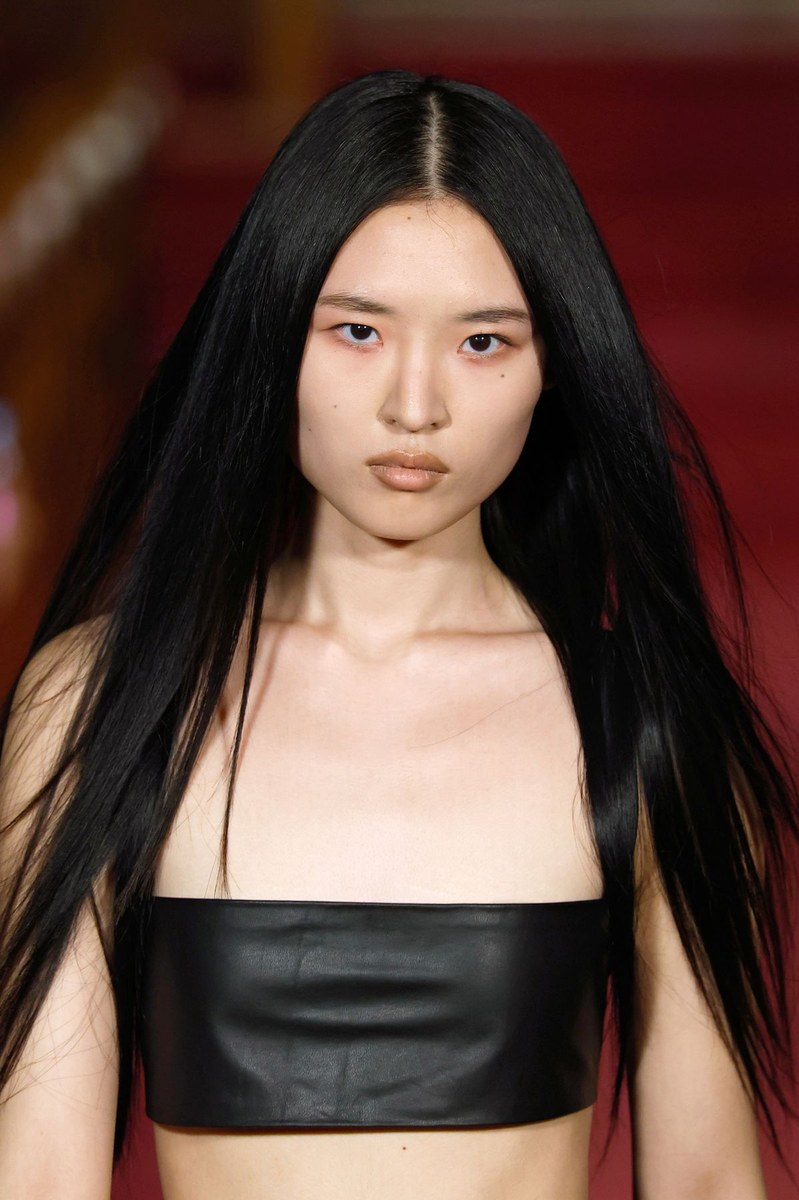
Andrew Curwen FW26 Women Looks Report

Andrew Curwen FW26 Women Looks Report
Andrew Curwen FW26 Women Looks Report

New York Fashion Week

Andrew Curwen FW26 builds a gothic wardrobe around the tension between tailored structure and exposed, vulnerable flesh, treating the body as both armature and spectacle. For buyers operating in the premium dark fashion and conceptual ready-to-wear space, goth-adjacent dressing has moved decisively from subculture to mainline luxury appetite.

Silhouette and Volume

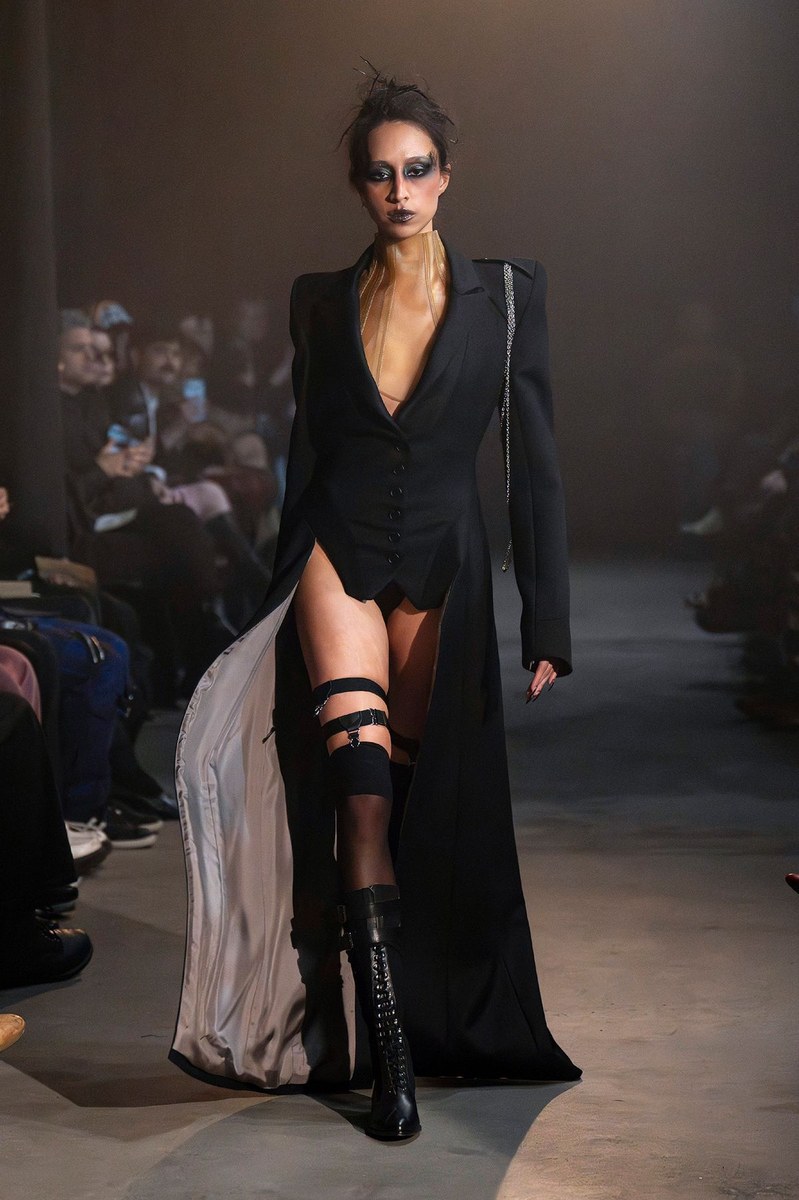
Two dominant shapes emerge: a sharply constructed, heavily padded-shoulder jacket silhouette drawn tight at the center body, and a draped or sheer maxi length that dissolves structure below the waist. Look 7 pushes this to an extreme with an oversized cocoon-collar greatcoat that swamps the frame entirely. Looks 1 and 10 pair the same architectural blazer with near-total leg exposure, creating a deliberate top-heavy imbalance. Volume also erupts at the shoulder in feather and textile constructions in Looks 6, 13, and 17, replacing conventional sleeve mass with organic, almost predatory forms. The silhouette language is binary and confrontational. There is no middle register.
Look 7
Look 7

Color Palette

Black dominates every look without exception, functioning less as a neutral and more as a categorical statement. Look 8 stands apart, introducing deep military olive trousers and cream-beige tones in the corset bodice, with red-orange fringe textile at the chest creating a visceral, wound-like contrast against the pale ground. Look 14 works in ivory, ecru and blush lace, giving it the quality of something exhumed rather than pristine. A dark tobacco brown coat appears in Look 7, reading as a warm shadow beside the cooler blacks throughout.

Look 8
Look 8

Materials and Textures

Curwen moves between smooth, matte suiting wool, sheer silk georgette, stiff corsetry boning materials, and raw feather and fringe constructions with clear intentionality, never allowing any single surface to feel incidental. Looks 3, 4, 10, and 12 use structured pinstripe or leather-finished corset panels that hold their shape independently of the body, functioning more as sculptural objects than undergarments. Sheer mesh and chiffon layers in Looks 2, 4, and 15 carry embroidered or printed motifs, adding graphic weight to otherwise weightless fabric. Featherwork in Looks 6 and 17 reads as voluminous and three-dimensional, with enough density to hold a silhouette from across the room.

Styling and Layering

Footwear runs consistently toward the knee-high lace-up boot in black patent or matte leather. Looks 1, 11, and 13 use studded or hardware-detailed versions that reinforce the collection's hard-edged mood. Long black gloves appear in Looks 4, 12, and 15, functioning as a structural extension of the sleeve line rather than as an accessory afterthought. Thigh-high stockings with garter hardware in Looks 1, 10, and 11 layer over sheer tights, building a deliberate stratigraphy of legwear that adds product complexity and retail opportunity. Feathers and wire headdresses are pervasive enough to read as a signature house element rather than a styling choice.

Look by Look Highlights

Look 1 The long-tail black blazer worn as a dress over thigh-high stockings and studded knee boots establishes the collection's core commercial proposition, a single tailoring piece that eliminates the need for separates.

Look 1
Look 1

Look 4 A sheer black full-length dress worn over a structured leather corset with long gloves and a spike-cluster bag represents the collection's most complete commercial look, translating directly into high-end occasion wear.

Look 4
Look 4

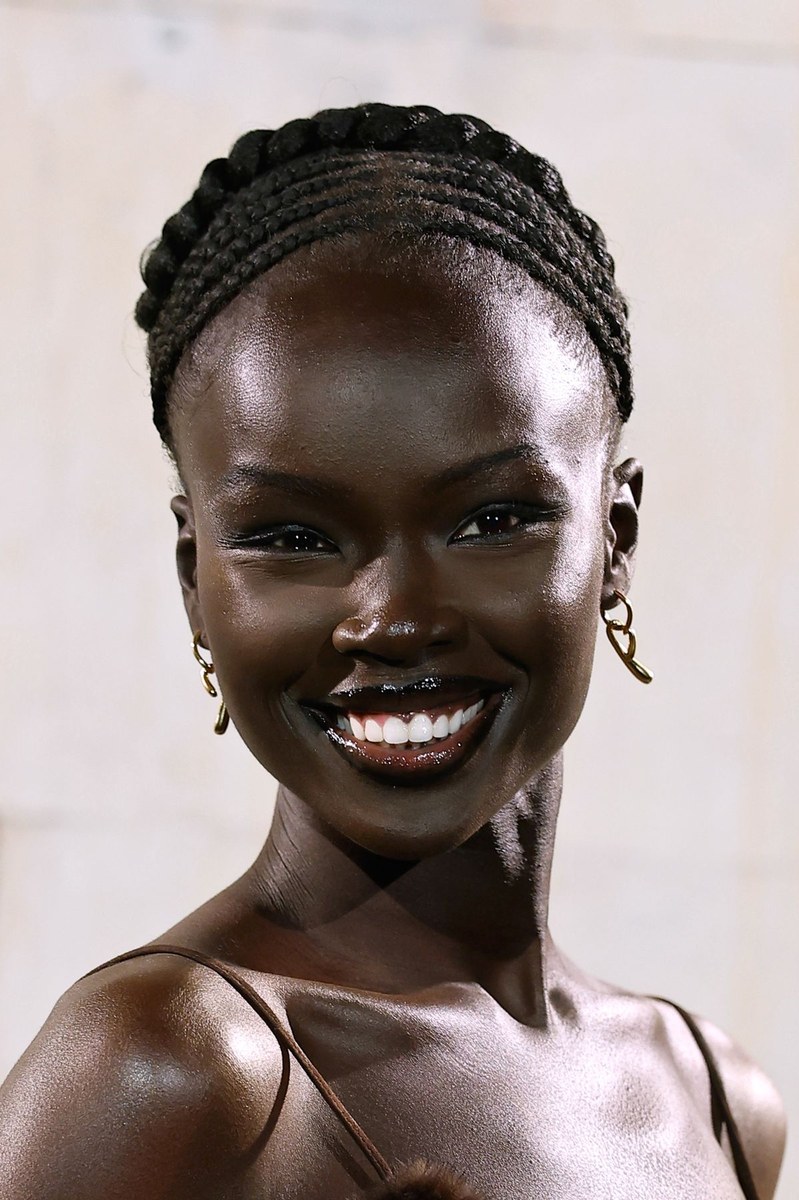
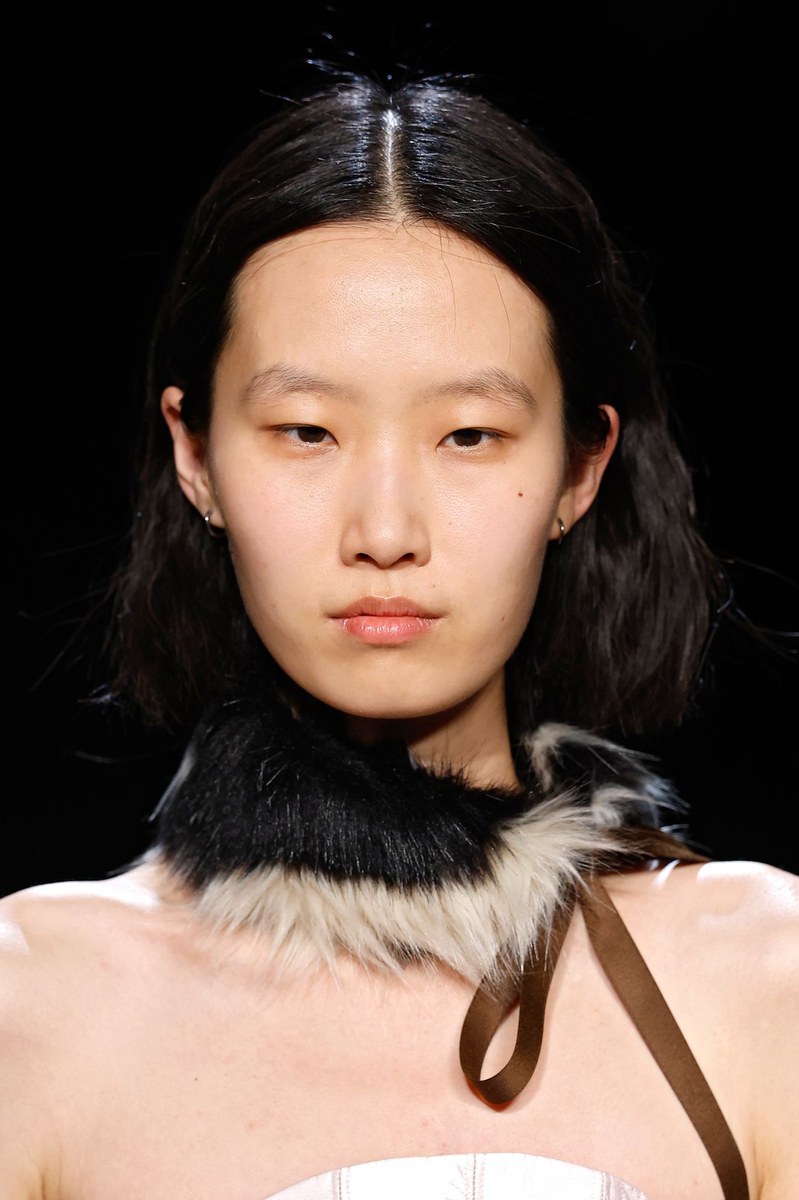
Look 7 The oversized dark tobacco greatcoat with a draped high collar and no visible top underneath is the collection's single most wearable outerwear statement and the piece most likely to translate to a broad buyer base.

Look 8 The deconstructed corset-and-trouser combination in olive, cream, and red fringe textile is the collection's clearest gesture toward color and the most actionable look for buyers seeking contrast within an otherwise all-black range.

Look 12 A male-presenting model in a black strapless boned corset with voluminous gloves and wide dark burgundy trousers directly addresses the growing market for gender-neutral structured bodywear at premium price points.

Look 12
Look 12

Look 15 The grey ribbed sleeveless top printed with a heraldic crest beneath a bead-encrusted corset waistband, over a tiered black chiffon skirt with feather hem, is the collection's most technically layered piece and the strongest argument for Curwen's craft positioning.

Look 15
Look 15

Look 16 The strapless black smocked-bodice dress with a full tulle-underlined skirt and over-the-knee boots is the most accessible silhouette in the collection and the most direct entry point for buyers in the dark occasion wear segment.

Look 16
Look 16

Look 17 The black feather-and-ruffle shoulder jacket over a high-cut leather bodysuit with patent thigh-highs condenses every recurring motif into one styling decision, making it the editorial anchor and the strongest candidate for look-book lead image.

Look 17
Look 17

Operational Insights

Corsetry as hero SKU: The boned corset appears across at least six looks in varying materials and price architectures, from pinstripe suiting to embellished leather. Buyers have a clear product family to build a buying strategy around with multiple entry price points.

Outerwear investment: Look 7's greatcoat and Look 1's extended-tail blazer are the collection's two highest commercial-probability pieces. Style directors should prioritize these for advance orders, as the oversized collar and padded-shoulder blocking require significant lead time from production partners.

Featherwork scalability risk: Significant material sourcing and labour cost accompany the feather constructions in Looks 6, 13, and 17. Buyers should request detailed cost breakdowns and minimum order requirements early, as feather volume and hand-application will compress margins if not priced to the top tier.

Legwear system: Recurring layering of garter-detail stockings over sheer tights creates a legwear system that functions as both styling logic and a separate product category. Style directors should explore whether Curwen will produce these as standalone accessories, which would drive incremental units at lower price resistance.

Gender-neutral positioning: Looks 2, 7, and 12 deliberately place male-presenting models in corsets, sheer tops, and draped volume. Buyers in forward retail environments should note this as a commercial signal rather than a styling gesture and consider floor placement that does not segregate by conventional gender category.

Complete Collection

Look 2
Look 2
Look 3
Look 3
Look 5
Look 5
Look 6
Look 6
Look 9
Look 9
Look 10
Look 10
Look 11
Look 11
Look 13
Look 13
Look 14
Look 14
Look 18
Look 18
Look 19
Andrew Curwen

About the Designer

Andrew Curwen was born in Lake Placid, New York, and spent his childhood moving constantly across the United States, his father's military career preventing any real sense of settled place. That rootlessness surfaces repeatedly in his work: when he finally sat down to research his family history before his debut collection, what he found was a family crest he had never known existed. He opened the show with it embroidered on a corseted top, a gesture that was equal parts personal archaeology and fashion declaration. He studied at Parsons, graduated in early 2018, and spent the years that followed learning the trade from the inside out, working shifts at Beacon's Closet in Brooklyn while absorbing everything he could from two of his Parsons contemporaries: Elena Velez, with whom he spent three seasons developing runway pieces, and Jane Wade, where he deepened his understanding of production and construction. He also studied bespoke tailoring under a master Savile Row craftsman, a parallel education that gave his work a technical foundation rare among emerging designers his age.

His references are literary and theatrical rather than trend-based. He grew up on the mythology of John Galliano and Alexander McQueen, and by his own account had begun to feel creatively inert until Galliano's final show for Maison Margiela in 2024 knocked something loose in him. He describes that collection as the moment he realized the hunger was still there, and it pushed him to go out on his own. The sensibility he calls "romantic violence" runs through everything he makes: Victorian corsetry and bustle silhouettes reworked in kidskin leather, moth-eaten tulle, Gothic architecture translated into garment structure. He thinks about nocturnal states of consciousness, the psychology of people who come alive after dark, and what their bodies deserve to wear.

In July 2025, Curwen presented his debut 11-look collection in Bushwick, Brooklyn, under the title "Your Last Breath Belongs To Me." By early 2026 he had joined the official NYFW calendar for Fall/Winter 2026, his first appearance on the CFDA schedule, showing a collection built around Poe-inflected imagery of ravens, waking wounds, and creatures of the night. Lady Gaga had already been photographed in the brand. He remains based in Manhattan, working out of the same studio he shared with Jane Wade, having moved from apprentice to founder without ever really leaving.

"New York Fashion Week needs more space for fashion not focused on mass appeal. My brand is forged in confrontation, driven by an unflinching examination of the body and power."

"I never felt like I had a home. The research helped me place my roots."

✦ This report was generated with AI — combining human editorial vision with Claude by Anthropic. Because the future of fashion intelligence is already here.