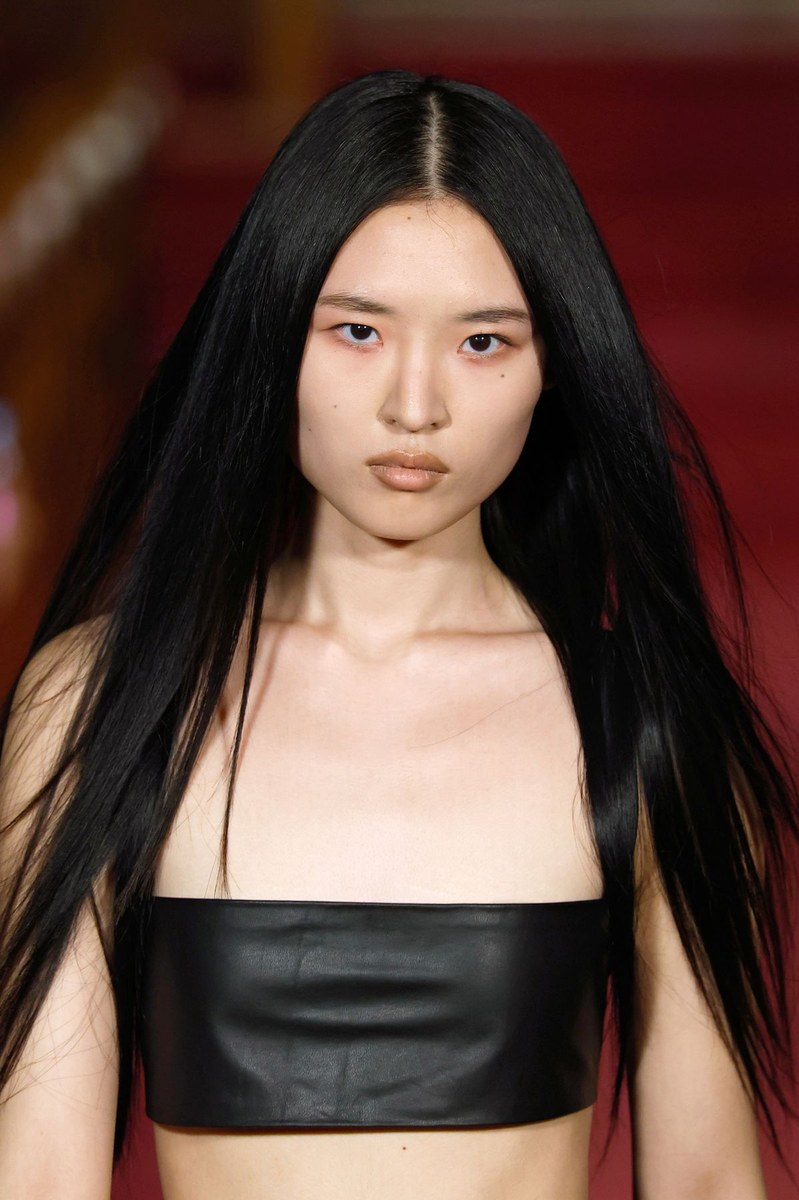
Bach Mai FW26 Women Looks Report

Bach Mai FW26 Women Looks Report
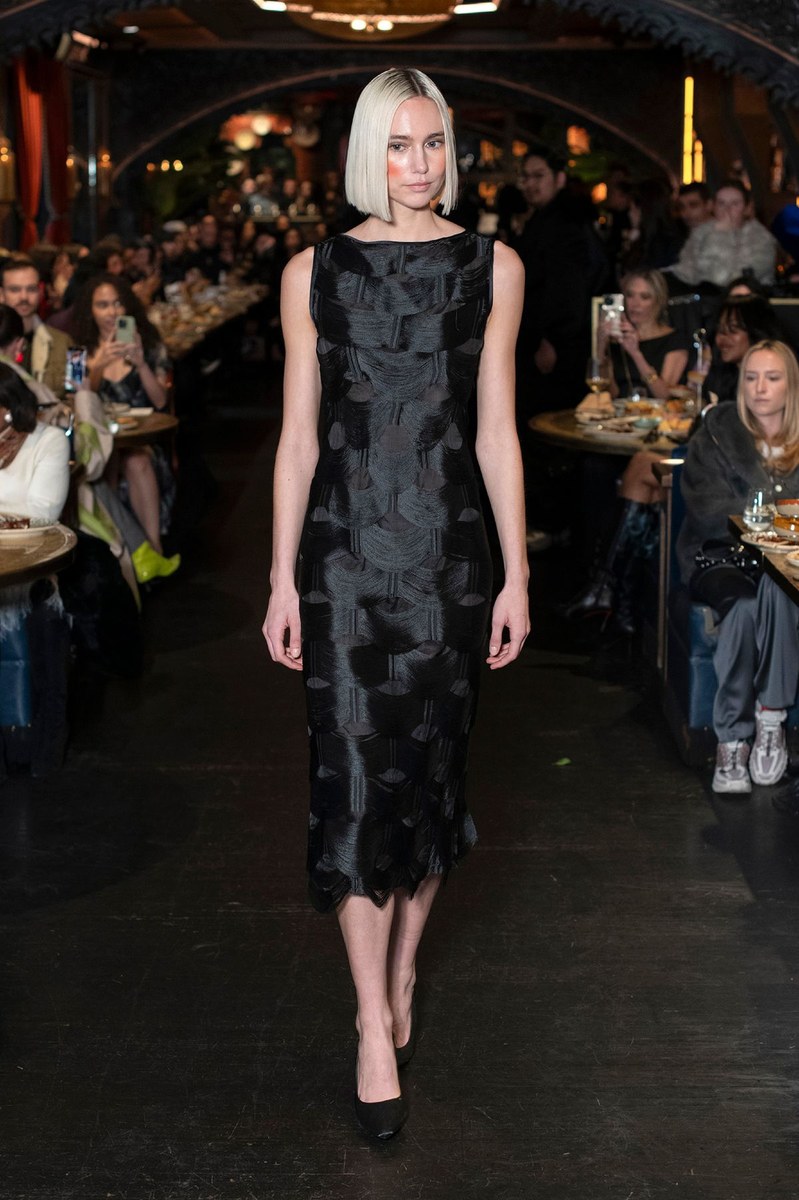
Bach Mai FW26 Women's Looks Report

New York Fashion Week

Bach Mai FW26 operates as a study in controlled luxury, where couture construction logic meets wearable evening and day dressing across a tight, disciplined range of silhouettes and fabrics. For buyers navigating a market hungry for occasion wear with genuine craft credentials, this collection delivers a clear, commercially legible point of view.

Silhouette and Volume

Two dominant shapes anchor the lineup: a fitted, waist-defined column that runs from midi to floor, and a wide-leg trouser cut so voluminous it pools at the foot. Structured peplum tops and kimono-influenced wrapping at the torso create architectural breadth at the shoulder that contracts sharply at the waist. Look 19 is the only ball gown moment, which reads as a deliberate punctuation mark rather than a recurring theme. Short silhouettes are confined to Look 7 and Look 11, where contrast with outerwear or a trailing coat amplifies the proportional drama.
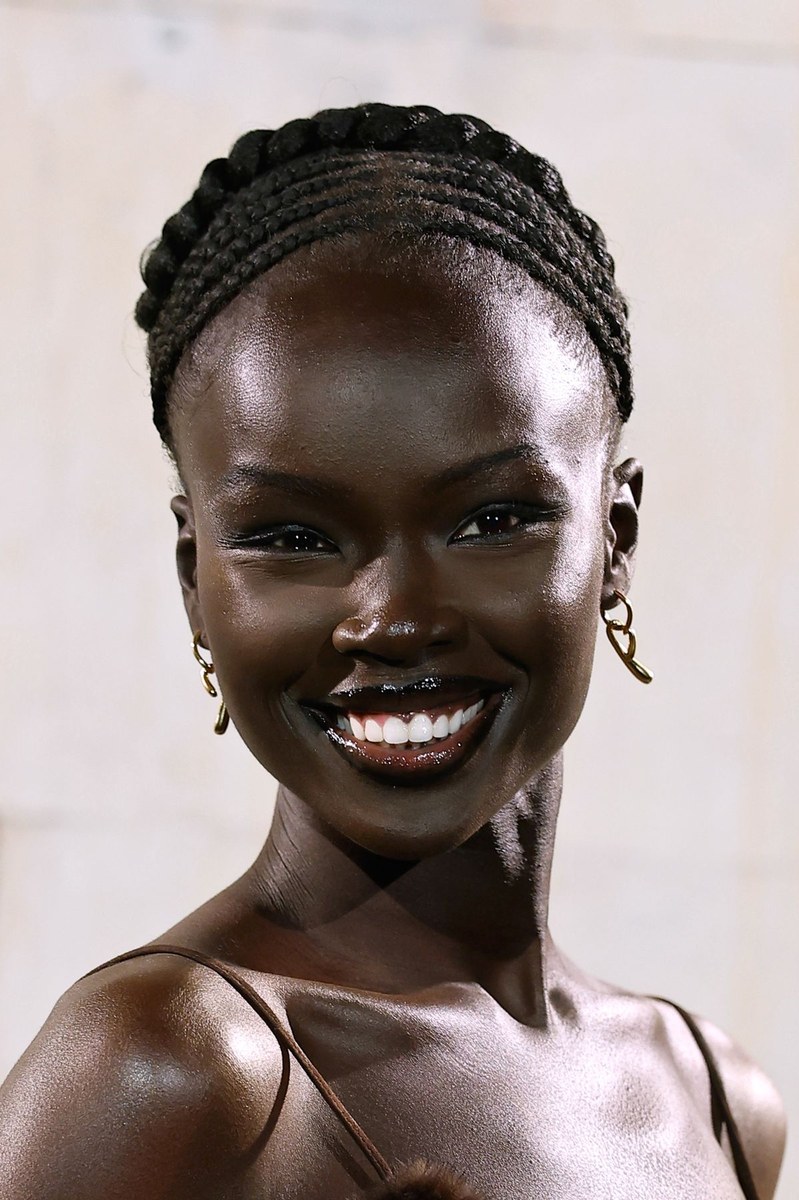
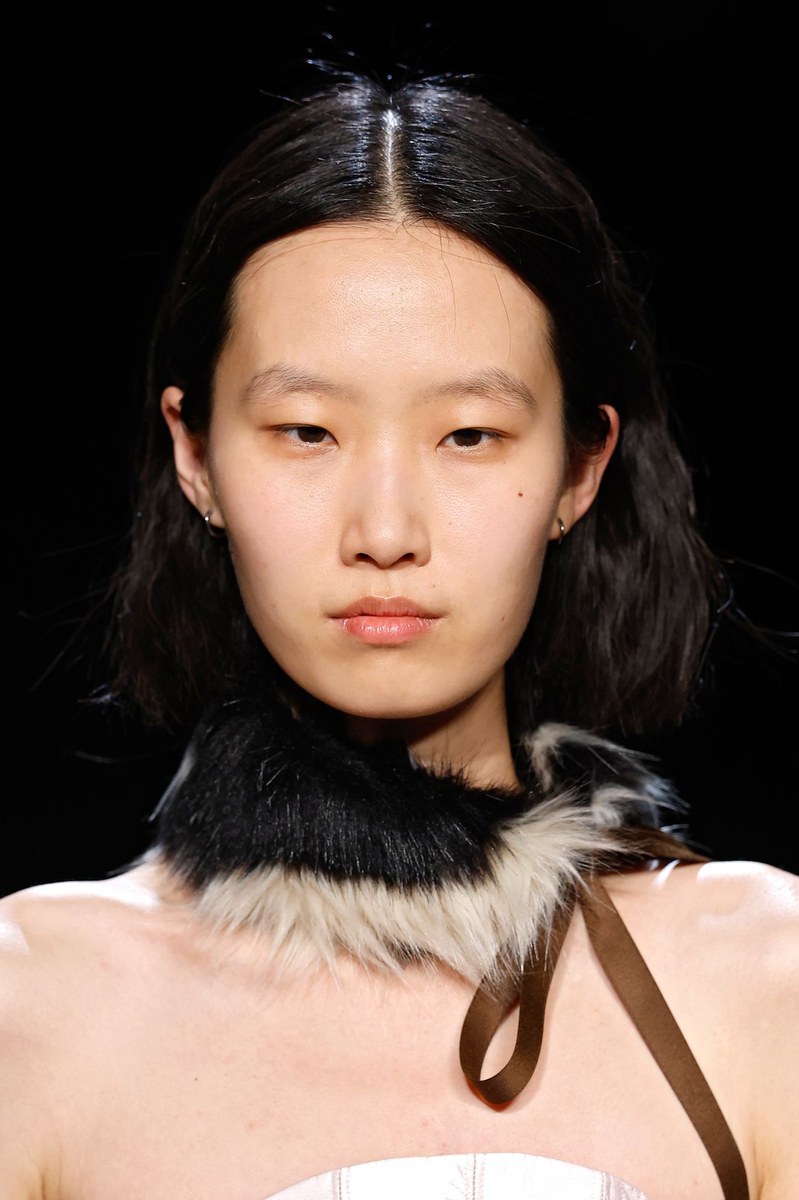
Look 19
Look 19

Color Palette

Black opens and closes the lineup, but the majority of the middle sequence runs in a single deep burgundy, closer to dried blood than true red. Mai uses this shade across satin, velvet, matte crepe and taffeta simultaneously. Black returns with authority in the closing evening looks, rendered in velvet for Looks 17 and 18, and in structured duchess-weight fabric for Look 19. The two palettes never mix within a single look, which creates a clean, buyer-friendly either/or narrative. A deep aubergine appears once, in Look 15, as a quiet bridge between the two dominant color stories.

Materials and Textures

Charmeuse and heavy satin carry the most visual weight, draping with the slow, liquid heaviness that reads well both in editorial photography and under event lighting. A brocade or burnout jacquard fabric, dark on dark with an abstract circular motif, repeats across Looks 1, 4 and the skirt of Look 2, giving the opening sequence textural density without color distraction. Velvet appears in three distinct applications: as a cropped jacket in Look 3, as a bolero in Look 7, and as full column and gown bodies in Looks 11, 17 and 18. Taffeta or structured faille grounds the finale in Look 19, adding body and rigidity that differentiates it from the fluid silhouettes that precede it.

Look 2
Look 2

Styling and Layering

A zip-front closure at the torso functions as a signature hardware detail across the peplum and blouson tops in Looks 2, 3, 8, 12, 13, 14 and 16, serving as both a structural and commercial motif that buyers can track as a house code. Footwear stays uniform and intentionally quiet throughout: a pointed-toe black pump in a low to moderate heel height that keeps the eye on the garment and signals that the brand is not positioning shoes as a secondary revenue driver. Scarves tied at the throat appear in Looks 5 and 10, where they echo the fluid satin of the shirt-and-skirt sets beneath them without adding bulk. Layering logic reads as subtractive. Both the bolero in Look 7 and the cropped jacket in Look 16 pare away coverage rather than pile it on, exposing skin or underlayers to create contrast.

Look 7
Look 7

Look by Look Highlights

Look 1 A sleeveless midi sheath in dark-on-dark burnout jacquard with a scalloped hem establishes the house's ability to build graphic surface texture within a monochromatic framework. Strong opening buy for specialty retailers targeting cocktail and gala dressing.

Look 1
Look 1

Look 3 The deep-V mink-textured velvet cropped jacket worn over wide-leg fluid trousers with no visible top beneath is the collection's most immediate red carpet proposition. This one will require careful sizing and fit grading to protect the plunging neckline at retail.

Look 3
Look 3

Look 9 A short-sleeve burgundy midi dress in matte crepe with pronounced bust seaming and a gently flared skirt emerges as the most accessible and highest-volume potential piece in the collection. It translates across age brackets and body types without losing the designer's point of view.

Look 9
Look 9

Look 11 A black velvet halter mini paired with a floor-length satin coat carried loosely over one arm reads as a two-piece dressing proposition that retail buyers can sell as separates or as a coordinated set. This doubles the unit potential per customer.

Look 11
Look 11

Look 15 The deep aubergine halter column gown with a sheer inset panel at the lower skirt is technically the most complex garment in the lineup. Its color position between black and burgundy gives it standalone editorial appeal for press placements.

Look 15
Look 15

Look 17 An off-the-shoulder black velvet midi dress with a structured satin lapel fold at the bust directly answers current market demand for velvet occasion wear that carries genuine construction craft. Its column silhouette supports a broad fit range.

Look 17
Look 17

Look 18 The black velvet off-shoulder full-length gown with a folded satin drape at the chest reads as the strongest evening statement in the collection. Its absence of ornamentation makes it a versatile candidate for custom and made-to-order programming.

Look 18
Look 18

Look 19 A strapless black ball gown in structured faille closes the show as the collection's single volume-maximizing silhouette, positioned clearly as a bridal or formal adjacency. It expands the brand's occasion footprint without destabilizing its core aesthetic.

Operational Insights

Zip hardware as brand code: The repeated zip-front closure across peplum tops, blousons and jackets in at least seven looks functions as a traceable house signature that product managers should protect in production specs. This maintains brand consistency across licensees or manufacturing partners.

Two-color capsule structure: The strict black and burgundy palette, with a single aubergine outlier, makes this collection highly executable as a focused capsule drop rather than a full seasonal range. This reduces inventory complexity for buyers who want to build a coherent in-store story with limited SKU count.

Separates architecture: Multiple looks pair zip-front tops with wide-leg trousers or fluid midi skirts in tonal matches, allowing style directors to present the collection as a mix-and-match wardrobe system. This increases basket size per customer beyond look-for-look buys.

Velvet tier for event retail: Looks 7, 11, 17 and 18 form a discrete velvet evening tier that buyers for event and gala markets can extract as a standalone buy. This is particularly relevant for the October through December selling window where velvet demand indexes highest.

Volume risk in trousers: The extreme wide-leg trouser silhouette in Looks 3, 8, 12 and 14 pools significantly at the foot and will require precise length calibration by inseam for retail. Buyers should request graded length options or confirm that alterations are built into the price architecture before committing to units.

Complete Collection

Look 4
Look 4
Look 5
Look 5
Look 6
Look 6
Look 8
Look 8
Look 10
Look 10
Look 12
Look 12
Look 13
Look 13
Look 14
Look 14
Look 16
Look 16
Look 20
Look 20
Look 21
Look 21
Look 22
Look 22
Look 23
Look 23
Look 24
Look 24
Look 25
Look 25
Look 26
Look 26
Look 27
Bach Mai

About the Designer

Bach Mai grew up in West Houston as the child of Vietnamese immigrants, in a city with an unusually active relationship to occasion dressing. His father was an engineer; his mother came from Vietnam and brought with her, like most Vietnamese women of her generation, an understanding of fabric as something you worked with and wore seriously. Mai attended St. John's School in River Oaks, and in the time his classmates spent otherwise, he was haunting the fabric store High Fashion to study materials, making dresses for his cousins and friends, and using his high school's build-your-own-curriculum option to study fashion history instead of something more conventional. The specific thing that redirected him permanently was John Galliano's Spring 2004 Haute Couture show for Dior — he found it online, watched it over and over, and later described it as a moment of total bewilderment. He had been seriously considering a career in opera, having trained as a singer, and fashion won.

He left Houston in 2007 to study at Parsons, where the training was technical and the city immediate. During his time there he interned at Calvin Klein and later at Oscar de la Renta, arriving at de la Renta during the autumn/winter 2013 season — the season Galliano himself came to work there for a fortnight. Mai watched from the workroom as the top models stood in the elevator corridor before their fittings, wearing Galliano's constructions, and understood something about clothes that photographs couldn't teach. He moved to Paris afterward, earned a master's degree from the Institut Français de la Mode, and worked at Prabal Gurung before he saw a notice in WWD that Galliano had been appointed at Maison Margiela and was hiring. He sent a contact for a recommendation, went to the interview, and was hired on the spot. He became Galliano's first design assistant, working intensively on the Artisanal Haute Couture collections from the debut Spring/Summer 2015 season onward.

The years at Margiela with Galliano gave Mai a thorough education in what couture actually demands at the workroom level: the precise relationship between a garment and a body, the logic of a fitting, the philosophy — Galliano's pyramid, with couture at the top as the experimental laboratory from which everything commercial descends. Mai returned to New York in 2019 with the intention of building an American couture house, launching his debut collection in 2021 in partnership with Hurel, a French fabric house established in 1873 that gave him access to materials like moiré libre, mirrored velvet lamé, and Chantilly lace. The first runway show, which he has described as a tribute to his late father, drew immediate attention: Venus Williams, Tessa Thompson, Kate Beckinsale, and Lucy Liu all wore the work. Vogue called him "an American couturier in the making." He continues as founder and creative director of the label, designing from New York and teaching at FIT.

"It was always my dream to go to Paris and study haute couture, then to come back and be an American designer. Texas women have such a love of event dressing, which doesn't really happen anywhere else. Growing up with that real understanding of glamour is what drives my work."

"The lining is what touches your body. That should be the most luxurious thing. When you put something on that makes you feel incredible, that's a power that clothing has. When you see a woman put it on, she feels like she can take on the world — that is the most amazing thing a designer can do."

✦ This report was generated with AI — combining human editorial vision with Claude by Anthropic. Because the future of fashion intelligence is already here.