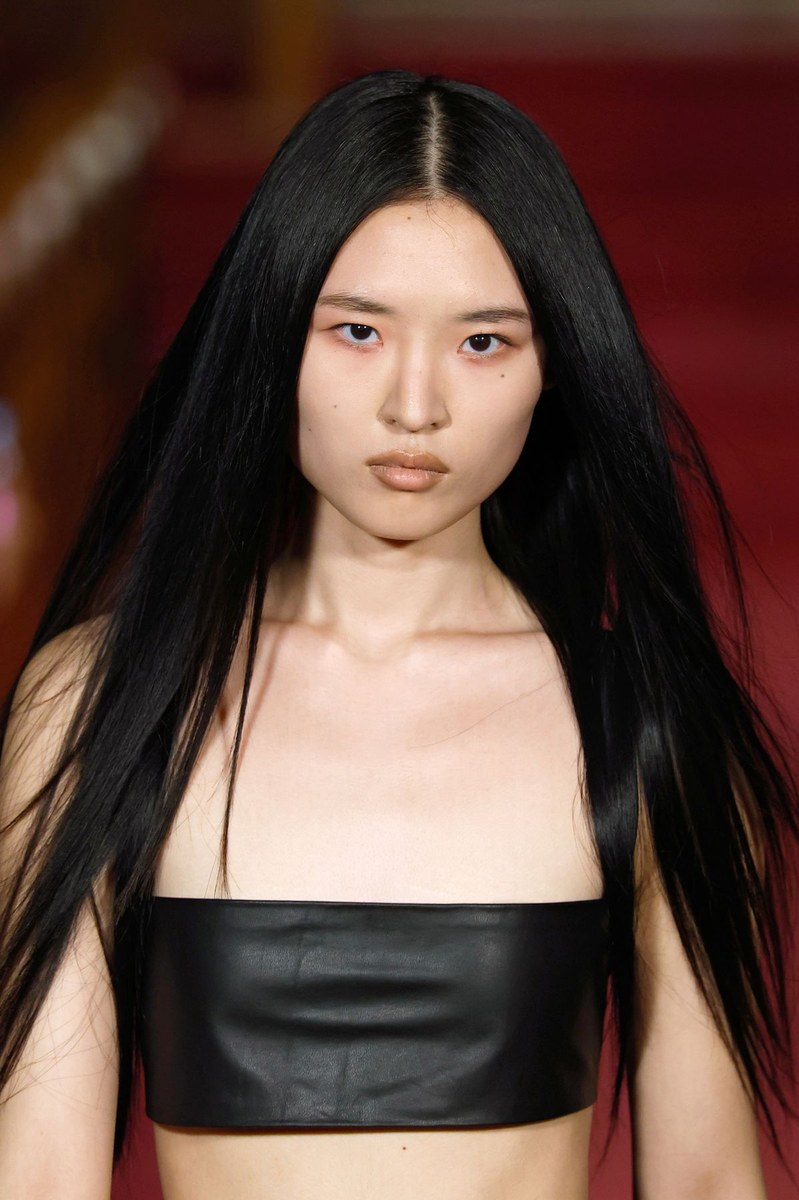
Bibhu Mohapatra FW26 Women Looks Report

Bibhu Mohapatra FW26 Women Looks Report
Did you know? Bibhu Mohapatra established his New York-based atelier in 2009 with a focus on zero-waste pattern cutting and hand-finishing techniques that minimize fabric surplus during production. His design methodology emphasizes draping and construction methods rooted in Indian textile traditions, which he integrates with contemporary silhouettes to reduce reliance on heavy seaming and structural interfacing.

Bibhu Mohapatra FW26 Women Looks Report

New York Fashion Week

Bibhu Mohapatra builds FW26 around a tension between architectural power dressing and fluid evening glamour, anchored in a burgundy-dominant palette punctuated by gold lamé and acid yellow. Buyers navigating a market hungry for occasion wear with genuine daytime crossover will find a commercially legible range here, with clear entry points across price tiers.

Silhouette and Volume

A long, column-like midi and maxi silhouette runs throughout, with structured shoulders that read sharp rather than exaggerated. Looks 1, 3, and 14 demonstrate a fitted-through-the-torso approach that widens at the shoulder line, creating a strong vertical proportion. Look 4 breaks that rhythm with a boxy, cape-shouldered top over a fluid maxi skirt, while Look 16 amplifies the drama with voluminous ruffled shoulders on a cropped two-piece. Trousers appear sparingly, in Looks 8 and 14, and both cut wide through the leg for a relaxed counterpoint to the otherwise controlled silhouette.
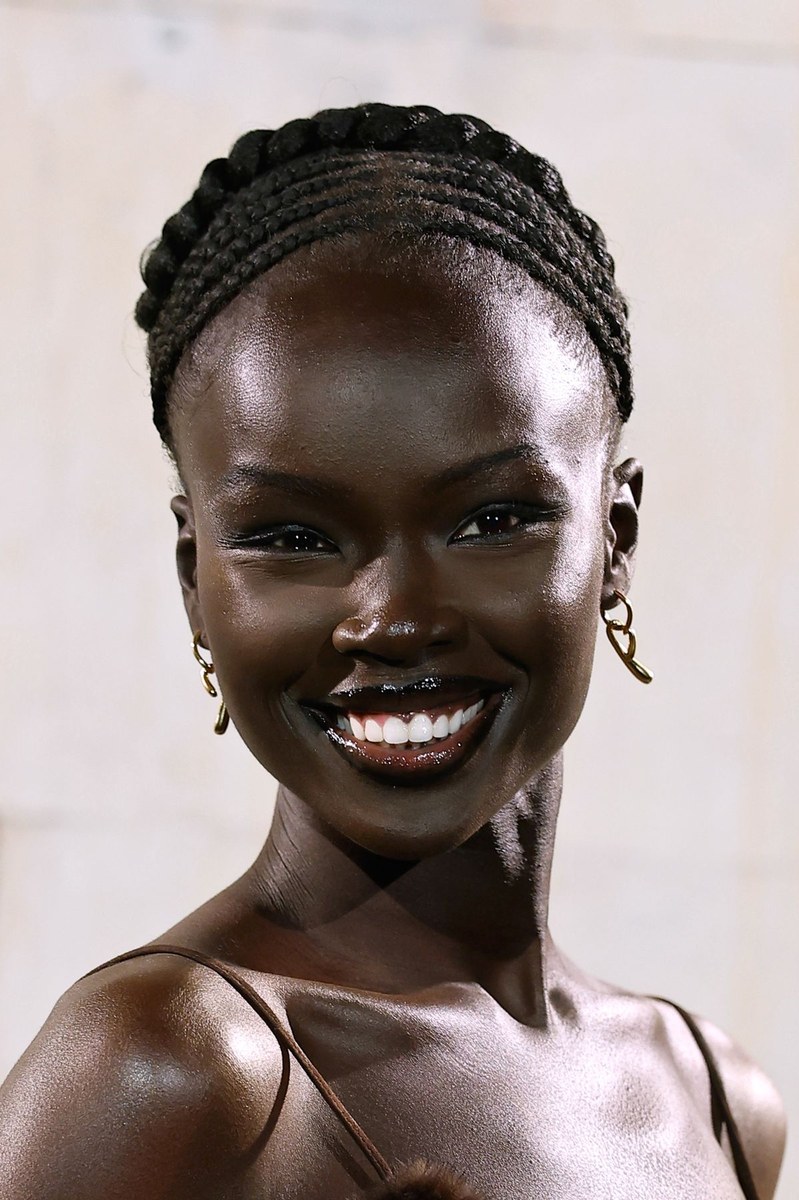
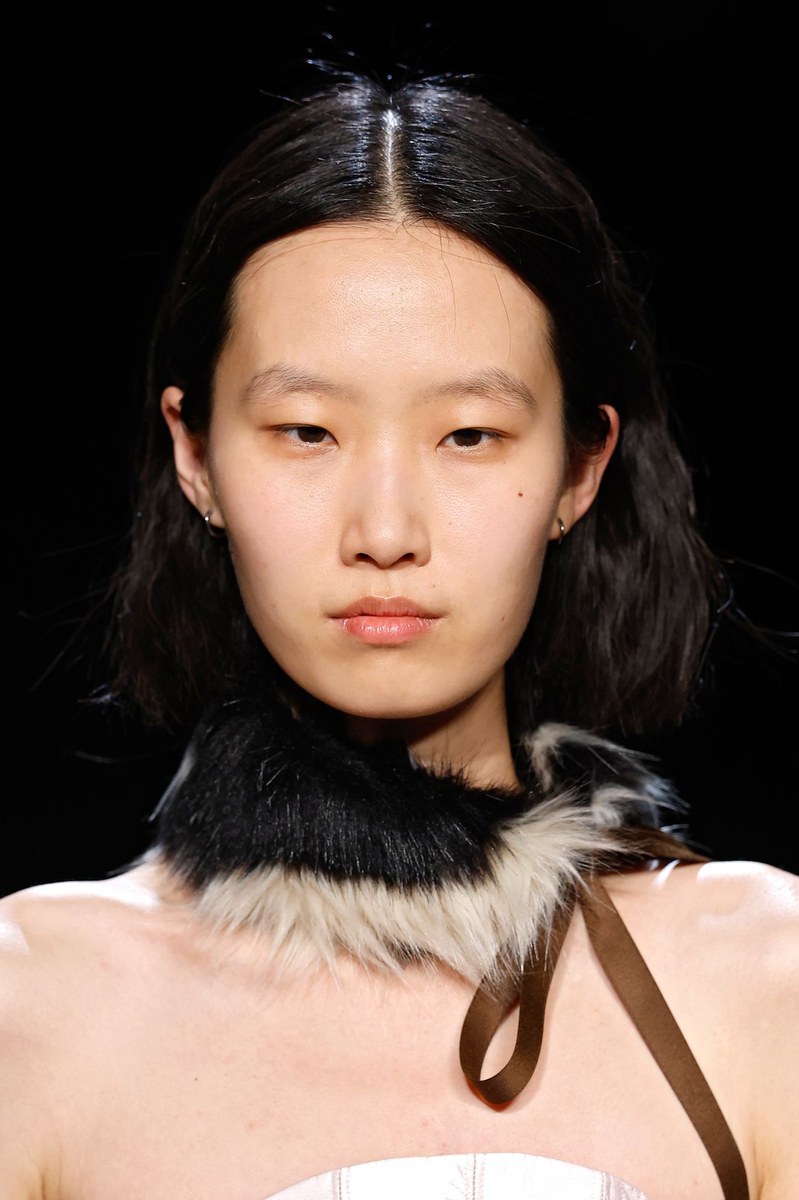
Look 4
Look 4

Color Palette

Burgundy is the spine of the collection, appearing across Looks 2, 3, 9, 13, 15, and 17 in varying fabrics and weights. Gold, used in Look 1 and its evening counterpart Look 19, reads as the collection's prestige signal, a warm antique gold rather than a bright metallic. Warmth pushes through in Look 12's purple-to-amber color block and the standalone amber suit in Look 8, without abandoning the collection's richness. Look 16's canary yellow breaks the entire color story deliberately, giving buyers a conversation piece and potential hero SKU.

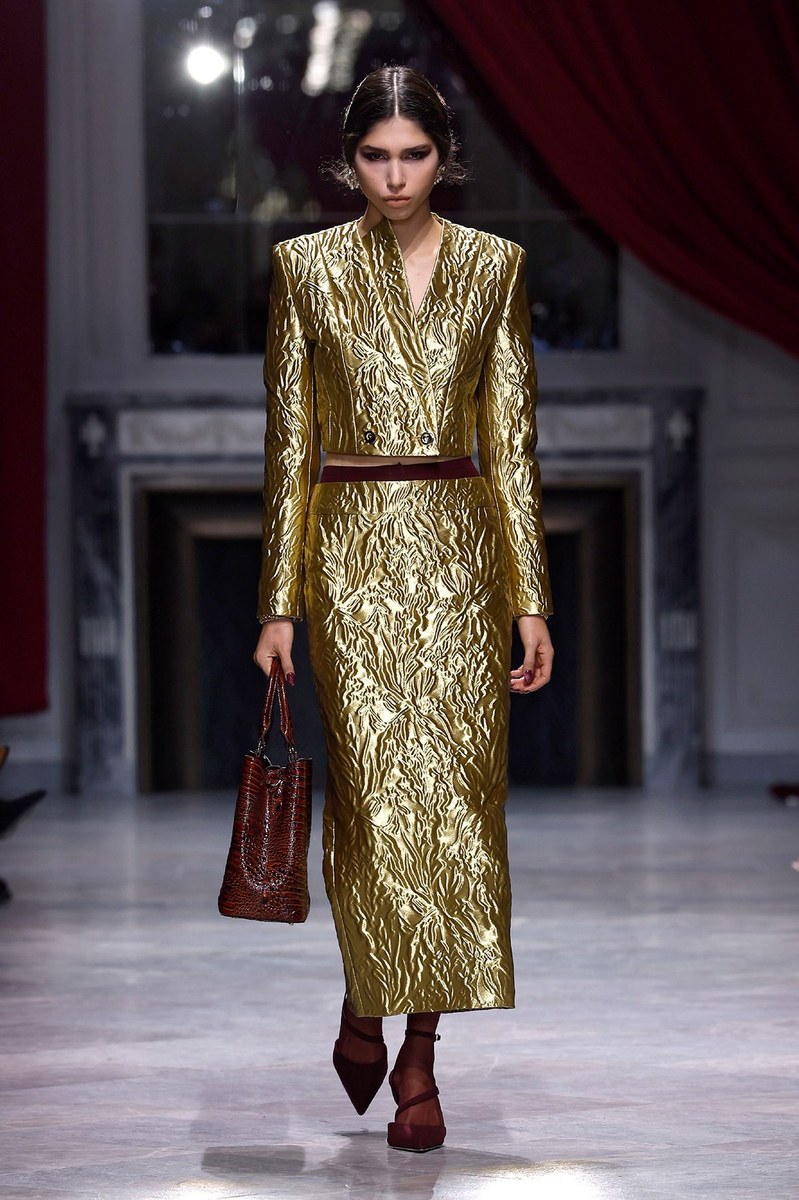
Look 1
Look 1

Materials and Textures

Crinkled gold lamé anchors Looks 1 and 19, a heavyweight, sculptural fabric with a crumpled foil surface that holds structure without boning. Smooth leather and faux leather appear in Looks 3 and 6, with a buttery, matte finish that photographs cleanly and supports the column silhouette. Shearling-trimmed leather outerwear shows up in Look 7 and Look 5, one a vest and one a full biker jacket, both in near-black with voluminous Mongolian lamb trim at the collar. Fluid silk charmeuse and crepe run through the eveningwear looks, particularly in Looks 13, 15, and 17, providing drape weight that moves well on the body.

Look 7
Look 7

Styling and Layering

Long leather gloves, worn in Looks 3, 4, and 9, function as a repeating structural accessory rather than an afterthought, extending the sleeve line and adding material contrast. Footwear runs almost exclusively to pointed-toe Mary Jane or cross-strap block-heel pumps in burgundy, ivory, or forest green suede, grounding even the most dramatic looks in wearable proportions. Structured croc-embossed totes in burgundy or cobalt appear across Looks 1, 2, 8, and 9, while smaller novelty bags include a trunk style in Look 3 and a cylindrical minaudière in Look 12. A leather newsboy cap in Look 11 is the one hat in the collection, sharpening the military coat beneath it and signaling a customer who accessorizes with intention.

Look 3
Look 3

Look by Look Highlights

Look 1 Opens the collection on a strong commercial note. The crinkled gold lamé coordinated set with burgundy belt and matching bag is a ready-made editorial and red-carpet option with clear wholesale appeal.

Look 3 Burgundy faux leather fitted dress with long gold gloves and a trunk bag represents the collection's strongest day-to-evening crossover piece, with material and silhouette that photograph well across all retail channels.

Look 6 A cropped burgundy leather blazer over a matching high-slit skirt, layered with a draped sand-colored scarf panel and worn with knee-high boots, is the most directional separates combination in the collection and strongest candidate for editorial placement.

Look 6
Look 6

Look 8 The amber sleeveless double-breasted suit in a matte suiting fabric stands as a standalone commercial unit, color-forward enough to be a statement and constructed conservatively enough for corporate occasion dressing.

Look 8
Look 8

Look 12 A sleeveless purple silk top paired with an amber draped satin skirt and magenta gloves makes the clearest color-blocking argument in the collection and gives buyers a three-piece separates story that can be broken apart at retail.

Look 12
Look 12

Look 16 Canary yellow ruffle-shoulder crop top and matching high-slit skirt, worn with a sable fur stole as a carried accessory, serves as a deliberate contrast piece that anchors the front-row and press imagery for the season.

Look 16
Look 16

Look 18 An ivory long-sleeved column gown with all-over appliquéd florals and feather trim reads as a bridal or black-tie proposition and gives the collection a clear luxury ceiling that justifies the price architecture below it.

Look 18
Look 18

Look 19 The closing gold crinkled lamé column gown with a chest cutout and oversized bow detail at the hip is the collection's most produced-looking evening piece, with a silhouette that translates directly to awards season and gala dressing.

Look 19
Look 19

Operational Insights

Burgundy depth At least nine looks feature burgundy in multiple fabrications including leather, satin, crepe, and jersey, making it the anchor colorway for any buyer building a capsule from this collection. Depth of buy in this color is justified.

Separates potential Several looks, including 2, 4, 12, and 15, are constructed as tops and skirts rather than dresses, giving product managers flexibility to buy and price individual units rather than committing to full coordinated sets.

Glove accessory program Long leather gloves appear in at least three distinct colorways across the collection. Style directors should evaluate whether the house offers these as standalone accessories, as they carry strong reorder and gifting potential independent of the clothing.

Outerwear as a limited category Only two outerwear silhouettes appear, the shearling biker in Look 5 and the embroidered military coat in Look 11. Both are strong but the category is thin, which is either a deliberate brand focus on eveningwear or a production gap that buyers should probe before placing orders.

Look 5
Look 5

Gold lamé narrative Looks 1 and 19 use the same crinkled gold lamé fabric at opposite ends of the show, creating a clear bracket for the collection. Buyers looking for press-friendly hero pieces should prioritize these two looks, as they carry the highest visual recall and strongest story for editorial partnerships.

Complete Collection

Look 2
Look 2
Look 9
Look 9
Look 10
Look 10
Look 11
Look 11
Look 13
Look 13
Look 14
Look 14
Look 15
Look 15
Look 17
Look 17
Look 20
Look 20
Look 21
Look 21
Look 22
Look 22
Look 23
Look 23
Look 24
Look 24
Look 25
Look 25
Look 26
Look 26
Look 27
Look 27
Look 28
Look 28
Look 29
Look 29
Look 30
Look 30
Look 31
Look 31
Look 32
Look 32
Look 33
Look 33
Look 34
Look 34
Look 35
Look 35
Look 36
Look 36
Look 37
Look 37
Look 38
Look 38
Look 39
Look 39
Look 40
Look 40
Look 41
Look 41
Look 42
Look 42
Look 43
Bibhu Mohapatra

About the Designer

Bibhu Mohapatra was born in 1972 in Rourkela, a steel-industry town in the state of Odisha on India's east coast, built around a plant and holding a population of roughly half a million. His father was an engineer who spent weekends taking apart motorcycles and cars piece by piece; his mother, Sashikala, sewed and taught him to do the same on her machine, using old saris as the material for early experiments. The boy who was quietly learning construction and drape from the women's textiles around him also grew up without television until 1988, which meant that whatever fashion reached him arrived in fragments — a Sunday supplement profile of an Indian designer, glimpses of the Jagannath Temple's intricate carvings at Puri, the Konark Sun Temple's sculptural language. He had one option for formal fashion education in India in the early 1990s: NIFT in Delhi, and he didn't pursue it. His brother, who was studying graphic design in the United States, suggested he apply to a master's program at Utah State University instead. Mohapatra got a partial scholarship, packed a suitcase full of clothes and Indian spices, and boarded his first flight in 1996.

Economics was the official subject in Utah, but what mattered more was a professor who found his sketchbook, made calls on his behalf, and got him into live-drawing classes in the art department free of charge. By the time he finished his master's, he had a portfolio and a clear direction. He moved to New York, enrolled at FIT, and almost immediately needed a job to afford the city. He printed twenty copies of his résumé and walked them up 7th Avenue, dropping them into the mailboxes of DKNY, Tommy Hilfiger, Calvin Klein. Halston called back. He spent his student years running bolts of fabric to factories, making embroidery layouts, attending fittings, and going to class six days a week. FIT gave him its Critics' Award for Best Evening Wear Designer. When Gilles Mendel was looking to expand J. Mendel into ready-to-wear, he hired Mohapatra as design director. For nearly a decade, Mohapatra built that label into one of the most sought-after names on the red carpet, dressing Angelina Jolie, Cate Blanchett, and Sienna Miller.

He left J. Mendel in 2008 and launched his eponymous label in the middle of the financial crisis, kept afloat in the first year by an order for three fifty-thousand-dollar coats. The label went through a restructuring in 2017 and came through it. His design sensibility is rooted in the specific crafts of Odisha: ikat hand-weaves, Dongria tribal textiles, silver filigree, patchwork and tie-and-dye traditions, the sculptural geometry he absorbed from temple architecture as a child. He has brought this material into evening gowns and ready-to-wear shown at New York Fashion Week, and has extended the practice into opera costume — he designed costumes for Verdi's Aida at Glimmerglass Opera and later for the Washington National Opera's tribute to Ruth Bader Ginsburg, using hand-loomed Odia ikat and Dongria weaves. Michelle Obama wore his work on her arrival in India in 2015, a moment that put Rourkela on fashion's map. He became a CFDA member in 2010, opened a flagship atelier on Duane Street in TriBeCa, and continues to design and build his label from New York.

"My memories of my mother and her teaching me to sew are always very much a part of my design process. I'm always instilling those early skills, influences and experiences into various aspects of my collections."

"We didn't have video games or even a TV. We got our first TV in 1988. Newspapers never carried anything on fashion. That was all the fashion I had access to. But that was my ticket to America — a suitcase full of Indian spices and a heart full of dreams."

✦ This report was generated with AI — combining human editorial vision with Claude by Anthropic. Because the future of fashion intelligence is already here.