Campillo FW26 Women Looks Report

Campillo FW26 Women Looks Report
Campillo FW26 Women Looks Report

New York Fashion Week

Campillo FW26 builds a masculine-coded wardrobe for women by cannibalizing tailoring archetypes, specifically the power suit, the workwear jacket, and the broad-shouldered blazer, and rebuilding them with corsetry logic, velvet, and exaggerated proportion. Market timing here is precise: as suiting returns to retail floors with renewed seriousness, this offers buyers a differentiated entry point between conventional tailoring and full avant-garde.

Silhouette and Volume

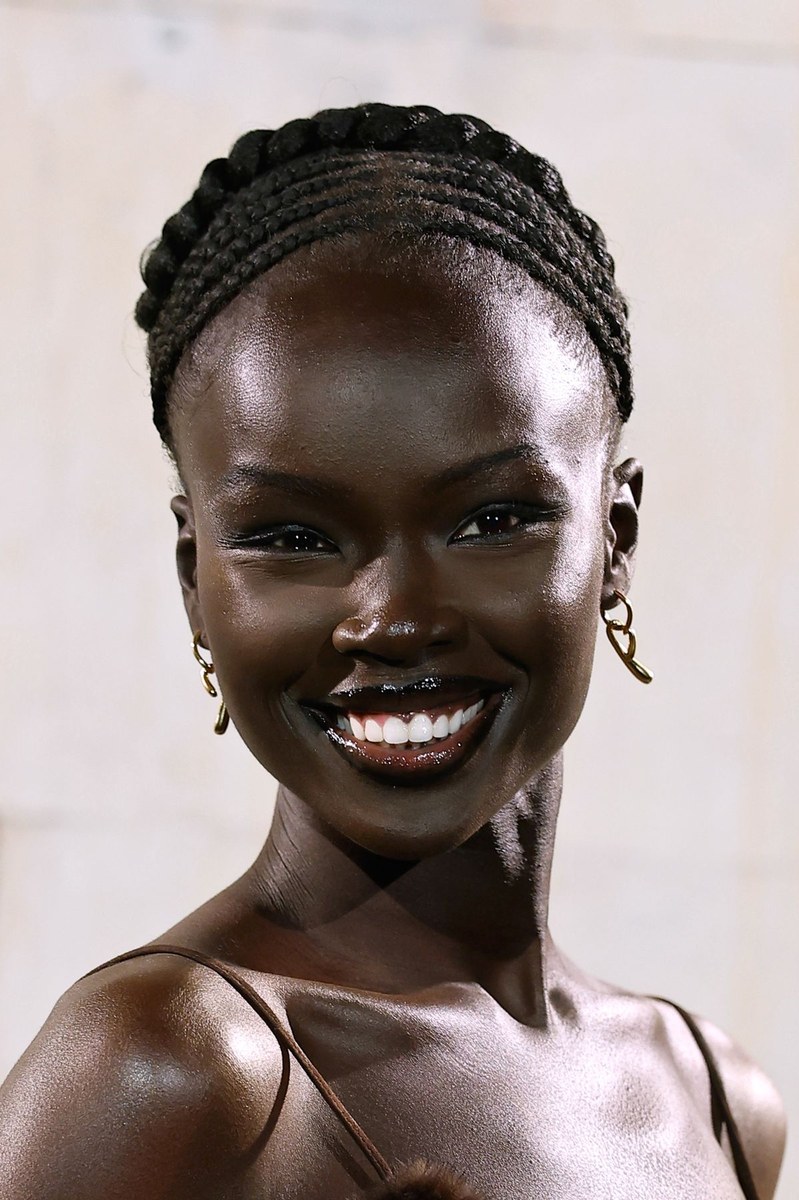
Structured, padded shoulders anchor nearly every look, creating a sharp horizontal line at the top that grounds everything below. Trousers run consistently wide and floor-grazing, from the pinstripe wool pairs in Looks 1 and 2 to the extreme denim volume of Look 4. Look 9 pushes furthest, pairing a fitted long-sleeve polo with a dramatic accordion-pleated skirt overlay that falls to the ankle. At least eight looks feature a cropped jacket ending above the natural waist, functioning as the collection's primary commercial silhouette unit.
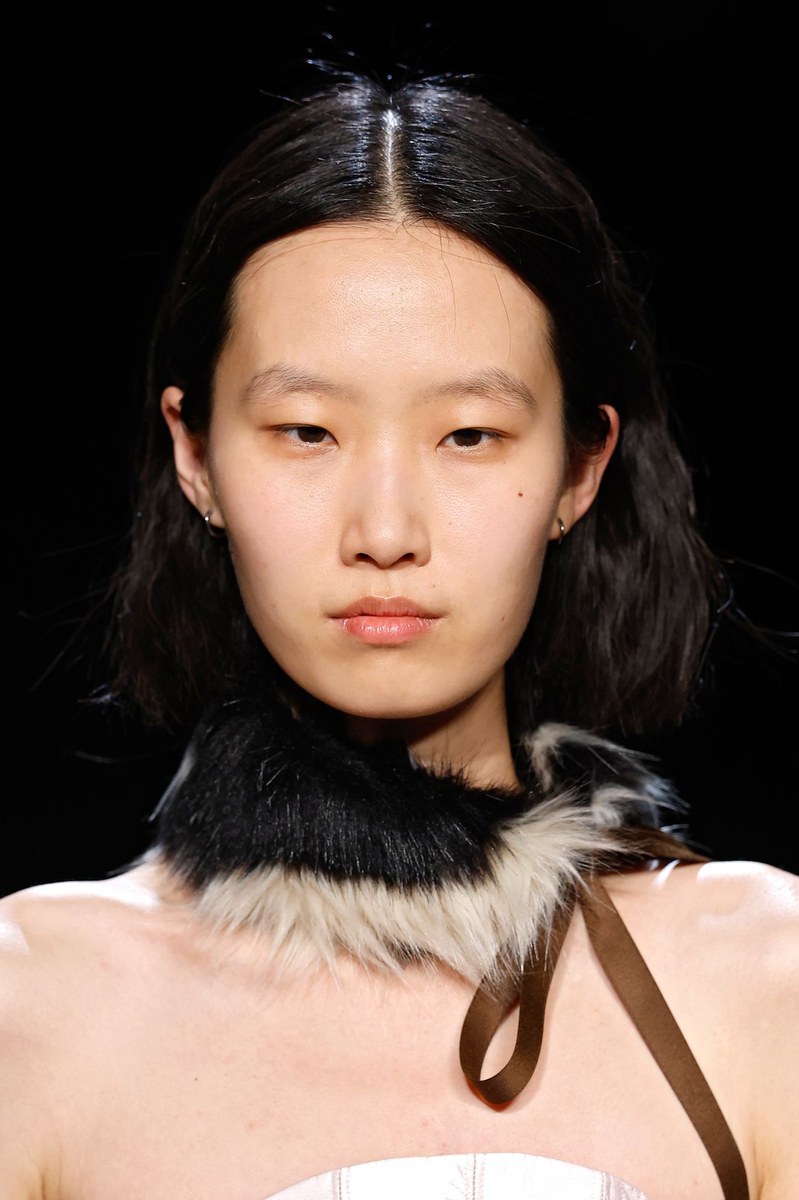
Look 4
Look 4

Color Palette

Heathered grays and navy pinstripes anchor the tailoring-heavy first half, establishing boardroom-adjacent sobriety. Against this, saturated single colors punch through: the magenta turtleneck of Look 5, the cobalt blue shirt in Look 6, the forest green satin of Look 17. Deep burgundy and khaki tones appear in Looks 19 and 8 respectively, softening the severity of the suiting. One vivid color consistently pairs against gray pinstripe, becoming the most repeatable and retail-legible formula across the range.

Look 5
Look 5

Materials and Textures

Pinstripe wool suiting in both mid-weight and heavy grades drives the collection structurally, appearing across jackets, trousers, skirts, and even corset pieces. A crushed velvet bodysuit layered over a grey pinstripe peplum waistband distinguishes Look 6, while black velvet wide-leg trousers add a soft, light-absorbing surface that contrasts sharply with the stiff suiting beneath. Look 8 brings full-length khaki leather, coat and matching trousers, trimmed with dark feather or fur fringe running along the lapels and panels. Suede-finish outerwear in Looks 10 and 4 carries a napped, matte surface that reads as workwear-adjacent without sacrificing a luxury hand.

Look 6
Look 6

Styling and Layering

A consistent internal logic guides the layering strategy: a fluid base layer, typically a satin or silk blouse with a draped turtleneck, sits beneath a structured vest or cropped jacket, with the waist occasionally cinched by a wide corset panel or statement belt. Look 13 exemplifies this cleanly, a white ruffled-cuff shirt under a cropped navy satin blazer with a burgundy cummerbund at the hip. Footwear runs almost exclusively to low-heeled pointed Chelsea boots or loafers in black or burgundy, keeping the proportion grounded. Structured totes with boxy, architectural silhouettes appear in Looks 5, 10, and 15, mirroring the jacket shapes.

Look 13
Look 13

Look by Look Highlights

Look 1 The ivory silk blouse tucked into a sculpted grey pinstripe corset panel over charcoal wide-leg trousers establishes the collection's central construction logic and reads as a three-piece suit replacement for immediate production consideration.

Look 1
Look 1

Look 2 A grey pinstripe sleeveless vest with built-in sculptural shoulder pads worn over a grey satin turtleneck achieves a menswear-to-womenswear translation that works as a separates buy without requiring the full look.

Look 2
Look 2

Look 5 An oversized grey pinstripe double-breasted jacket with elasticated hem worn with a magenta silk turtleneck and black feather-trimmed leather tote stands as the collection's most editorial look and its strongest press placement candidate.

Look 9 A full-length accordion-pleated skirt overlay in matching grey pinstripe creates floor-length ceremonial weight that gives this collection an occasion category and differentiates it from purely daywear tailoring.

Look 9
Look 9

Look 12 Navy pinstripe cropped jacket with deeply curved front seams and gold square buttons over white turtleneck and wide navy trousers represents the most commercially direct and production-ready look in the lineup.

Look 12
Look 12

Look 16 An emerald green structured blazer with tonal three-dimensional floral applique at the left panel, worn over a bronze ribbed turtleneck and grey pinstripe trousers, is the collection's luxury spike and strongest candidate for editorial and retail window placement.

Look 16
Look 16

Look 17 Forest green satin high-neck blouse paired with cognac leather wide-leg trousers decorated with evenly spaced gold square hardware studs signals a clear accessories and leather goods crossover moment with strong sell-through potential in elevated casual retail.

Look 17
Look 17

Look 19 An oversized grey pinstripe blazer with black fur trim at the lapel and cuffs over deep burgundy suede wide-leg trousers creates the collection's strongest cold-weather closing argument and signals where the fur-trim and suede combination can move as a hero product pairing.

Look 19
Look 19

Operational Insights

Corset waistbands: Structured pinstripe corset panels in Looks 1 and 6 function as standalone SKU opportunities. Buyers should consider them as belt-adjacent accessories that activate existing trouser inventory without requiring a full new silhouette build.

Cropped jacket sizing: At least eight looks feature the cropped blazer across suede, wool, satin, and neoprene-finish fabrics. Style directors should note the consistent crop length, ending two to four inches above the trouser waistband, as a fit standard to communicate clearly to production partners and avoid proportion errors at manufacturing.

Pinstripe as base cloth: Navy and grey pinstripe wool serves as the through-line across tailoring, corsetry, and skirt construction. Buyers consolidating fabric sourcing can achieve collection cohesion by committing to one or two stripe widths in multiple weights from the same mill.

Color injection strategy: One saturated accent color per look pairs against neutral suiting. Magenta, cobalt, forest green, mustard, and red each appear once. Product managers building assortments can replicate this by treating satin turtlenecks or blouses as color carriers sold in multiple colorways against a single grey or navy suiting base.

Hardware as category signal: Square gold hardware buttons appear on jackets in Looks 11, 12, 13, and 14, and as stud details on the leather trousers in Look 17. This repeated motif creates a hardware signature that accessories teams can develop into branded buttons or bag hardware, extending the collection's visual identity into a higher-margin product category.

Complete Collection

Look 3
Look 3
Look 7
Look 7
Look 8
Look 8
Look 10
Look 10
Look 11
Look 11
Look 14
Look 14
Look 15
Look 15
Look 18
Look 18
Look 20
Look 20
Look 21
Look 21
Look 22
Look 22
Look 23
Look 23
Look 24
Look 24
Look 25
Look 25
Look 26
Look 26
Look 27
Look 27
Look 28
Patricio Campillo

About the Designer

Patricio Campillo was born and raised in Mexico City, but the grammar of his work was formed outside it, on his family's ranch in the town of Zacualpan in México state, where horses, charro suits, and the accumulated objects of generations shaped what he understood beauty to be. His father kept a collection of charro antiques, and it was only in 2020, when Campillo returned to his family's heritage while rethinking his brand, that he discovered a charro suit his grandfather had given his father on his eighteenth birthday. He pulled it on with a tank top, tight pants, and Cuban heels and understood that this jacket, with its precise shoulder structure and rigorous construction, was the thing he had been circling all along. The suit became the base pattern for the jackets and trousers that would come to define his label. He studied communications and simultaneously pursued an advanced degree in luxury brand marketing, and began his working life writing reviews of fashion shows, an activity that taught him to look at clothes with real analytical attention before he had made any of his own.

In 2012 he moved to Paris and worked as an assistant to Tiffany Godoy, then editor-in-chief of The Reality Show Magazine, a French-Japanese publication known for its sharp, avant-garde editorial stance. It was during this period, attending re-sees and shows and confronting the distance between what fashion was supposed to be and what it had become, that he decided he wanted to make things instead of write about them. A moment at a Yohji Yamamoto show cut through the noise: slow music, a small venue, models walking deliberately, clothes that earned their silence. He returned to Mexico, taught himself to design, made his first collection in 2015, and founded the brand two years later, initially under the name The Pack before renaming it Campillo. He came close to shutting it down before reaching the semi-finals of the LVMH Prize in 2024, the first Mexican designer ever to do so.

The brand works entirely with natural materials: hand-dyed linen, silk, organic bamboo fiber, metal-free leather. Buttons are carved from bone by hand; silver thread is applied by embroiderers in small family workshops in Mexico; tailoring follows the structural logic of charro jackets reinterpreted into silhouettes that blur gender codes. Each collection has been built around a specific Mexican reference: volcanoes for Spring 2025, the repetition embedded in craft traditions for Spring 2026, which reimagined Mexican intrecciato weaving into bombers, button-ups, and trousers. He has shown at New York Fashion Week since 2024, where his AW25 bow — wearing a shirt printed with "El Golfo de México" in response to Trump's executive order renaming the Gulf of America — confirmed that he understands the runway as a platform for something larger than clothes. He remains founder and creative director of Campillo, and the brand is produced in Mexico.

"The Charro culture has been something that I grew up with. My father, his collection of charro antiques and memories of his uncle are things that are deeply rooted in me and are part of my essence."

"There's freedom in repetition, because it allows you to create whatever you want with time. I've done the reinterpretation of the charro suit for maybe eight seasons now. After you do something and perfect it so many times, what does that look like?"

✦ This report was generated with AI — combining human editorial vision with Claude by Anthropic. Because the future of fashion intelligence is already here.