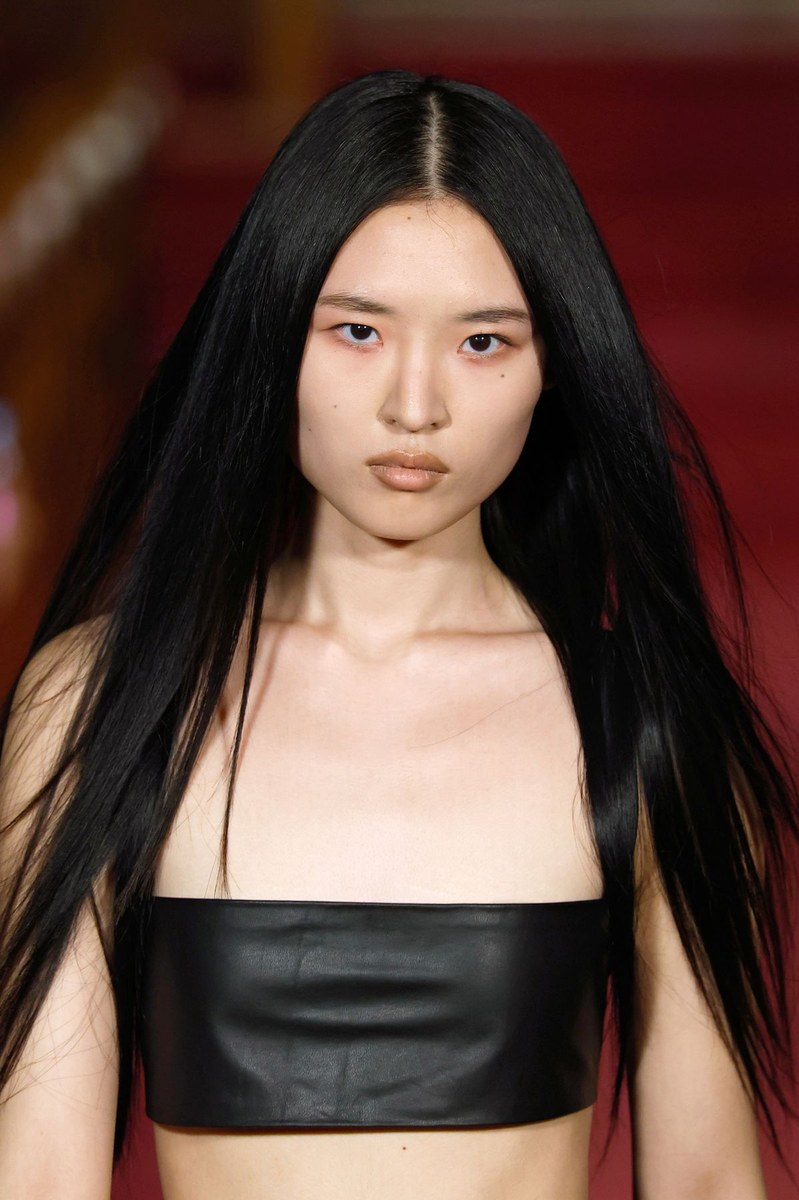
Elena Velez FW26 Women Looks Report

Elena Velez FW26 Women Looks Report
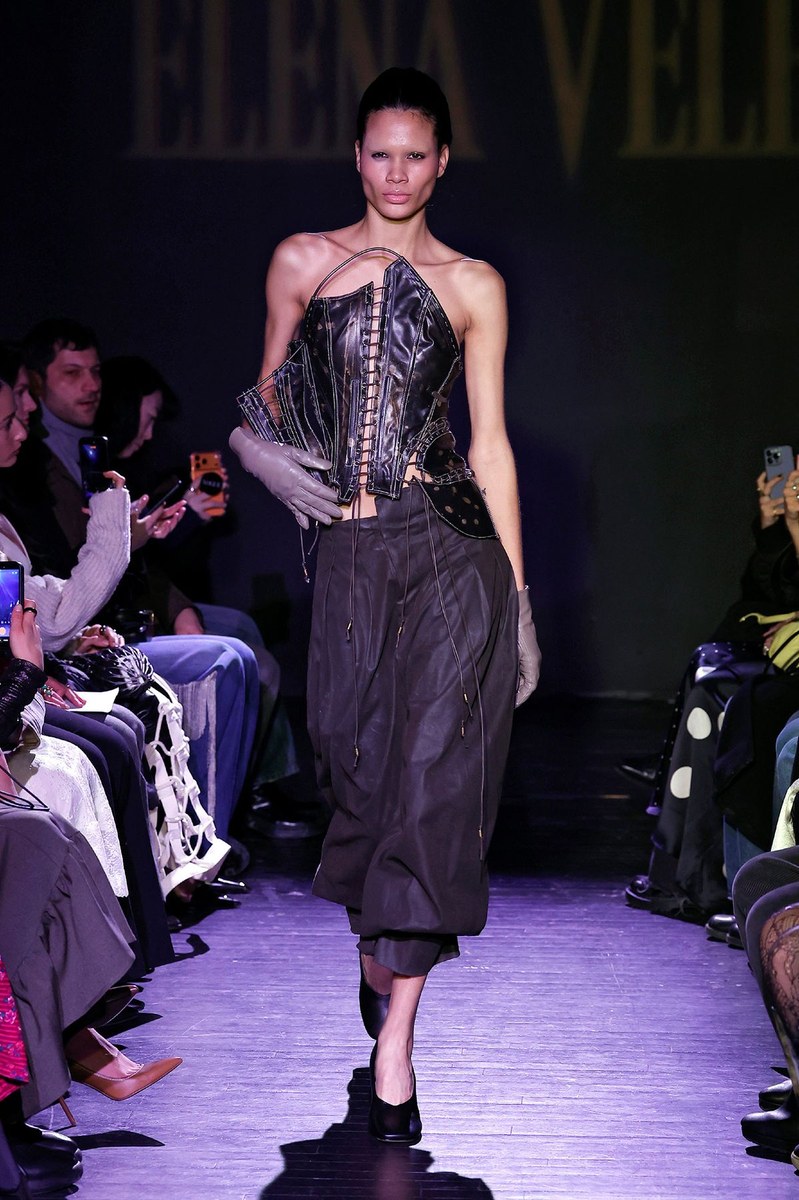
Elena Velez FW26 Women Looks Report

New York Fashion Week

Elena Velez FW26 builds a wardrobe around controlled destruction, pulling corsetry, leather, raw-edge tailoring and distressed knit into a coherent system of deliberate undoing. Buyers will find this collection arrives at precisely the moment the market is hungry for wearable darkness that reads as craft rather than costume.

Silhouette and Volume

The collection alternates between body-compression and drape-heavy release. Corseted torsos appear in Looks 1, 5, 11 and 17, each cinching the waist to a sharp point before volumes either dissolve downward into wide-leg trousers or disappear entirely into bare legs. Looks 2 and 4 work the opposite logic, wrapping the body in relaxed, falling fabric that gathers without structure. Look 6 pulls both impulses into one outfit, pairing an oversized black blazer with slouched, cuffed olive trousers so that volume pools low rather than radiating from the shoulders.
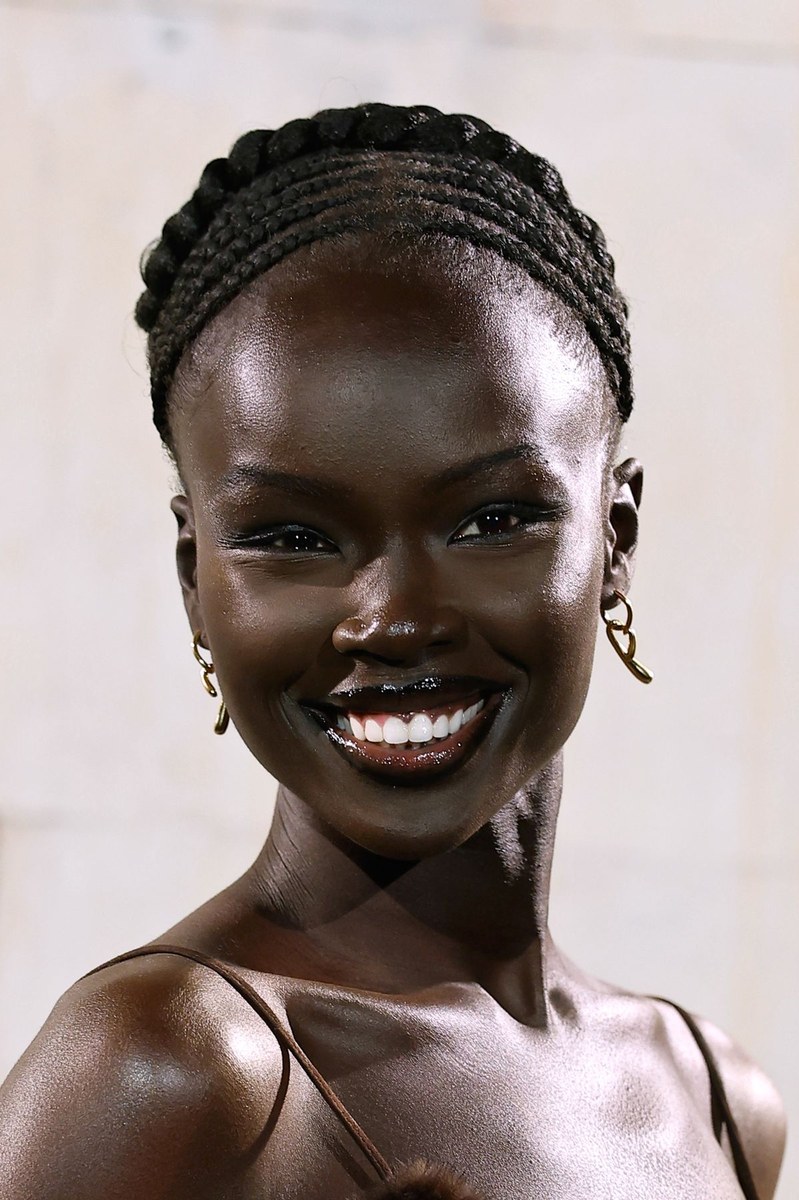
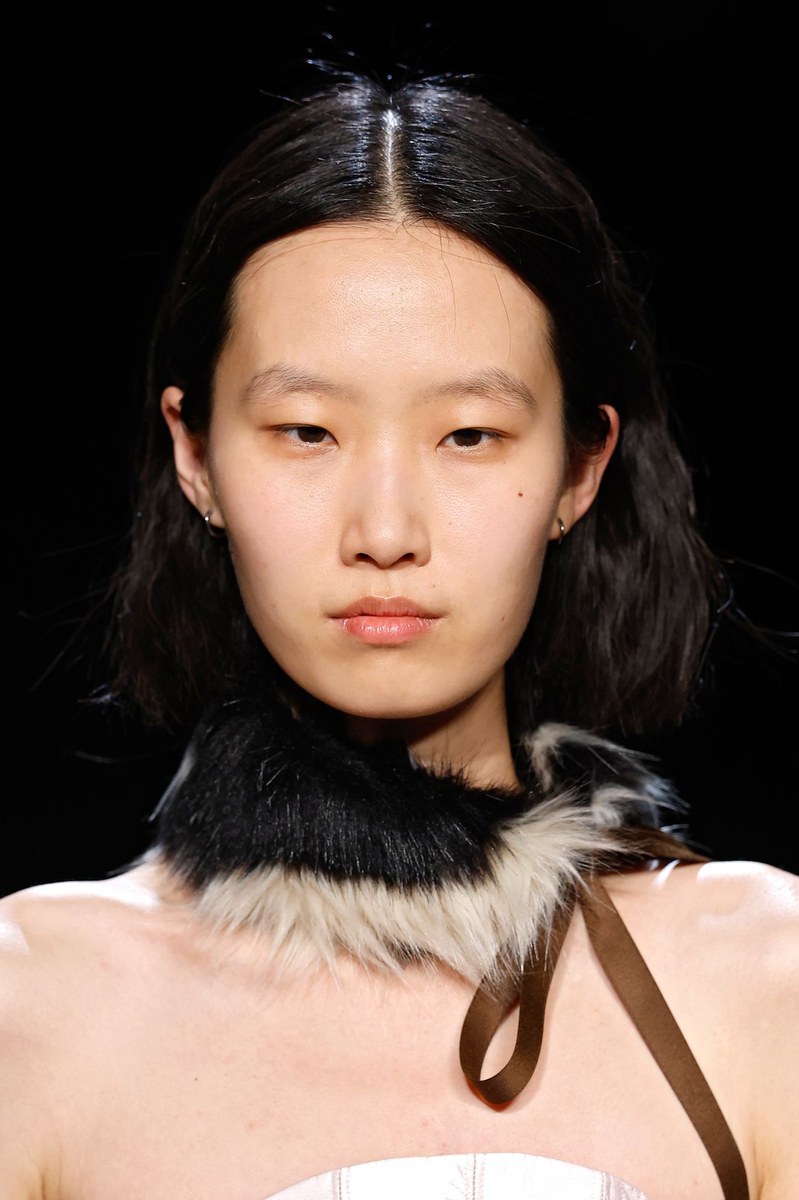
Look 6
Look 6

Color Palette

Near-black dominates, appearing in leather, knit, PVC-effect fabric and denim across the majority of looks. Olive and khaki enter as a consistent counterpoint, visible in Looks 3, 6, 8, 12 and 16, creating a military-adjacent palette that reads as muted and functional rather than camouflage-literal. Nude and pale sand appear precisely where tension is needed, in Looks 5, 12, 13 and 17, placed against dark leather or black mesh so the skin-tone fabric reads as exposure rather than warmth. Look 18 stands apart, where a fine stripe of white on grey introduces a tailoring-world reference that lands with restrained precision.

Look 18
Look 18

Materials and Textures

Leather, both matte and slightly burnished, drives the collection structurally, appearing in corsets, jackets and skirts across Looks 1, 5, 8, 9, 11 and 16. In Looks 4 and 7, the PVC-adjacent crinkled fabric sits at the heavy end of the material spectrum, with a crushed, reflective surface that behaves somewhere between liquid and rigid. Distressed open-knit appears in Looks 2 and 14, the former almost entirely destroyed across the chest, the latter sliding off the shoulder as an oversized pull. Suede in muted olive adds a napped, matte softness in Looks 12 and 16 that offsets the harder materials elsewhere without softening the overall mood.

Styling and Layering

Long black gloves recur across multiple looks, functioning less as an accessory and more as an extension of the sleeve or a second skin layer, most visible in Looks 4, 13 and 15. Footwear splits cleanly between two registers: platform sandals and chunky open-toe shoes ground the grittier looks, while low block-heel pumps in white or black close the cleaner silhouettes, appearing in Looks 10, 14 and 18. Double-belt constructions appear at the waist in Looks 9 and 16, reading as structural detail rather than afterthought. Velez treats accessories as integrated construction elements, not finishing touches, as evidenced by the suede cowl draped around the neckline in Look 18 and the sculptural leather hat in Look 10.

Look by Look Highlights

Look 1 The black leather lace-up corset worn over wide olive-grey trousers with dangling hardware cords serves as the collection's thesis piece. Its construction complexity makes it the highest-barrier production item for any licensee or wholesale partner.

Look 1
Look 1

Look 5 A heavily distressed black leather jacket with structured military shoulders worn over a nude bodysuit and black lace-up boots reads as the most commercially transferable leather piece in the lineup. It functions independently from the full styling context.

Look 5
Look 5

Look 7 The black crinkled PVC-effect gown with a sweetheart bust and puff sleeves carries the strongest seasonal reference to eveningwear, making it the clearest entry point for specialty retailers serving occasion-dress categories.

Look 7
Look 7

Look 9 A cropped black leather jacket over grey-green washed low-rise jeans with a double-buckle belt and lace-up combat boots is the most street-ready look in the collection and the strongest candidate for direct wholesale translation.

Look 9
Look 9

Look 11 The tan and black leather lace-front bra-and-skirt combination, worn with knee-high sheer stockings and no additional layering, is the collection's most editorial look. Magazine placement suits it better than immediate retail adoption.

Look 11
Look 11

Look 17 A white cotton shirt with exaggerated puff sleeves layered under a black mesh and lace corset over sheer tights and tall black boots collapses intimate apparel and tailored shirting into a single construction. Production presents a challenge, though strong sell-through potential exists in the right retail environment.

Look 17
Look 17

Look 19 The sculptured white cotton shirt with intentional crushed pleating and French cuffs worn with straight black trousers addresses a male or gender-fluid buyer. Its restraint relative to the rest of the collection signals meaningful range extension potential.

Look 19
Look 19

Look 18 The fitted pinstripe jacket with a suede bandana cowl draped at the throat over a high-slit wrap skirt represents the collection's most refined construction moment and the clearest path to a premium ready-to-wear price point.

Operational Insights

Leather sourcing: Multiple leather weights and finishes work simultaneously throughout the collection, so buyers commissioning production need to secure at minimum three grades, matte heavyweight for corsets, medium burnished for jackets, and lightweight for bra constructions, from the same tannery. Color consistency across a single delivery depends on it.

Corset construction capacity: Looks 1, 11 and 15 require lace-front corset construction with integrated boning channels and multi-panel leather assembly. Style directors should assess whether their current manufacturing partners have the specialized sewing capacity before committing to these SKUs as core assortment.

Commercial entry points: Looks 9, 5 and 3 carry the lowest construction complexity relative to aesthetic impact, making them the logical candidates for a first-buy order for multi-brand retailers testing the Velez customer for the first time.

Knitwear as statement, not filler: The destroyed open-knit in Look 2 and the off-shoulder chunky rib in Look 14 both require intentional placement in a buy. Neither reads well as a standalone piece without the surrounding wardrobe context, so product managers should plan them as part of a curated capsule rather than individual SKUs.

Look 2
Look 2

Gender-fluid ranging: Look 19 and Look 2 both sit outside the conventional womenswear silhouette frame and speak directly to a gender-neutral customer. Buyers for stores with a demonstrated non-binary customer base should treat these two looks as a test assortment with strong potential to outperform category averages.

Complete Collection

Look 3
Look 3
Look 4
Look 4
Look 8
Look 8
Look 10
Look 10
Look 12
Look 12
Look 13
Look 13
Look 14
Look 14
Look 15
Look 15
Look 16
Look 16
Look 20
Look 20
Look 21
Look 21
Look 22
Look 22
Look 23
Look 23
Look 24
Look 24
Look 25
Look 25
Look 26
Look 26
Look 27
Look 27
Look 28
Look 28
Look 29
Look 29
Look 30
Look 30
Look 31
Look 31
Look 32
Elena Velez

About the Designer

Elena Velez grew up in Milwaukee as the only child of a single mother who captained cargo vessels on the Great Lakes. Her childhood ran alongside Great Lakes ports, metal shops, and shipyards — industrial spaces that most people her age would never think twice about but that she absorbed as aesthetic raw material. Of Puerto Rican heritage, she grew up straddling worlds: the heavy, functional America of the Midwest and the charged question of what femininity looks like when it isn't being sold back from a runway in Paris or New York. She was interested in design from early childhood, documented already on local television as a teenager, but initially aimed for a more practical future, attending Milwaukee's Spanish immersion and language schools with plans to work as a government translator. It was acceptance to Parsons that redirected everything. She studied first at the Paris campus, then graduated from the New York school in 2018 with a BFA in fashion design and a minor in creative entrepreneurship, and later completed a graduate diploma at Central Saint Martins in 2020.

She launched her label with minimal capital and no industry connections, working with salvaged ship sails from her mother's yard and metal sourced from Milwaukee fabricators, building a practice that was materially specific from the start. Her thesis collection showed at VFILES and London Fashion Week in 2018; by 2019 Anna Wintour had named her a Teen Vogue Generation Next designer. The official company, Elena Velez Industries Inc., was formed in February 2021 with early investment from Milwaukee-based firms, and the brand's momentum accelerated sharply from there. She won the CFDA Emerging Designer of the Year award in 2022, was inducted as a CFDA member in 2023, and reached the semi-finals of the LVMH Prize in 2024. Her work entered the collections of the V&A Museum and the Barbican Centre.

The clothes operate in the space between damage and precision, between something that looks like it survived an event and something cut with complete intention. She describes her visual identity as "aggressively delicate" and "anti-fragile," and her reference pool runs from the metalsmithing traditions of the American Rust Belt to what she calls "apocalyptic anti-heroines" — women who are matriarchal and transgressive at the same time. Julia Fox, Rosalía, Grimes, and Solange have all worn the work; her runway shows have involved incense, live performance, and in February 2026, a collaboration with streamer Clavicular that attracted strongly divided reviews and accusations of platforming controversy. Velez has been consistent in her willingness to push into territory the industry finds uncomfortable, framing alignment as distinct from endorsement and dissent as the only credible artistic position available. She designs and runs the label from New York, where she remains founder and creative director.

"I think I'm uniquely positioned to inject a sort of candor that is very diametrically opposed to the way the industry historically has been run. I have the life experiences and the credentials and the authenticity of my own origin story to be able to challenge that status quo in a meaningful and good faith way."

"You get punched in the face every day as a small business owner. You just have to wake up the next day and say, 'It feels really good to be punched in the face again.' After time, you've constructed something with blood, sweat and tears. It's formative, tangible and exciting. That's why we keep doing it."

✦ This report was generated with AI — combining human editorial vision with Claude by Anthropic. Because the future of fashion intelligence is already here.