Fashion East - Goyagoma FW26 Bags
Fashion East, Goyagoma FW26 Bags Report
Goyagoma's FW26 accessories direction centers on the tactile clutch, built entirely from shearling and curly lamb textures in a minimal, handle-free format. For buyers and product managers, this signals a clear consumer appetite for sensory materiality over hardware-driven status, a shift worth factoring into Q3 and Q4 assortment planning now.
Silhouettes and Shapes
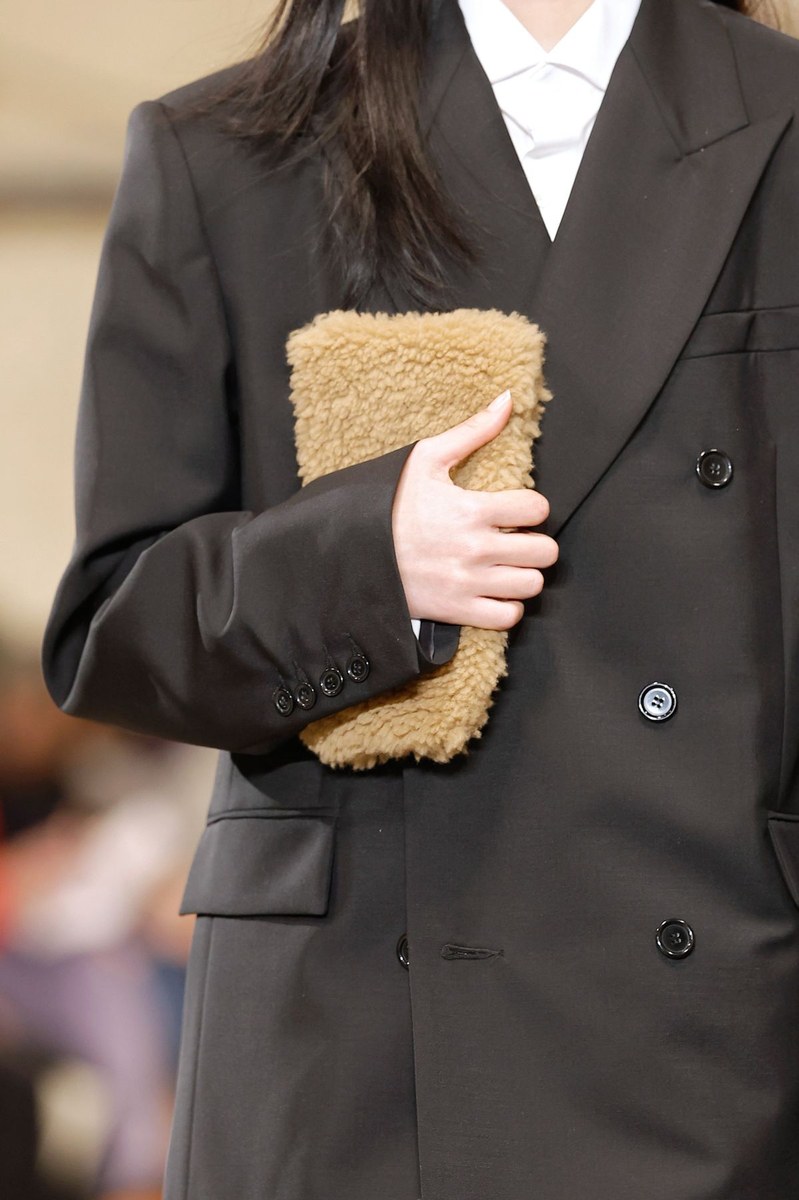
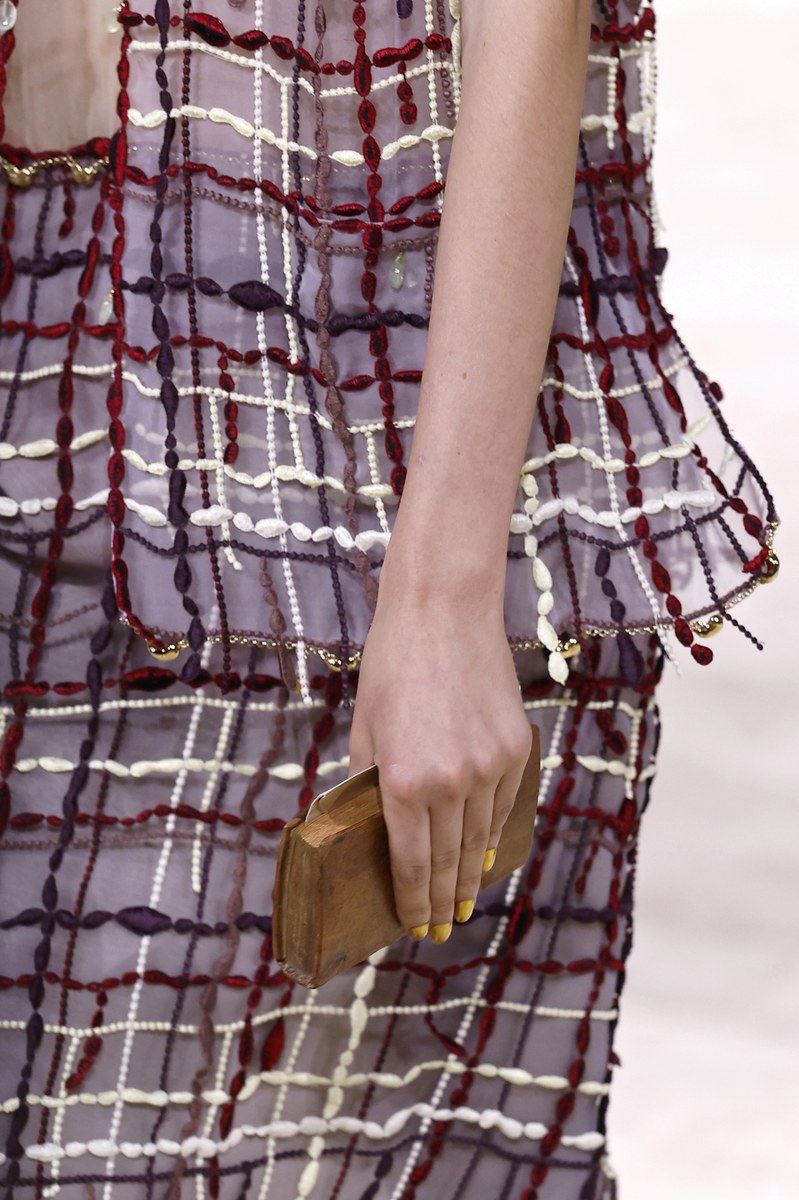
Both bags follow a compact, rectangular clutch format, held directly in the hand with no strap, chain, or top handle present. Bag 1 reads slightly larger, with a fuller, more padded profile that the shearling pile inflates further. Smaller and flatter in the hand, Bag 2's curly lamb texture pulls the silhouette into a denser, more compressed form. Both sit low and relaxed against the body rather than displayed outward.
Materials and Hardware
Bag 1 is constructed from camel-toned shearling, with a medium-length pile that reads soft and voluminous. Black curly lamb comprises Bag 2, tightly coiled and dense, which gives it a heavier, more sculptural surface quality. Neither bag carries visible hardware, closures, or metal detailing of any kind. Construction appears intentionally minimal, with no visible seaming, piping, or contrast stitching from the runway distance.
Color Direction
The two-bag palette runs a tight tonal axis from camel to black, both grounded and seasonally legible for fall. Bag 1's warm camel reads against the charcoal suiting as a deliberate temperature contrast, injecting softness into an otherwise austere look. Bag 2's full black aligns with the black satin gown for a tone-on-tone effect, where the bag reads as a textural accent rather than a color statement. Together the palette signals a buy-safe, broad-market color strategy with high outfit compatibility.
Key Models and Details
The dominant model across both looks is a handle-free rectangular clutch, sized between a phone wallet and a standard evening clutch. No closures are visible, suggesting either a simple envelope fold or a concealed internal magnet. Logo treatment is absent entirely, positioning these bags firmly within the logoless luxury bracket that continues to hold traction with the premium contemporary consumer. Production complexity stays low with hardware absent across both models, keeping material cost concentrated in the textile itself.
Bag by Bag Highlights
Bag 1 A camel shearling clutch with generous pile depth that creates a soft, pillow-like silhouette. This makes it the warmer and more commercial of the two in terms of broadened retail appeal.

Bag 2 A black curly lamb clutch with a tightly coiled surface that reads more directional and editorial. This style suits a tighter, trend-forward buy rather than a depth replenishment.

Bag 1 Tucked flat against the blazer body, the carry position reinforces a daytime styling context. This widens its potential placement from evening departments into tailoring-adjacent ready-to-wear floors.
Bag 2 All-black material-on-black outfit pairing demonstrates a clear evening and occasion positioning. This supports a formalwear or event accessories slot in retail planning.
Bag 1 The camel colorway aligns with existing neutral shearling momentum in the accessories market, reducing adoption risk for buyers entering the texture clutch category for the first time.
Bag 2 Curly lamb surface differentiates from the more common flat or long-pile shearling options currently saturating mid-market. Premium or boutique placement becomes a stronger argument with this distinction.
Operational Insights
Material sourcing: Both bags require either genuine shearling or curly lamb, or high-quality faux alternatives. Buyers should open conversations with textile mills now given lead times for quality shearling simulation fabrics that hold pile structure through the selling season.
Hardware elimination: The complete absence of metal components across both styles reduces unit cost and simplifies production, making this a viable direction for brands looking to maintain margin at accessible price points without sacrificing a premium material story.
Size calibration: The compact clutch format sits below standard day bag functionality, positioning these as a secondary or occasion purchase. Buyers should plan accordingly and avoid over-indexing on depth for this silhouette.
Color sequencing: Camel should enter the assortment ahead of black in terms of volume commitment. Camel carries broader outfit compatibility and lower return risk, while black curly lamb functions better as a tight, differentiated style within the range.
Retail placement: The logoless, hardware-free construction places both bags in the premium contemporary or advanced contemporary bracket. Mass or accessible channels will need a branded element or price repositioning to move these silhouettes at volume.
✦ This report was generated with AI — combining human editorial vision with Claude by Anthropic. Because the future of fashion intelligence is already here.