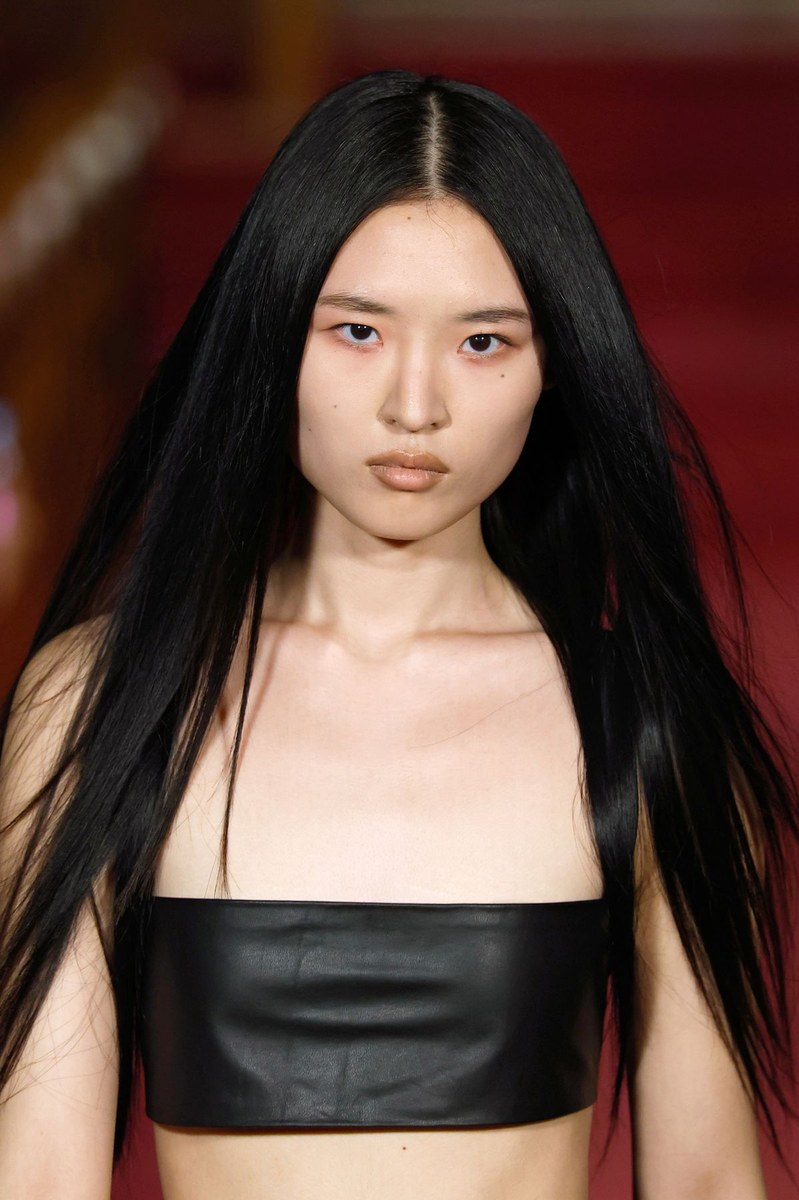
Frederick Anderson FW26 Women Looks Report

Frederick Anderson FW26 Women Looks Report
Frederick Anderson FW26 Women Looks Report

New York Fashion Week

Frederick Anderson builds his FW26 collection around the tension between exposure and structure, threading sheer fabrics, fringe, and lace through body-conscious silhouettes that read as both sensual and deliberately crafted. For buyers working in the contemporary eveningwear and special occasion segments, this collection arrives at a moment when customers are actively seeking pieces that feel dressed up without reading as conventional formalwear.

Silhouette and Volume

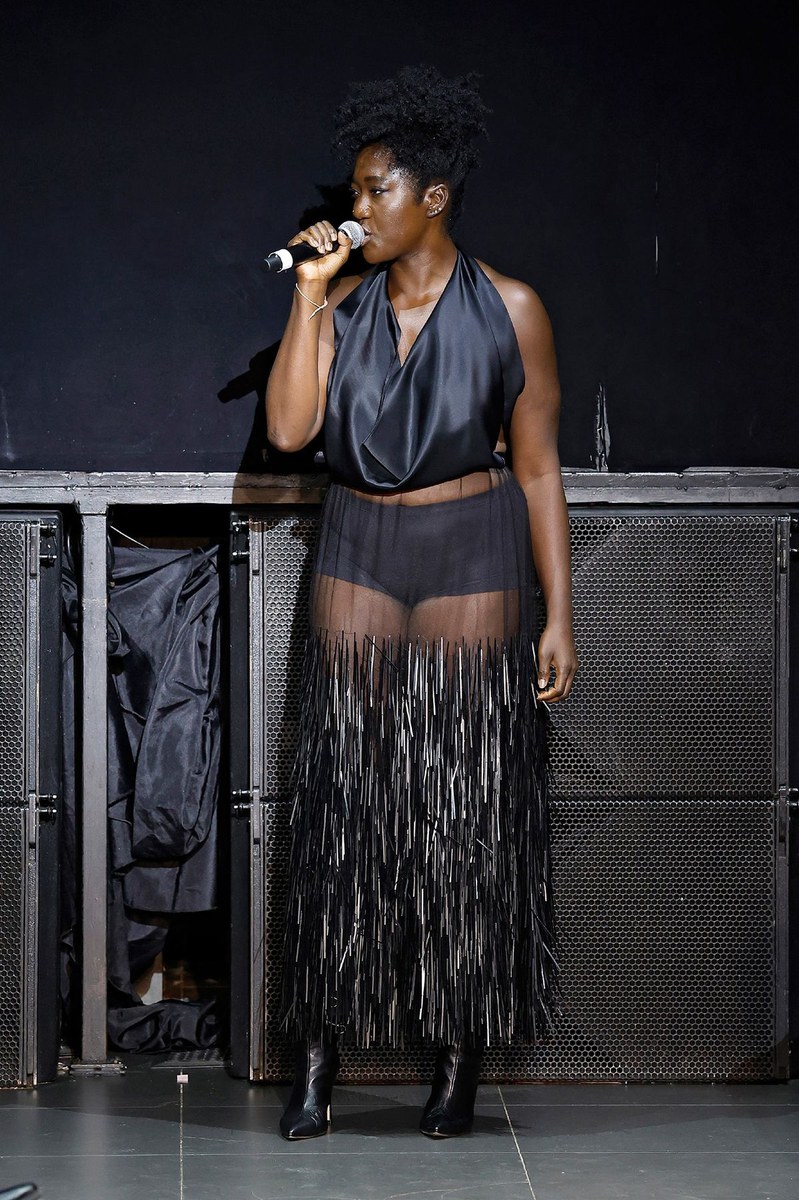
Most looks hold tightly to the body through the torso, with volume released only through fringe movement (Looks 1, 11, 16, 18) or a single flared skirt (Look 3). Midi and knee-length pencil silhouettes dominate the runway, reinforced by sheath cuts in Looks 2, 4, 5, and 17. Look 3's fit-and-flare and the wide-leg trouser of Look 19 stand out as genuine departures, both serving as commercial pivot points within an otherwise sleek lineup. Narrow proportions at the shoulder and hip make the fringe and sheer panels the primary sources of visual motion rather than structural volume.
Look 3
Look 3

Color Palette

Black anchors the entire collection. Nearly every look reads as pure black, with surface variation in texture and transparency doing the work that color shifts would do elsewhere. Look 17's cobalt blue lace and the blue plaid of Looks 11, 12, and 13 form the only true color departure, creating a secondary palette story that could be merchandised as a distinct capsule. Look 19 breaks away entirely with head-to-toe silver sequin, functioning as a finale statement rather than a repeatable commercial color.

Look 17
Look 17

Materials and Textures

Lace, sheer mesh, and fringe carry the heaviest workload. The lace ranges from dense floral Chantilly in Looks 5, 6, and 17 to a woodgrain-printed sheer in Looks 10, 12, and 14, which reads as a proprietary print application on a lightweight mesh base. Boucle-style tweed with embedded metallic thread appears in Looks 4, 8, and the coat in Look 11, adding weight and tactile contrast to the otherwise delicate surface vocabulary. Leather or leather-look panels anchor Looks 7 and 9, where cut geometric shapes are applied onto sheer grounds to create structural patterning without lining.

Look 11
Look 11

Styling and Layering

Longline coats and open blazers layer consistently over lingerie-adjacent bodysuits or fringe skirts, as seen in Looks 8, 11, 14, and 15. This creates a clear commercial formula: a statement innerwear piece paired with a cover-up, giving buyers two SKUs per outfit that can be sold separately or together. Footwear runs almost entirely to black strappy block-heeled sandals with ankle straps, keeping the styling neutral and directing all attention to the garments themselves. Closed-toe black pumps in Looks 8 and 12 shift those looks toward a more polished, boardroom-adjacent register.

Look by Look Highlights

Look 1 The draped black satin halter top paired with a leather fringe midi skirt over a sheer base establishes the collection's central fringe-and-exposure thesis. It reads as the strongest opening commercial statement for evening retail.

Look 1
Look 1

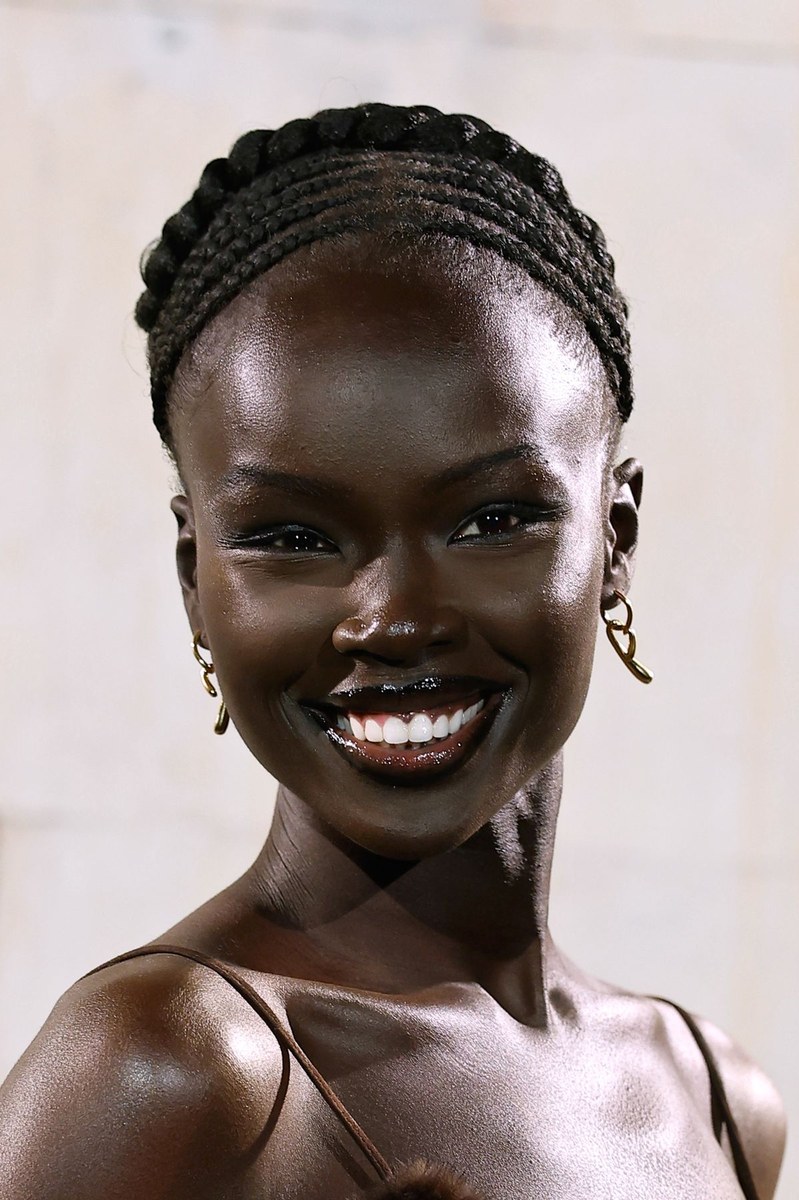
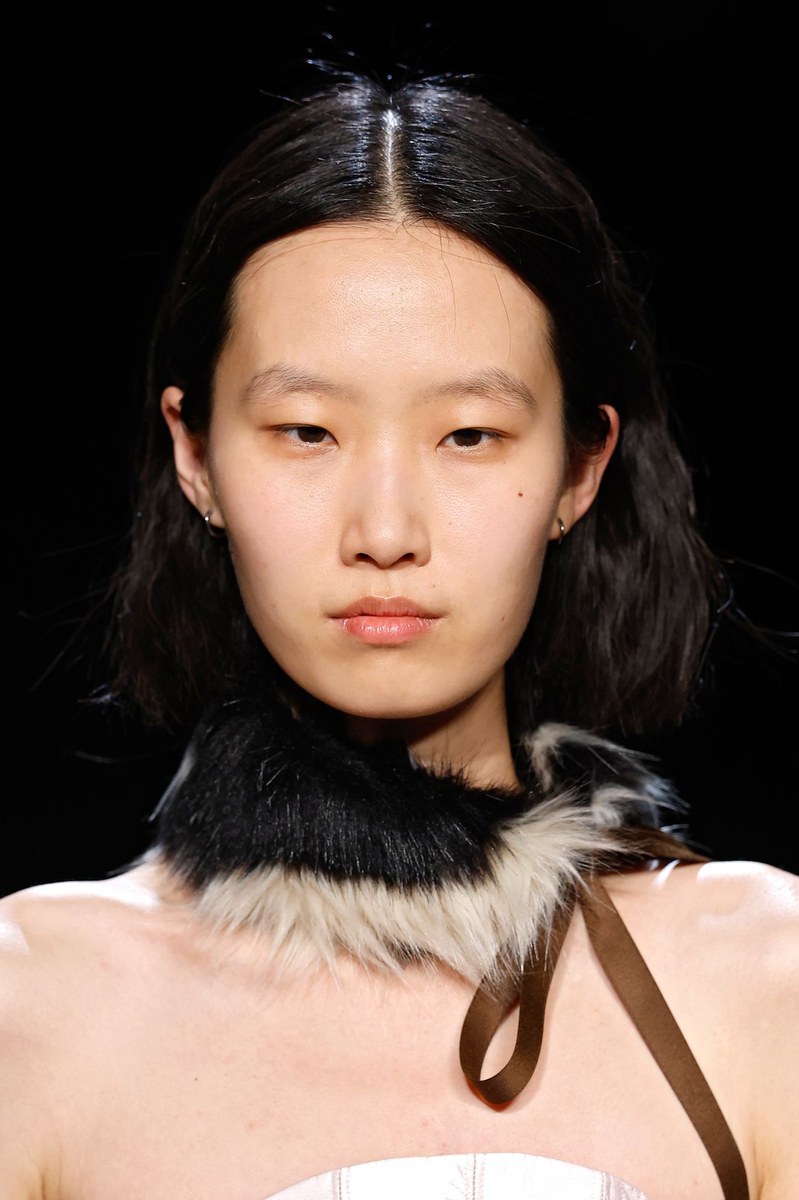
Look 3 The deep-V halter mini in black glitter fabric with a full flared skirt is the clearest buy for contemporary bridal party and cocktail occasion, requiring no styling to land on the sales floor.

Look 4 The black metallic tweed sheath with waist-cut lace inserts balances coverage with visual tension and targets the customer who wants occasion dressing with structural integrity rather than pure sheerness.

Look 4
Look 4

Look 9 The leather geometric applique mini over a sheer base demonstrates a construction technique worth flagging for product managers. The cut-and-applied leather work on mesh can drive strong unit price without heavy material cost.

Look 9
Look 9

Look 15 The cobalt blue lace coat over a black fringe bodysuit is the strongest layering look of the collection for buyers building coordinated sets, offering a clear coat-plus-bodice story with strong color contrast.

Look 15
Look 15

Look 17 The full cobalt blue lace sheath with cap sleeves and scalloped hem is the most accessible piece in the color capsule and will perform for any buyer targeting formal occasion wear in a non-black color option.

Look 18 The spaghetti-strap black fringe gown in tiered layers reads as the gala or red-carpet anchor. Given its sheer construction, it will require thoughtful in-store photography and fit guidance to convert at retail.

Look 18
Look 18

Look 19 The all-over silver sequin wide-leg suit with a cropped wrap blazer is a singular piece that reads as a wardrobe moment rather than a collection staple, best positioned for editorial pull or limited capsule placement.

Look 19
Look 19

Operational Insights

Fringe as a core material investment: Fringe appears in at least six looks across multiple silhouettes, meaning buyers who commit to fringe-heavy SKUs (Looks 1, 11, 14, 16, 18) are working with the designer's clearest volume intention. A fringe capsule with strong internal coherence is entirely feasible.

Sheer base construction: Nearly every look relies on a sheer mesh or chiffon ground layer. Production and quality control teams must plan for consistent mesh opacity levels and seam finishing standards that hold up under event lighting.

Two-piece retail strategy: The coat-over-bodice formula in Looks 8, 11, 14, and 15 supports a deliberate sell-through approach where buyers can ticket each piece independently. This increases average transaction value per outfit and reduces dependence on coordinated set sales.

Color capsule viability: The cobalt blue lace and plaid grouping (Looks 11, 12, 13, 15, 17) is self-contained enough to be bought as a focused color story for stores that want a non-black evening option without committing to the full collection. Plaid-to-lace fabric pairing within that group gives buyers a textural variety argument.

Sizing and transparency communication: Given the volume of sheer and fringe silhouettes across the collection, style directors should prepare size-inclusive merchandising plans early. Lack of lining in most looks requires careful fit communication across size ranges to avoid return rate issues in direct-to-consumer channels.

Complete Collection

Look 2
Look 2
Look 5
Look 5
Look 6
Look 6
Look 7
Look 7
Look 8
Look 8
Look 10
Look 10
Look 12
Look 12
Look 13
Look 13
Look 14
Look 14
Look 16
Look 16
Look 20
Look 20
Look 21
Look 21
Look 22
Look 22
Look 23
Look 23
Look 24
Look 24
Look 25
Look 25
Look 26
Look 26
Look 27
Look 27
Look 28
Look 28
Look 29
Look 29
Look 30
Look 30
Look 31
Look 31
Look 32
Look 32
Look 33
Look 33
Look 34
Look 34
Look 35
Look 35
Look 36
Frederick Anderson

About the Designer

Frederick Anderson was born in Memphis and raised in Fayetteville, North Carolina, in a household where artistic discipline arrived early. He studied violin and piano, took ballet seriously, and drew constantly — the kind of childhood resume that points less toward fashion and more toward a general appetite for form and performance. He attended the North Carolina School of the Arts before moving to New York City, where his first professional engagement had nothing to do with clothes: he joined the Broadway cast of Cats, wearing a furry unitard in front of three thousand people every night. When that chapter closed, he landed in the world of experiential events, producing activations for 7th on Sixth — Fern Mallis's vehicle for American fashion week — and eventually working with Condé Nast on the launches of Self, Cargo, and Domino magazines. He could illustrate, he could produce, he could read a room. Fashion was always nearby; he just hadn't walked through that door yet.

The door opened when he met Douglas Hannant at FIT in 1991. The two studied together, fell into a relationship, and soon launched what would become one of New York's most exclusive made-to-order lines. Anderson ran the business operations and shaped the creative vision while the label operated under Hannant's name alone — a deliberate decision, Anderson has explained, rooted in the reality of the early 2000s market, where no major Black designer held a visible position and the industry simply wasn't prepared to buy luxury from one. Their clients didn't know or didn't ask: Beyoncé, Charlize Theron, Jennifer Hudson, and Janet Jackson wore the clothes. Geoffrey Beene, who took them to lunch and walked the New York streets with them watching people build their own identities, served as an informal mentor. Anderson departed in 2014, went on to serve as president of the Hanley Mellon Collection, and then, after Matthew Mellon's death unraveled that project, finally sat still long enough to consider what he actually wanted to say.

In 2017 he launched under his own name, starting with a capsule called "Black Like Me" and following with the full Frederick Anderson Collection in 2018. The clothes are cut from couture-weight fabrics, often layered with hand-crocheted pieces made by artisans in Buenos Aires, and they move between the tailored and the festive without landing fully in either camp. The references are wide but grounded: he admires Jean Paul Gaultier for the way he takes an audience on a journey, Yves Saint Laurent for proportion, and Geoffrey Beene for the problem-solving intelligence embedded in every seam. The label won the Fashion Group International Rising Star Award in Womenswear in 2022, and Anderson opened a flagship store in NoMad shortly after. He continues to show at New York Fashion Week, where his Fall 2026 collection drew from the blues — a direction that felt, from the outside, both surprising and completely logical.

"The stereotypical idea of what Black women look like is changing, the way we look at race. I love that story. That's the story I want to tell now."

"I have missed being in the work room and having my hands on clothes."

✦ This report was generated with AI — combining human editorial vision with Claude by Anthropic. Because the future of fashion intelligence is already here.