Haute Couture FW26 Details: The Trend Report
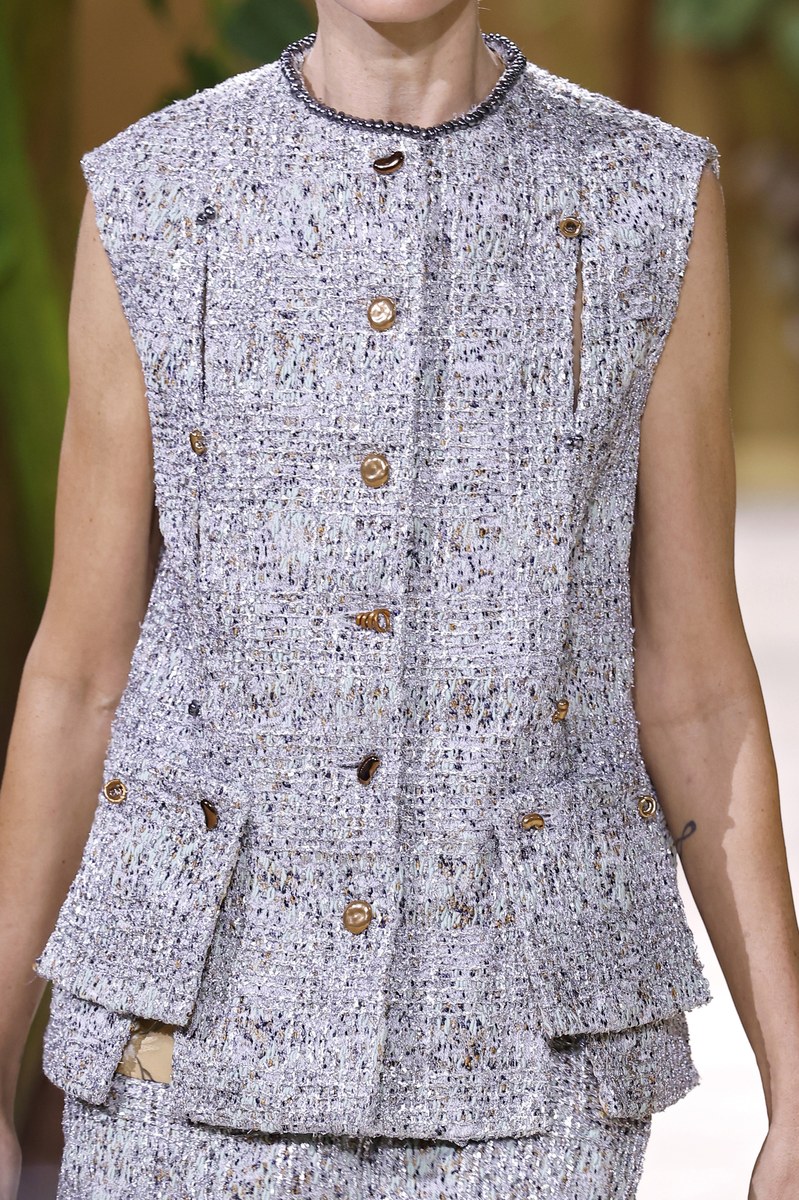
The Fall/Winter 2026 Haute Couture season in Paris delivered a decisive collective argument: embellishment is no longer decorative afterthought but structural logic. Across maisons ranging from long-established houses to independent ateliers, the dominant signal was craft as primary commercial language. Surface manipulation, dimensional appliqué, sculptural headwear, and material-driven jewelry replaced conventional hardware and logo markers as the season's key propositions, positioning tactile complexity and visible hand-work as the primary justification for couture-level investment.
Embellishment & Embroidery
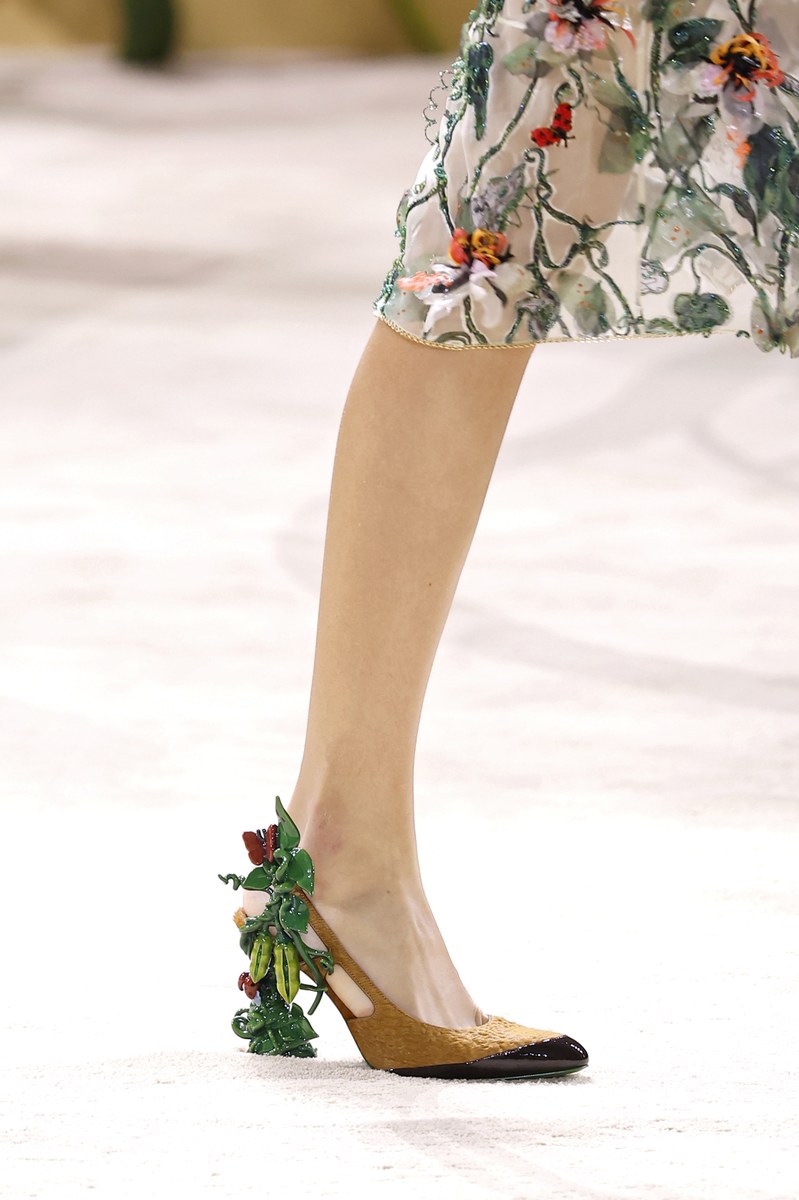
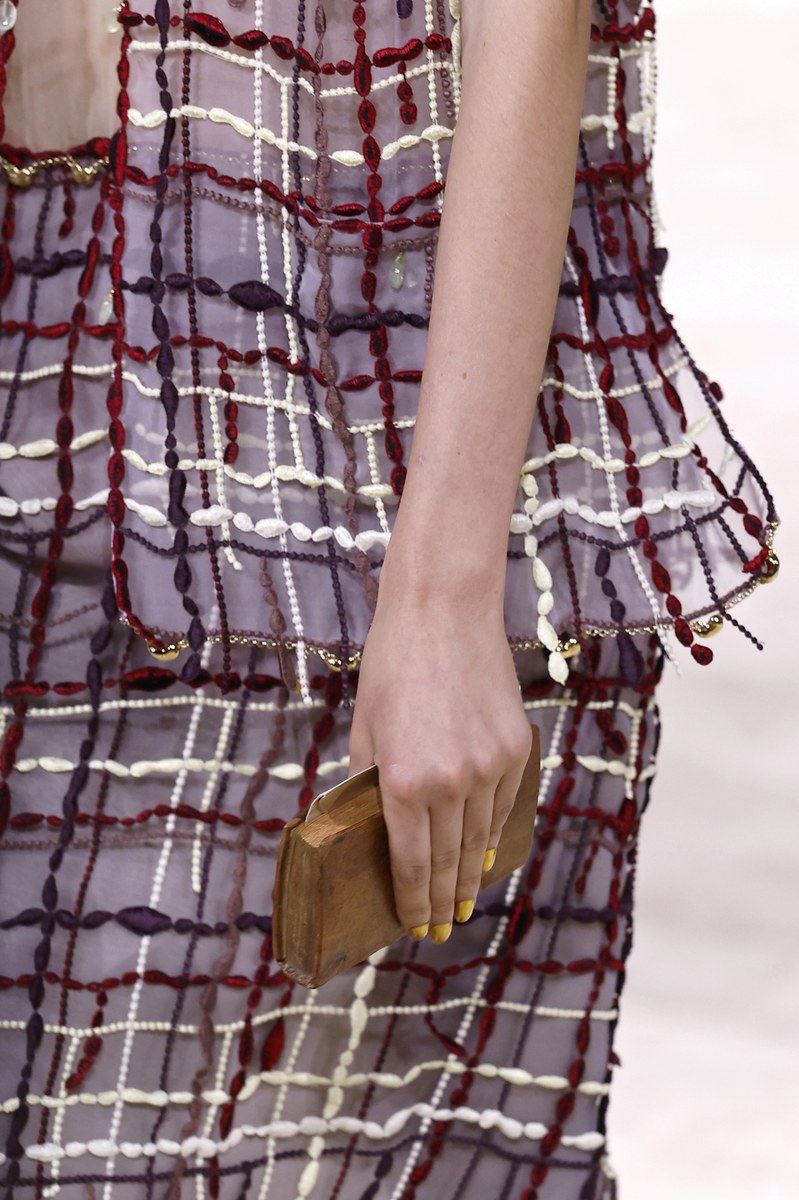
Three-dimensional appliqué and layered surface embellishment dominated the season with consistent cross-maison urgency. Balenciaga delivered dimensional petal appliqués and velvet motifs on sheer embroidered grounds, building gold daisy clusters into chainmail-like density, while Celia Kritharioti layered crystal appliqué, ostrich feathers, metallic braid, and freshwater pearls onto velvet, tulle, and metallic satin bases with maximum decoration density. Elie Saab built branching crystal embroideries and three-dimensional floral appliqués following body contours, with frayed silk edges on Chantilly lace introducing strategic rawness as a counterpoint to richness. Zuhair Murad pursued maximalist naturalism through hand-applied three-dimensional floral appliqué, ostrich feather borders, and crystal-traced boning, while Rahul Mishra anchored hand-applied beadwork, metallic cord passementerie, and laser-cut lace appliqué on sheer bases with visible layering. The consistent thread across these maisons is embellishment that reads as additive architecture rather than applied decoration: each layer justifies its presence structurally.
Alexis Mabille layered bullion thread, silk ribbon, beading, and sequins into densely embroidered bodices, positioning these pieces as collector-grade against cleaner silhouettes in the same lineup. Manish Malhotra collapsed decoration and construction entirely, using metallic bugle beads, impasto-textured acrylics, and sculptural three-dimensional appliqué as load-bearing design elements. Germanier took a material-science approach, building geological texture from chunked sequin clusters, tightly packed seed beads producing topographic surfaces, and molded rubber spikes, eliminating separate accessories in favour of embellishment as embedded accessory layer. The season collectively elevates hand-craft density as the primary argument for premium retail positioning.
Surface, Texture & Craft
Fabric manipulation as primary design language, rather than embellishment applied over resolved fabric, was the defining craft signal of the season. Christian Dior built radiant metallic pleats and sculptural crumpled volumes in metallic lamé and plissé silk, relying on tension rather than structure to hold form, while Ardazaei employed dimensional appliqué, radial pleating, smocking, bias-cut gathering, and corded lace within single garments, using silk chiffon, metallic brocade jacquard, and textured crinkle weave as layered complexity. Stephane Rolland built origami-informed layered organza petals and smocked waistbands within an almost entirely white palette, using raw looped fiber textures and padded shoulder wraps for dimensional contrast. Standing Ground embedded metallic presence rather than applying it overtly, deploying raised beadwork, ruched panels, topstitched cord channels in bonded jacquard, and organic biomorphic suede layering across a matte-dominant black and grey palette.
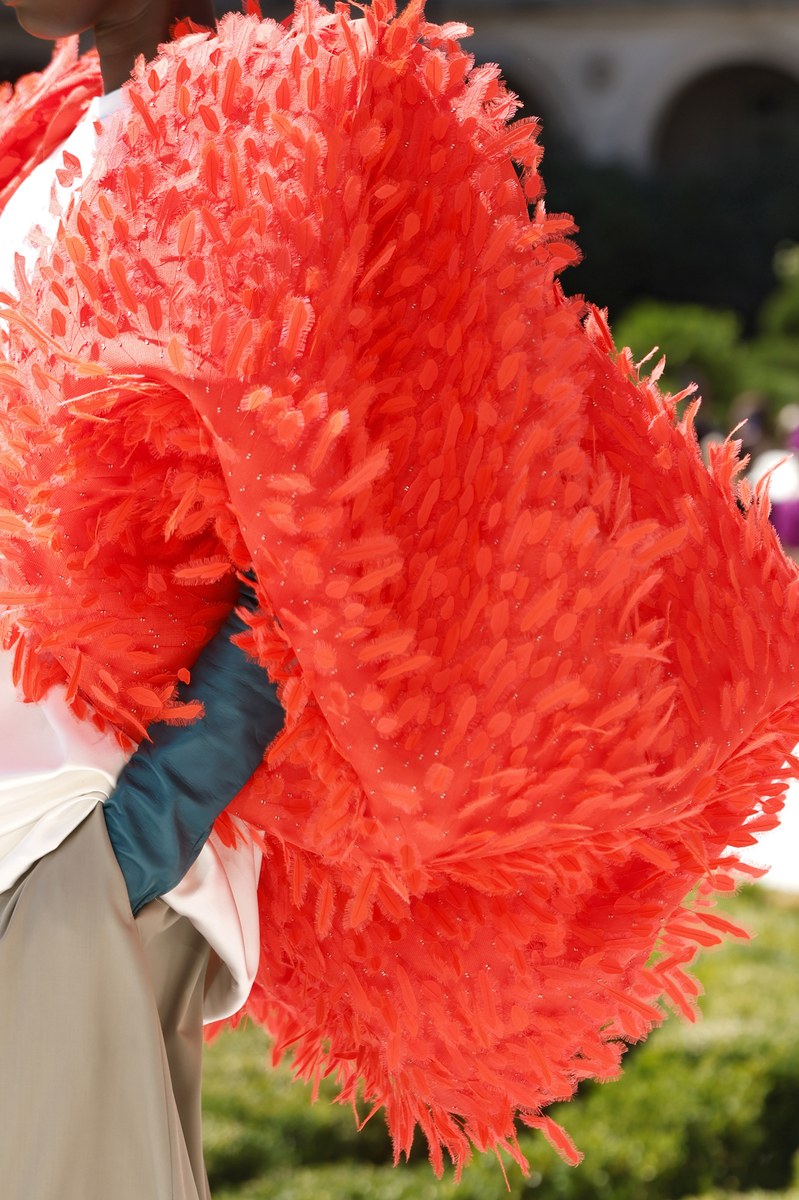
Hand-work specificity was equally pronounced among independent ateliers. Imane Ayissi used raffia fringe, asymmetric feather appliqué, and crinkled brocade as simultaneous structure and surface, with headwear fabrications directly mirroring dress materials. Yuima Nakazato constructed stamped brass or gilt metal tiles laced with waxed cord, glazed ceramic panels, woven leather, and cast shell forms into body armor corsetry, operating at a craft register closer to object-making than garment production. Aziz Rebar deployed pleated metallic organza, ruched taffeta, smocked cottons, and ribbed tulle as dimensional focal points on body-hugging silhouettes, treating structural fabric manipulation as the primary commercial offering.
Headwear & Jewelry
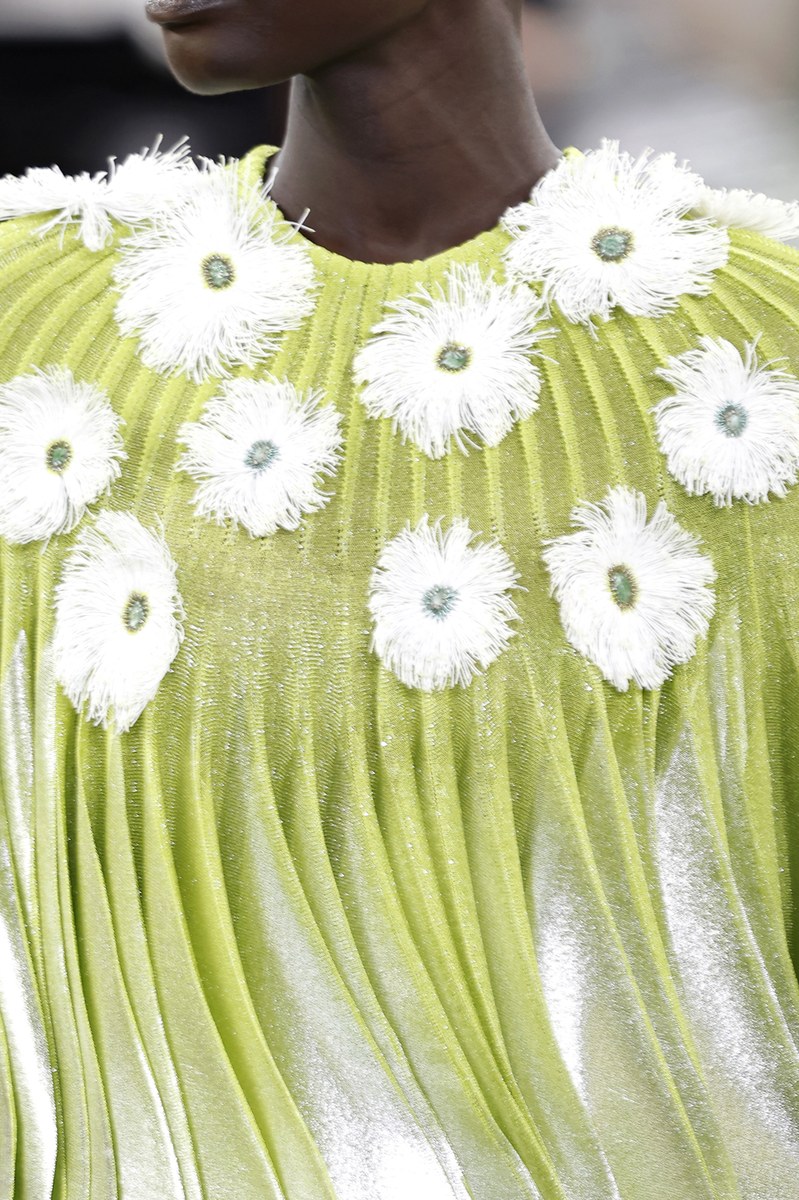
Headwear claimed significant runway authority this season, moving from accessory to architectural protagonist across multiple maisons. Iris van Herpen built biomorphic headpieces from laser-cut sterling silver, transparent acrylic spheres, and vacuum-formed polycarbonate shells with embedded electroluminescent patterning, positioning accessories as prosthetic body systems rather than adornment. Robert Wun deployed transparent acrylic dome helmets, oversized origami cranes, and geometric brims as primary architectural elements in saturated monochrome palettes. Elie Saab shaped sinamay straw into sculptural butterfly and phoenix silhouettes with internal armatures, while Zuhair Murad merged nude mesh face wraps with mounted white butterfly specimens. Rahul Mishra stiffened net tulle with millinery wire into halo and birdcage silhouettes that unified the collection with dress construction logic. George Chakra built a singular repeated headwear format across the lineup: black duchesse satin skull caps with structured side bows, establishing a consistent house code. Aziz Rebar deployed face-obscuring veils, sculptural wire armatures, and sequin cowls as a unified system. Chanel made headwear the clearest commercial focus of the collection, presenting voluminous raffia, shredded ribbon, and fringe constructions alongside sculptural insect and bird jewelry motifs.
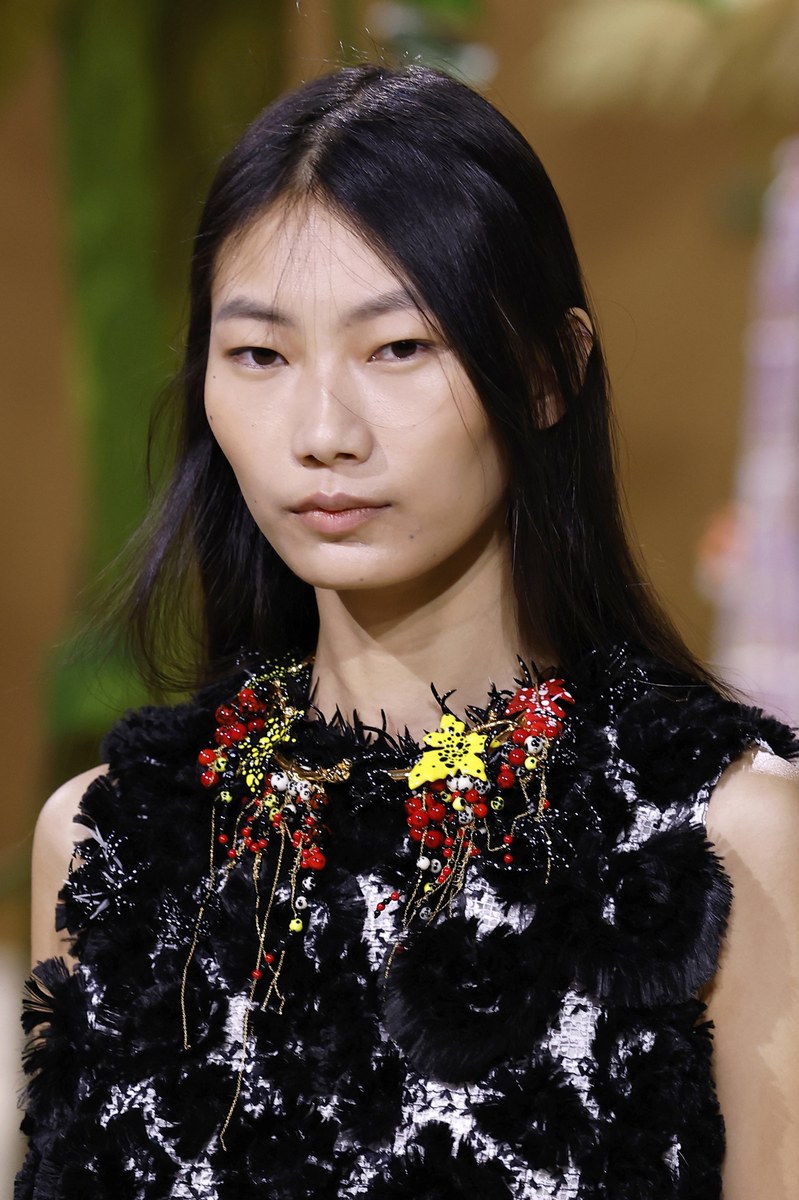
Jewelry operated at two distinct registers this season. At the maximalist end, Balenciaga presented crystal ear cuffs, chandelier earrings, and multi-finger rings in marquise and pavé cuts as explicit statement categories, while Manish Malhotra positioned statement jewelry as a co-equal garment competitor, using antique gold, bronze metallics, and deep garnet accents. At the quieter end, Aelis applied archaeological logic to body-length jewelry built from white coral, freshwater pearls, tarnished silver chains, and shell fragments, foregrounding material provenance over sparkle. Rahul Mishra offered mixed metal jewelry with faceted stones as deliberate restraint against hand-worked embellishment. The season's jewelry signal is bifurcated: maximalist crystal statements for occasion dressing, and found-material or craft-mineral pieces for the luxury customer seeking narrative over flash.
Colour of the Details
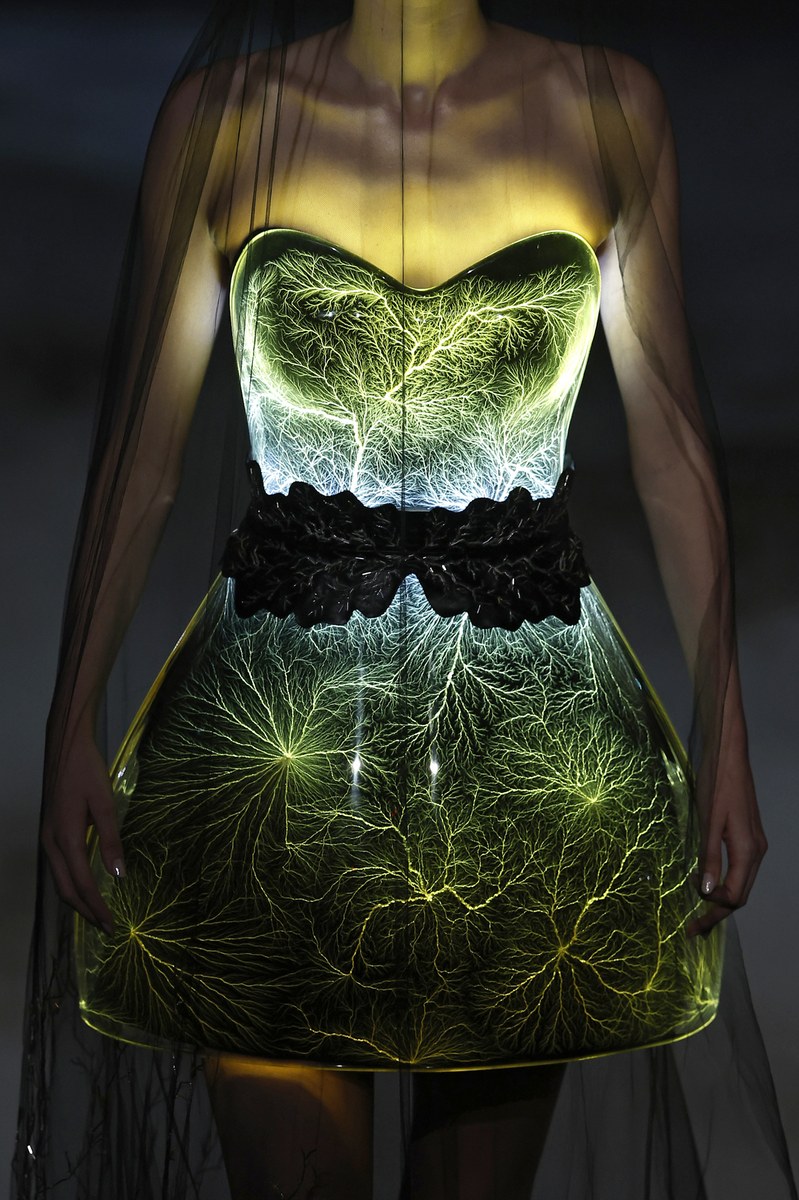
The season's detail palette resists reduction to a single dominant story: two opposing systems operated simultaneously. Deep nocturnal grounds anchored by black, cobalt blue, midnight navy, deep violet, aubergine, and crimson red hosted the season's richest embellishment work, with Giorgio Armani Privé concentrating beaded fringe and sculptural forms within a disciplined midnight palette, and Celia Kritharioti building crystal and feather density against ivory, crimson, and black grounds. George Chakra anchored Klein blue and scarlet against black and ivory with bronze punctuation. Germanier committed to neon acid yellow, hot magenta, and metallic silver against black, while Balenciaga moved through saturated brights, magenta, and deep purple with gold accents.
The opposing system favoured warm neutral and bridal-adjacent grounds: ivory, champagne, blush pink, dusty rose, and optical white. Stephane Rolland committed almost entirely to sculptural optical white. Rami Al Ali built the full collection across ivory, champagne, warm gold, and silver-grey. Manish Malhotra's dominant palette of blush pink, dusty rose, warm ivory, and cream positioned the collection firmly as modern bridal. Ardazaei's warm earth tones of burnt sienna, mahogany, antique gold, and bronze provided a third option, a rich mineral warmth distinct from both the nocturnal darks and the bridal whites. The season's detail colours are therefore commercial tools for market segmentation rather than unified seasonal direction.
Standout Details
- Iris van Herpen: Vacuum-formed polycarbonate headpieces with embedded electroluminescent patterning reframe couture accessories as wearable technology objects with museum-acquisition value.
- Stephane Rolland: Agate stone slices set in gold and black beading on smooth crepe and duchess satin introduce mineralogical ornament as a commercial capsule anchor within strict white luxury positioning.
- Germanier: Molded rubber spikes graduated from nubs to elongated points and tightly packed seed bead topographic surfaces eliminate accessories entirely, making embellishment the whole product proposition.
- Yuima Nakazato: Stamped brass or gilt metal tiles laced with waxed cord and glazed ceramic panels in body armor corsetry operate at collector and museum-acquisition register rather than conventional couture occasion dressing.
- Chanel: Voluminous raffia and shredded ribbon headwear constructions paired with sculptural insect and bird jewelry motifs signal the strongest immediate commercial opportunity in handcraft-intensive millinery for season-adjacent retail.
- Elie Saab: Sinamay straw shaped into phoenix and butterfly silhouettes with internal armatures, combined with frayed Chantilly lace edges, positions strategic rawness as a luxury finish rather than an economy signal.
What It Means for Product Teams
- Invest in dimensional appliqué development now. Hand-applied three-dimensional floral, petal, and naturalistic motifs appeared across at least eight collections this season. Buyers and product managers sourcing embellishment for Fall 2026 deliveries should prioritise atelier partners with three-dimensional appliqué capacity, particularly in velvet, organza, and feather-based techniques.
- Headwear deserves its own development budget. From Chanel's raffia volumes to van Herpen's polycarbonate architectures, headwear functioned as primary commercial statement, not styling support. Millinery and structured headpiece development should be scoped as standalone product investment rather than accessory afterthought, particularly in sinamay, wired net, and hard fabrication categories.
- Bridal and elevated occasion dressing is the season's clearest commercial addressable market. Collections from Manish Malhotra, Rahul Mishra, Rami Al Ali, and Ardazaei consistently positioned craft-intensive embellishment as modern bridal rather than red-carpet dressing. Product teams serving bridal and luxury occasion categories should treat artisan-led surface complexity as the primary margin justification and plan education tools to communicate craft narratives at retail.
- Textile manipulation is a standalone commercial language, not a secondary technique. Christian Dior, Ardazaei, Stephane Rolland, Aziz Rebar, and Standing Ground all built complete collections on pleating, smocking, ruching, and origami-informed folding without relying on conventional embellishment. Textile development teams should be briefed on structural manipulation capacity as a differentiator for premium and contemporary lines entering the couture-adjacent market.
- The jewelry bifurcation is a genuine product strategy signal. The season split clearly between maximalist crystal statement jewelry targeting occasion dressing and found-material, archaeological, or mineral jewelry targeting the narrative-driven luxury consumer. Product teams managing accessories ranges should develop both tracks independently rather than defaulting to a single jewellery direction, as the consumer motivations are distinct and not interchangeable.
The Fall/Winter 2026 Haute Couture season establishes craft visibility and material honesty as the season's defining commercial differentiators, with the most compelling product opportunities sitting at the intersection of structural embellishment, sculptural headwear, and defensible hand-work narratives. Product teams that can trace, communicate, and price the labour embedded in surface complexity will hold the strongest position entering the season.