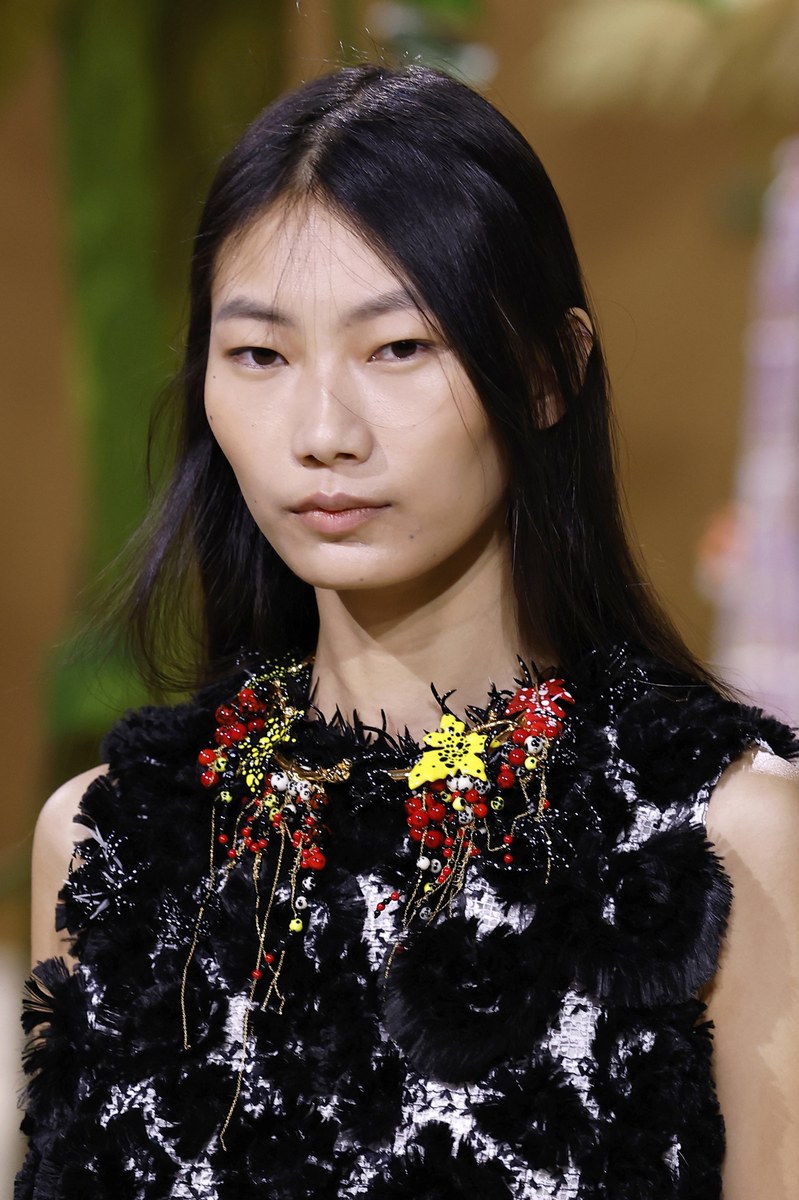
Kseniaschaider FW26 Details

Kseniaschaider FW26 Details
Kseniaschaider FW26 Details Report

Kseniaschaider FW26 plants its entire accessories and detail strategy inside denim, treating the fabric as both structural material and conceptual subject. For buyers and product managers, this signals a strong commercial push toward denim as a full-look system rather than a casual separates category.

Category Overview

All eight details fall within the Dress Detail category, and together they map a coherent denim-first design language that moves from tailored outerwear to skirts, vests, trousers, and layered accessory elements. Rather than background fabric, denim becomes the primary design surface here. Mixed washes, contrasting weights, and varied construction methods appear across pieces, signaling that buyers should read this as a denim-specific product strategy rather than a seasonal material gesture. A single non-denim moment, the cream canvas vest in Detail 3, serves as a deliberate tonal break that reinforces rather than dilutes the direction.
Detail 3
Detail 3

Material and Construction

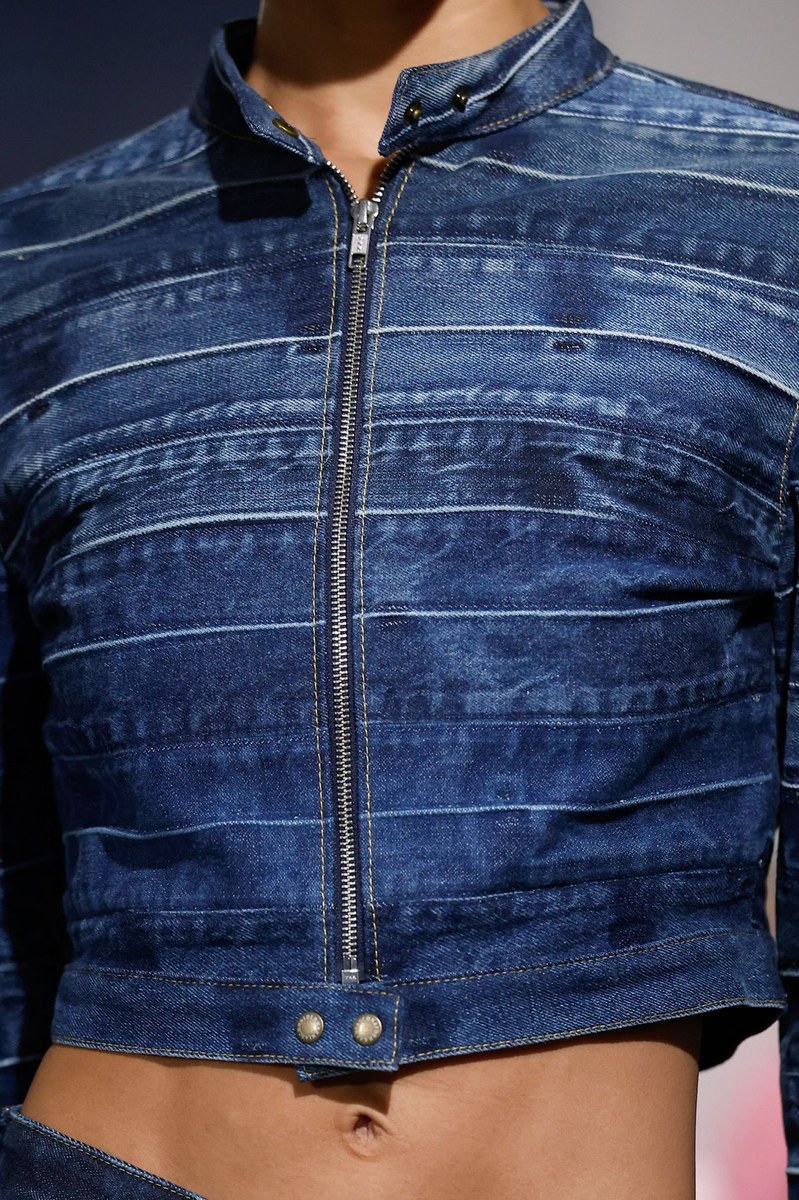
Medium to dark indigo denim dominates, with lighter ice-blue washes appearing in Detail 4 and Detail 5. Horizontally paneled denim strips stitched together create a banded surface texture across the cropped moto-style jacket in Detail 1, a labor-intensive construction that reads as high-value to the contemporary buyer. Detail 2 introduces a jacquard panel insert in olive and cream tones sewn into wide-leg trousers, mixing woven fabrications with structured canvas. Cream coated canvas with topstitched seam lines and brass hardware characterizes Detail 3, pointing toward a premium workwear-adjacent fabrication that could translate well into a leather or coated-cotton production run.

Detail 4
Detail 4

Color and Finish Direction

Indigo in a mid-to-deep wash anchors Details 1, 6, 7, and 8. Ice blue provides contrast in Details 4 and 5, where a lighter stonewash finish creates visual separation between layered denim pieces. Muted earth tones emerge in the olive and cream jacquard of Detail 2, grounding the collection and connecting back to Detail 3's off-white canvas. Between antique silver, gunmetal, and brushed brass, hardware finishes vary across the range, with gunmetal zippers appearing on Details 1, 6, 7, and 8 as the dominant closure finish.

Detail 2
Detail 2

Key Pieces and Details

Detail 6 stands out as the most commercially complex piece, a sleeveless denim vest covered in multiple zip-close 3D cargo pockets that projects direct utility-wear influence. A denim overskirt or apron layer belted over a yellow trouser, Detail 8 features multiple snap-close patch pockets that translate directly into a strong product story around layering and modular dressing. Horizontally banded construction carries the highest investment of the outerwear pieces in Detail 1's moto jacket, reading as a hero item for premium denim buyers. For an accessory-adjacent moment, Detail 5 offers a branded red leather card holder tucked into a denim breast pocket, signaling a deliberate small leather goods entry point for buyers sourcing beyond apparel.

Detail 6
Detail 6

Detail by Detail Highlights

Detail 1 (Dress Detail) Horizontal denim panel construction across a cropped zip-front moto jacket creates a tactile stripe effect through seam placement rather than print, with antique silver zipper hardware and snap closures at the hem.

Detail 1
Detail 1

Detail 2 (Dress Detail) Wide-leg olive canvas trousers carry large jacquard insert panels on the front thighs and an oversized knee-level patch, mixing geometric camo-pattern woven fabric with structured base cloth for a high-contrast material split.

Detail 3 (Dress Detail) A cropped, sleeveless cream canvas vest with two flap chest pockets, topstitched seams throughout, and large disc-shaped metallic snap buttons reads as a deconstructed workwear top with a deliberate tailoring finish.

Detail 4 (Dress Detail) Ice-blue stonewash denim skirt with an open, folded waistband layered over a printed darker denim waistband creates a double-waist construction that plays with the visual language of an undone or deconstructed trouser-to-skirt conversion.

Detail 5 (Dress Detail) A medium-wash denim jacket breast pocket holds a red pebbled leather card holder embossed with the Kseniaschaider logo, stacked with branded cards, positioning the small leather good as an in-pocket accessory moment.

Detail 5
Detail 5

Detail 6 (Dress Detail) A cropped open-front denim vest carries at least eight zip-close and open cargo pockets of varying sizes across the front panels, all in the same indigo wash as the base fabric, building sculptural volume through pocket accumulation.

Detail 7 (Dress Detail) A close-up of a side hem detail shows a double zip-close curved cargo pocket with two additional snap-button sub-pockets below, the kind of hardware-heavy construction that signals direct utility or workwear crossover positioning.

Detail 7
Detail 7

Detail 8 (Dress Detail) A raw-selvedge-weight denim belted apron skirt with an arched hem cutout, multiple snap-close patch pockets, and a single zip pocket at the upper left hip layers over a mustard yellow trouser, functioning as a modular outer layer.

Detail 8
Detail 8

Operational Insights

Pocket architecture: Cargo, snap, and zip pockets accumulate across Details 6, 7, and 8, pointing to utility detailing as a primary design driver. Buyers sourcing denim separates should prioritize styles with at least three external pocket options to align with this direction.

Mixed fabrication strategy: Detail 2's jacquard-into-canvas construction and Detail 3's canvas alternative to denim suggest the brand is building a denim-adjacent fabrication story that product managers can extend across wovens, technical fabrics, and coated materials without breaking the visual system.

Hardware standardization: Gunmetal zippers and snap closures repeat across six of the eight details, giving production teams a clear hardware spec direction. Sourcing a consistent gunmetal finish across closures will be essential for capsule coherence.

Small leather goods entry point: Detail 5's branded card holder inside a denim pocket is a direct signal that the brand sees accessories as extensions of the garment system. Buyers with SLG categories should note the red pebbled leather as an accent material with strong contrast potential against indigo denim.

Layering as a commercial format: Details 4 and 8 both rely on visible layering, with a second waistband or an overskirt worn above another piece. This construction approach lets retailers build two-piece denim sets that photograph as one look, a format with strong e-commerce and wholesale sell-through history.

✦ This report was generated with AI — combining human editorial vision with Claude by Anthropic. Because the future of fashion intelligence is already here.