Leblancstudios FW26 Women Looks Report

Leblancstudios FW26 Women Looks Report
Leblancstudios FW26 Women Looks Report

New York Fashion Week

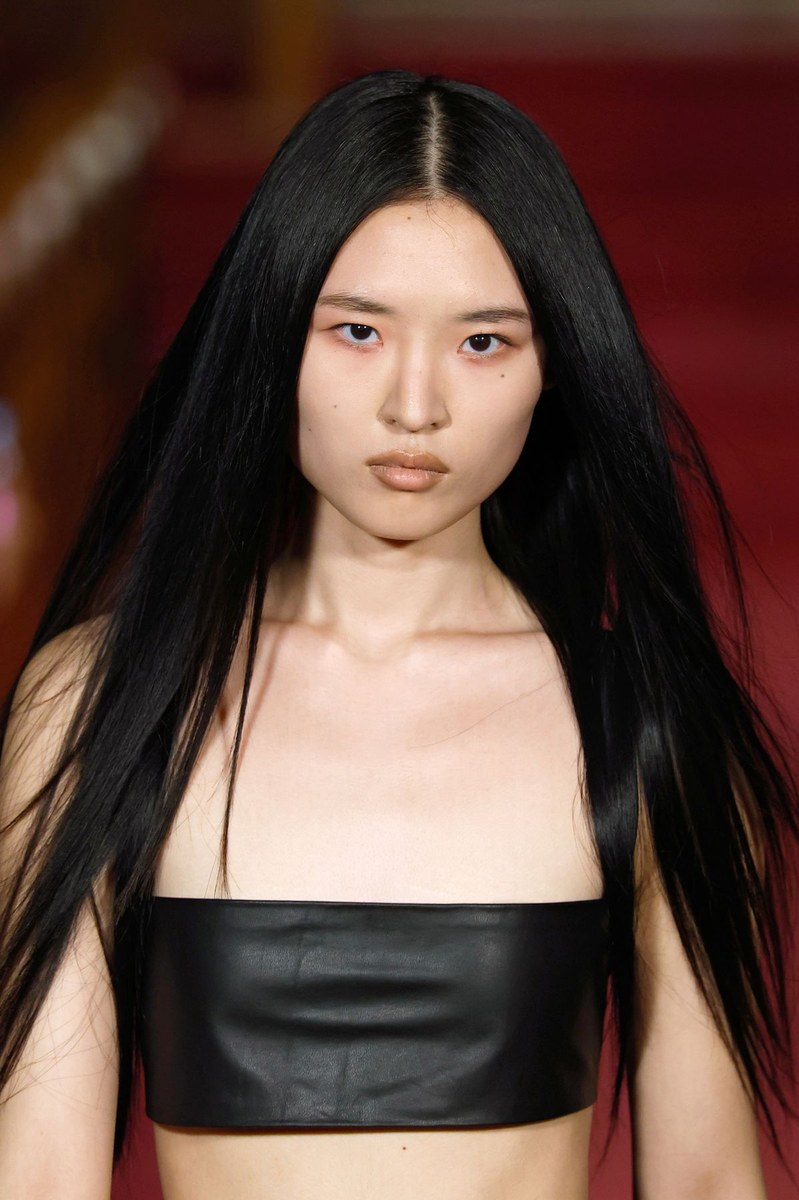
Leblancstudios FW26 pulls the wardrobe apart and rebuilds it around oversized tailoring, activist graphic messaging, and a palette of earthy browns cut with candy-bright accents. Buyers should take note: this collection arrives at a moment when the market is hungry for gender-fluid separates that carry cultural weight without sacrificing commercial wearability.

Silhouette and Volume

Volume dominates at the shoulder and through the leg. Wide-cut trousers appear in nearly every look, while blazers cut well past the natural shoulder create proportion that reads distinctly intentional. Looks 4, 11, and 16 feature cropped zip-up knits that tighten the torso deliberately, so the width below feels considered rather than simply oversized. Skirts, when they appear, drop to midi or billow into A-line shapes, never fitted. The silhouette language stays consistent enough to read as a house signature.
Color Palette

Warm brown dominates, appearing in at least six looks as a suit, jacket, or knit base. It anchors the collection in a grounded, non-seasonal earthiness that carries forward from fall into resort. Cream and off-white break through in Looks 9, 10, and 13, cooling the palette without abandoning warmth. Sharpest are the moments when a single punchy color cuts against that brown and cream foundation, the coral red of Look 8, the periwinkle blue of Look 4, or the pale yellow of Look 11. Pink reappears in Looks 16 and 17 as a soft but persistent accent, suggesting a deliberate commercial thread rather than a one-off styling choice.

Look 8
Look 8

Materials and Textures

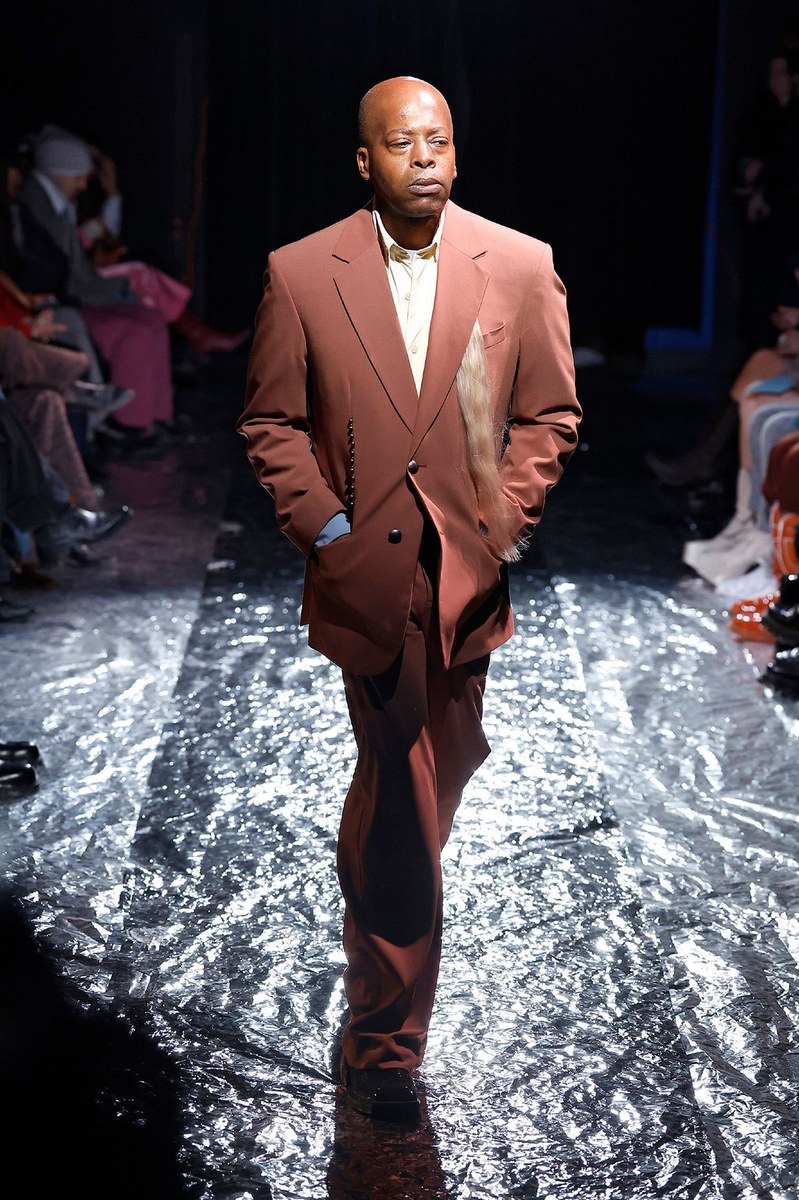
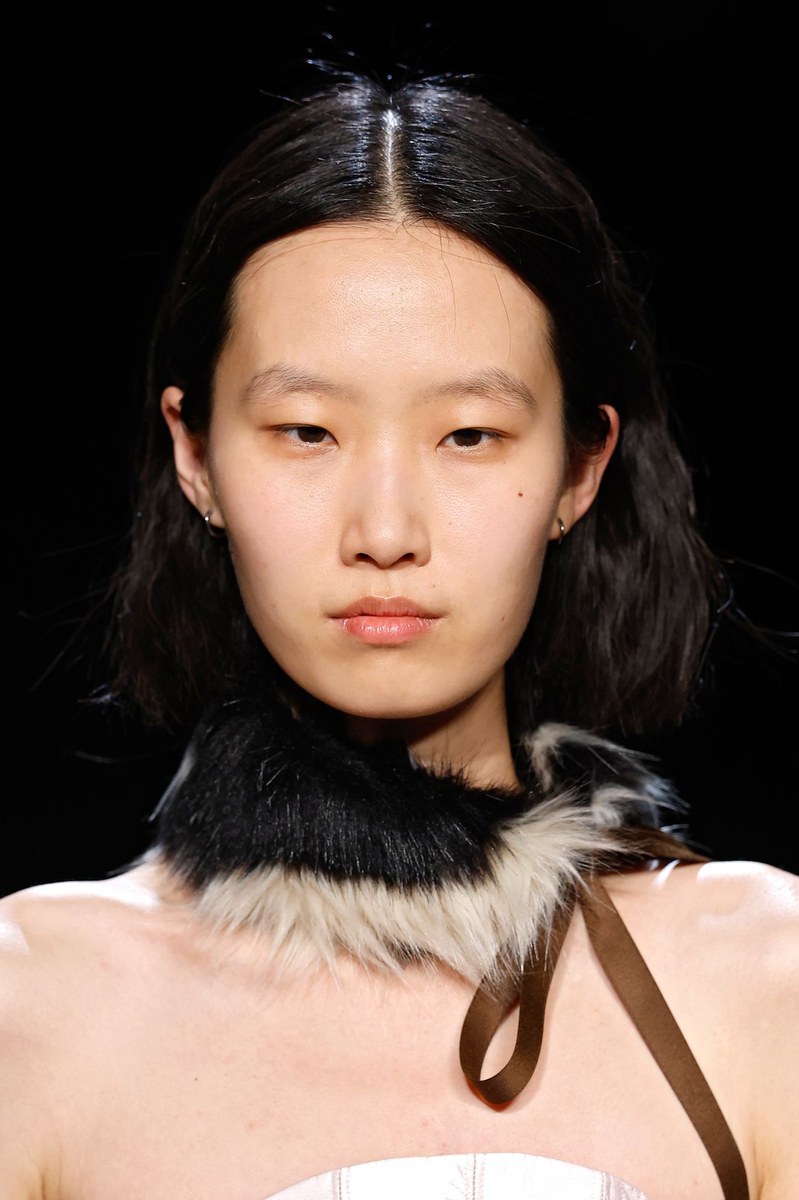
Tailoring fabric runs throughout, crisp and medium-weight in the suits of Looks 1, 2, 10, and 19, giving structure without stiffness. Open-stitch knits in Looks 4, 8, 11, 13, and 16 have a visible perforated texture that reads as sporty and relaxed, clearly cut from the same design family across all appearances. Look 19 introduces long fringe trim in white-blonde tones across the jacket shoulders, while Look 18 uses a wide fur-trimmed collar on a brown zip-up knit, both adding tactile contrast and a seventies sensibility without moving into costume territory. The gold lamé wrap skirt in Look 13 and the cream satin wrap skirt in Look 8 bring a liquid drape that cuts against the collection's prevailing matte weight.

Look 19
Look 19

Styling and Layering

A structured or textured outer piece worn over a collared shirt follows consistent logic throughout, with a third knitwear layer occasionally slipped between them as seen in Looks 12 and 18. Button badges appear across Looks 2, 3, 6, 7, and 9, functioning as a recurring accessory device that ties the collection together and carries the political messaging without requiring print. Footwear splits cleanly between two modes: white low-top sneakers worn with ankle socks in the more casual looks, and dark leather oxford or loafer styles in the tailored looks. Long hair extensions worn over or attached to outerwear, visible in Looks 1, 4, and 11, read as a deliberate aesthetic motif rather than a styling afterthought.

Look by Look Highlights

Look 1 The copper-rose double-breasted suit in an oversized cut, styled with a long white fur extension draped from the pocket, establishes the collection's scale and its habit of grafting unexpected texture onto tailoring classics.

Look 1
Look 1

Look 4 The periwinkle blue perforated zip-up hoodie worn over a fuchsia tee and paired with wide tobacco-brown trousers makes the strongest commercial case in the collection for a ready-to-wear knitwear separates story.

Look 4
Look 4

Look 9 The ivory overcoat blanketed in colorful activist button badges is the collection's most direct editorial statement and its most buyable outerwear piece for a specialty retailer looking for conversation-starting product.

Look 9
Look 9

Look 10 A cream double-breasted blazer and wide-leg trouser suit worn over a rust-brown graphic knit with the word "PRESENT" along the hem resolves the tension between polished tailoring and slogan dressing in a single, layered look.

Look 10
Look 10

Look 13 The white perforated knit crop top paired with a gold lamé tied wrap skirt is the collection's clearest gender-neutral to womenswear crossover moment and the most likely candidate for a high-sell-through holiday floor placement.

Look 13
Look 13

Look 17 The gray tuxedo blazer with black satin lapels worn over a pink slogan tee reading "It's Better in the Caribbean" with wide chocolate-brown trousers and green leather shoes brings a retro suiting narrative that translates directly to a capsule menswear-inspired women's blazer program.

Look 17
Look 17

Look 18 The brown zip-up knit with wide natural fur collar trim, layered over a blue collared shirt and wide cream trousers with a dark navy belt, is the most commercially refined look in the collection and the strongest signal of where the brand's premium outerwear potential sits.

Look 18
Look 18

Look 19 The brown herringbone oversized suit with cream fringe erupting across both shoulders is the collection's loudest theatrical statement. For production teams, it marks a clear direction for embellishment strategy in the tailoring category.

Operational Insights

Button badge accessory program: Activist pin badges recur across at least five looks, signaling a low-cost, high-margin accessory category that buyers can stock as an add-on SKU and that style directors can use to extend the collection's editorial lifespan across social and editorial channels.

Knitwear silhouette family: The perforated zip-up hoodie appears in at least three distinct colorways and pairings, Looks 4, 11, and 16, making it a core repeatable style that production teams should sample in a full colorway run for wholesale ordering.

Tailoring scale opportunity: Oversize suiting in brown, cream, and gray accounts for nearly a third of the collection and points toward a commercial tailoring capsule that could anchor a fall floor set, particularly for accounts already buying into the gender-fluid suiting category.

Graphic and slogan textile strategy: Slogan tees and labeled skirts, including the "Nada Es Inocente" print in Looks 7 and 8, the "PRESENT" knit in Look 10, and the Caribbean tee in Look 17, form a cohesive graphic program that style directors can position as politically resonant basics with a specific Latin American cultural reference point.

Footwear split: White sneaker looks and dark leather formal looks divide cleanly, giving retail partners a straightforward floor merchandising strategy that separates the collection into a casual separates section and a tailored suiting section without requiring additional styling investment.

Complete Collection

Look 2
Look 2
Look 3
Look 3
Look 5
Look 5
Look 6
Look 6
Look 7
Look 7
Look 11
Look 11
Look 12
Look 12
Look 14
Look 14
Look 15
Look 15
Look 16
Look 16
Look 20
Look 20
Look 21
Yamil Arbaje and Angelo Beato

About the Designer

Yamil Arbaje was fourteen years old and filling notebooks with T-shirt sketches when his sister introduced him to Angelo Beato, then seventeen, who lived five minutes away in Santo Domingo. Beato had been quietly building a collection of Raf Simons shirts, something no one else around him seemed to be doing, and the recognition was mutual and immediate. After school they would take buses to local factories, still in their uniforms, and sit in waiting rooms until someone agreed to show them how garments were actually made. The city offered no Dominican brand that its young people actually wore, no local design culture to plug into. That absence was the founding premise.

Beato remained in the Dominican Republic as the brand took shape, working as a filmmaker and creative director while deepening LEBLANCSTUDIOS' roots in local youth culture. Arbaje moved to New York to complete his studies at Parsons and apprenticed sequentially at Willy Chavarria, Bode, and Connor McKnight, three American labels with distinct relationships to craft, community, and American tailoring codes. The brand continued to operate across both cities, with much of the design process conducted over WhatsApp. Their division of labor was geographic but not creative: every collection remains a dialogue between two people in different time zones with the same archive in their heads.

That archive draws from political history, street-level observation, and cinema with unusual specificity. Beato returns repeatedly to Andrei Tarkovsky, Alfred Hitchcock, and the Argentine director Lucrecia Martel for their use of color and atmosphere. The palette of the Caribbean itself, what the duo describes as "corrosive hues," feeds the denim and knitwear work for which the brand is best known, producing colors in a sustainable washhouse in the Dominican Republic that result in yellows, maroons, and oranges rarely seen in comparable labels. Their AW26 collection, "Nada Es Inocente," shown at New York Fashion Week in February 2026, moved between formalwear and sportswear with hair brooches as accessories, rooting an overtly political meditation on wealth and uncertainty in the particular texture of Dominican daily life. The brand received the Fashion Trust U.S. Graduate Prize in 2024 and today operates salons and a cultural platform between Santo Domingo and New York.

"I remember seeing Dominican guys in clubs or bars wearing nice T-shirts from American or European brands, but we never had a Dominican brand that people would wear." — Yamil Arbaje

"Tarkovsky is always an inspiration of mine. Also, Alfred Hitchcock and Lucrecia Martel make very nice movies with good colours that we reference a lot." — Angelo Beato

✦ This report was generated with AI — combining human editorial vision with Claude by Anthropic. Because the future of fashion intelligence is already here.