Lii FW26 Women Looks Report
New York Fashion Week
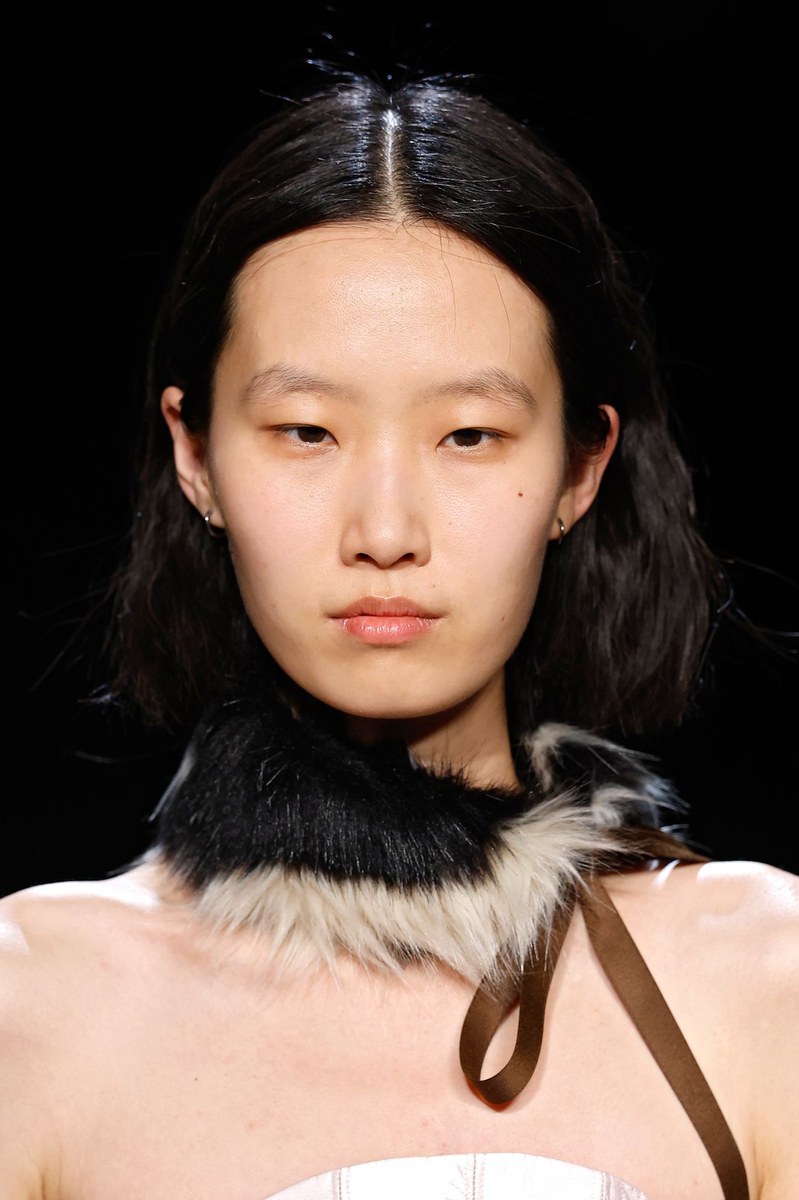
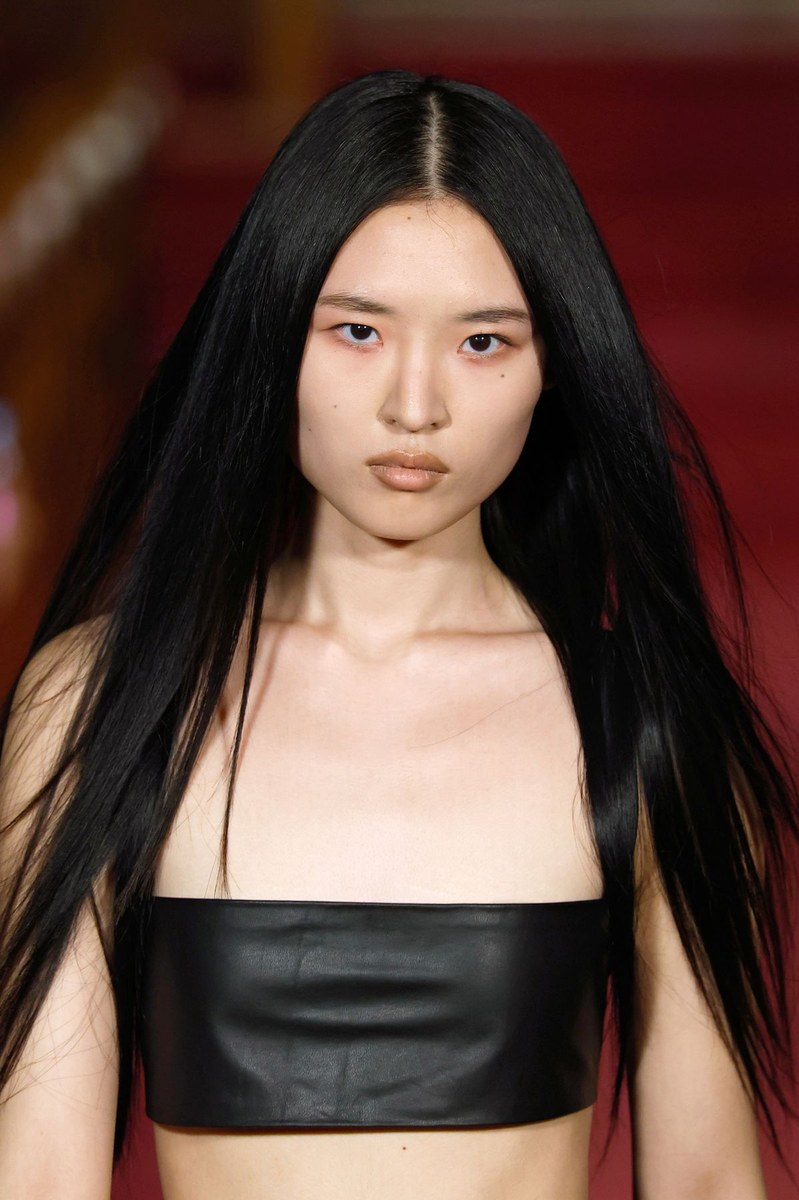
Lii FW26 builds a wardrobe around the collision of athletic construction and sculptural tailoring, threading colour-blocked neoprene zip-ups, faux-fur dresses and origami-folded outerwear through a single disciplined vision. Buyers operating in the contemporary premium space will recognize what's missing from most ranges: volume and drama without ceremony.
Silhouette and Volume
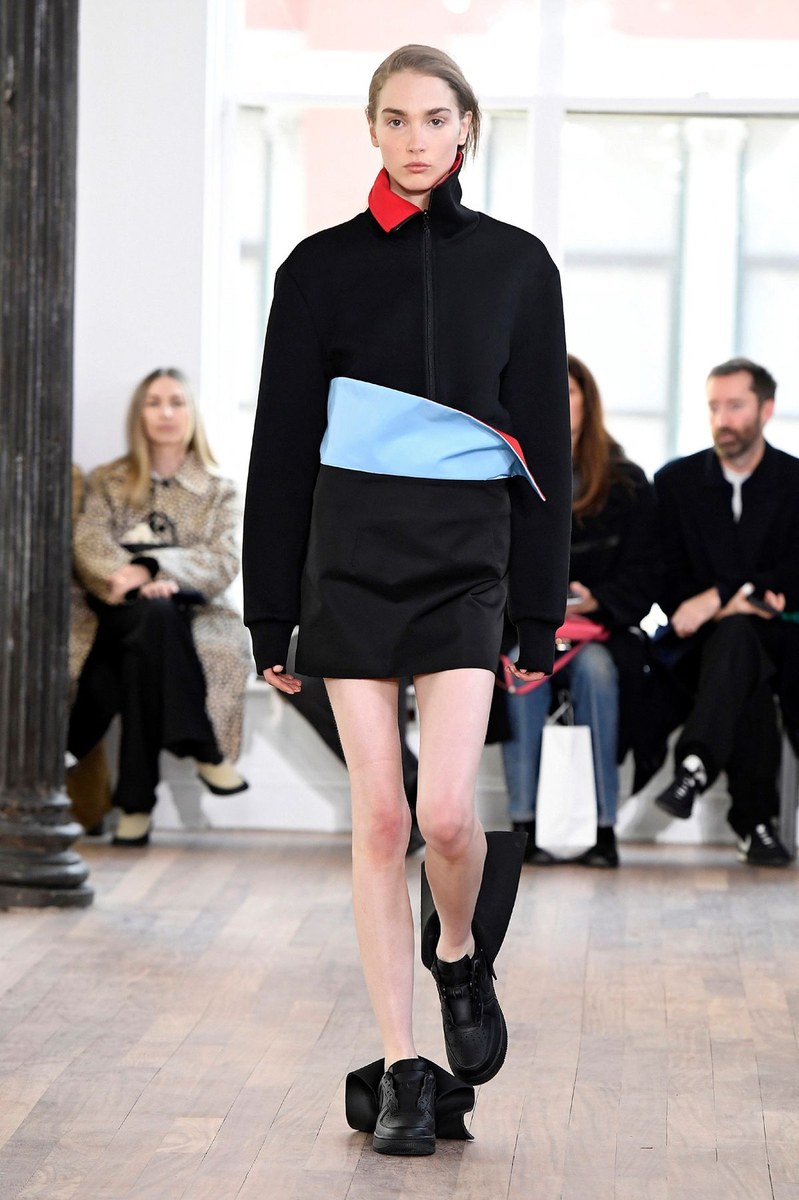
Two silhouette families anchor the collection. A compact, above-the-knee mini worn under cropped zip-through tops in Looks 1, 2 and 5 creates a narrow, athletic column. Then there's the voluminous bubble or balloon hem, executed in satin and heavy neoprene in Looks 10, 11, 17 and 18, which pulls the proportion wide and low at the knee. Looks 10 and 11 push furthest into sculptural territory. Sharp, angular outerwear extends well beyond the shoulder, making the upper body almost architectural.
Color Palette
Black and white serve as neutral carriers for saturated accent colours rather than statements in themselves. Cobalt blue, kelly green, signal red and bright yellow each appear at least twice, recurring specifically at collar linings, glove cuffs and colour-block panels, as in Looks 1, 5, 16 and 18. Baby blue reads almost as a secondary neutral, appearing in faux-fur trim on Look 6, a full faux-fur mini dress on Look 13 and as an oversized bomber on Look 14. What emerges is an energetic, primary-coded mood without the streetwear pastiche.

Materials and Textures
Neoprene dominates the structured pieces, appearing in the zip-up tops of Looks 1, 2, 5, 17 and 18, carrying colour well and holding its shape without lining. Faux fur ranks second, ranging from a cropped gilet layered over a jersey dress in Look 3 to a full-length shag mini in Look 12. Grey and sky-blue iterations read lighter in weight than the dense black version in Look 4. Satin-finish fabric appears in the bubble skirts of Looks 10 and 11 and the balloon-hem skirts of Looks 17 and 18, adding a liquid surface quality that contrasts deliberately with the matte neoprene above. Lightweight nylon shell in Looks 14 and 15 reads as the most commercial-ready material in the range, with a familiar outerwear hand that translates easily to production at scale.

Styling and Layering
Gloves function as the primary accessory throughout, appearing in powder blue, teal, orange, white and violet across Looks 3, 4, 8, 15, 17, 18 and 19, always in a contrasting colour to the garment they accompany. This is not an afterthought. The gloves serve as the colour pop that would otherwise live in a bag or shoe, repositioning that accent spend on the hand. Footwear remains consistent across almost every look: a chunky black lace-up sneaker or lug-sole derby with an oversized black fabric bow tied at the ankle, which grounds even the most voluminous silhouettes and reads as a signature the brand clearly intends to own. Layering logic is additive rather than concealing, with inner layers always visible at the hem or collar, as in Looks 14, 15 and 19.
Look by Look Highlights
Look 1 establishes the collection's core proposition in one outfit: a black neoprene zip-up with a red collar lining and a diagonal baby-blue colour-block panel at the waist, paired with a black mini skirt. It's the most immediately shoppable and giftable top in the range.

Look 2 inverts Look 1 into white, with a cobalt collar and a navy and kelly-green angular panel. This confirms the colour-block zip-up as a repeatable product family with genuine SKU potential across multiple colourways.

Look 6 pairs a strapless black A-line mini with a wide baby-blue faux-fur hem trim. A single construction detail shifts a simple dress into a statement piece with strong editorial and event wear utility.
Look 10 is the collection's most directional single piece, a rigid black and white angular top that extends past the shoulder in sharp geometric planes over a cobalt blue balloon-hem satin skirt. Built for press coverage rather than volume buying, but essential for brand positioning.

Look 13 delivers a head-to-toe baby-blue long-haired faux-fur mini dress with a deep V neckline. Among fur pieces in the collection, this reads as the most wearable and commercially legible, positioned cleanly between party and fashion-forward casualwear.

Look 16 runs a long black polo dress with a cobalt rib collar over wide-leg cream trousers with an asymmetric colour-blocked hem panel in teal and yellow. The most gender-fluid look in the show and the one most likely to read well in a multi-brand contemporary edit.

Look 17 pairs a kelly-green neoprene zip-up with a sand-coloured satin balloon skirt and white gloves. Colour-confident and volume-forward in a way that buyers targeting the 28 to 40 contemporary premium customer will find actionable.

Look 19 layers a structured white collarless vest over a black and grey faux-fur jacket with violet gloves. Here the brand makes its strongest argument for considered layering as a selling story rather than a styling conceit.

Operational Insights
Colour-block zip-up top as hero SKU: Looks 1, 2 and 5 confirm the neoprene zip-up with contrasting collar and angular colour panel as a repeatable, season-agnostic product. Buyers should consider ranging it in at least three colourways for autumn floor sets, with the black-red and white-cobalt combinations as the commercial anchors.
Gloves as margin-positive accessory category: The collection positions coloured gloves in powder blue, teal, orange, white and violet as a deliberate styling layer rather than a weather necessity. Style directors should treat these as an accessory buy in their own right, particularly for gifting and add-on sale strategies at POS.
Faux fur in three distinct product typologies: A cropped gilet (Look 3), a full dress (Looks 12 and 13) and a hem trim application (Looks 6 and 7) segment faux fur across the range, giving product managers three distinct entry price points and fabrication costs to work with rather than a single fur proposition.
Signature footwear bow as a licensed or exclusive opportunity: The black lace-up platform with the oversized bow appears in nearly every look and reads as a deliberate brand signature. Buyers at footwear-carrying accounts should pursue a conversation with Lii about exclusive or co-branded production of this style, as it has strong standalone retail potential.
Balloon and bubble hem skirts as a volume-to-price story: The satin balloon skirts in Looks 10, 11, 17 and 18 use relatively low-cost fabrication to achieve high visual impact through cut and construction. Drama here comes from the pattern geometry rather than material expense, making this a strong candidate for mid-tier price point development without margin sacrifice.
Complete Collection


About the Designer
Zane Li grew up in Chongqing, the sprawling, fog-wrapped city in central China where nearly everyone dresses in black, white, and grey. The exception was his mother's beauty salon, which he spent long stretches of his childhood inside: a room dense with chrome fixtures, velvet surfaces, and stacks of magazines, presided over by a woman who wore power shoulders to work and dressed with a deliberate visibility that nobody else around her seemed to practice. Before he could sew, Li was cutting up her old clothes and reassembling them with hot glue. She was the one who pushed him to leave. As a teenager he became fixated on the mid-2010s editions of T Magazine, particularly the visual world assembled during the Joe McKenna and Marie-Amélie Sauvé era, and he absorbed it entirely through images, unable to read a word of the text. In 2019, at eighteen, he moved to New York to enroll at the Fashion Institute of Technology. It was his first time in America.
He had one semester of normal campus life before the pandemic froze everything. Isolated in a Brooklyn Heights apartment, he pivoted hard into research: watching films every night, moving through Kiyoshi Kurosawa, David Cronenberg, and Katsuhiro Otomo's Akira, building a visual library out of necessity. He also met his now-husband, the stylist Jason Rider, on Tinder two months after arriving in the city; they fell in love during lockdown. Rider had worked at T Magazine during the exact years Li had been studying its pages from across the Pacific. Li graduated FIT in 2023, interned briefly at Proenza Schouler in his final year, and looked for an entry-level role that would let him touch every part of a brand simultaneously. Finding no such job, he launched Lii himself. He was twenty-two and had never worked professionally for anyone.
His debut collection, shown in February 2024 at twenty-three, drew its geometry from Ellsworth Kelly's collages and Anish Kapoor's sculptures and earned immediate attention: Vogue named him one to watch, and Ssense placed an exclusive order. The working method is architectural from the first mark: he starts every garment as a flat shape, a square or a rectangle, then introduces the curves of a body until the contradiction between the two resolves into something new. He keeps a photo album of archival Cristóbal Balenciaga and Christian Dior alongside reference images from Doug Wheeler's immersive light installations and stills from Asian art cinema. The FW26 collection, shown in New York as part of the CFDA calendar and named after a sensation of alien disconnection felt in moving vehicles through unfamiliar cities, confirmed him as one of the most rigorous and specific new voices in American fashion. He is currently a 2026 LVMH Prize semifinalist, presenting menswear seasonally in Paris while maintaining his studio in Chinatown and returning to Chongqing several times a year to manufacture and source fabric.
"I looked for an entry-level job where I could do all of this, and there wasn't one. So I was like, I'll just try to do this myself."
"Reality, abstract, reality — it's always that process."
✦ This report was generated with AI — combining human editorial vision with Claude by Anthropic. Because the future of fashion intelligence is already here.