Michael Kors FW26 Women Looks Report

Michael Kors FW26 Women Looks Report
Michael Kors FW26 Women Looks Report

New York Fashion Week

Michael Kors FW26 builds a wardrobe around disciplined American glamour, pairing oversized tailoring and draped knits with precise doses of feathers, fur, and sequins. For buyers, strong commercial viability emerges across both daywear separates and evening categories, with clear cross-market appeal from workwear to red carpet.

Silhouette and Volume

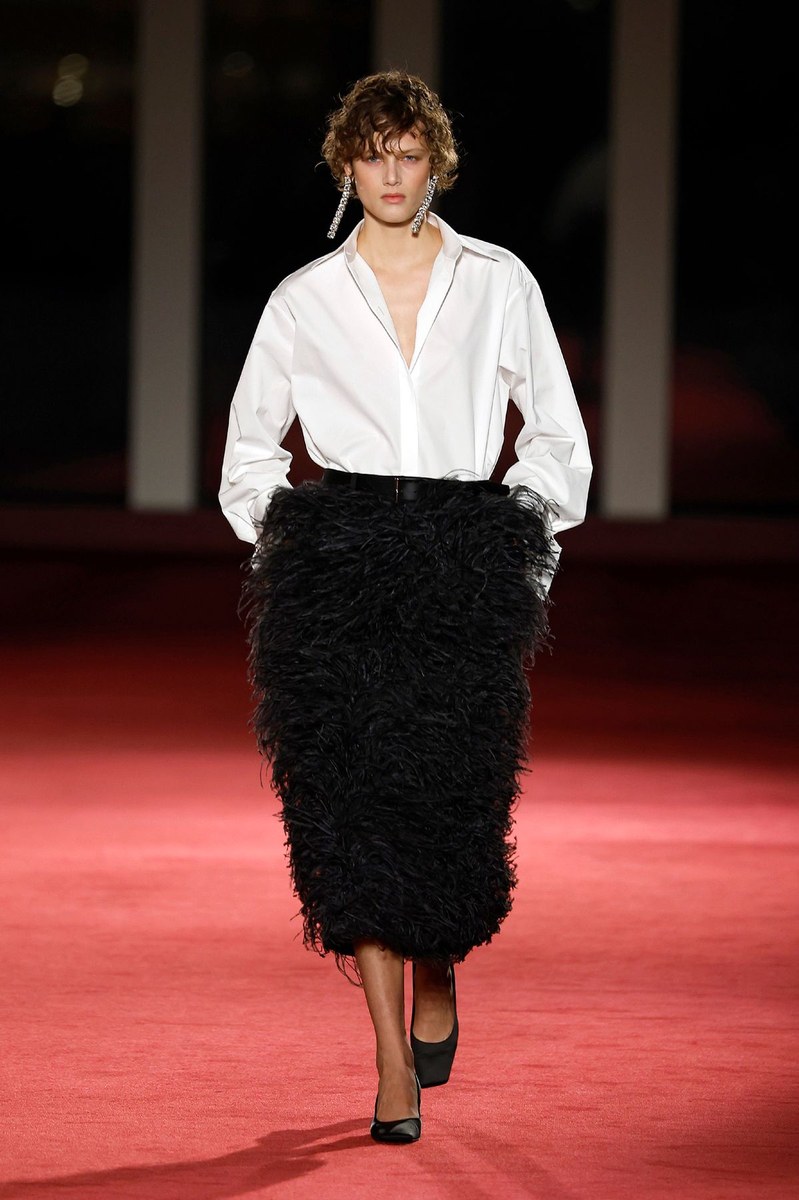
Broadened shoulders and cocoon-like volumes dominate the upper body, while skirts and trousers below carry an asymmetric or flared momentum that keeps the silhouette from reading as static. A draped black caftan-style coat wraps the body in Look 3, and Look 18 sends out palazzo trousers so wide they pool at the floor. Between this extreme ease and sharper, elongated tailoring lies the herringbone topcoat of Look 16. Volume here is structural, not incidental, as demonstrated by the feathered skirt in Look 1, which sits mid-calf and holds its own cylindrical shape.
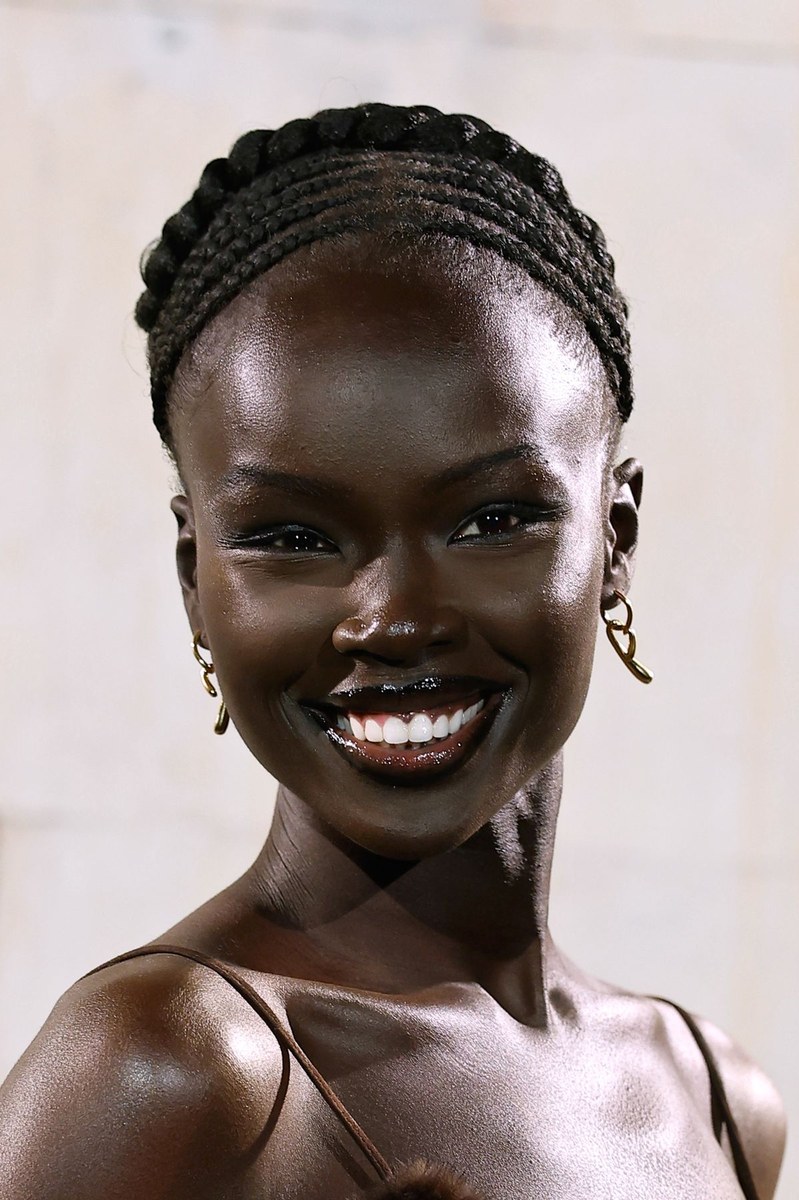
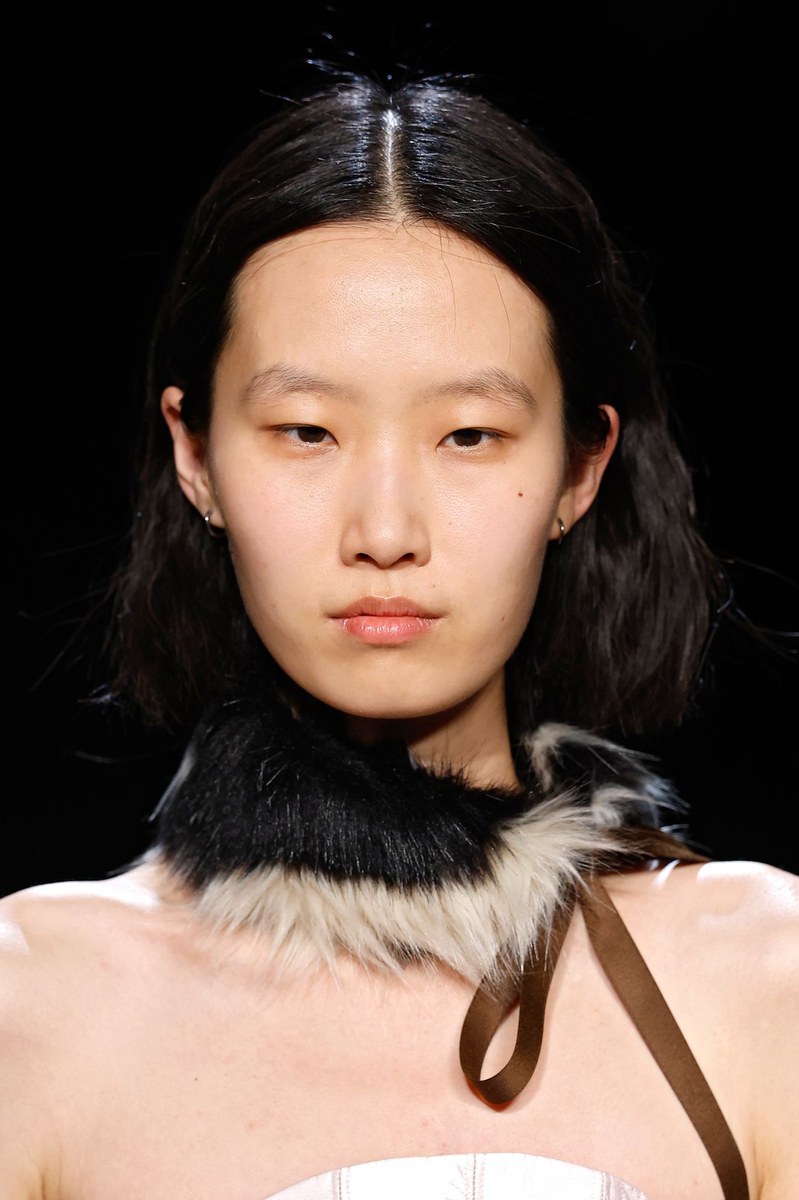
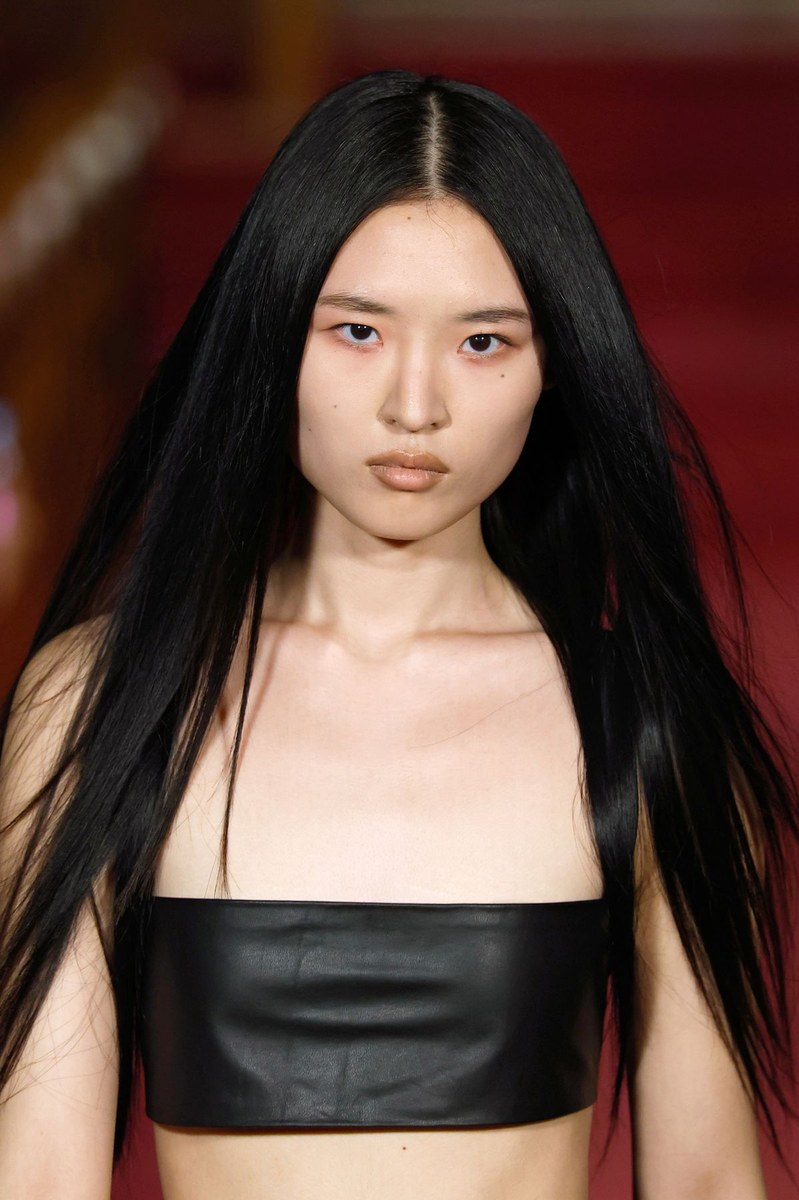
Look 3
Look 3

Color Palette

Black and white anchor the opening and closing, framing Look 1's crisp white poplin against a sculptural black feather skirt and returning to total black in Look 19. Crimson makes the season's strongest statement in Look 7, where a head-to-toe red ensemble in cashmere and fur refuses any relief color. Charcoal grey recurs across Looks 4, 6, 8, 11, 15, and 16, functioning as the commercial backbone of the lineup. Oxblood burgundy in Look 10 and Look 11, paired with the warm sand of Look 14, round out a palette that is sophisticated without being inaccessible to a broad retail customer.

Look 1
Look 1

Materials and Textures

Feathers carry significant design weight across three distinct applications: a dense mid-length skirt in Look 1, a sequin-embedded cape-like top in Look 5, and a fully feathered strapless mini in Look 17. Rich tonal pairings of fur, whether real or faux, add volume in Looks 3, 7, 10, 12, and 14. Wool flannel and herringbone coating handle the tailoring pieces with a firm, structured hand, while surface contrast arrives through the black sequin column in Look 19 and the tweed ruffled dress in Look 13, introducing sparkle and raw fraying. Camel-tone leather blocking in Look 14, seen in both the skirt and boots, demonstrates Kors's continued confidence in tone-on-tone leather as a commercial texture story.

Styling and Layering

Long leather gloves anchor nearly every look, appearing in black, white, oxblood, and camel, and functioning as the collection's single most consistent styling device. Pointed black pumps for evening alternate with patent block-heel mules and flat-front white knee boots in Look 3, introducing contrast grounding for dark, draped pieces. Oversized shield sunglasses in Looks 8, 9, and 12 add an air of studied anonymity that coordinates with the collection's broader mood of restrained authority. Scarves worn loose and unsecured, as in Look 7 and Look 11, signal an effortless layering logic that buyers will recognize as easily reproducible at different price points.

Look by Look Highlights

Look 1 The white oversized poplin shirt tucked into a black ostrich-feather pencil skirt is the collection's most immediately shoppable statement, pairing an everyday top with a high-drama bottom that drives unit mix opportunities across two separate categories.

Look 7 A monochromatic crimson look built from a turtleneck, a draped shawl-collar coat, elbow-length knit gloves, and a fur stole creates the season's most photographable moment and establishes a strong color story for buyers building holiday capsule edits.

Look 7
Look 7

Look 10 A sleeveless deep-V oxblood wool shift dress worn with matching leather thigh-high boots, opera gloves, and a fur stole demonstrates tone-on-tone dressing at its most resolved, making it a clear candidate for luxury department store visual merchandising.

Look 10
Look 10

Look 12 A voluminous ivory faux-fur coat layered over a cream ribbed turtleneck sweater dress with black shield sunglasses and black gloves reads as a complete commercial package for outerwear-focused buyers seeking an editorial hero piece.

Look 12
Look 12

Look 14 A total camel look combining a chunky turtleneck poncho, leather asymmetric skirt, matching boots, leather bucket hat, and tonal fur stole is the strongest single-color investment look of the collection and points directly at the luxury accessories market.

Look 14
Look 14

Look 17 The black-and-silver mixed-feather strapless mini worn with sheer black tights and long black leather gloves is the clearest eveningwear hero, compact enough to retail as a standalone piece and dramatic enough to anchor a shop-in-shop or campaign visual.

Look 17
Look 17

Look 19 A black cashmere cape-top with deliberate side slits over a floor-length black sequin skirt, worn by Christy Turlington, closes the collection with authority and represents the strongest candidate for pre-order and made-to-order eveningwear programming.

Look 19
Look 19

Look 6 The charcoal double-faced wool pea coat with an exaggerated structured collar, worn over a matching ribbed knit midi skirt and carried with a sculptural white leather floral tote, is the collection's most transferable tailoring investment for buyers targeting the elevated outerwear market.

Look 6
Look 6

Operational Insights

Glove program: Long opera-length gloves appear in nearly every look and in multiple materials including suede, leather, and knit. Buyers should treat these as a standalone accessory category with strong attachment potential at point of sale, not simply a styling prop.

Feather versatility: Feathers appear in three distinct formats, a full skirt, a top, and a mini dress, across Looks 1, 5, and 17, giving product managers the option to build a tiered feather assortment across price architecture from statement separates to eveningwear.

Monochromatic blocking: Looks 7, 10, 12, and 14 each commit fully to a single color family across every garment and accessory. Style directors should build complete color-blocked outfitting stories for visual displays rather than breaking these looks into individual mix-and-match units.

Fur coat volume: The oversized fur coats in Looks 3, 7, and 12 in black, red, and ivory cover the three most commercially viable colorways for outerwear. Buyers should prioritize these three neutrals for initial orders rather than testing additional colors in a first delivery.

Menswear-adjacent tailoring: Looks 8, 11, 16, and 18 pull from a menswear vocabulary through wide-leg trousers, long topcoats, and relaxed suiting. Product managers targeting gender-fluid or workwear-oriented retail accounts should flag this group as a distinct sub-category within the broader women's collection buy.

Complete Collection

Look 2
Look 2
Look 4
Look 4
Look 5
Look 5
Look 8
Look 8
Look 9
Look 9
Look 11
Look 11
Look 13
Look 13
Look 15
Look 15
Look 16
Look 16
Look 18
Look 18
Look 20
Look 20
Look 21
Look 21
Look 22
Look 22
Look 23
Look 23
Look 24
Look 24
Look 25
Look 25
Look 26
Look 26
Look 27
Look 27
Look 28
Look 28
Look 29
Look 29
Look 30
Look 30
Look 31
Look 31
Look 32
Look 32
Look 33
Look 33
Look 34
Look 34
Look 35
Look 35
Look 36
Look 36
Look 37
Look 37
Look 38
Look 38
Look 39
Look 39
Look 40
Look 40
Look 41
Look 41
Look 42
Look 42
Look 43
Look 43
Look 44
Look 44
Look 45
Look 45
Look 46
Look 46
Look 47
Look 47
Look 48
Look 48
Look 49
Look 49
Look 50
Look 50
Look 51
Look 51
Look 52
Look 52
Look 53
Look 53
Look 54
Look 54
Look 55
Look 55
Look 56
Look 56
Look 57
Look 57
Look 58
Look 58
Look 59
Look 59
Look 60
Look 60
Look 61
Look 61
Look 62
Look 62
Look 63
Look 63
Look 64
Look 64
Look 65
Michael Kors

About the Designer

Michael Kors Born Karl Anderson Jr. in 1959 in Merrick, a quiet suburb of Long Island twenty-three miles from Manhattan, Michael Kors grew up inside a family already fluent in the language of image. His mother Joan had been a Revlon model, and when his parents divorced and she remarried, the five-year-old Karl renamed himself Michael, partly out of family loyalty and partly, it seems, because the new name simply fit better. The same year, his mother let him advise on her wedding dress. He told her to cut the bows off. She did. "The marriage didn't last," Kors would say years later, "but the pictures are timeless." He grew up tearing through each issue of Vogue the day it arrived, took acting classes as a teenager before realizing the stage was the wrong stage, and was already selling clothes out of his family's basement by the time he graduated high school.

He enrolled at the Fashion Institute of Technology in 1977 and left nine months later, not because of failure but because an opportunity was already in front of him. At Lothar's, an upscale boutique on West 57th Street directly across from Bergdorf Goodman, he started as a salesman and quickly moved into designing and running visual displays. Dawn Mello, then executive vice president of Bergdorf Goodman, walked in, noticed what he was doing, and told him to call her when he had a collection. He called. In 1981, at twenty-two, he launched his line at Bergdorf's. His first runway show in 1984 sent Iman down the runway in a leather pullover and grey flannels. The aesthetic was already fully formed: chic, unfussy, built for real movement through a real day.

The designer he cited most consistently as a precursor was Claire McCardell, the mid-century American sportswear pioneer who refused to look to Paris for permission. Kors carried the same conviction into his own work, and it eventually caught the attention of a French house. In 1997 he was named the first creative director of women's ready-to-wear at Céline, a distinction that had never gone to an American before. He spent six years there, restoring the brand's commercial relevance and launching the accessories program that would define it for the next decade. He left in 2003 to concentrate entirely on his own empire. Today, as Chief Creative Officer of the Michael Kors brand under Capri Holdings, he oversees a global operation spanning ready-to-wear, accessories, footwear, fragrance, and the MICHAEL Michael Kors diffusion line, which he launched in 2004 and recently repositioned for a new generation of what he calls "jet setters."

"I practically hyperventilated every month when Vogue arrived."

"She was the first designer to look not to Paris for inspiration but to the needs of the American woman. They were timeless."

✦ This report was generated with AI — combining human editorial vision with Claude by Anthropic. Because the future of fashion intelligence is already here.