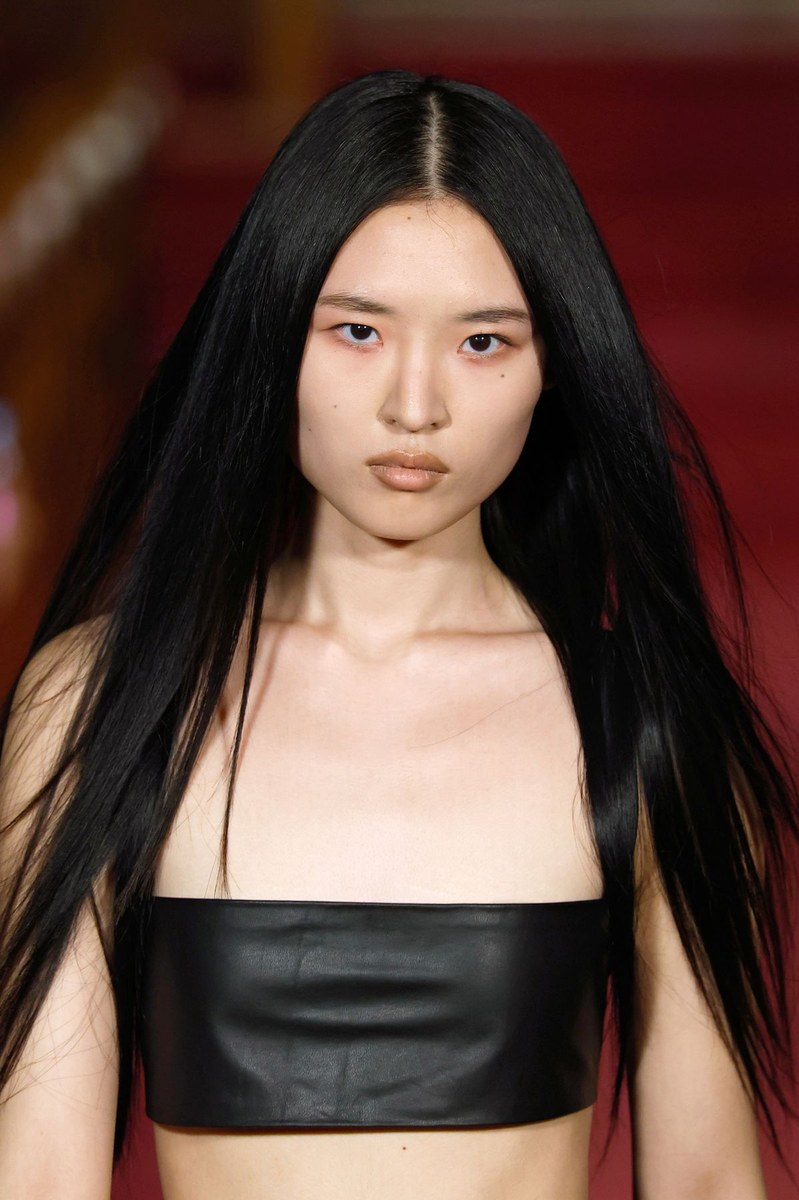
Pamella Roland FW26 Women Looks Report

Pamella Roland FW26 Women Looks Report
Did you know? Pamella Roland built her brand on a proprietary beading and embellishment technique that allows intricate hand-sewn details to remain flexible and wearable rather than stiff, a method developed during her early career dressing entertainment industry clients who needed performance-ready evening wear. This manufacturing approach has become a signature differentiator that influences her entire design process, from fabric selection to construction sequencing.

Pamella Roland FW26 Women Looks Report

New York Fashion Week

Pamella Roland FW26 builds a coherent evening wardrobe around three anchors: black and white contrast dressing, liquid marble-printed satin, and blush-to-ivory embellished gowns that move from cocktail to full ceremony. The collection arrives as the red-carpet and gala market rebounds, giving buyers a clear, category-organized assortment with strong price-point signals from crystal embellishment through to feather trim.

Silhouette and Volume

Fitted, body-conscious columns and full-skirted midi silhouettes split the collection cleanly. Column gowns dominate the evening section, running from hip to floor with strategic slits rather than volume. Look 9 and Look 12 introduce structured shoulder construction, a pointed commercial counterweight to the fluid draping elsewhere. Look 14 stands as the single deliberate exception, a kaftan-width ivory crepe that reads as a statement exit piece rather than a volume bet.
Look 9
Look 9

Color Palette

Black is the unambiguous foundation, appearing across at least ten looks in matte crepe, patent vinyl, velvet and feather. Blush white pairs consistently with it, either as contrast lapels (Look 1, Look 3) or as a standalone in the finale embellished gowns (Look 17, Look 19). A silver-grey marble print ties Looks 5 and 6 together as a sub-story within the range. Gold enters late, through Looks 13 and 16, shifting the mood from nocturnal to ceremonial and signaling a bridal-adjacent sell-through opportunity.

Look 1
Look 1

Materials and Textures

Heavy crepe carries the workload, providing the clean matte surface that makes crystal embellishment read clearly in Look 2 and Look 11. Patent vinyl in Look 4 creates the highest-contrast texture moment, a hooded cape over a patent shift that reads directional but may face fabric-care friction at retail. Marble-printed satin in Looks 5 and 6 has a high-weight, structured drape that holds sculptural lines without boning. Blush sequin cloth in Looks 17 and 19 uses a dense, tight-packed paillette construction with no visible base fabric showing, positioning these pieces at the top of the price architecture.

Look 2
Look 2

Styling and Layering

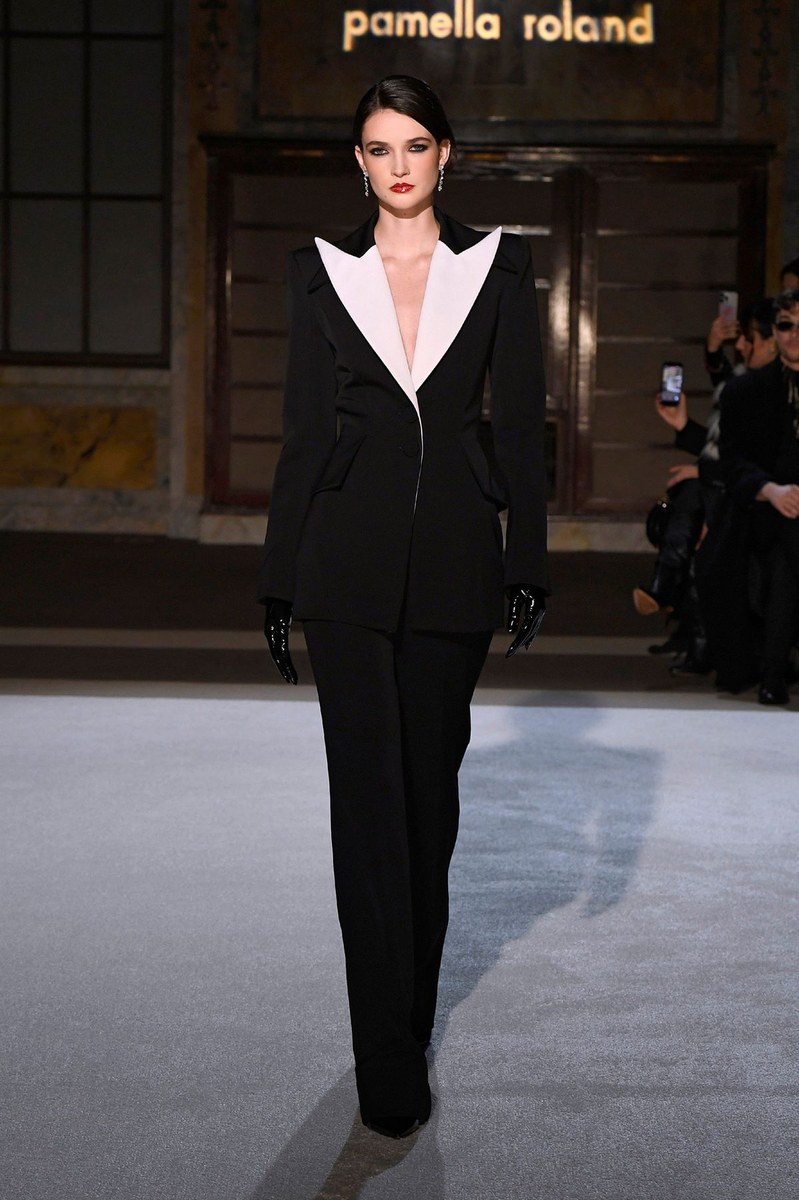
Black patent leather opera gloves in Looks 1 and 3 anchor the styling language for the black-and-white chapter, adding a 1950s-reference luxury layer that raises perceived value without adding garment complexity. Knee-high leather boots appear in Looks 4 and 9, grounding the shorter silhouettes and signaling a daytime-adjacent wearability that could pull editorial coverage from non-gala accounts. Pointed-toe court pumps in coordinating fabric or patent dominate the footwear across most looks, a consistent and replicable commercial choice. Look 19 features an ivory puffer coat draped across the shoulders that reads as a statement layering prop rather than a production investment, visually separating the finale gown from the earlier embellished pieces.

Look 19
Look 19

Look by Look Highlights

Look 1 A black double-crepe tuxedo suit with a white contrast peak lapel and long patent gloves makes the strongest entry-price commercial case in the collection. Mainstream department store buyers can slot this directly into a power-dressing floor set.

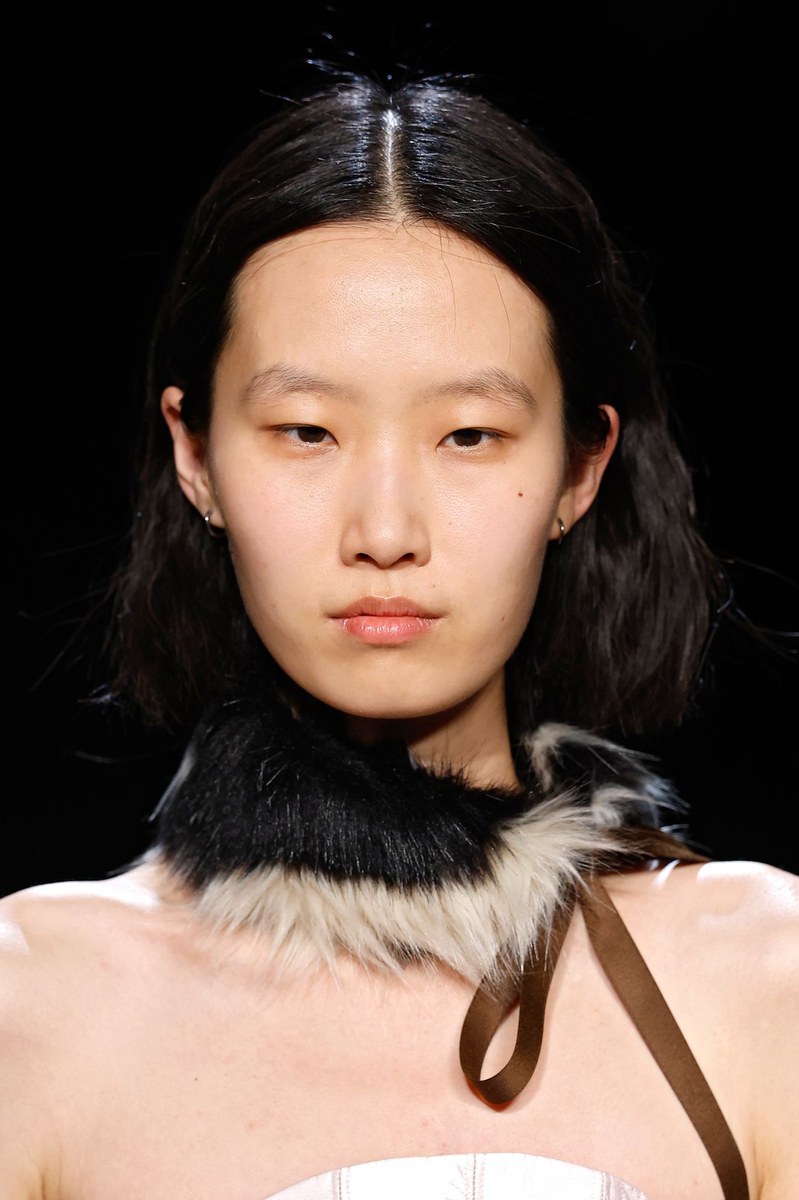
Look 2 The off-shoulder black crepe mini with a crystal fringe collar delivers the collection's best cocktail-to-event conversion piece, short enough for younger customers and formal enough for black-tie adjacent occasions.

Look 3 Carrying the strongest red-carpet placement potential of the black-and-white chapter, this black halter column gown features a pleated white bib front and floor-length white train panel. Awards-season trunk shows will find particular value here.

Look 3
Look 3

Look 7 A black strapless mini built from geometric quilted fabric with layered ostrich feather trim at the bust and hem is the highest-drama short look in the collection and a direct contender for night-economy editorial and event-driven sell-through.

Look 7
Look 7

Look 10 A silver floral jacquard off-shoulder gown with a high front slit and ruched bardot bodice answers a clear gap in the metallic formal market and will cross easily into mother-of-the-bride and gala verticals.

Look 10
Look 10

Look 12 The black faille sweetheart midi with a matching structured cape carrying gold botanical embroidery combines volume control with surface decoration in a way that photographs well at multiple zoom levels, an important consideration for e-commerce conversion.

Look 12
Look 12

Look 16 A rose gold sequin column gown with a high turtleneck and three-dimensional floral appliqué across the torso positions itself as the aspirational centerpiece of the gold chapter, likely to drive trunk show traffic as a ceremony or premiere option.

Look 16
Look 16

Look 19 The blush halter column gown covered in mixed crystal and sequin embellishment at maximum density, worn with an oversized ivory quilted coat, is the closing bridal-adjacent statement that buyers in the luxury bridal and reception-dress market should flag for immediate follow-up.

Operational Insights

Black crepe reorder depth: At least ten SKUs in black crepe span multiple silhouettes across the collection. Buyers should plan deeper black crepe inventory relative to other colorways, as the fabrication consistency means production MOQs will be more favorable and reorder lead times shorter.

Crystal embellishment placement: Looks 2, 8 and 11 all use crystal or beaded trim at neckline and bustline only, leaving the body of the garment clean. This construction approach reduces embellishment yardage cost while maintaining the luxury read, and product managers should use it as a costing benchmark when negotiating with vendors.

Marble print satin as a capsule: Looks 5 and 6 use the same marble-print satin in two silhouettes, a column gown and a tailored suit. Style directors can merchandise these as a two-piece capsule, which increases average transaction value and creates a differentiated rack story.

Feather trim category signal: Feather trim appears in Looks 7 and 17 in black and blush respectively, both in short silhouettes. This positions feather trim as a cocktail-tier detail for FW26 rather than a gown detail, which has sourcing and lead-time implications given feather supply constraints. Buyers should confirm feather sourcing and compliance certifications before committing volume.

Bridal and reception adjacency: Looks 14, 19 and 16 collectively form a white and gold ceremony-adjacent mini-collection. Style directors at stores with active bridal or occasion departments should consider a dedicated trunk show pull from this grouping rather than folding these pieces into the general evening floor, as the silhouette and price point differ enough to warrant a separate selling environment.

Complete Collection

Look 4
Look 4
Look 5
Look 5
Look 6
Look 6
Look 8
Look 8
Look 11
Look 11
Look 13
Look 13
Look 14
Look 14
Look 15
Look 15
Look 17
Look 17
Look 18
Look 18
Look 20
Look 20
Look 21
Look 21
Look 22
Look 22
Look 23
Look 23
Look 24
Look 24
Look 25
Look 25
Look 26
Look 26
Look 27
Look 27
Look 28
Look 28
Look 29
Look 29
Look 30
Look 30
Look 31
Look 31
Look 32
Look 32
Look 33
Look 33
Look 34
Look 34
Look 35
Look 35
Look 36
Look 36
Look 37
Look 37
Look 38
Look 38
Look 39
Look 39
Look 40
Look 40
Look 41
Pamella Roland DeVos

About the Designer

Pamella Roland DeVos grew up in Grand Rapids, Michigan, far from any fashion capital, in a household where getting dressed was already an event. The formative image she returns to again and again is her mother slipping into a red gown and, in her words, simply transforming. That moment lodged somewhere permanent. Her father had other ideas about her future, steering her toward a business degree at Michigan State University, and she followed his advice without abandoning the obsession. She graduated in 1984, studied art history alongside her business courses, and filed the whole thing away.

Before she ever cut a pattern, she spent nearly a decade in marketing and public relations, moving between corporate offices and agency environments, learning how brands communicate and how desire gets manufactured. In the early nineties, she followed her husband Dan to Japan, where she directed public relations for the National Art Show of the College Women's Association of Japan, one of the most significant cultural events in the country. Japan sharpened her eye. The discipline, the craft, the understanding that form is never incidental, stayed with her. Back in Michigan, she and Dan built DP Fox Ventures, a diversified company spanning real estate, sports, and automotive dealerships. It was only at 41 that she finally let the old fixation take over and launched her label, Pamella Roland, in 2002.

The brand debuted at New York Fashion Week that fall and was picked up by Neiman Marcus almost immediately, winning the Gold Coast Award in its second year. DeVos designs eveningwear, and she is deliberate about the references she pulls from: Mark Rothko's color fields have driven entire collections, and her long involvement with the Whitney Museum and the Grand Rapids Art Museum places her in constant proximity to painting, sculpture, and the kind of visual thinking that formal fashion training does not always produce. In 2010 she was inducted into the CFDA. In 2024, she crossed from runway to stage, designing the costumes for the West End production of The Devil Wears Prada: The Musical, dressing Vanessa Williams and bringing the same architecture of glamour she built her label on to a completely different medium.

"Although I would have loved to study fashion, my father encouraged me to pursue a business degree in college, and I also studied art history. My background in business and art history blend nicely with running a fashion business."

"I just love the colors that he used. When I saw his work I knew that these were the colors that I wanted in my show."

✦ This report was generated with AI — combining human editorial vision with Claude by Anthropic. Because the future of fashion intelligence is already here.