Prabal Gurung FW26 Women Looks Report

Prabal Gurung FW26 Women Looks Report
Prabal Gurung FW26 Women Looks Report

New York Fashion Week

Prabal Gurung built this collection around the tension between tailored authority and liquid femininity. Sharp wool suiting gives way to bias-draped satin and crushed velvet within a single coherent wardrobe. For buyers, that range signals a designer positioning himself to capture both the corporate dressing and occasion wear markets simultaneously, without splitting the brand identity.

Silhouette and Volume

Structured, narrow suiting in Looks 1 and 2 opens the collection before expanding dramatically through oversized cocoon coats in Looks 3 and 5. Mid-collection, the silhouette shifts to fluid, body-grazing drape across bias tops and wrapped skirts. Looks 17, 18, and 19 push volume into fluted hems and mermaid flares, giving the runway a clear three-act architecture from tailored to molten to formal.
Color Palette

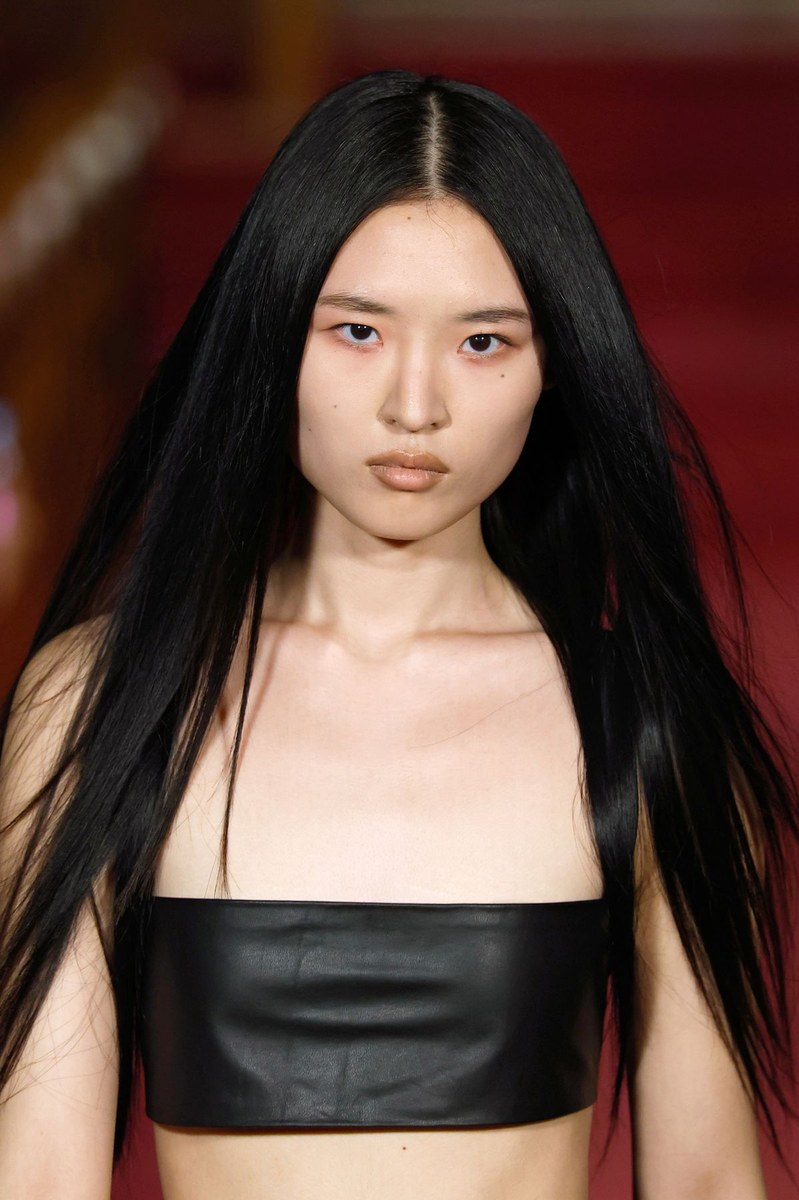
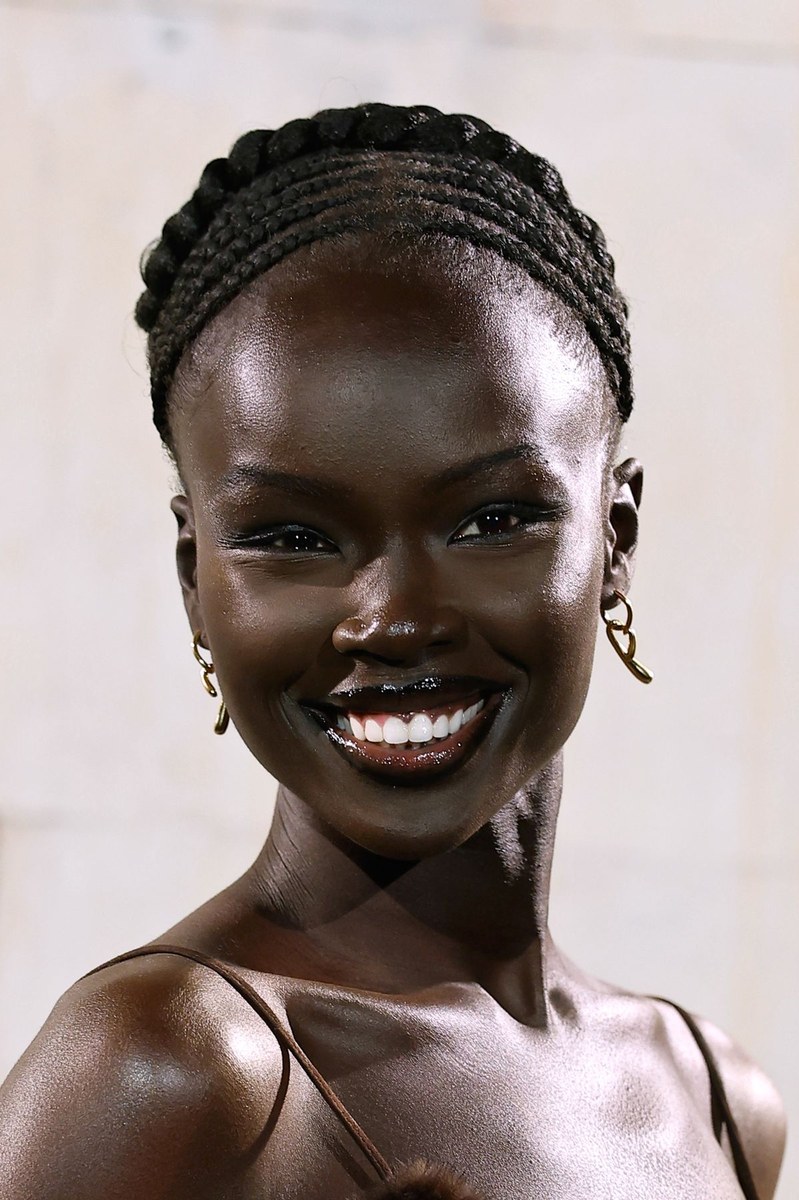
Black anchors the collection from open to close, appearing in suiting, velvet, lace and outerwear across at least eight looks. Olive green surfaces as the strongest accent, appearing in Looks 8, 9, and 12 in both matte and satin finishes. Liquid silver in Look 18, gunmetal in Look 17, and warm gold in Looks 13 and 15 shift the mood from daytime authority to evening opulence. Dusty rose in Look 7 and blush in Look 5 provide the only genuinely soft, romantic moments in an otherwise forceful palette.

Look 18
Look 18

Materials and Textures

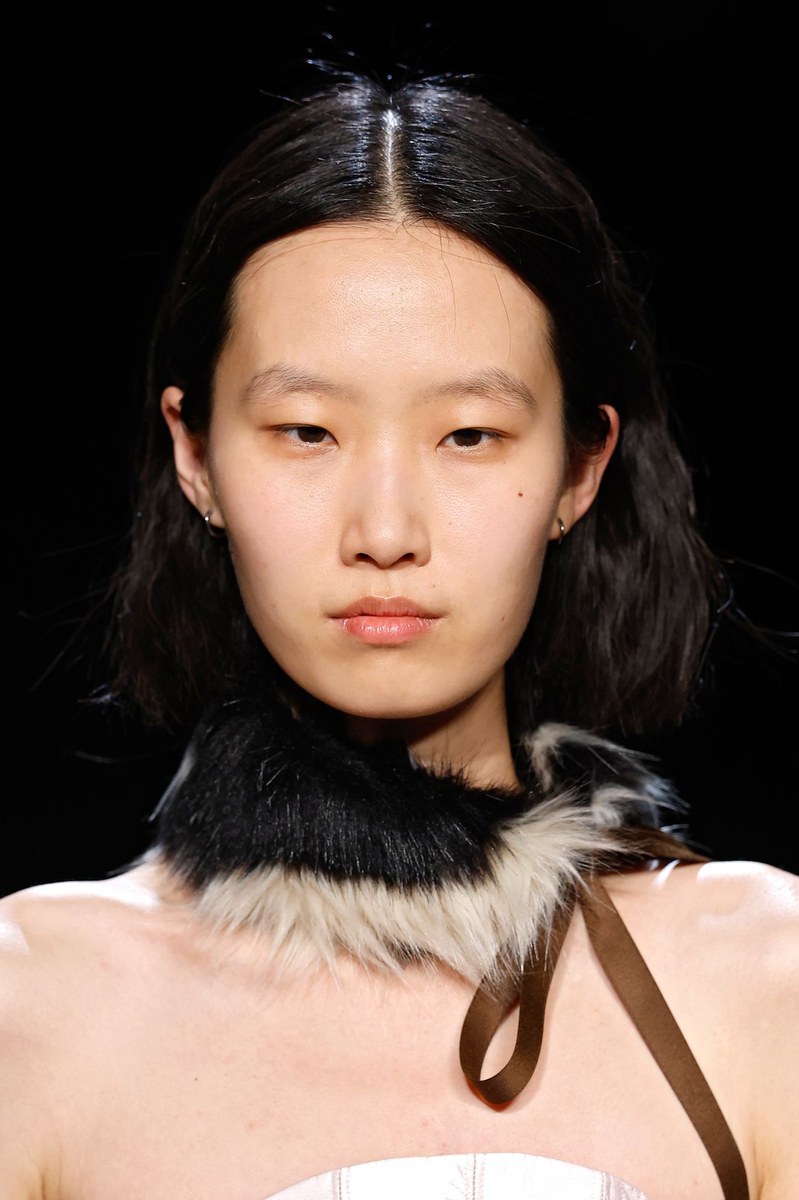
Crushed and crinkled velvet carries significant weight across the lineup, appearing in the heavily textured outerwear of Look 3, the column dress of Look 15, and the draped top of Look 14, each time catching light differently depending on construction and pile direction. Fluid satin in bias cuts drives Looks 9, 11, 13, 16, and 18, with a heavy, high-momme drape that photographs as liquid rather than stiff. Sheer silk chiffon in Looks 7 and 8 layers over velvet trousers and satin pants, adding transparency without reducing weight. Look 5 features quilted, metallic outerwear that reads as a technical fabrication, with a crinkled foil surface over what appears to be a down or fiber fill.

Look 3
Look 3

Styling and Layering

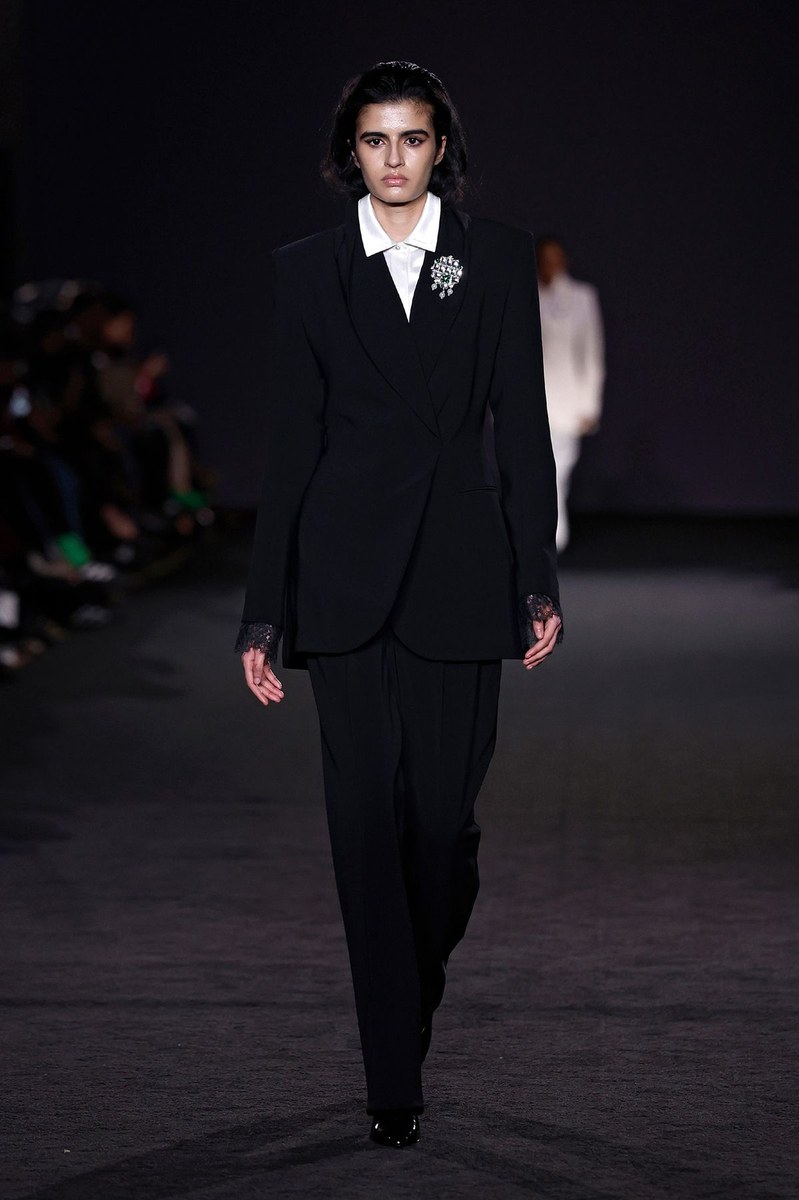
Thin black leather belts appear repeatedly as the primary layering tool, cinching draped chiffon tops over tailored trousers in Looks 7, 8, 9, and 13 to define the waist without construction. Knit sweaters in Looks 6 and 10 are worn draped across the shoulder rather than pulled on, functioning as a shoulder wrap rather than a conventional top layer. Crystal brooches on the lapels of Looks 1, 2, and 12 serve as the recurring jewelry anchor, keeping embellishment concentrated and editorial. Footwear stays consistent throughout: pointed-toe black kitten heels or low slingbacks that lengthen the leg without competing with the drama of the textile.

Look by Look Highlights

Look 1 The black double-faced crepe suit with lace-trimmed cuffs and a crystal brooch establishes the collection's power dressing entry point and presents as an immediately shoppable executive wardrobe piece.

Look 1
Look 1

Look 2 A white version of the same suit in a satin-faced lapel fabric reads as bridal adjacent and expands the suiting into occasion wear without requiring a separate design investment.

Look 2
Look 2

Look 5 The oversized crinkle-foil quilted coat with a contrasting ivory quilted collar is the statement outerwear piece of the collection and will photograph strongly in editorial contexts that drive sell-through.

Look 5
Look 5

Look 11 Rust-red bias satin tops with a long trailing drape panel paired with straight black trousers represent the most commercially accessible evening separates moment in the collection, and the color reads as a strong alternative to the season's burgundy fatigue.

Look 11
Look 11

Look 12 An olive structured blazer over a rust satin shirt with an embellished black skirt draped beneath combines three of the collection's core elements into one look that buyers can break apart into separates across multiple categories.

Look 12
Look 12

Look 17 The gunmetal crushed velvet column dress with a fluted metallic brocade hem reaches the production complexity peak of the collection, requiring at least two distinct fabric sourcing channels, but it anchors the formal tier with clear red carpet positioning.

Look 17
Look 17

Look 18 A silver halter neck draped gown with a thigh-high split is the most immediately commercial formal piece, with a clean single-fabric construction that reduces production cost while maintaining evening authority.

Look 19 The ivory floral brocade mermaid gown with a bateau neck closes the collection as a bridal or white tie option and represents a distinct revenue category separate from the core ready-to-wear.

Look 19
Look 19

Operational Insights

Fabric sourcing: High-momme satin, crushed velvet, and crinkle-foil metallics dominate the collection. Buyers should confirm minimum order quantities and lead times for the foil-quilted fabrication in Look 5 early, as that material category has had supply volatility in recent seasons.

Separates strategy: At least twelve of the nineteen women's looks break cleanly into tops and bottoms or jacket and skirt pairings. Style directors should plan floor sets around the separates logic rather than treating looks as fixed units, which maximizes SKU flexibility and average transaction value.

Brooch accessory: Crystal cluster brooches appear in Looks 1, 2, and 12. Product managers should evaluate whether to source them as a branded accessory add-on, since they drive the tailoring category's visual identity and present a low-cost high-margin attachment opportunity.

Color sequencing: Olive, rust, and gold form a cohesive warm-neutral grouping that can be merchandised together as a capsule distinct from the black core. This grouping targets a customer who finds all-black collections visually monotonous but still wants evening sophistication.

Occasion tier clarity: At least four looks (Looks 17, 18, 19, and Look 14) operate exclusively in the formal or bridal occasion tier. Buyers at multi-brand retailers should treat these as a separate buy from the suiting and separates, since they require different floor placement, margin expectations, and customer communication.

Look 14
Look 14

Complete Collection

Look 4
Look 4
Look 6
Look 6
Look 7
Look 7
Look 8
Look 8
Look 9
Look 9
Look 10
Look 10
Look 13
Look 13
Look 15
Look 15
Look 16
Look 16
Look 20
Look 20
Look 21
Look 21
Look 22
Look 22
Look 23
Look 23
Look 24
Look 24
Look 25
Look 25
Look 26
Look 26
Look 27
Look 27
Look 28
Look 28
Look 29
Look 29
Look 30
Look 30
Look 31
Look 31
Look 32
Look 32
Look 33
Look 33
Look 34
Look 34
Look 35
Look 35
Look 36
Look 36
Look 37
Look 37
Look 38
Look 38
Look 39
Look 39
Look 40
Prabal Gurung

About the Designer

Prabal Gurung was born in Singapore in 1979 to Nepalese parents and grew up in Kathmandu, raised largely by his mother, a schoolteacher, after his father's volatile presence made childhood difficult. He attended St. Xavier's, a Jesuit school in the city, and absorbed the textures of Nepal around him, the embroidery, the saturated color, the textile traditions that ran through the markets and the festivals, before he had any framework for what they would later become in his hands. He has written about that childhood candidly in his memoir, including the bullying and abuse he survived, and that honesty has become part of how his work is understood: clothes as a form of self-assertion for people who have been told to make themselves smaller.

He studied fashion at the National Institute of Fashion Technology in New Delhi, where he apprenticed alongside Manish Arora, absorbing the maximalism and craft intensity of Indian fashion. What pulled him toward New York was, by his own account, an episode of The Oprah Winfrey Show he saw while back in Kathmandu: "I had no idea who she was. There was this show about living your dreams." He enrolled at Parsons, interned at Donna Karan, won the school's top design prize in his first year, and graduated with a foundation in both technical construction and the American commercial sensibility. Two years with Cynthia Rowley's production team followed, and then five years as design director at Bill Blass, one of the most rigorous training grounds available in American fashion, where he learned what it meant to run a heritage brand's entire creative output.

He launched his own label in February 2009, and the response was almost immediate. Michelle Obama wore his designs repeatedly, as did the Duchess of Cambridge, Oprah Winfrey, and eventually Priyanka Chopra and Shakira. The 2010 Ecco Domani Fashion Fund Award, the CFDA Swarovski Award for Womenswear in 2011, and a runner-up position in the CFDA/Vogue Fashion Fund underscored his standing in the industry. He makes over 80 percent of his collection in New York and has consistently pushed the industry toward greater representation, being among the first designers to feature plus-size models on the runway. In 2011 he co-founded the Shikshya Foundation Nepal to provide education for underprivileged children, and he was named a Goodwill Ambassador for Maiti Nepal. In 2025 he published his memoir, Walk Like a Girl.

"I had no idea who she was. I had just come back from India, and I was back home in Nepal, and there was this show about living your dreams."

"Fashion is a conversation. It's not just about clothes. It's about identity, it's about culture, it's about where you come from and where you're going."

✦ This report was generated with AI — combining human editorial vision with Claude by Anthropic. Because the future of fashion intelligence is already here.