Private Policy FW26 Women Looks Report

Private Policy FW26 Women Looks Report
Private Policy FW26 Women Looks Report

New York Fashion Week

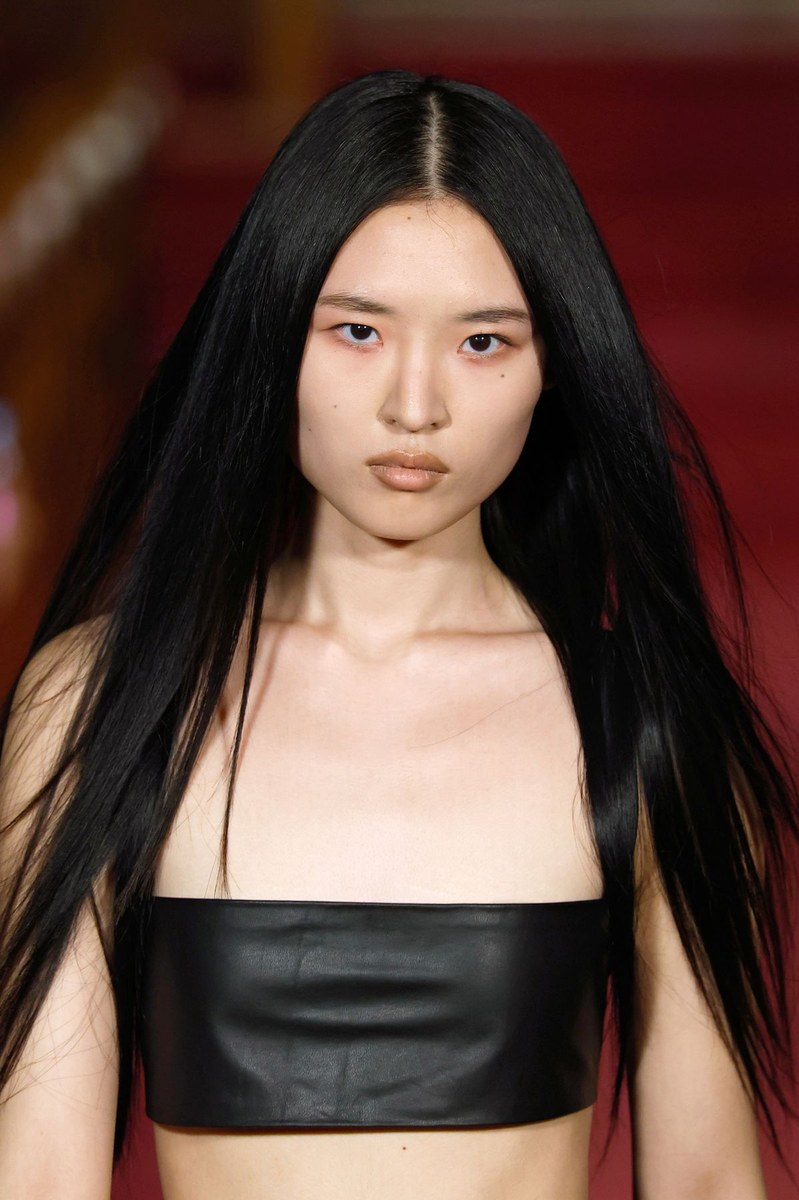
Private Policy FW26 fuses workwear architecture, sportswear graphics and Western references into a gender-fluid wardrobe built for a customer who moves between subcultural codes without apology. Buyers are actively seeking product that bridges men's and women's departments without flattening either, and this collection arrives at precisely that moment.

Silhouette and Volume

Body-skimming mini proportions alternate with floor-length drama throughout. Rarely does anything settle in the middle. Cropped bombers and boxy utility jackets sit above asymmetric micro-skirts in Looks 1 and 9, creating a compact upper volume that reads strong against bare leg. Looks 7, 10 and 19 introduce the maxi silhouette as a counterweight, built in high-waisted leather, denim and satin that flares toward the hem with deliberate formality.
Color Palette

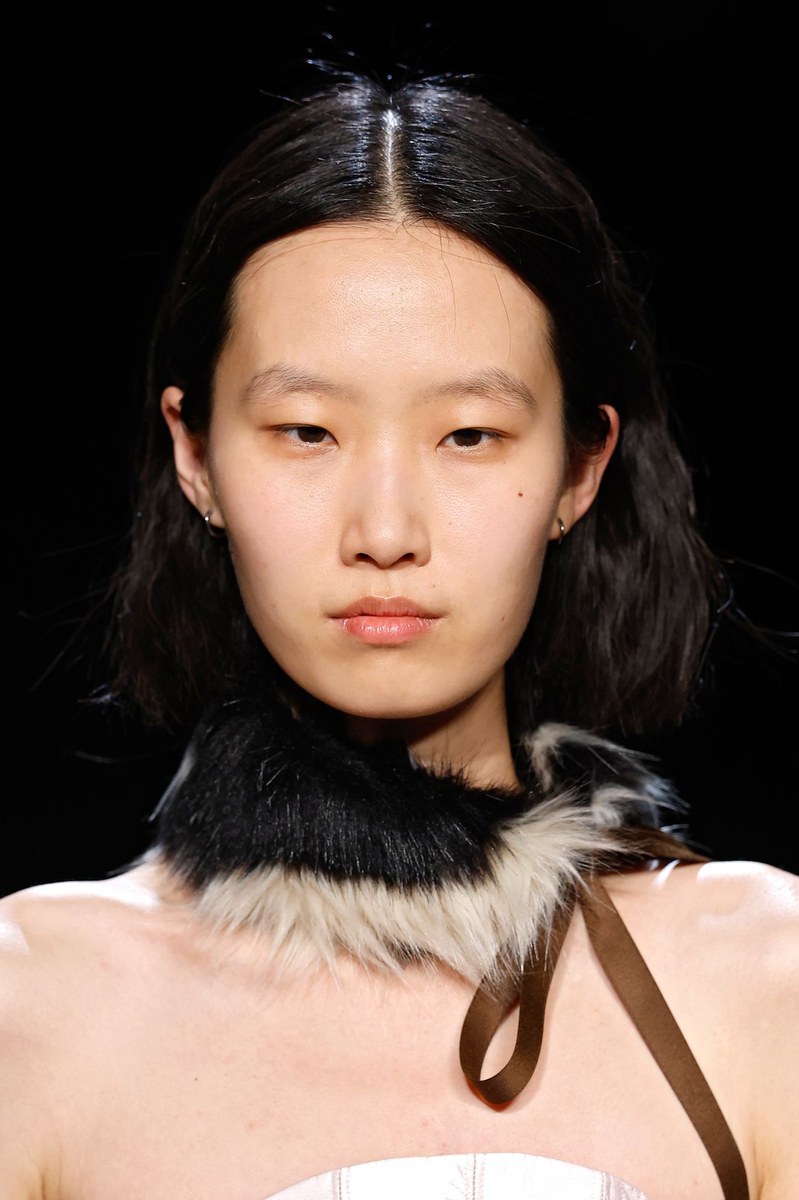
Tan and caramel leather dominate from Look 1 through Look 9, grounding the Western references in warm, cohesive amber tones. Black enters as a hard reset in Looks 6, 11, 12, 15, 16 and 17, carrying downtown severity that contrasts directly with the earth tones preceding it. Powder blue appears twice, in Looks 3 and 19, injecting a cool satin luminosity that reads as the collection's most commercial and easily transferable color story. Look 10's red and tan colorblock rugby and Look 8's red SWEAT tank function as graphic punctuation across an otherwise restrained palette.

Look 1
Look 1

Materials and Textures

Glazed leather is dominant, appearing in cognac bombers, maxi skirts and full leather suits across Looks 1, 4, 7 and 8. Its patent-adjacent surface catches light without softening the structure. Satin in a fluid, medium-weight hand appears in Looks 3, 5 and 19, draping cleanly against the body and providing contrast to stiff leather and denim elsewhere. Chunky hand-knit crochet recurs as a headline accent in Looks 2 and 4, in elongated hood forms that hang past the waist and introduce a craft-forward texture the rest of the collection does not repeat. White canvas with metal snap hardware in Look 13 and grey denim with press-stud paneling in Look 14 signal a utilitarian fabrication direction with strong potential in the workwear-adjacent market.

Look 13
Look 13

Styling and Layering

Structured outerwear pairs consistently with bare or lightly covered legs, using knee-high and cowboy boots to anchor the exposed lower half rather than relying on hosiery. Tan suede cowboy boots recur across Looks 1, 4, 5, 10 and 19, functioning as a through-line that ties the Western reference across otherwise distinct garment categories. Visible hardware, snap closures and studded trim serve as the decorative layer in menswear-influenced looks rather than print or embroidery. Branded streetwear shorthand appears in the SWEAT logo tee and city-name knitwear across Looks 7, 8 and 11, reading well in a wholesale environment.

Look by Look Highlights

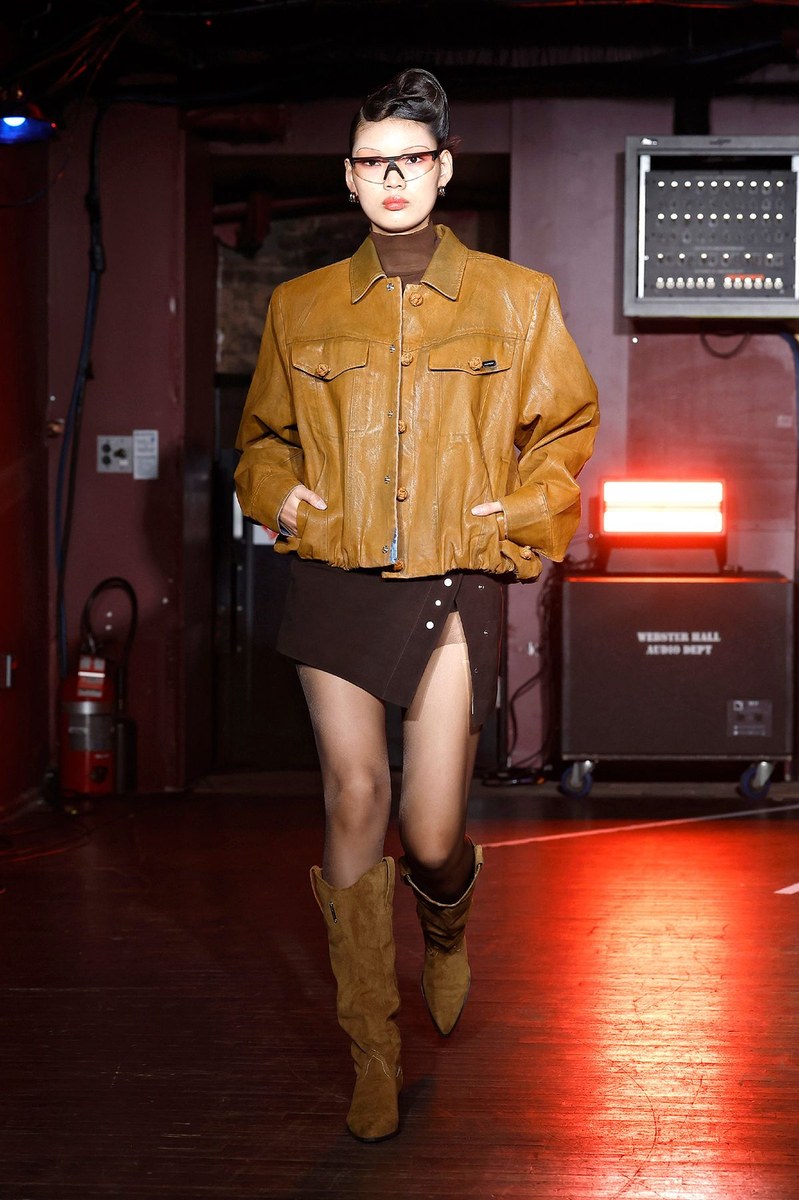
Look 1 The cognac patent leather bomber over a brown asymmetric micro-skirt with suede cowboy boots establishes the collection's core silhouette logic and will be the most repeatable unit for buyers building a Western-influenced capsule.

Look 4 A full head-to-toe caramel glazed leather suit with an elongated crochet hood is the collection's single most arresting statement piece, with the crochet component functioning as a separable accessory that widens its commercial range.

Look 4
Look 4

Look 7 A white SWEAT logo tee tucked into a floor-length cognac leather maxi skirt is immediately wearable, with high potential for editorial placement and retail sell-through.

Look 7
Look 7

Look 9 The sharply padded gold satin cropped blazer over a caramel ribbed midi skirt with tan gloves and a suede baker boy cap is the collection's most polished look and the strongest argument for a formal-adjacent leather and satin delivery.

Look 9
Look 9

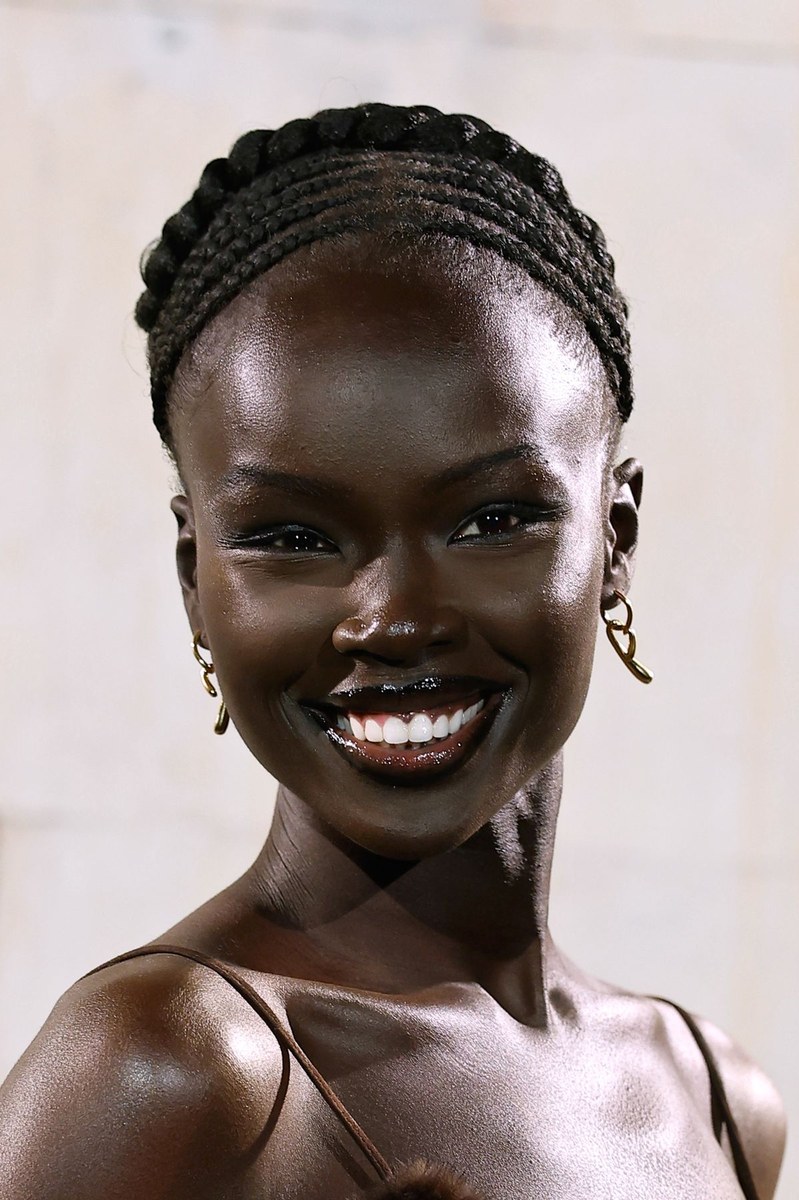
Look 11 The black cable-knit New York cardigan with white shirt cuffs and a matching ribbed skirt, worn with black knee boots and long beaded braids, bridges the streetwear and knitwear categories in a way that has direct application for department store buying.

Look 11
Look 11

Look 13 An all-white canvas suit with shearling collar and cuffs, studded with metal snaps across the trouser legs, is the most technically constructed look in the collection and signals a hardware-detail direction that product managers can apply across multiple categories.

Look 18 The grey plaid stretch mock-neck mini dress worn with tan suede cowboy boots and a croc-embossed chain bag is the tightest, most trend-aligned look in the collection and the easiest entry point for a contemporary buyer with a younger customer base.

Look 18
Look 18

Look 19 The powder blue satin maxi shirtdress with chest patch pockets and a deep front slit, styled with tan ankle boots, is the most versatile individual piece in the collection and functions as a strong hero dress for resort or transitional floor sets.

Look 19
Look 19

Operational Insights

Leather continuity: Glazed and patent leather pieces across Looks 1, 4, 7 and 8 share a consistent amber tone that allows buyers to build a tight leather capsule from a single colorway without relying on expensive cross-category color matching.

Hardware as signature: Snap closures, metal studs and press-stud paneling appear across Looks 13, 14, 15 and 17 as a recurring construction detail that product managers can adopt as a brand-differentiating trim strategy across outerwear and bottom categories.

Gender-fluid assortment opportunity: Looks 2, 4, 8, 13, 14 and 15 were worn by male models but read as shared wardrobe product, which gives style directors a direct path to building a gender-neutral floor set without requiring separate design development.

Logo and city-name knitwear as a scalable program: The SWEAT graphic in Looks 7 and 8 and the New York cable-knit in Look 11 form the blueprint for a location-based or branded knitwear program that can be extended seasonally with low design risk and strong proven commercial precedent.

Boot dependency: Suede cowboy boots anchor at least seven looks in the collection, making them an essential companion purchase for any retailer buying the leather or satin dress categories, and a strong argument for a coordinated footwear collaboration or exclusive boot colorway negotiation.

Complete Collection

Look 2
Look 2
Look 3
Look 3
Look 5
Look 5
Look 6
Look 6
Look 8
Look 8
Look 10
Look 10
Look 12
Look 12
Look 14
Look 14
Look 15
Look 15
Look 16
Look 16
Look 17
Look 17
Look 20
Look 20
Look 21
Look 21
Look 22
Look 22
Look 23
Look 23
Look 24
Look 24
Look 25
Look 25
Look 26
Look 26
Look 27
Look 27
Look 28
Look 28
Look 29
Look 29
Look 30
Look 30
Look 31
Look 31
Look 32
Look 32
Look 33
Look 33
Look 34
Look 34
Look 35
Haoran Li

About the Designer

Haoran Li grew up in Qingdao, the coastal city in eastern China whose name Western drinkers know from the beer. His parents were jewelry designers, and growing up inside a household that treated making objects as a serious profession shaped how he understood craft before he had language for it. Siying Qu comes from Xining, in the remote plateau province of Qinghai in western China, a region geographically and culturally distant from the coastal cities that dominate the country's fashion imagination. Her family was in business but carried a private love for fine arts, and her mother had an exacting eye for the details of how a garment was constructed. Qu arrived in the United States at 15 as an exchange student in North Carolina, which is where she first had space to seriously consider fashion as a direction, understanding it from the start as a discipline that fused art with commercial intelligence rather than treating them as opposing forces.

Both ended up at Parsons School of Design in New York, and their working tables happened to land next to each other during the pressure of senior thesis year. Li was specializing in womenswear with a focus on textile construction; Qu was deep in menswear and silhouette. Before graduating they had both interned at Alexander Wang, Calvin Klein, and 3.1 Phillip Lim, absorbing the operational reality of how a New York fashion business actually runs. Near the end of their final year, after the two had begun to pick up press through student awards, Li asked Qu if she wanted to start something together. She said yes. The brand name came from the popup legal text that appears on every website they visited: "privacy policy." They twisted the word order, and the renaming felt right, a small subversion with a conceptual edge.

Private Policy launched in 2015 and built its identity around one specific structural decision: each collection would take a single social or political topic as its subject, the way a newspaper takes a story, and translate it through clothes. Enslaved fishermen in Southeast Asia, globalization and the Brexit moment, pharmaceutical industry power, gender fluidity as a lived reality among their downtown New York community. The brand's genderless silhouettes are produced between New York and Shanghai and have appeared on Dua Lipa, Hailey Bieber, Kendall Jenner, and Bella Hadid. Li handles textiles and fabrication; Qu handles shape and silhouette. The division is clean and collaborative, and both have been recognized by Forbes China and nominated by the Fashion Group International as Rising Stars.

"Parsons encourages students to find purpose for making clothes, because obviously, humans are not lacking clothes, but lacking meaning. That is also where the idea of Private Policy comes from."

"We want to explore and bring out more social and political events from our community to more people; to let more people learn about different cultures and what's happening around the world."

✦ This report was generated with AI — combining human editorial vision with Claude by Anthropic. Because the future of fashion intelligence is already here.