Ulla Johnson FW26 Women Looks Report
New York Fashion Week
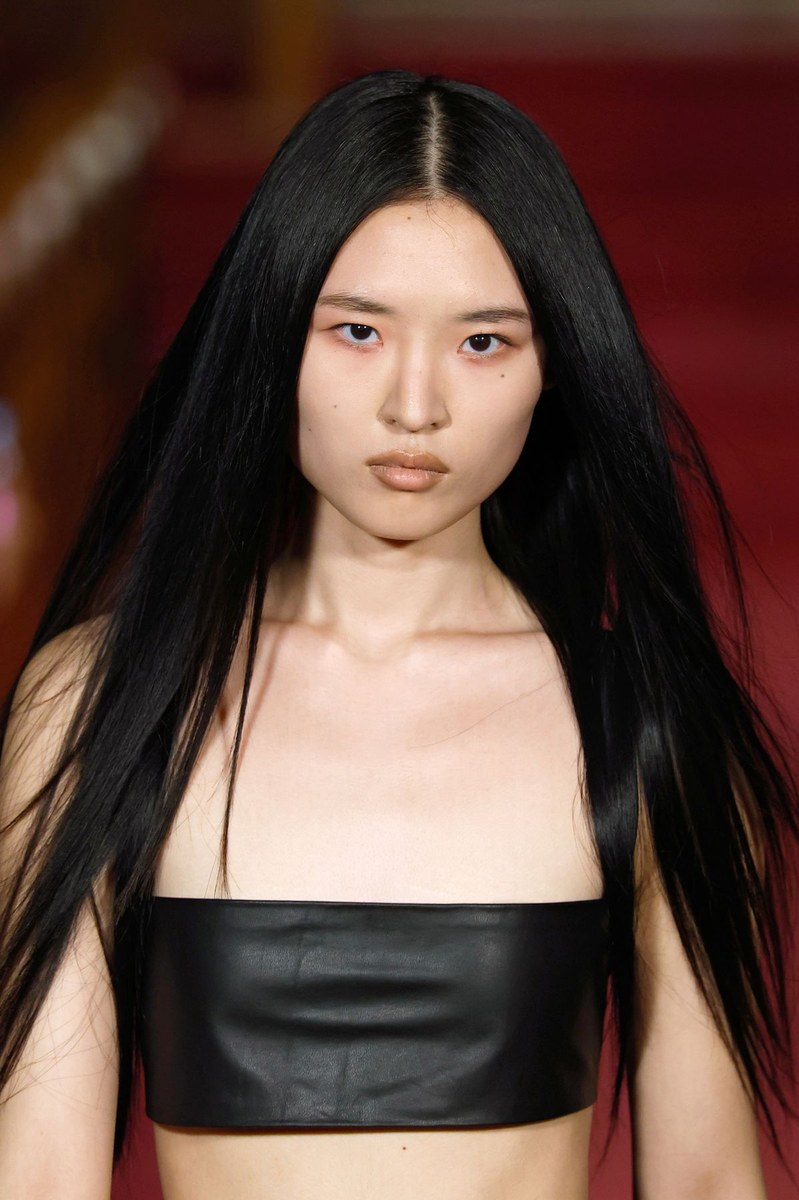
Ulla Johnson FW26 builds a wardrobe around deliberate contrast, pairing raw, handcrafted textures against liquid or lacquered surfaces to create clothes that feel both labor-intensive and deeply wearable. For buyers, this positions the brand squarely in the growing market for artisan-coded luxury at an accessible price tier, where consumers want craft they can actually wear.
Silhouette and Volume
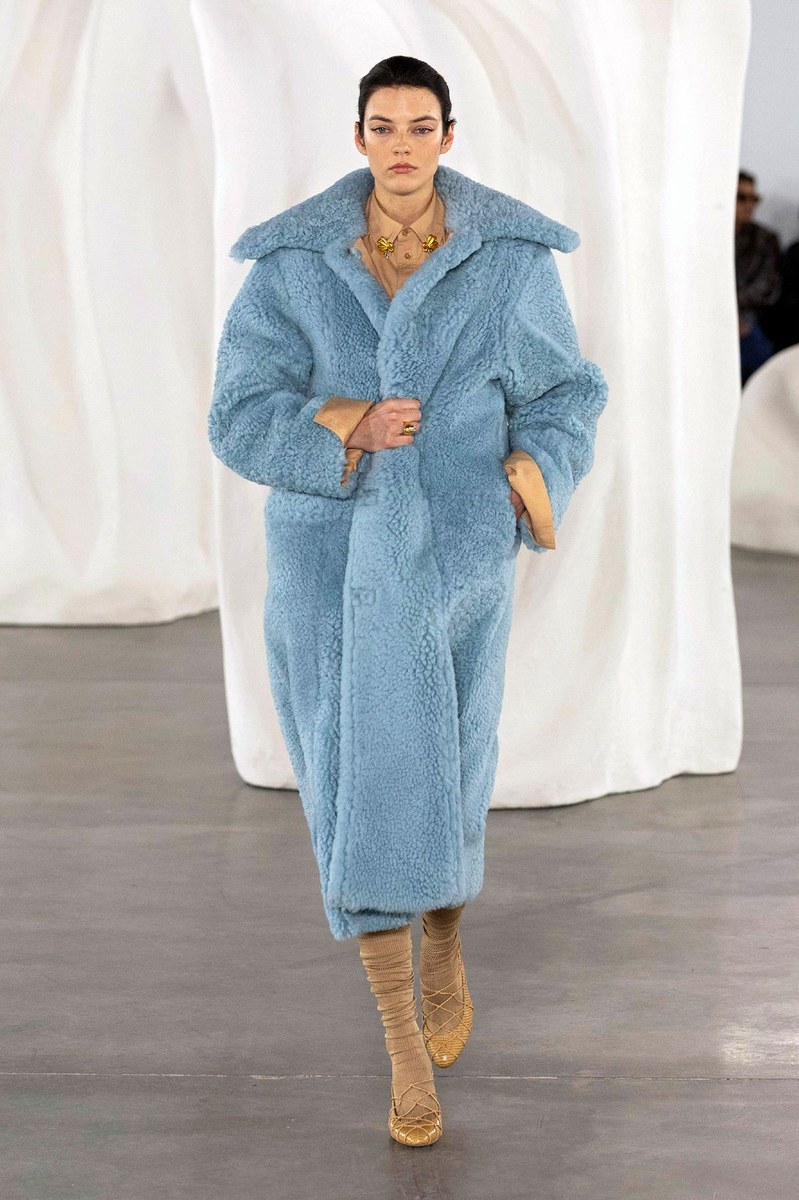
Two opposing ideas of volume drive the silhouette story. Oversized cocoon shapes dominate outerwear, as in the enveloping shearling coat of Look 1, while skirts and dresses often collapse inward at the hem or gather into controlled balloon forms. Mid-length proportions recur consistently, landing between the knee and the ankle and making these pieces easy to merchant across multiple customer profiles. Shoulders stay relaxed and dropped throughout, reinforcing a sense of ease even in more formal evening pieces.
Color Palette
Chartreuse yellow anchors the collection as its boldest statement, appearing in Look 3, Look 5, Look 7, and Look 10. It reads as a direct commercial signal that the brand is committed to color as a sales driver rather than a safe neutral story. Magenta fuchsia appears in Look 4 and Look 6 with equal confidence. Earthy tones of olive, tobacco brown, and warm sand ground these saturated brights, surfacing across Looks 2, 9, 15, and 18. Buyers can build assortments with high-impact hero pieces and quieter fill-in separates from this carefully balanced palette.

Materials and Textures
Textural contrast is the collection's primary design language. Crinkled patent or lacquered coatings appear on trousers in Look 2 and shorts in Look 17 and Look 19, giving a stiff, reflective surface that sits against the soft bouclé or chunky marl knits layered above them. Lace runs throughout, stitched into the hem of Look 3's chartreuse skirt, banding the maxi dress in Look 5, and forming the structural fabric of the slip dress in Look 16. Strong handcraft investment appears in the pink crochet co-ord in Look 8 and the gold textured knit and skirt in Look 10, signaling premium retail positioning.

Styling and Layering
Layering is loose and intentional, never fussy. Oversized chunky scarves carried in hand in Look 2 and Look 12 function as accessories and as visual extensions of the knit story, a styling choice that will photograph well in editorial and translates directly into a scarf upsell at retail. Leather gloves in oxblood or olive appear across Looks 3, 7, 8, and 16, adding a consistent accessory narrative that buyers can carry as a category alongside the apparel. Footwear alternates between lace-up flat sandals, pointed kitten-heel pumps, and tall burgundy boots, covering enough range that the collection does not depend on a single shoe story to close a look.
Look by Look Highlights
Look 1 The powder-blue shearling maxi coat in a wrap silhouette is the single most immediately merchantable outerwear piece, with broad appeal and a strong hero SKU profile for department store buys.
Look 5 The chartreuse silk maxi dress banded with horizontal black lace tiers and tied with a black ribbon belt is a statement dress with clear occasion dressing potential and a strong margin story given the fabric and trim complexity.

Look 8 The blush pink open-weave crochet top and matching maxi skirt with applied three-dimensional floral rosettes represent the collection's highest craft investment and will perform for independent boutiques targeting the artisan luxury customer.

Look 10 The gold chainmail-textured open-knit top paired with an asymmetric gold tile-embellished mini skirt and black ribbon belt delivers a full evening look that reads glamorous without a conventional gown structure, useful for buyers building non-traditional formalwear options.

Look 13 The black satin single-button blazer worn over a black lace bralette and wide-leg black denim is the collection's most accessible and broadly sized-in entry point, with strong potential across contemporary and bridge retail doors.

Look 15 The double-breasted oversized blazer in a navy and tobacco floral jacquard, worn alone as a mini dress with knee socks and block-heeled mules, is a high-impact styling unit that will attract press attention and drive traffic to the broader buy.

Look 11 The sand-tone jacquard cocoon coat dress scattered with tufted blue and white feather appliqués addresses the customer seeking volume and decoration without color, and the feather detailing adds a hand-applied element that supports a higher retail price point.

Look 19 The gold crinkle-foil puff-sleeve blouse paired with black lacquered patent shorts and fishnet tights builds a party look entirely from separates, giving buyers flexibility to merchandise the pieces independently or as a unit.

Operational Insights
Craft premium pricing: The crochet, open-knit, and feather-embellished pieces in Looks 8, 10, 11, and 14 carry visible labor investment that supports a higher initial markup. Style directors should position these as key items with dedicated in-store storytelling rather than folding them into rack merchandising.
Scarf as accessory category: Oversized fringe-edge marl scarves carried in Looks 2 and 12 function as standalone accessories with strong gifting and add-on potential. Buyers should request these as separate SKUs and plan a scarf assortment alongside the knitwear buy.
Color sequencing for floor sets: Chartreuse and fuchsia pieces will need careful floor placement to avoid cannibalizing each other. Plan them in separate fixture clusters anchored by the olive and tobacco neutrals so each color story reads cleanly and the brights drive traffic without visual noise.
Lace as a cross-category material thread: Lace appears in at least six looks across skirts, dresses, slips, and trim details. Product managers should track lace as a recurring material commitment and audit whether current supplier capacity can support replenishment if any of those styles reorder.
Separates ratio: Most of the collection is built from separates rather than complete dresses, which gives buyers maximum flexibility to build out a curated assortment at varied price points. Style directors should prioritize top and bottom pairings that can be sold as a set at a combined retail price while remaining individually ticketed on the floor.
Complete Collection


About the Designer
Ulla Johnson grew up in Yorkville, on Manhattan's Upper East Side, the daughter of a Serbian mother and a Danish father, both archaeologists who met on a dig in Yugoslavia. The childhood that followed was peripatetic and saturated with objects: family excavations took her to Iran and Germany, and her mother collected textiles and jewelry wherever they went, building a tactile archive that Johnson absorbed before she understood what it was teaching her. She went to Bronx Science, then the University of Michigan, where she studied psychology and women's studies, steered away from fashion by parents who wanted her grounded in a liberal arts education. The clothes remained an obsession she carried quietly alongside the coursework.
She graduated at 24, moved back to New York, and started the brand immediately, with five tailored separates and five thousand dollars of her own money. There was no apprenticeship, no design school, no house to learn from. She was self-taught and instinct-driven, and the Lower East Side boutique owners she knew became her first stockists. Barneys bought the collection in 2000, giving her an early anchor in the market, and she grew slowly from there, deliberately resisting the kind of expansion that would have required her to design for someone other than herself.
Her supply chain reflects the archaeology in her blood: she works with artisans in Peru, India, Kenya, the Philippines, and Uruguay, sourcing handcraft techniques that she folds into clothes designed to be worn in SoHo or Montauk without a seam of effort showing. Her collections draw on paintings, fiber art, and the textile traditions she encountered as a child, including a collaboration with the estate of Lee Krasner that translated the painter's canvases directly into printed cloth. In 2025 the American Apparel and Footwear Association named her Designer of the Year. She still works from her SoHo studio, lives in a Fort Greene brownstone with her husband and three children, and has never quite separated her design life from the rest of it.
"Being a female designer is incredibly important to me. As a woman designing for women, I really do live in my work. I know how I want a piece to make me feel, and oftentimes that drives the creative process."
"The touch of a garment is really the first thing that I look at. Things that feel really soft, that have an integrity on the hanger, but when worn really communicate a warmth and a sense of having been touched."
✦ This report was generated with AI — combining human editorial vision with Claude by Anthropic. Because the future of fashion intelligence is already here.