Zomer FW26 Shoes

Zomer FW26 Shoes

Zomer FW26 Shoes Report

Zomer FW26 pulls in two distinct directions: a heavily repeated chunky running sneaker in grey technical mesh alongside a single sharp-edged leather wedge mule. Buyers need to read this split carefully. It signals a deliberate tension between athletic utility and refined construction, opening two very different wholesale and retail stories.

Silhouettes and Construction

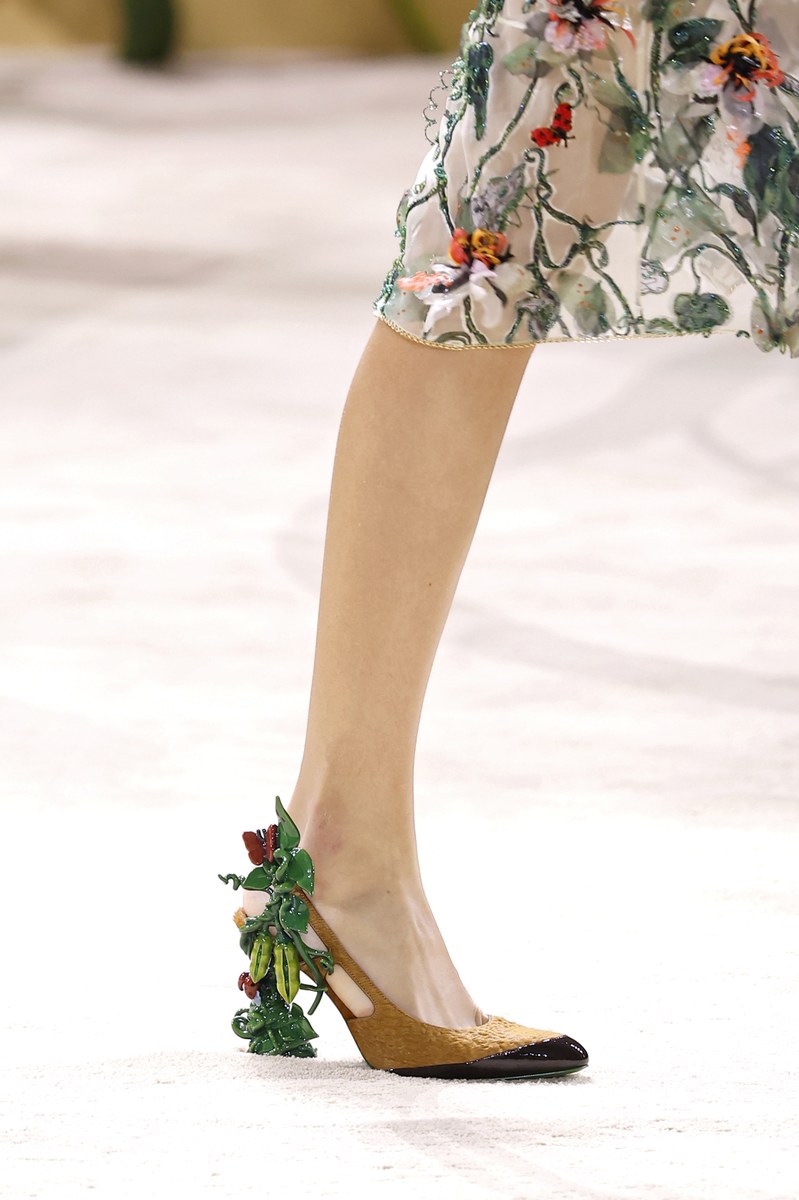
Four of the five looks center on a low-profile, heavily cushioned running trainer with a multi-unit stacked foam and rubber outsole, sitting roughly 35 to 40mm at the heel with minimal platform taper. The toe box is wide and rounded, built on a performance last rather than a fashion one. Shoe 5 breaks entirely from this pattern. A pointed, slightly squared-off toe sits on a solid wedge heel of approximately 60mm, constructed as a mule with no back strap and an open counter.
Shoe 5
Shoe 5

Materials and Finishes

Shoes 1 through 4 share the same Asics GT-series base, combining open-knit engineered mesh on the toe box with TPU overlays at the midfoot, reinforced eyelets, and a segmented GEL-visible outsole unit in translucent rubber. Deliberate variation appears across looks, with some versions reading cleaner and others carrying a distressed, worn-in finish as seen on Shoe 4. Shoe 5 uses smooth vegetable-tanned leather in a warm tan, with a wooden or wood-effect wedge block and a clean feather edge where the upper meets the sole.

Shoe 4
Shoe 4

Color Direction

Grey, charcoal, and silver anchor the sneaker palette across all four trainer looks. Shoe 3 pushes darkest into near-black with gold and olive-yellow accent overlays, while Shoe 4 introduces the only light colorway with off-white mesh and powder blue TPU panels. Yellow lace accents and a pop of lime on the outsole unit appear on Shoe 2. Cognac tan anchors the non-athletic track with Shoe 5. The palette reads industrial and muted with controlled warm interruptions.

Shoe 3
Shoe 3

Key Models and Details

The Asics GT-2160 or a close variant appears as the base model running across Shoes 1, 2, 3, and 4, with branding visible on the tongue and lateral side in tonal or metallic treatments. Standard flat woven lacing appears on all four trainers, with no swap to elasticated or toggle closures. Shoe 5 carries no visible hardware or closure system at all, relying entirely on the slip-on wedge construction and a single vamp seam for visual structure.

Shoe by Shoe Highlights

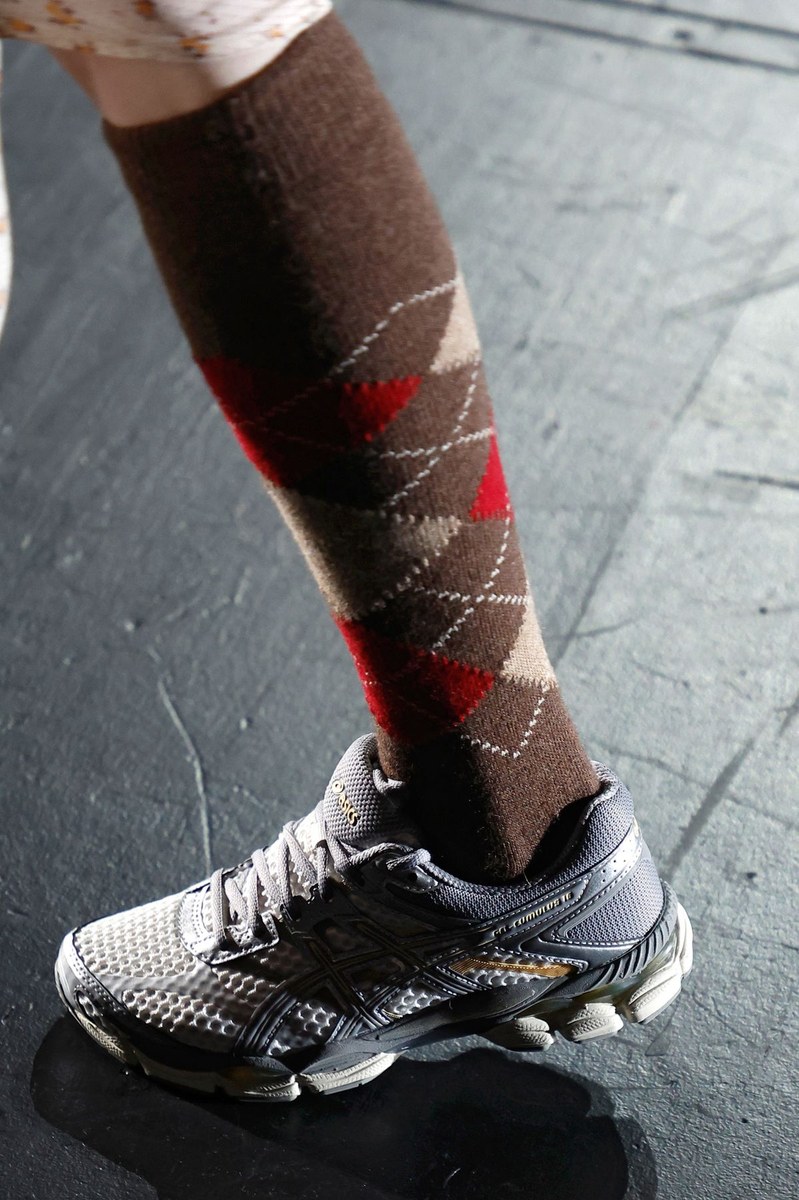
Shoe 1 pairs the grey Asics trainer with tall brown and red argyle knee socks. The contrast between athletic construction and heritage knitwear signals the collection's sartorial intent most clearly.

Shoe 1
Shoe 1

Shoe 2 runs the same trainer silhouette with green, navy, and tan argyle socks bunched at the ankle, yellow lace tips, and a visible lime outsole accent. This version carries the highest color energy in the sneaker group.

Shoe 2
Shoe 2

Shoe 3 presents the darkest colorway, a near-black upper with gold and olive-yellow overlays on the lateral cage, worn with dark plaid socks that read as a deliberate tonal camouflage strategy.

Shoe 4 is the lightest and most wearable retail option, an off-white and powder blue trainer with a worn, slightly dirty finish that positions it as the most accessible entry point for buyers serving a broader consumer base.

Shoe 5 is the collection's pivot point, a cognac leather pointed wedge mule with a solid 60mm block heel, no hardware, and a feather-edge sole that speaks directly to a tailored or occasion-wear customer the sneakers do not reach.

Shoe 3 and Shoe 4 together demonstrate how the same base construction reads across a full tonal spectrum from near-black to off-white. This matters for product managers planning colorway depth within a single SKU.

Operational Insights

Asics collaboration depth: All four trainer looks appear to use the same Asics base model. Buyers should confirm exclusivity windows or wholesale availability before committing to the sneaker story, as this silhouette is already circulating in the broader market.

Sock as accessory driver: Every sneaker look integrates argyle or plaid knee or ankle socks as a core styling tool, creating a direct cross-category sell opportunity for buyers who can bundle hosiery with footwear at point of purchase or in lookbook adjacency.

Colorway prioritization: Shoe 4 in off-white and blue carries the broadest commercial appeal and should be the lead buy quantity, with Shoe 3 in black and gold positioned as a limited or capsule depth option for accounts with higher risk appetite.

Wedge mule scalability: Shoe 5 is a single-unit silhouette with no metal hardware and a clean material story, which lowers production complexity and cost, making it a strong candidate for scaled production if the buyer demographic skews toward tailored or contemporary womenswear.

Distressed finish management: The worn effect on Shoe 4 requires tight quality control parameters in production. The line between intentional distressing and defect rejection is narrow, and buyers should request physical samples before signing off on finish standards.

✦ This report was generated with AI — combining human editorial vision with Claude by Anthropic. Because the future of fashion intelligence is already here.