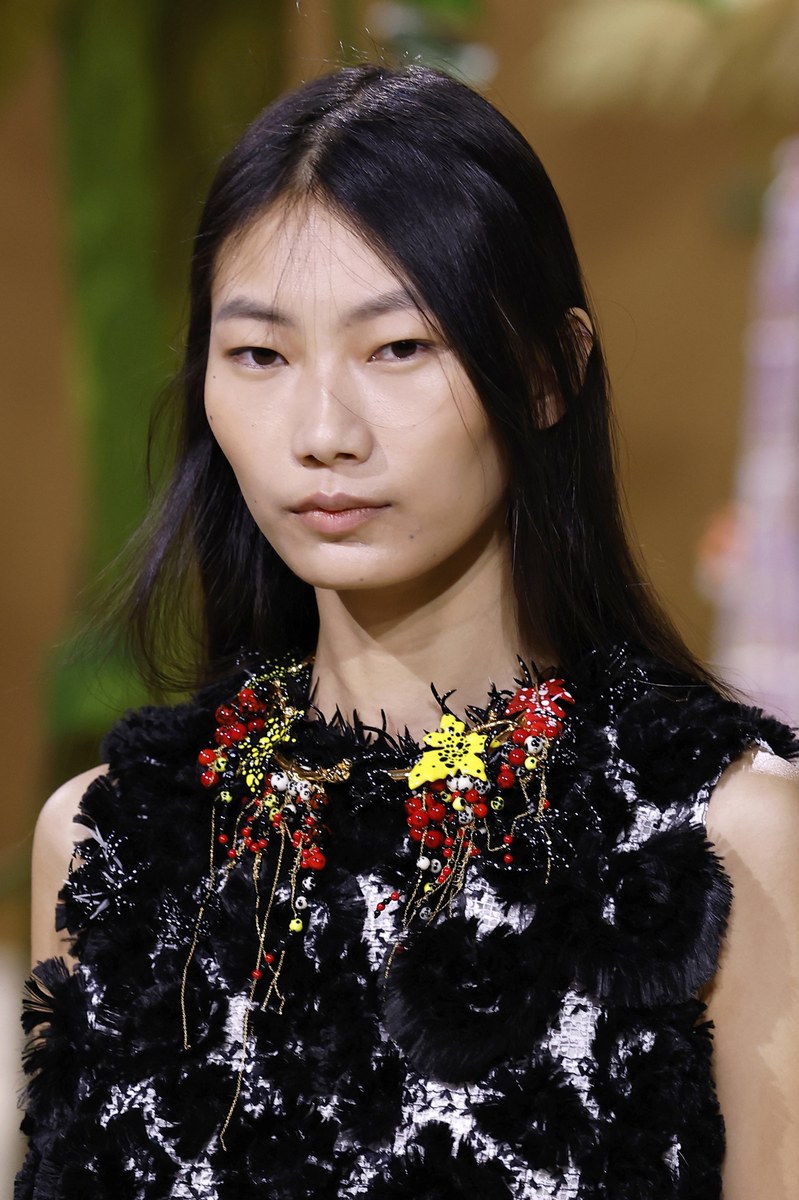
ACNE Studios FW26 Women Looks Report
Paris Fashion Week
Acne Studios FW26 builds a wardrobe around deliberate contradiction, pairing the utilitarian with the liquid, the tailored with the deconstructed, the archival with the street. For buyers, this arrives at a moment when customers are actively rejecting one-note dressing and spending on pieces that work across multiple contexts and styling registers.
Silhouette and Volume
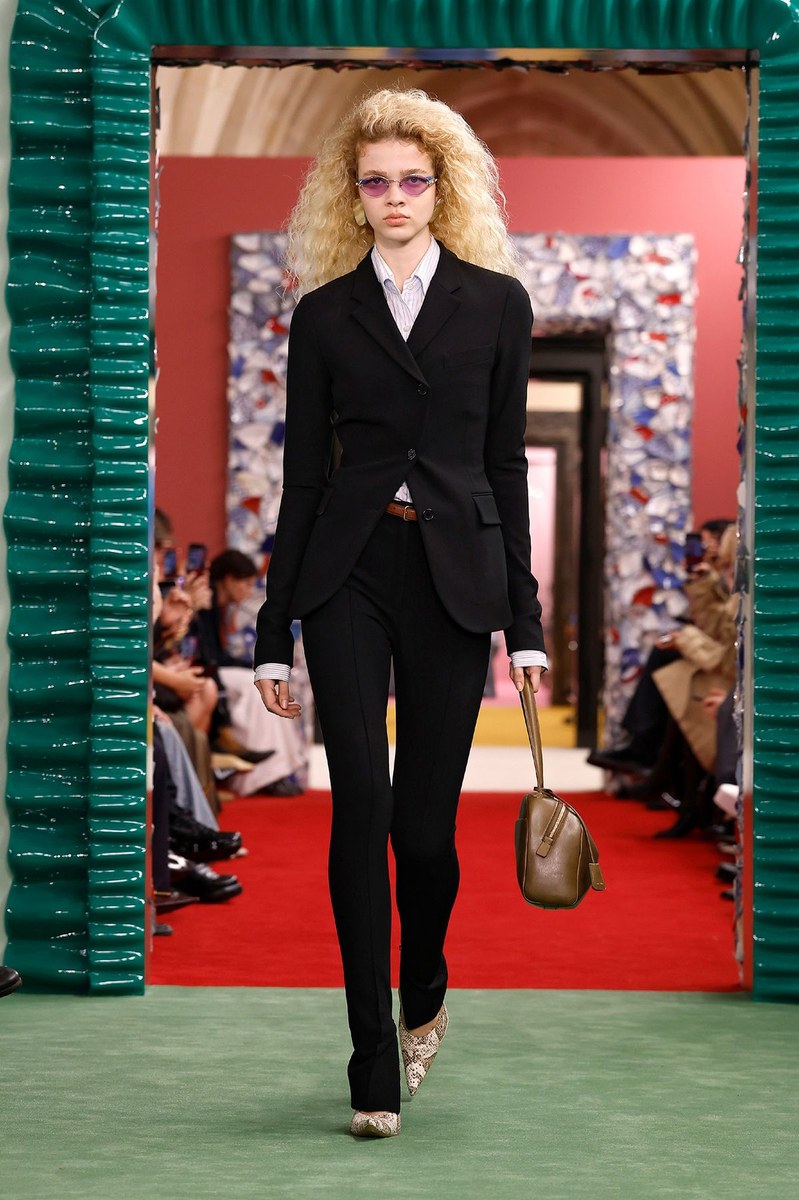
The lineup moves between two distinct poles. Fitted, elongated torsos in ribbed knits and narrow trousers anchor one end, while oversized blazers with collapsed shoulders, voluminous satin coats, and draped midi skirts occupy the other. Look 21 drives the contrast home most forcefully, a floor-length silver satin double-breasted coat that reads simultaneously as outerwear and eveningwear. Slim and high-waisted trousers, often belted tight, ground even the most exaggerated outerwear proportions.
Color Palette
Warm taupes, sandy beiges, chocolate browns, and charcoal checks dominate the color story, producing a grounded, earthy base that recurs across approximately half the collection. Against this foundation sits a series of deliberate, saturated hits: cobalt blue in Look 3 and Look 35, coral red in Look 26, forest green in Look 42, signal red in Look 38, and pale silver across Looks 19, 21, and 22. The pairing of warm neutrals with single-color saturated accents, particularly visible in Look 24 where coral meets charcoal, gives buyers a clear framework for building coordinated floor sets. Look 43 layers deep brown with forest green and a pale grey plaid scarf, a more complex tonal build that rewards the customer willing to invest in head-to-toe.

Materials and Textures
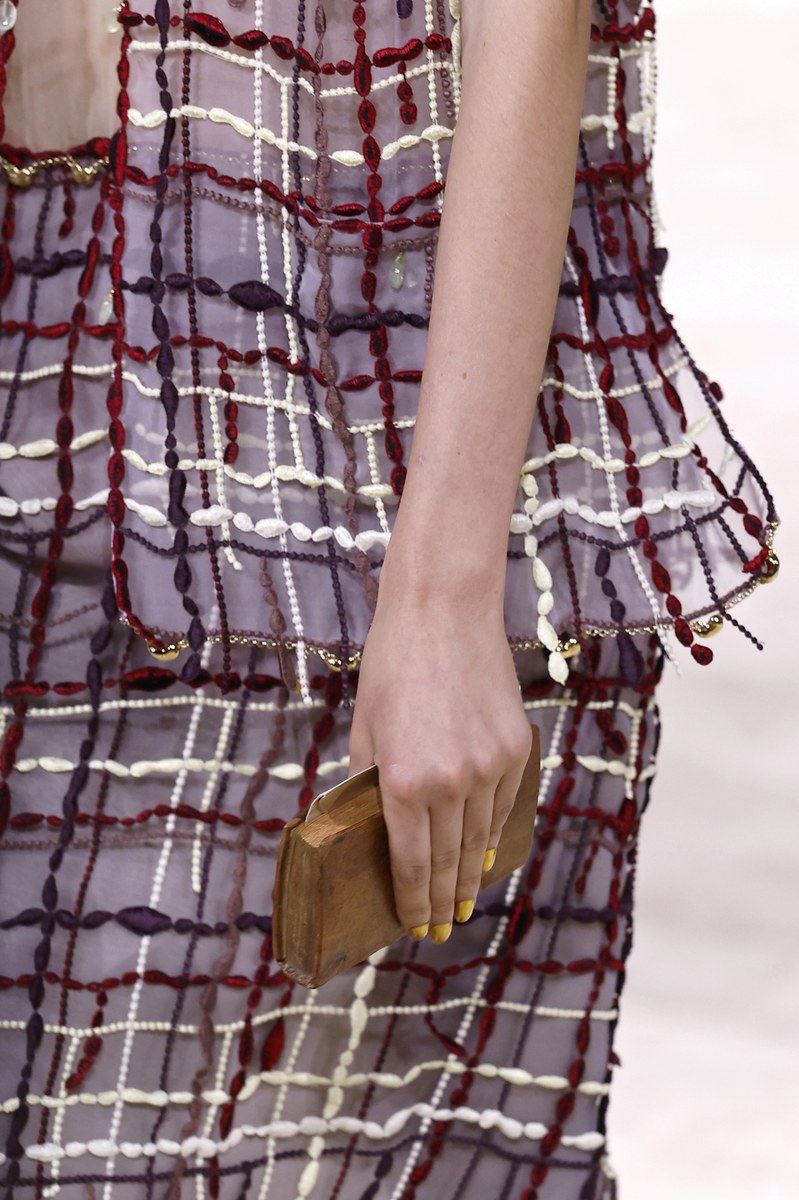
Wool checks in medium weights form the structural backbone, appearing in at least a dozen looks across blazers, skirts, trousers, and coats, with scale ranging from fine windowpane to bold plaid. Liquid satin in silver, cream, and yellow carries significant presence, cut into draped shirt-dresses and voluminous coats that read as both daytime and after-dark pieces. Leather appears in multiple weights: cropped moto silhouettes in sky blue, coral, and black in Looks 2, 4, and 26, a belted trench in deep brown in Look 40, and a sharp black mid-length version in Look 6. Fur trim at collars, cuffs, and boot tops, as seen across Looks 7, 11, 16, 18, 24, 34, and 36, adds tactile weight and commercial familiarity without overtaking the cleaner lines underneath.

Styling and Layering
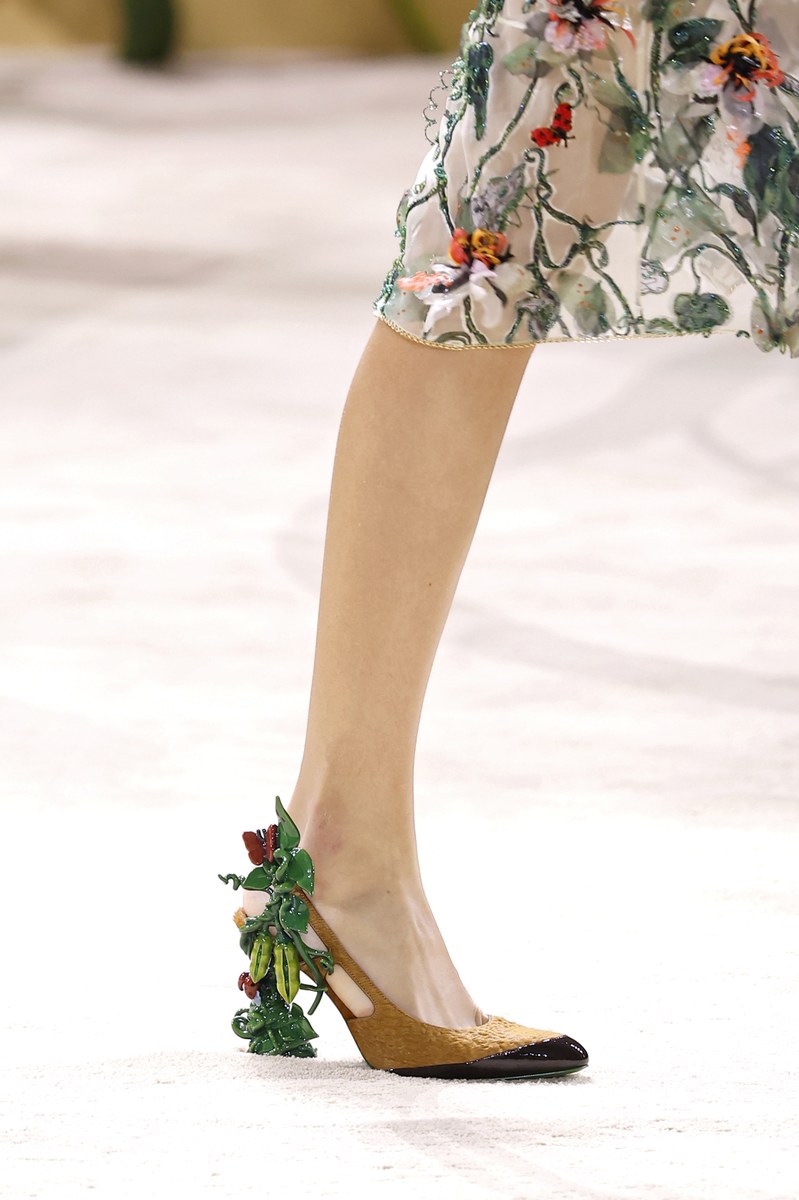
Layering logic builds the collection's character more than any single garment. A shirt worn beneath a turtleneck beneath a blazer, as in Look 7 and Look 34, creates depth without visual clutter. Printed silk and plaid wool scarves carry narrative weight across Looks 15, 17, 18, 20, 37, 41, and 43, functioning as a key volume tool wrapped loosely at the neck or draped full-length over one shoulder. Over-the-knee suede boots in taupe, cobalt, and forest green sit alongside low-heeled pumps with decorative bow hardware, giving buyers two clear footwear stories to develop with the apparel. Structured half-moon top-handles and boxy satchels in oxblood and olive range to sculptural domed styles, suggesting a bag program built around carry-ability rather than logo visibility.

Look by Look Highlights
Look 3 pairs a fine blue-grey plaid midi skirt and matching belted jacket over a turtleneck, with cobalt suede over-the-knee boots that transform a head-to-toe check look into a deliberate color statement worth merchandising as a set.
Look 13 sends two mismatched check fabrics, one solid-ground brown windowpane and one beige plaid, into a single oversized suit, with crystal-trimmed lapels adding evening weight to a daytime silhouette, a strong candidate for special-occasion buying.

Look 19 constructs a sleeveless silver satin shirt-dress entirely from knotted and belted fabric manipulation, exposing a coral turtleneck beneath. The construction complexity here makes it a clear editorial and window piece.

Look 21 is the collection's commercial anchor for eveningwear, a floor-length silver satin coat worn open over a plaid skirt, with brown leather knee boots that keep the look from reading as costume.
Look 29 pairs a sheer brown short-sleeve top with a midi skirt printed with a large-scale black-and-white photographic face, a direct reference to Acne's archive of graphic storytelling that will drive press attention and sell quickly to image-conscious customers.

Look 36 is the strongest evening dress in the lineup, a chocolate brown one-shoulder satin midi with an asymmetric tiered hem, fur wrist cuff, and bow-hardware heels, a complete and cuttable look for evening capsule buys.

Look 42 builds a bold colorblock moment from an emerald green draped satin shirt-dress worn over a cobalt blue turtleneck with leather gloves and nude pumps, a head-to-turn look that requires minimal styling effort on the floor.

Look 45 closes with a black satin oversized double-breasted blazer over a floor-length black skirt, stripped of all decoration and accessories except brown leather ankle boots. Its restraint after 44 layers of complexity makes it the clearest commercial tailoring statement of the show.

Operational Insights
Check fabrications: Wool check in at least four distinct colorways, blue-grey, beige-tan, dark charcoal, and brown windowpane, runs through the entire collection and should be prioritized as a core fabric investment. Coordinated capsules across categories can be built from a single check run.
Fur trim placement: Fur appears consistently at collars, cuffs, and boot tops rather than as full lining or outerwear shell, which lowers production cost and simplifies regional compliance decisions around fur regulations while retaining the tactile luxury signal.
Graphic print skirts: Looks 29, 31, 35, and 39 each use large-scale photographic face prints on skirts and dresses. These are high-velocity statement pieces that serve editorial and social media functions, and buyers should plan for limited-quantity initial orders with reorder flexibility built in.
Suede over-the-knee boots: Cobalt, taupe, forest green, and cream suede boot variants appear across more than ten looks. The boot program is tightly integrated into the collection's color logic and represents a significant footwear revenue opportunity tied directly to the apparel palette.
Layering separates as standalone product: Turtleneck ribbed tops, belted wrap skirts, and cropped check blazers all function as independent SKUs that photograph as part of a larger look but sell individually to customers building a personal wardrobe. Style directors should shoot these in layered editorial context while ensuring single-piece e-commerce imagery is also produced.
Complete Collection


Jonny Johansson grew up in Umeå, a small city in the far north of Sweden, in a household that was equal parts artistic and unconventional. His mother was a painter, his father a military man with an oddly refined sense of personal style: suits, ties, a quiet stubbornness about how he looked. That contradiction never left him.
Before fashion, there was music. Johansson spent his twenties as a guitarist, chasing a career in rock. It didn't last. What followed wasn't a pivot toward design school or an internship at a Parisian maison. It was something far less conventional. In 1996 he co-founded a creative collective with three friends, focused on film, advertising and graphic design. Fashion was never the plan.
The jeans changed everything. In 1997 he made 100 pairs in raw denim with red stitching and handed them out to people he knew. Most found them strange. Then the right magazines noticed, and suddenly strange became desirable.
His aesthetic has never been built around a single muse or a fixed ideal of beauty. The references shift constantly: photography, architecture, art, surf culture, the way light changes the surface of a fabric. What stays constant is a refusal to explain too much or to make things too easy. Collections arrive with an off-kilter logic that rewards attention without demanding it.
Thirty years on, Acne Studios is a €300 million business, and Johansson remains its only creative voice, a rare thing in an industry that tends to separate founders from their work long before this point.
"I didn't have a traditional fashion education. I like current and honest fashion — working with my life, things very close to me at that moment."
✦ This report was generated with AI — combining human editorial vision with Claude by Anthropic. Because the future of fashion intelligence is already here.