Act nº1 FW26 Women Looks Report

Act nº1 FW26 Women Looks Report
Act nº1 FW26 Women Looks Report

Milan Fashion Week

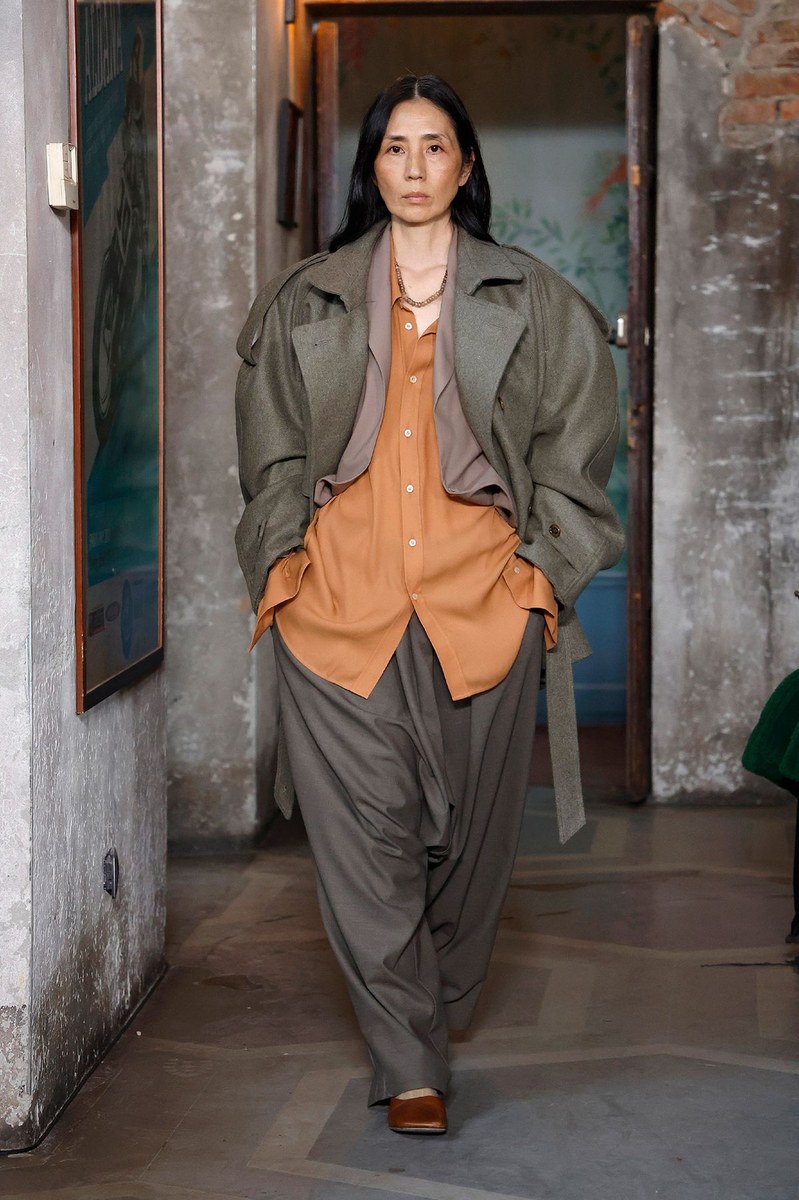
Act nº1 FW26 builds a wardrobe around deliberate disarray, treating layering not as styling but as structure, where knotted scarves, displaced belts and bundled fabric become load-bearing elements of each look. For buyers, the appeal is clear: as consumers move away from polished minimalism, this collection offers a credible, wearable language for expressive dressing that does not rely on print or embellishment.

Silhouette and Volume

Volume at the hip and leg drives the silhouette forward. Nearly every look features trousers that drop low at the crotch, gather excess fabric at the thigh, and taper or pool at the ankle, reading closer to traditional harem or pleated suiting shapes than to any current trouser trend. Look 5 and Look 10 push further into skirt territory with gathered wool and cotton constructions that function as hybrid pant-skirts. Oversized jackets and coats sit deliberately loose, with dropped shoulders and bunched sleeves in Look 1 and Look 9 that give the upper body a collapsed, weighted quality.
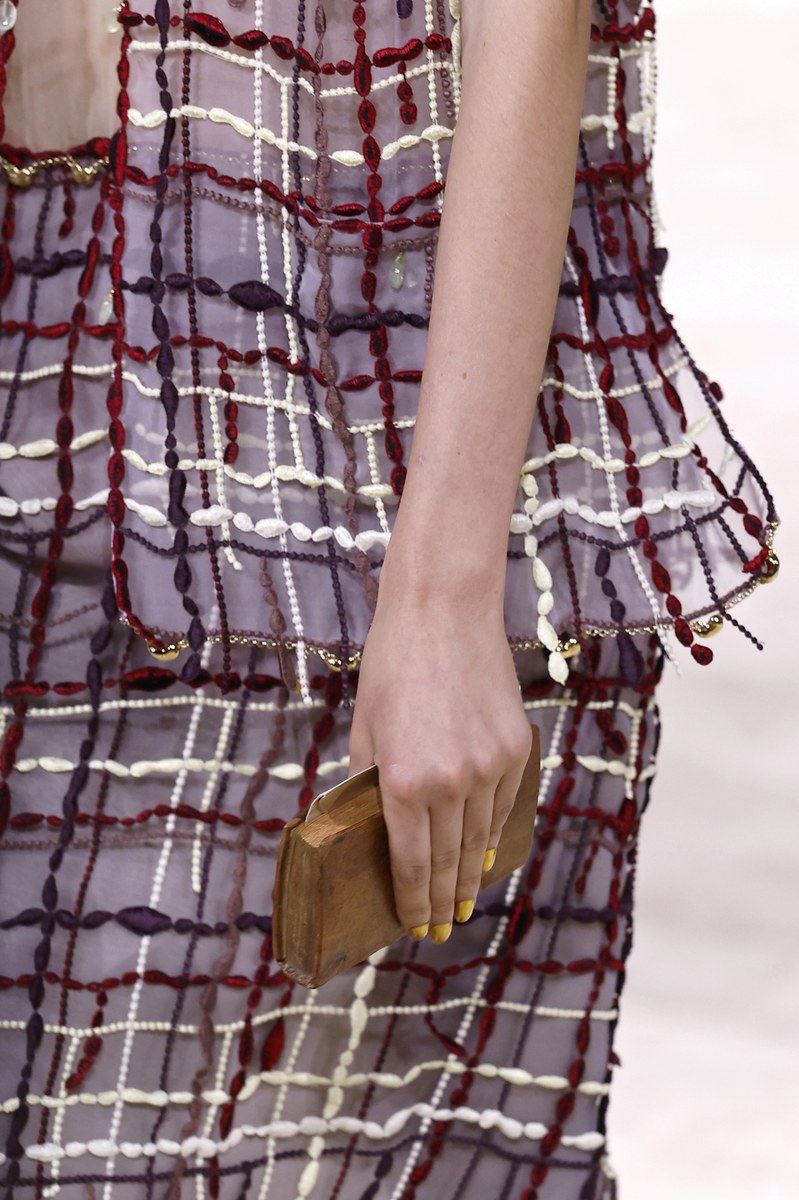
Look 5
Look 5

Color Palette

Khaki, stone, tobacco, deep chocolate brown, and military olive dominate a narrow, warm-leaning palette. Cooler greys and a desaturated slate blue appear in Look 4, Look 8, and Look 12, providing tonal relief without disrupting the earthy logic. White functions as accent rather than base, most forcefully in Look 7 and Look 9 where it appears as a collar or layer draped at the neck. The effect reads autumnal and muted, with warmth created through tonal layering rather than contrast.

Look 4
Look 4

Materials and Textures

Wool, viscose, and cotton weaves carry most of the collection, with the wool in medium to heavy weights that hold sculptural folds without tailoring support. Look 3 introduces a chocolate dark-brown leather biker jacket with visible topstitching, while Look 18 pulls in a sheer black mesh top that reads against the otherwise opaque palette. Distressed open-weave knitwear appears in Look 2 and chunky scarves tied at the neck run through Looks 5, 6, and 11. Across the collection, fabrics share a matte, low-sheen surface quality that reinforces the deliberately undone register.

Look 3
Look 3

Styling and Layering

Accumulation rather than coordination drives the layering logic. Multiple shirt collars appear simultaneously, sweaters sit under jackets worn open and collapsing, and scarves bundle rather than tie neatly, most prominently in Look 5, Look 6, and Look 11 where the scarf reads like a gathered fabric mass at the collarbone. Belts move away from waistbands entirely, looped through fabric or worn across the body as hardware detail in Look 9 and Look 11. Brown leather loafers, black Oxford shoes, and worn-in suede creepers ground the footwear strategy throughout, with silver-toned chunky sneakers in Look 10 as the only departure from traditional silhouettes.

Look by Look Highlights

Look 1 layers a sage wool trench over a warm terracotta silk shirt and stone-grey wide-leg trousers, establishing the collection's tonal layering logic in its most commercially accessible form.

Look 1
Look 1

Look 4 uses a sheer navy button-front over a semi-transparent undershirt and black wide-leg trousers with a deconstructed dark indigo coat draped off the shoulders, making transparency a structural tool rather than a reveal.

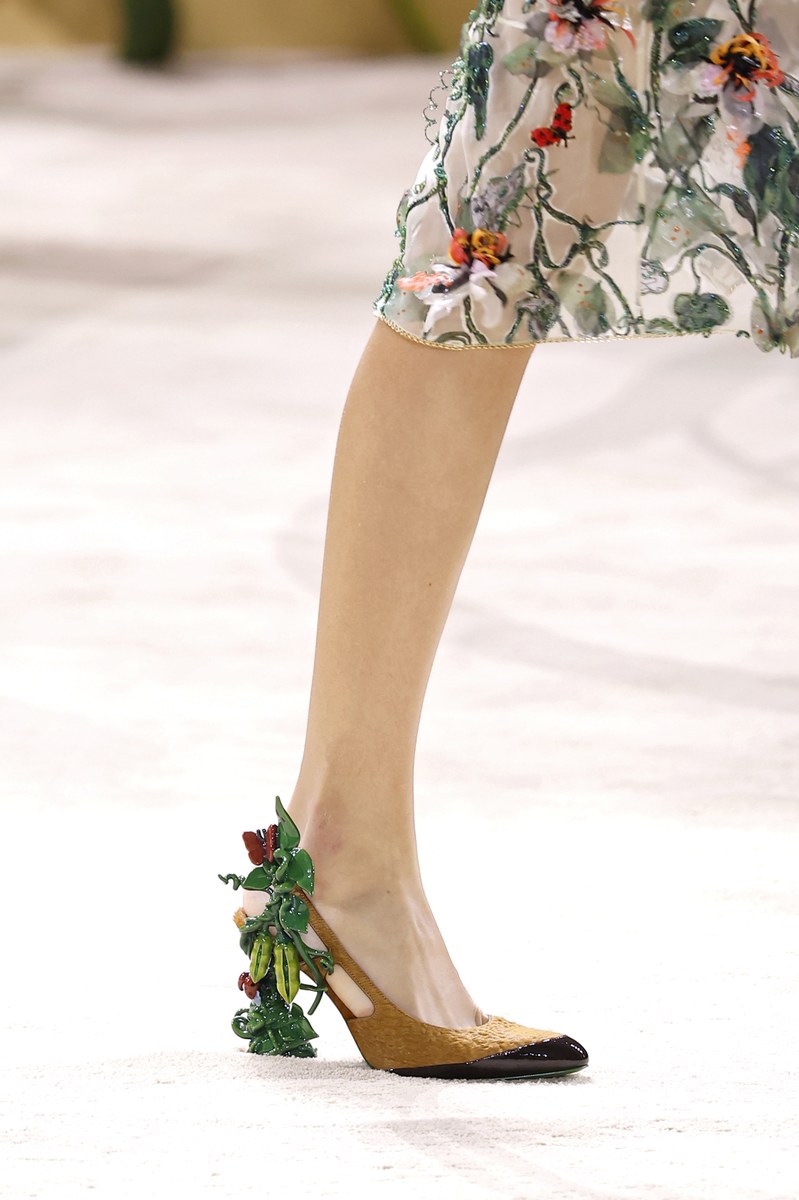
Look 5 pairs a deep burgundy long-sleeve knit with a voluminous light grey wool gathered skirt tied at the waist, and a chunky knit scarf bundled at the neck in charcoal and grey, making it the strongest single unit for buyers building into outerwear-adjacent separates.

Look 9 wraps a white oversized cotton scarf as a dramatic collar over a dark tobacco wool jacket, with a brown leather belt worn across the hips rather than through belt loops, producing a look that will photograph consistently for editorial use.

Look 9
Look 9

Look 12 combines a mustard-tan cropped trench jacket with layered grey wool suiting pieces and dramatically ballooned grey pinstripe trousers, offering the most direct men's-wardrobe-adjacent option for buyers building gender-fluid product lines.

Look 12
Look 12

Look 17 stacks fringed grey wool strips over wide-leg denim, a satin shirt, and an oversized black field jacket, representing the most editorial piece in the collection and signaling a performance or capsule proposition rather than a core commercial SKU.

Look 17
Look 17

Look 19 strips back to the clearest construction detail, wrapping a white cotton shirt into a twisted front knot that creates a self-belt effect, worn over sage drop-crotch trousers and making it the easiest entry point for product managers assessing construction complexity versus retail price.

Look 19
Look 19

Look 16 contrasts an ivory collarless jacket worn open and sliding off the shoulders with heavily pleated black wide-leg cropped trousers that cut below the knee, giving buyers a proportionally distinct trouser option that sits apart from the full-length silhouette elsewhere in the collection.

Look 16
Look 16

Operational Insights

Trouser construction: The drop-crotch, deep-pleat trouser silhouette appears across at least twelve looks and represents the collection's most repeatable commercial unit. Buyers should assess fabric weight carefully, as the shape requires medium-to-heavy drape to hold without collapsing.

Layering separates strategy: Built for mix-and-match purchasing rather than head-to-toe looks, this collection calls for independent buy quantities across shirt, scarf, and trouser categories. Most looks function as assemblies of three to four separates rather than coordinated sets.

Scarf as hero accessory: Chunky knit and woven scarves appear in at least six looks and function as structural focal points rather than secondary accessories. Product managers should treat them as a key category entry point and consider bundle pricing with tops or jackets.

Gender-neutral adjacency: Multiple looks, particularly Look 2, Look 6, Look 7, and Look 12, read across gender categories in silhouette and color. Buyers for retailers with unisex or gender-neutral floor space will find direct carry-over potential without requiring separate buys.

Look 2
Look 2

Footwear edit: The shoe selection deliberately avoids trend-driven styles in favor of investment-grade basics: brown loafers, black Oxfords, and suede creepers. Retailers should note that this collection does not drive footwear attachment sales and should plan cross-sell strategy around bags, belts, and knitwear instead.

Complete Collection

Look 6
Look 6
Look 7
Look 7
Look 8
Look 8
Look 10
Look 10
Look 11
Look 11
Look 13
Look 13
Look 14
Look 14
Look 15
Look 15
Look 18
Look 18
Look 20
Look 20
Look 21
Look 21
Look 22
Look 22
Look 23
Look 23
Look 24
Look 24
Look 25
Look 25
Look 26
Look 26
Look 27
Look 27
Look 28
Look 28
Look 29
Look 29
Look 30
Look 30
Look 31

About the Designer

Luca Lin grew up immersed in two distinct but equally formative worlds. His childhood in Reggio Emilia was shaped by his Chinese immigrant parents, who arrived in Italy during the 1980s and opened what became the first Chinese restaurant in the northern Italian city. The family home, filled with vintage Chinese furniture and objects collected obsessively by his parents, became the aesthetic foundation for everything that would follow. As a small child, Lin spent countless hours in his aunt's tailor shop, absorbing the rhythms and precision of garment construction. This early exposure to craftsmanship, combined with the cultural duality of his upbringing, would prove defining.

Before fashion captured his attention completely, Lin followed a more traditional path. After graduating from fashion school in Milan, where he studied alongside future business partner Galib Gassanoff, Lin began his career at Max Mara Group. The experience provided technical grounding, but it was the stories embedded in his multicultural heritage that eventually pulled him toward independent design. In 2016, he and Gassanoff established Act N°1 in Reggio Emilia, naming their venture after what felt like the first act of their creative lives.

Lin's aesthetic draws from a deep well of cultural references, pulling motifs from Chinese opera masks, Tang dynasty elements, and traditional Ruqun costumes, then filtering them through contemporary techniques. His approach centers on dramatic hybrids, often patching different garments into single pieces or layering structured tailoring with extravagant tulle volumes. The brand's signature ruffle jacket emerged as both a design statement and an activist gesture, conceived as a protest against child marriage. Lin works primarily with Italian deadstock fabrics, transforming surplus materials into garments that carry both cultural and emotional weight. His aesthetic philosophy rejects the pursuit of pure novelty, preferring instead to "reshaping the existing" through a lens of multicultural dialogue.

Since Gassanoff's departure in 2023, Lin has led Act N°1 as sole creative director, maintaining the label's commitment to social commentary while expanding its reach. The brand has dressed Beyoncé, Lizzo, and Lady Gaga, among others, and received support from Valentino's Pierpaolo Piccioli. Lin now mentors fashion students at Istituto Marangoni Firenze, where he emphasizes the designer's responsibility to communicate meaningful messages beyond mere aesthetic appeal.

"We believe being truthful to your roots and upbringing means you can produce soulful items in an industry full of beautiful, but oftentimes empty stuff."

"The reality is that we are not inventing anything; fashion designers are restyling, reshaping the existing."

✦ This report was generated with AI — combining human editorial vision with Claude by Anthropic. Because the future of fashion intelligence is already here.