Agro Studio FW26 Details

Agro Studio FW26 Details
Agro Studio FW26 Details Report

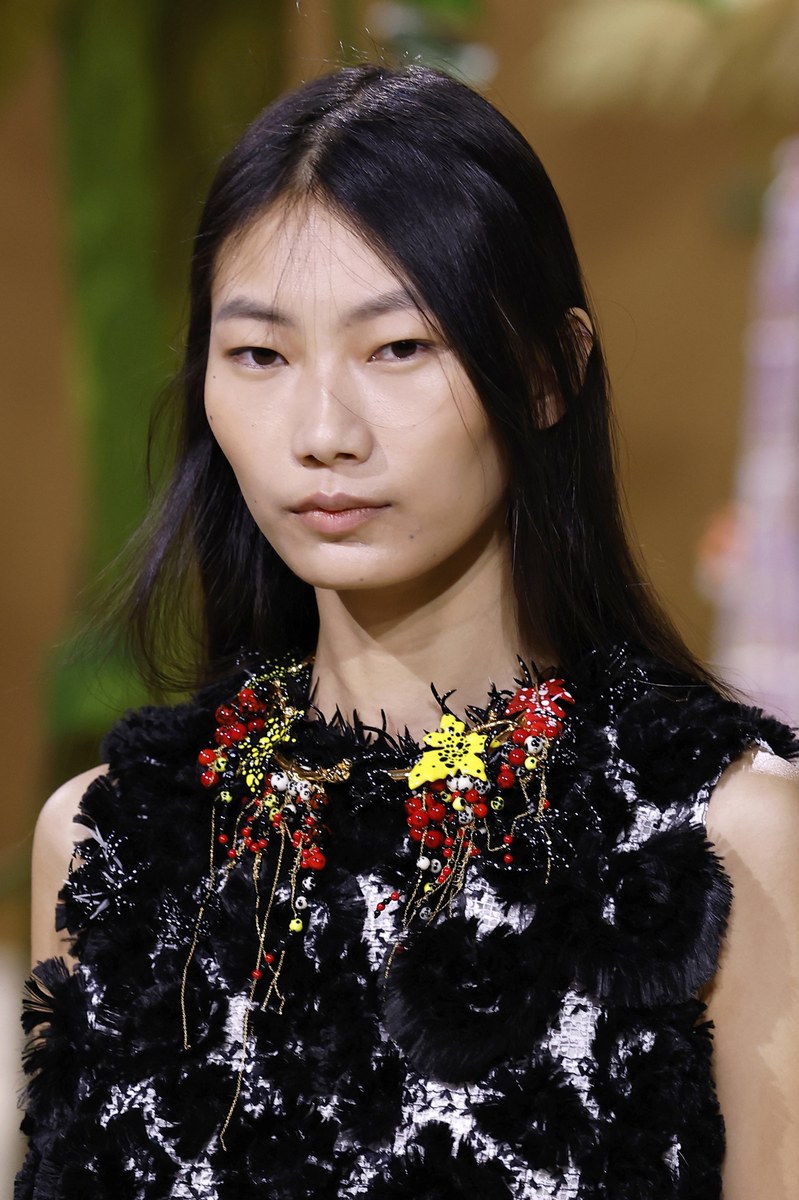
Agro Studio's FW26 collection builds its identity around structural tension, layering raw craft with corsetry precision, distressed denim, and fur-weighted outerwear to form a coherent language of controlled decay. For buyers and product managers, this direction signals strong commercial appetite for pieces that carry visible construction as a design feature rather than an afterthought.

Category Overview

Two categories dominate the submission: Dress Detail and Headwear. Dress Detail does the heaviest lifting, ranging from mixed-textile patchwork outerwear in Items 1 and 5 to silver satin corsetry in Item 4 and heavily distressed raw denim in Item 2. Items 9 and 10 represent the headwear offering, both reinforcing the collection's tonal seriousness through burnt sienna shearling and matte black fabric. The accessories strategy prioritises material storytelling over ornamentation, directing buyers toward invest-to-own fabrications rather than trend-reactive styling.
Item 4
Item 4

Material and Construction

Four distinct material families appear across Dress Detail: wool-blend tweeds and pinstripe fabrics with shearling trim (Items 1 and 8), raw selvedge denim with gold-painted underlayer visible through deliberate destruction (Item 2), silver duchess satin with grommeted lace-up boning (Item 4), and layered black jacquard with tulle and ruffled organza (Items 5 and 6). Item 7 presents a dark taupe satin corset with brass grommet hardware and wide flat lace in a matching tone, the most technically complex construction in the edit. A graphic jersey slip in Item 3 is printed with a trompe-l'oeil torso motif and carries branding text reading "Made in London AW26," a deliberate self-referential gesture. Headwear construction in Item 9 uses a structured shearling trapper form with visible leather crown and ear flap hardware closure.

Item 2
Item 2

Color and Finish Direction

Tobacco brown, raw indigo, charcoal black, and ivory white form the dominant palette, with brass and gold as recurring accent finishes. Item 9's burnt sienna shearling stands as the single warmest, most saturated color note across all ten items. Silver arrives as a cool counterpoint in Item 4, where the duchess satin carries a high-sheen finish that reads almost metallic under runway lighting. The collective direction signals a preference for naturalistic depth over clean primaries, commercially positioned toward a consumer shopping autumn wardrobing rather than statement dressing.

Item 9
Item 9

Key Pieces and Details

Item 4 represents the most commercially replicable construction in the edit, a silver satin long-sleeve corset with front lace-up closure, multiple boning channels, and grommet hardware in a brushed silver finish. It pairs directly with matching low-rise trousers visible at the hem, making it a strong candidate for coordinated set production. Item 7 offers a darker interpretation of the same corsetry language in taupe satin with brass grommets, positioned more accessibly as a standalone layering piece over the brown lace blouse beneath it. Item 9 is the single most immediately buyable headwear piece, carrying clear sell-through potential in markets with cold-weather demand.

Item by Item Highlights

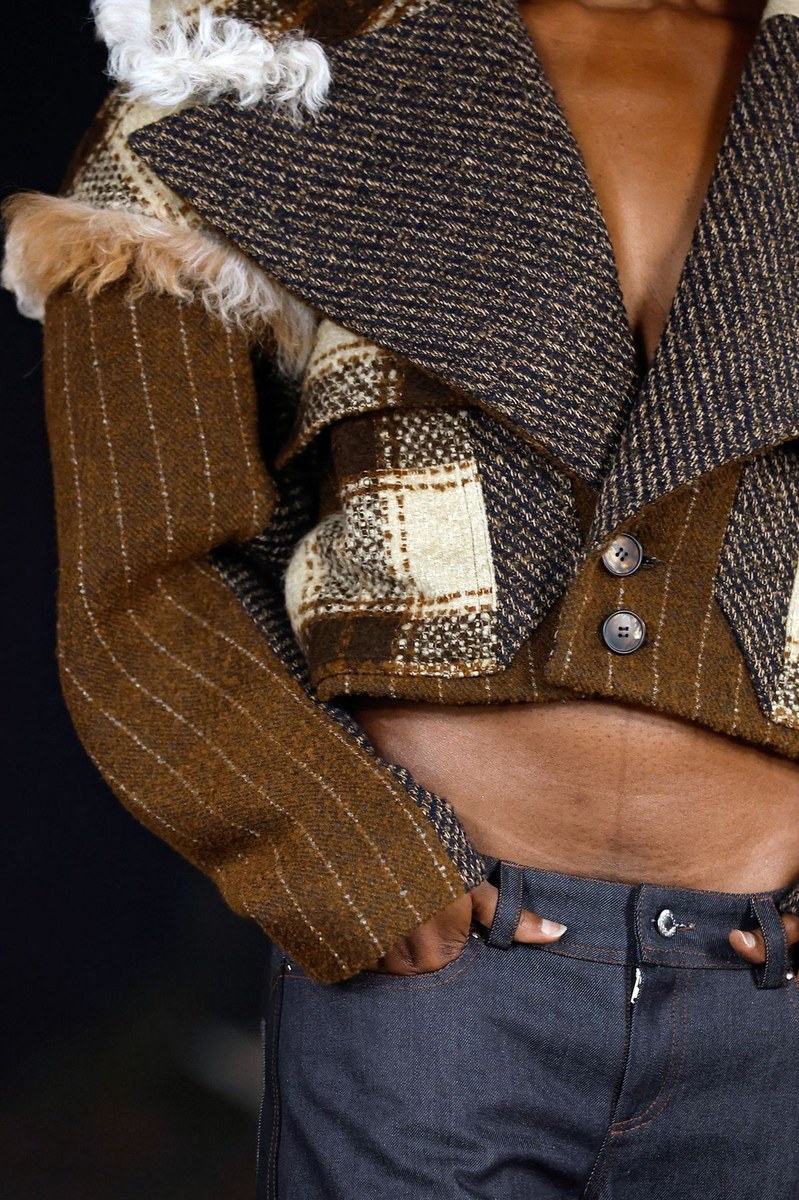
Item 1 (Dress Detail) A cropped jacket constructed from at least three textiles, brown herringbone tweed, cream-and-brown plaid woven panel, and pinstripe wool sleeve, with white shearling collar trim and two-hole shell buttons at front placket.

Item 1
Item 1

Item 2 (Dress Detail) Raw indigo selvedge jeans with a large vertical destroyed panel at the knee, the underlying layer painted or laminated in olive-gold, framed by contrast seaming and brass rivet hardware at panel corners.

Item 3 (Dress Detail) A nude-foundation slip bodice printed with a monochrome engraving-style graphic depicting a goat head, muscled torso, and decorative scrollwork, branded with "Agro Leather, Made in London, AW26, Craftsmanship" in serif typography.

Item 3
Item 3

Item 4 (Dress Detail) A front-laced silver duchess satin corset with approximately twenty grommet pairs in brushed silver, multiple vertical boning channels creating pronounced waist suppression, and paired with matching low-rise satin trousers.

Item 6 (Dress Detail) A strapless black mini corset dress combining at least five black-on-black patterned fabric panels, including jacquard, dot weave, and plaid, finished at the hem with three tiers of gathered black organza ruffles.

Item 6
Item 6

Item 7 (Dress Detail) A waist-cinching taupe satin underbust corset with diagonal pleated panel detailing, brass grommets, and flat brown ribbon lacing, worn over a black-and-blush floral lace long-sleeve layer.

Item 7
Item 7

Item 9 (Headwear) A structured burnt sienna shearling trapper hat with a flat padded crown, folded ear flaps, and a leather binding at the crown seam, worn with a matching shearling-collared leather aviator jacket.

Item 10 (Headwear) A matte black chiffon or jersey head wrap tied low across the forehead and draped around the neck, functioning simultaneously as headwear and neckwear with no visible hardware or closures.

Item 10
Item 10

Operational Insights

Corsetry construction Both Items 4 and 7 use grommeted front lacing rather than back-closure boning, a production decision that changes sizing grading and fit protocols significantly. Supplier alignment will need to happen early in development.

Denim treatment Item 2's destroyed panel with painted underlayer suggests a multi-step finishing process combining mechanical destruction with hand or screen application of metallic paint. Source vendors with both denim distressing and print finishing capabilities under one roof or in sequential production.

Graphic jersey Item 3's trompe-l'oeil body print with seasonal branding text positions the brand in a direct-to-consumer storytelling mode. Product managers should evaluate whether the "AW26" and "Made in London" text constitutes a licensable or trademark-protected design element before any adaptation.

Fur and shearling volume Items 1, 8, and 9 all incorporate shearling or long-pile faux fur in cream or sienna tones. The proportion is generous and structural rather than trim-level, which drives up yardage requirements and fabric cost per unit substantially compared to standard outerwear.

Headwear versatility Item 10 blurs the boundary between headwear and scarf categories, creating a dual-placement opportunity for buyers working across accessories departments. Display and retail category tagging decisions should be resolved before wholesale line sheet distribution.

Complete Collection

Item 5
Item 5
Item 8
Item 8

✦ This report was generated with AI — combining human editorial vision with Claude by Anthropic. Because the future of fashion intelligence is already here.