Blumarine FW26 Women Looks Report

Blumarine FW26 Women Looks Report
Blumarine FW26 Women Looks Report

Milan Fashion Week

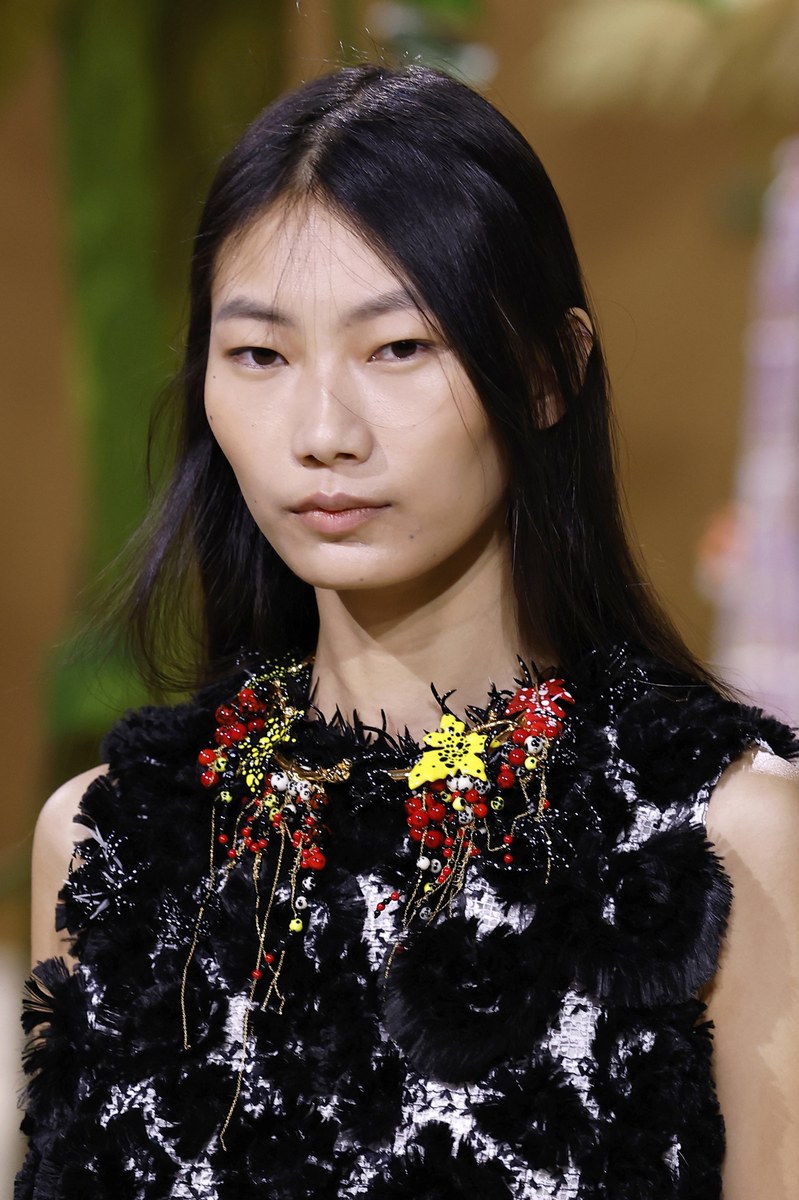
Gothic romanticism anchors Blumarine FW26 around two unmissable elements: a black-and-red rose print rendered in taffeta and knit, and an all-red capsule stretching from sheer lace to ruffled puffer volume. For buyers, the timing feels right. Maximalist femininity is converting at retail, and this lineup delivers a clear, repeatable visual language across multiple price tiers and product categories.

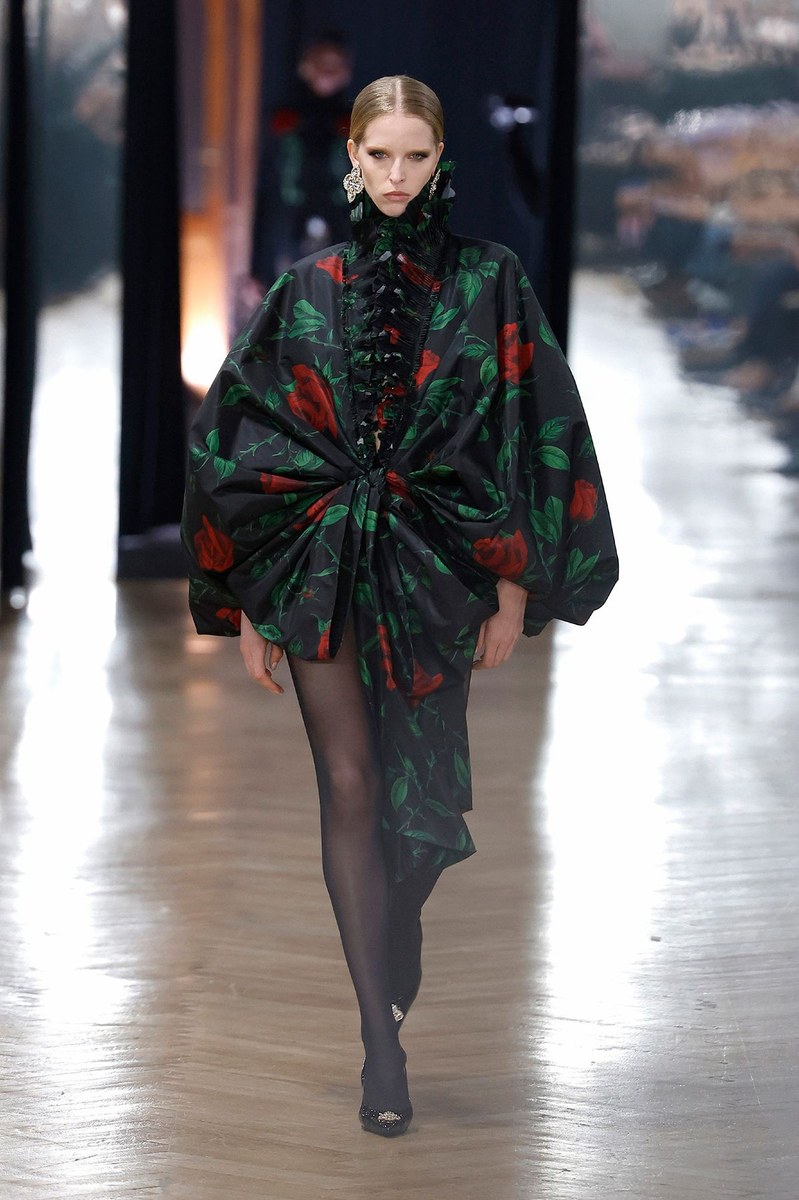
Silhouette and Volume

Two dominant shapes carry the collection: an extreme balloon silhouette gathered at the waist and dropped into a bubble hem, and a slim high-neck or off-shoulder bodice that releases into a short, flared skirt with a floor-length train. Look 1 and Look 19 both execute the cinched-waist balloon in printed taffeta, while Look 8 and Look 13 translate the same architecture into all-red and all-black versions respectively, confirming the shape as a core commercial bet. Mini lengths dominate throughout, kept wearable by opaque or sheer tights that read as part of the look rather than an afterthought. A buyer could build a coherent floor set without visual noise here.
Look 1
Look 1

Color Palette

Black anchors the opening, always paired with the house's signature red-and-green rose print on a dark ground, making the palette feel nocturnal and saturated rather than simply dark. Mid-collection, a deliberate pivot to full red carries through Looks 5 to 9, creating a coordinated capsule that sells as a group. Every piece in that run works in the same red. Look 19 introduces an ivory-and-black botanical print that lightens the final act, while Looks 16 and 17 bring in silver and gunmetal sequin against black lace for an evening register. The result splits into three tight chapters: rose-print black, monochrome red, and black-silver evening.

Look 19
Look 19

Materials and Textures

Taffeta carries the most volume-intensive pieces, its stiffness doing structural work in the balloon hems of Looks 1, 8, 13 and 19 without internal boning. Stretch knit with appliquéd velvet roses appears in Looks 2 and 4, giving those pieces a body-conscious fit that contrasts sharply with the sculptural taffeta. Chiffon and silk georgette handle the ruffled column pieces in Looks 7 and 15, where the fabric's weight creates a cascading drape rather than a rigid form. Sequined burnout velvet in Look 16 and a silver-embroidered lace gown in Look 17 position the evening tier at a fabrication level that justifies a premium retail price point.

Look 16
Look 16

Styling and Layering

Thigh-high stockings in both matching and contrasting colors function as a consistent styling device across the entire collection, appearing in black for the dark looks and in red for the monochrome capsule. It turns legwear into a saleable unit and gives wholesale buyers a clear accessories bundle to build around each look. Pointed-toe kitten heels and low stilettos keep the shoe story secondary to the garment. Oversized crystal cluster earrings accent the feminine pieces while large coin or butterfly drops play against the more architectural ones, adding a costume-jewelry layer that aligns with Blumarine's established accessories business.

Look by Look Highlights

Look 1 The black taffeta rose-print balloon coat gathered at the waist with velvet lacing is the collection's most photographable piece and its most complex construction, making it a press and hero-unit buy rather than a volume driver.

Look 3 The off-shoulder mini in the same rose-print taffeta with a deep V-plunge and bubble skirt is a cleaner, more commercial version of the print story and the strongest candidate for a buy across multiple doors.

Look 3
Look 3

Look 5 The all-red crochet cutwork mini with a ruffled train running to the floor reads as a made-to-order or limited-distribution piece, notable for its handcraft density and its ability to anchor a red capsule at the top of the price range.

Look 5
Look 5

Look 6 The full-coverage red lace mini over bare skin with matched red thigh-highs delivers the most direct lingerie-to-ready-to-wear translation in the collection and sits at a fabrication level that commands a mid-to-premium price without exceptional construction complexity.

Look 6
Look 6

Look 10 The structured black jacket with cameo-scale jewel buttons and a matching micro-skirt is the collection's most wearable separates proposition and the piece most likely to perform outside a specialty or designer floor.

Look 10
Look 10

Look 14 The black guipure lace coat worn open over bare skin and slim black trousers is the only true trouser look in the collection, making it commercially distinct and a strong option for buyers serving a customer who wants the Blumarine aesthetic without the mini-length commitment.

Look 14
Look 14

Look 17 The floor-length black lace gown with silver sequin rose embroidery and a side-cutout bodice is the evening anchor, fabrication-intensive and narrow in commercial application but critical for positioning the brand in the formal and bridal-adjacent market.

Look 17
Look 17

Look 19 The ivory-and-black botanical-print taffeta balloon coat mirrors Look 1 in construction but lands in a lighter, more day-accessible palette, making it the print story's most versatile entry point for a broader retail context.

Operational Insights

Rose print taffeta: The black-ground red-and-green rose print runs across at least four distinct silhouettes (Look 1, Look 3, Look 4, Look 19 in botanical variant), which means buyers can invest in the print family across price tiers and build a floor set without redundancy.

Red capsule cohesion: Looks 5 through 9 operate as a five-piece monochrome red capsule with matched legwear and footwear, making this the strongest group buy in the collection for a retailer who wants a high-impact install or a focused editorial push.

Legwear as a revenue unit: Thigh-high stockings in both red and black appear styled as integral components across more than half the looks, creating a direct licensed or in-house accessories opportunity that product managers should prioritize alongside the apparel order.

Construction tiering: Three production complexity levels split cleanly: balloon taffeta and crochet cutwork at the top, lace and chiffon ruffles in the middle, and stretch knit with velvet appliqué at the entry level, giving buyers a clear margin ladder to work with when building an assortment.

Separates gap: With the exception of Look 10, Look 12 and Look 18, the collection skews heavily toward complete looks and dresses, which limits separates-floor applicability. Style directors building a buy for a multi-brand floor should flag this early and identify the jacket and skirt combinations that can be broken out and sold independently.

Complete Collection

Look 2
Look 2
Look 4
Look 4
Look 7
Look 7
Look 8
Look 8
Look 9
Look 9
Look 11
Look 11
Look 12
Look 12
Look 13
Look 13
Look 15
Look 15
Look 18
Look 18
Look 20
Look 20
Look 21
Look 21
Look 22
Look 22
Look 23
Look 23
Look 24
Look 24
Look 25
Look 25
Look 26
Look 26
Look 27
Look 27
Look 28
Look 28
Look 29
Look 29
Look 30
Look 30
Look 31
Look 31
Look 32
Look 32
Look 33
Look 33
Look 34
Look 34
Look 35
Look 35
Look 36
Look 36
Look 37
Look 37
Look 38
Look 38
Look 39
Look 39
Look 40
Look 40
Look 41
Look 41
Look 42
Look 42
Look 43
Look 43
Look 44
Look 44
Look 45
Look 45
Look 46
Look 46

About the Designer

David Koma's journey began in Tbilisi, Georgia, where he came into the world in 1985 to parents who could not have anticipated their son's creative path. His mother, a geologist, and father, an engineer, raised him in a family that would relocate to Saint Petersburg, Russia, when he was nine years old. The move proved pivotal, as it was there in the post-Soviet environment that Koma's artistic inclinations flourished amid the city's rich cultural backdrop.

At just eight years old, while still living in Tbilisi, Koma discovered his passion for fashion design, beginning to sketch dresses in what he now describes as coming from nowhere but surprising his parents entirely. His precocious talent led him to study fine art in Saint Petersburg from age ten, where he also took anatomy classes that would later inform his body-conscious designs. By thirteen, he had designed his first collection and was entering design competitions against students twice his age, finishing high school by fifteen with a clear vision of his future.

The transition from art to fashion came naturally when Koma moved to London in 2003 to study at Central Saint Martins. He graduated with distinction in 2009, winning the Harrods Design Award, and immediately launched his eponymous brand. His aesthetic, remarkably consistent from those early teenage sketches, centers on sculptural silhouettes that celebrate the female form. From 2013 to 2017, he served as creative director at Mugler, a role he considers transformative in teaching him to think on a larger scale while maintaining his signature approach. His work draws inspiration from diverse sources, from 1960s television like Mad Men to 1980s films and shows, old Hollywood glamour, and figures ranging from Aphrodite to Marlene Dietrich. He finds particular fascination in tension and contradiction, describing his aesthetic as the interplay between softness and brutalist architecture, sensuality and restraint.

"I always think the female body is the most beautiful thing, and all I want to do is make it the most beautiful," he has said. "Stay true to your vision and don't be afraid to take risks. It's how I've remained authentic in my creative direction."

✦ This report was generated with AI — combining human editorial vision with Claude by Anthropic. Because the future of fashion intelligence is already here.