Collina Strada FW26 Shoes

Collina Strada FW26 Shoes
Did you know? Collina Strada was founded in 2009 by Colin McDowell as a gender-neutral line that pioneered the use of deadstock and surplus fabrics from other manufacturers, reducing textile waste before sustainability became a mainstream industry priority. The brand's upcycling approach has remained central to its production model, with each collection incorporating salvaged materials that would otherwise end up in landfills.

Collina Strada FW26 Shoes Report

Collina Strada FW26 plants its entire footwear strategy in a single tension: chunky athletic construction draped in the vocabulary of bridal and garden-party dressing. For buyers and product managers, this signals a commercially viable moment where the athleisure sole gets repositioned as a feminine, occasion-adjacent platform rather than a performance reference.

Silhouettes and Construction

All four styles share the same base silhouette, a mid-cut lace-up sneaker boot sitting on a heavily lugged, trail-runner sole unit with visible midsole cushioning and deep tread geometry. Toe shapes are rounded and blunt across the board. Ankle height sits just above the ankle bone on the boot styles (Shoes 1, 2, and 4), while Shoe 3 drops to a low-cut sneaker profile. Built thick enough to read as a platform without crossing into wedge territory, the sole unit on all four appears to be a single molded rubber construction.
Materials and Finishes

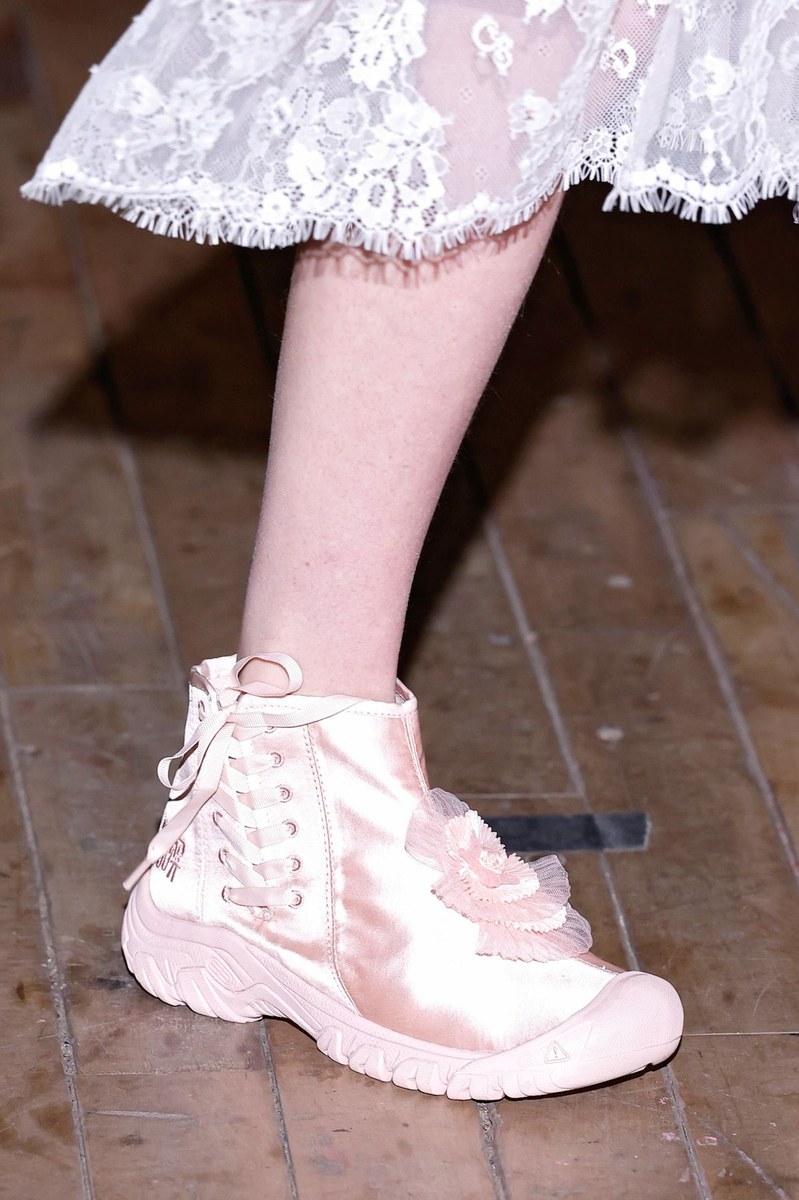
Shoes 1 and 3 use satin as the primary upper material, smooth and light-reflective, cut and lasted directly onto the athletic base with no visible seam tape or conventional sneaker panel construction. A printed jacquard or woven technical fabric in a painterly camouflage pattern covers Shoes 2 and 4, finished with tonal dark hardware on the lace eyelets. Floral and fringe embellishments across all four styles appear to be applied organza, tulle, and satin ribbon constructions. The handworked nature rather than molded or machine-applied finish carries direct implications for production cost and minimum order quantities.

Color Direction

The palette splits into two clear groups. Shoes 1 and 3 occupy a soft blush and pale pastel spectrum, specifically a cool petal pink satin on Shoe 1 and a watercolor wash of blush, butter yellow, and sage on Shoe 3. These tones connect directly to the bridal and cottagecore commercial segments. Shoes 2 and 4 anchor the collection in a muted slate and charcoal camouflage, with near-black rubber soles that reinforce the utilitarian read. Desaturated and tactile, the seasonal signal avoids primary brights entirely.

Key Models and Details

A seven-eyelet lace-up sneaker boot with a looped pull tab at the heel collar dominates Shoes 1, 2, and 4. Satin ribbon laces appear on Shoes 1 and 3, while waxed cord finishes Shoes 2 and 4. This small but consequential material choice shifts the mood between the two colorways entirely. Branding appears embossed on the lateral side of the midsole on Shoe 1, small and tonal, consistent with Collina Strada's historically restrained logo placement. Positioned at the lateral forefoot on all four styles, the floral appliqués function as the primary design signature of the range.

Shoe by Shoe Highlights

Shoe 1 A blush satin high-top sneaker boot with satin ribbon lacing and a single oversized organza floral at the lateral vamp. The satin upper presents both the production risk and the commercial hook in equal measure.

Shoe 1
Shoe 1

Shoe 2 The slate camouflage high-top with waxed black laces and a multi-layered dark organza fringe floral reads as the most wearable crossover style in the range. Accessible to buyers serving a streetwear-adjacent customer base, it bridges categories effectively.

Shoe 2
Shoe 2

Shoe 3 A low-cut satin sneaker in a multicolor pastel watercolor print, weighted down with stacked satin bow and lace appliqués at the forefoot. Worn with a gold lurex ruched ankle sock, the sock styling functions as a direct visual merchandising directive.

Shoe 3
Shoe 3

Shoe 4 The second camouflage boot style, differentiated from Shoe 2 by a lower lace height and a silver-toned metallic fringe floral. This gives buyers a within-group variation that justifies carrying both SKUs in the same buy.

Shoe 4
Shoe 4

Shoe 1 and Shoe 3 together establish the satin athletic hybrid as the lead concept. The contrast between the high-cut boot and the low sneaker silhouette gives a category structure that translates directly into a two-depth buy strategy.

Shoe 3 specifically merits attention from accessories buyers, because the lurex sock is styled as an inseparable component of the look. A coordinating sock SKU would drive attach rate in direct-to-consumer and wholesale contexts.

Operational Insights

Embellishment sourcing: The organza and satin floral appliqués appear entirely handworked. Buyers should build lead time and cost buffers of at least 20 to 30 percent above standard athletic footwear production schedules before committing to reorder quantities.

Sole unit consolidation: All four styles share what appears to be one common sole unit mold. Collina Strada engineered cost efficiency at the bottom while concentrating differentiation at the upper, a replicable strategy for private label product managers working in the fashion-athletic hybrid space.

Camouflage colorway risk: Shoes 2 and 4 use a fashion-forward camouflage print that reads closer to painterly abstract than military. They position themselves as a lower reorder risk than seasonal trend color stories but still require sell-through monitoring in the first four weeks of floor placement.

Satin upper durability: Buyers placing satin upper styles (Shoes 1 and 3) should request abrasion and scuff resistance testing data before finalizing production. Satin on an athletic last will face customer return pressure that a standard leather upper would not.

Accessory attachment opportunity: The explicit sock-as-styling-element on Shoe 3 gives both mono-brand retailers and department store buyers a clear adjacent category play. Product managers should treat the coordinating sock as a bundled SKU rather than a standalone accessory from the initial assortment planning stage.

✦ This report was generated with AI — combining human editorial vision with Claude by Anthropic. Because the future of fashion intelligence is already here.