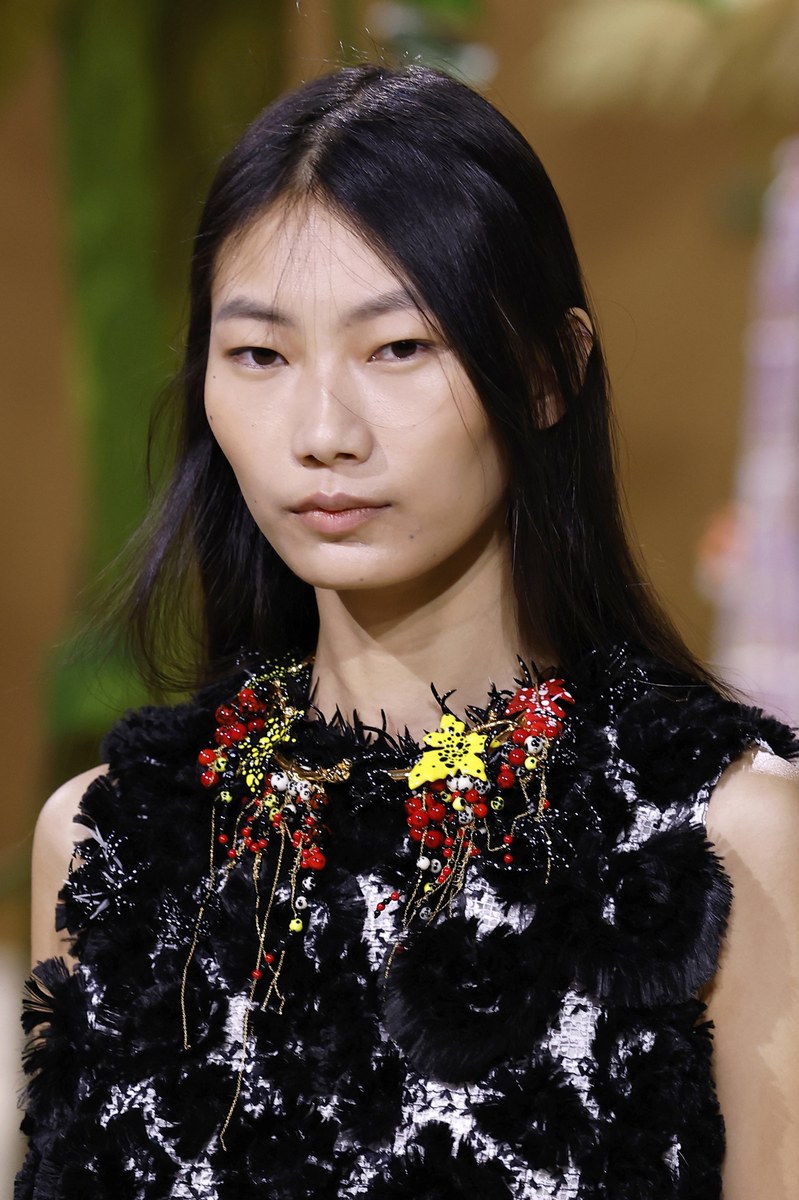
Conner Ives FW26 Women Looks Report

Conner Ives FW26 Women Looks Report
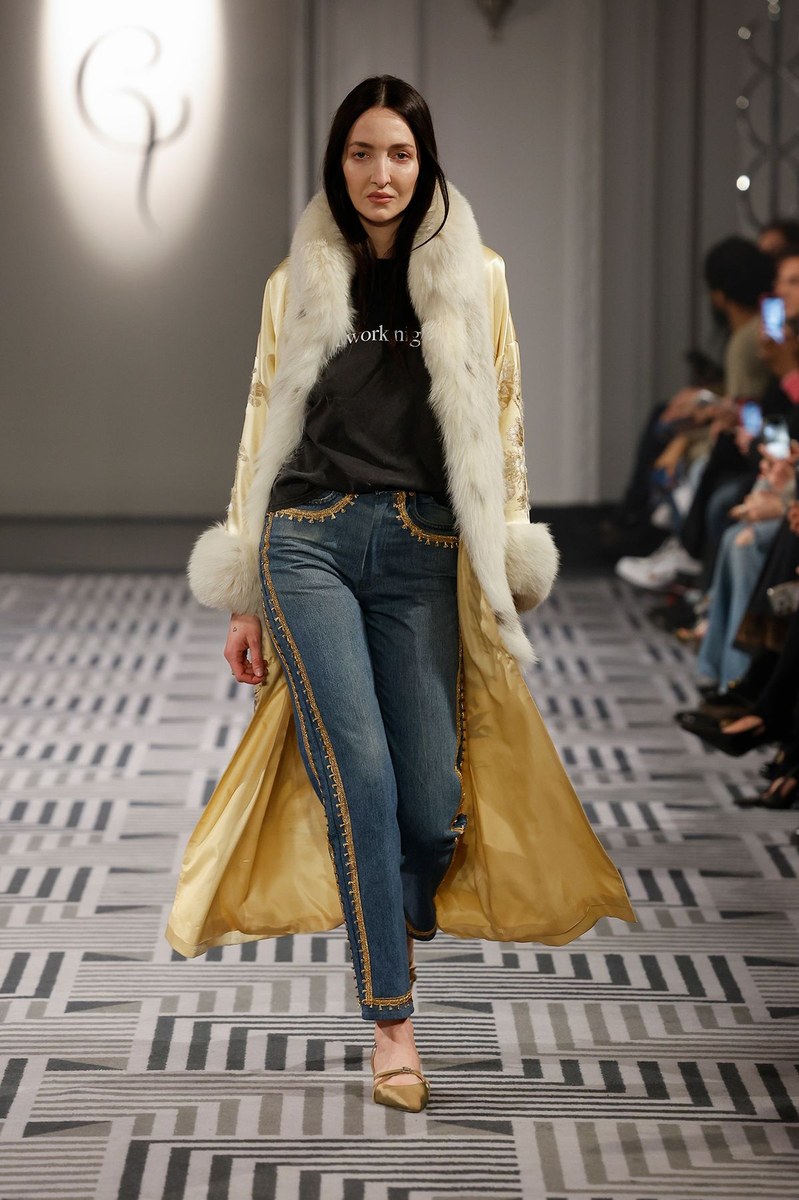
Conner Ives FW26 Women Looks Report

London Fashion Week

Conner Ives built this collection around the collision of inherited luxury and everyday vernacular clothing, reworking silk kimono fabric, vintage scarves, and embroidered denim into a wardrobe that treats archival material as a primary resource rather than a reference point. For buyers operating in a market where vintage-adjacent product is outpacing newness across multiple price brackets, this approach maps a credible commercial path for that appetite.

Silhouette and Volume

The dominant silhouette runs slim through the body and breaks at the ankle with cropped, tapered hems. Dresses drape and gather without padding or structure, as in Look 7 and Look 17, while tailored pieces like the jacket in Look 8 hold a precise, squared shoulder. Proportion stays grounded and wearable across its more directional and its more accessible moments, without veering into extreme volume.
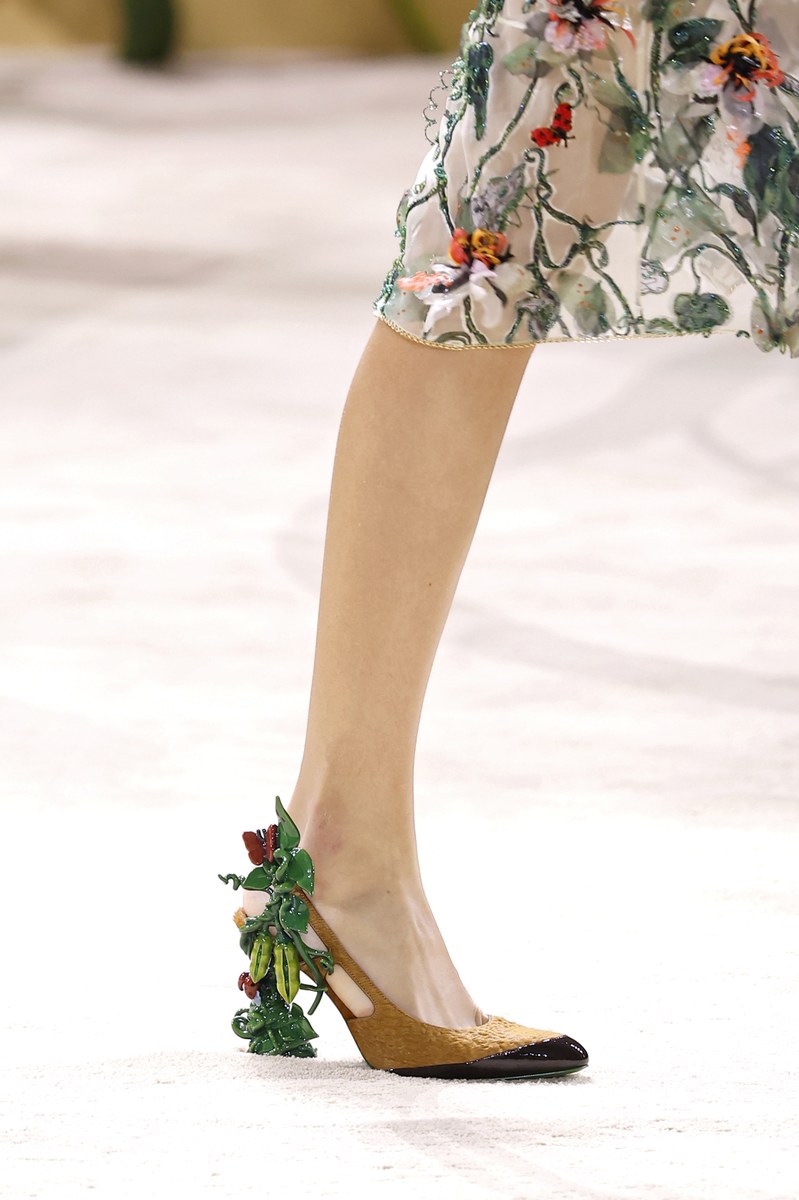
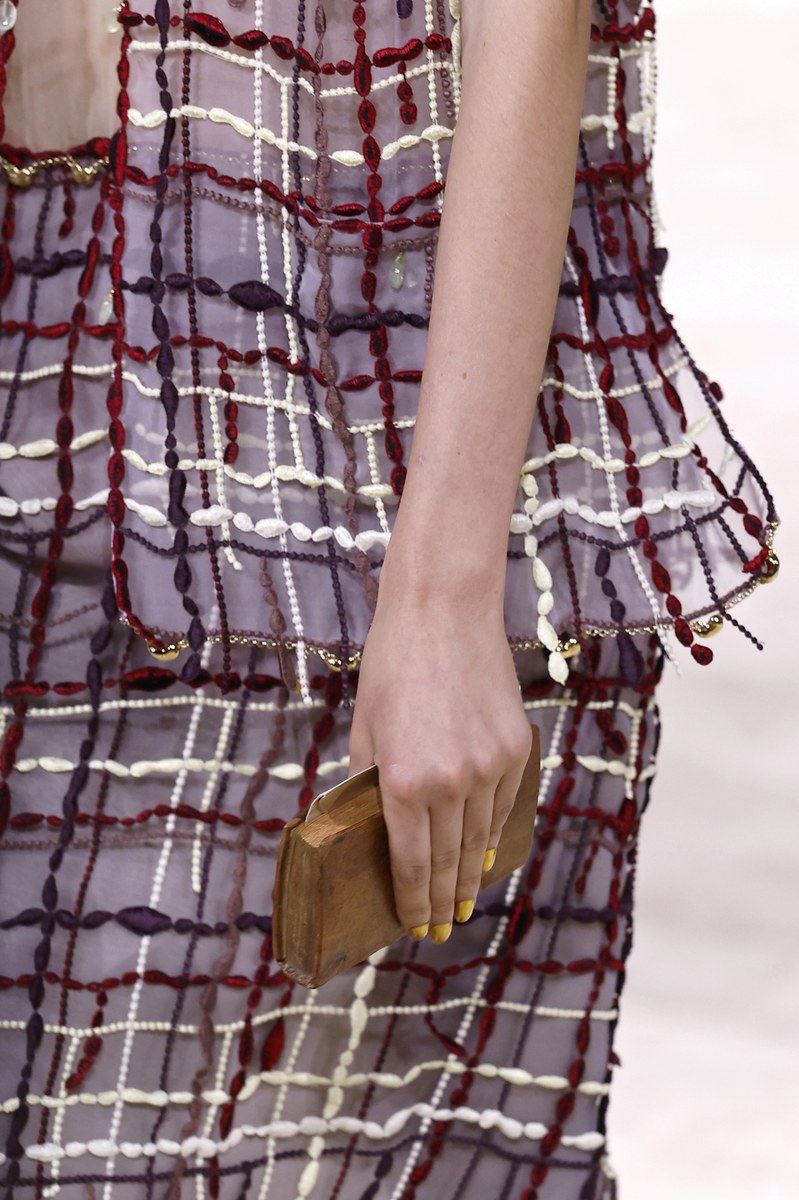
Look 7
Look 7

Color Palette

Pale gold and ivory recur as anchor tones, appearing across the satin coat in Look 1, the embroidered top in Look 4, the crane-printed jacket in Look 6, and the wisteria skirt in Look 18. Navy, black, and mid-wash denim cut against these, creating a contrast that reads simultaneously archival and clean. Browns move through Looks 15, 16, and 17 with a muted earthiness, from warm caramel to deep tobacco, grounding the more ornate printed fabrics.

Look 1
Look 1

Materials and Textures

Heavy-weight ivory silk with embroidered gold detailing anchors the outerwear, while mid-weight denim carries hand-stitched metallic trim in Looks 1, 6, and 12. Scarf-weight printed silk, likely re-sourced vintage stock given the Hermès-adjacent equestrian motifs, reappears as draped tops, layered skirts, and constructed bodices across Looks 3, 8, 11, and 13. Large-scale paillette fabric in Look 2 reads almost sculptural in its density. Against it, the bias-cut silk chiffon in Look 17 moves with extreme fluidity.

Look 2
Look 2

Styling and Layering

Ives stacks registers deliberately, placing graphic T-shirts under fur-trimmed silk coats in Look 1 and rugby shirts under printed skirts in Look 3, so that each look carries two or three distinct price-point signals at once. Footwear splits into two tracks: embroidered or fur-trimmed kitten-heel mules that reinforce the archival material language, and tall cream leather boots with floral embroidery, as seen in Looks 7, 9, and 14, that push toward a more editorial destination. Minimal in construction but charged in material, accessories center around a drawstring bag in embroidered or printed silk returning as a consistent house object across at least five looks.

Look by Look Highlights

Look 2 The large-scale black paillette dress with a pointed black collar and floral-embroidered ankle boots is the most production-intensive piece in the collection and the strongest candidate for press placement and wholesale anchor.

Look 6 The structured pale gold satin jacket with a hand-embroidered crane motif worn over gold-trimmed ripped denim distills the collection's thesis most clearly and reads as the most immediately licensable silhouette.

Look 6
Look 6

Look 8 A clean grey wool jacket with jewelled buttons over an orange and gold printed scarf-wrap mini skirt demonstrates the highest commercial crossover potential, combining a wardrobe staple with a directional bottom.

Look 8
Look 8

Look 11 The full-length mixed-print column dress assembled from what reads as multiple patchworked vintage scarves signals a strong capsule direction for buyers interested in deadstock or upcycled-adjacent product stories.

Look 11
Look 11

Look 12 The double-denim look with gold frog closures on the jacket, chain-stitch trim running the trouser leg, and fur hem cuffs makes the loudest statement in the collection and reads as the clearest social media asset.

Look 12
Look 12

Look 16 The deep olive jacquard robe coat with fringe hem and white fur-trimmed block-heel mules carries the highest drama-to-wearability ratio in the collection and reads as a strong event-dressing proposition for specialty retailers.

Look 16
Look 16

Look 19 The all-white finale look, a bias silk slip under a structured organza cape with a white fur-trimmed hood, functions as a bridal-adjacent closing statement that opens a separate commercial conversation beyond the main collection.

Look 19
Look 19

Look 10 The model carrying a small dog as an accessory aside, the white silk shirt, patterned tie, and wide-leg white trouser with a burgundy cummerbund introduce a menswear-inflected suiting vocabulary that broadens the collection's gender-market reach.

Look 10
Look 10

Operational Insights

Deadstock sourcing The printed silk scarf fabric appearing across at least six looks will require buyers to confirm whether Ives is working with actual vintage stock or a proprietary reprint, as this distinction significantly affects unit availability and reorder capacity.

Embellishment lead times Hand-stitched metallic trim on denim in Looks 1, 6, and 12 and the embroidered crane in Look 6 suggest embellishment processes that run 12 to 16 weeks minimum. Buyers should factor this into delivery planning for any wholesale commitment.

Fur trim classification White fur trim appears on shoes and hemlines across Looks 1, 4, 6, 12, and 16. Product managers need to confirm immediately whether this is faux or real fur before committing to territory-specific purchase orders, particularly for EU and UK markets with strengthening retail fur policies.

Bag as anchor SKU The drawstring bag in embroidered and printed silk appears in Looks 3, 9, 13, and 14. Its low construction complexity relative to the garments makes it the most accessible entry-price category in the collection for new accounts.

Menswear crossover Looks 5, 10, and 15 read as fully resolved menswear looks with direct commercial application. Style directors at accounts with a genderless or expanded-men's floor should treat these as a separate buying decision rather than as editorial context within the women's range.

Complete Collection

Look 3
Look 3
Look 4
Look 4
Look 5
Look 5
Look 9
Look 9
Look 13
Look 13
Look 14
Look 14
Look 15
Look 15
Look 17
Look 17
Look 18
Look 18
Look 20
Look 20
Look 21
Look 21
Look 22
Look 22
Look 23
Look 23
Look 24
Look 24
Look 25
Look 25
Look 26
Look 26
Look 27
Look 27
Look 28
Look 28
Look 29
Look 29
Look 30
Look 30
Look 31
Look 31

About the Designer

The suburban calm of Bedford, New York shaped Conner Ives in ways he couldn't understand until he crossed an ocean. Raised by a dentist mother who secretly shared her fashion magazines with him at ten, and a Presbyterian minister father who later became a psychotherapist, Ives grew up crafting dresses while his sister played hockey. His parents encouraged both pursuits without question. The picturesque small town life felt suffocating at the time, conformity was survival. Every teenager wore the same Patagonia fleeces and Livestrong bracelets, uniformity disguised as choice.

Before fashion school, Ives interned at established design houses including J.W. Anderson and later worked briefly at Dilara Findikoglu. These experiences taught him the unglamorous mechanics of the industry while he built his portfolio. At 19, he moved to London for Central Saint Martins, initially rejected from the womenswear program before finally gaining entry. His breakthrough came during his first year when model Adwoa Aboah wore his student creation to the 2017 Met Gala, catching Rihanna's attention and leading to his role designing for her Fenty collection.

His aesthetic mines America through the lens of distance and longing. The culture he once desperately wanted to escape became his strongest inspiration once homesickness set in. He reconstructs vintage band tees and corporate logos into silk gowns, elevates mall culture into couture. The work is built around American female archetypes he observed growing up, from suburban soccer moms to pop culture icons like Carolyn Bessette Kennedy. He sources deadstock fabrics from Sheffield warehouses, turning limitation into opportunity. His signature patchwork T-shirt dresses, assembled from four random vintage tees, have become the brand's foundation. As Creative Director of his eponymous label since graduation, Ives has won the BFC/Vogue Designer Fashion Fund and built a platform for activism through fashion.

"My work is an exploration of American identity through poignant memories of growing up there. I only gained my appreciation for American culture after coming to London. Here, I became homesick and the culture that I was so desperate to escape became my strongest inspiration." "My goal is to create something that is both new and nostalgic. I think nostalgia has such a power, it's a force that connects us all."

✦ This report was generated with AI — combining human editorial vision with Claude by Anthropic. Because the future of fashion intelligence is already here.