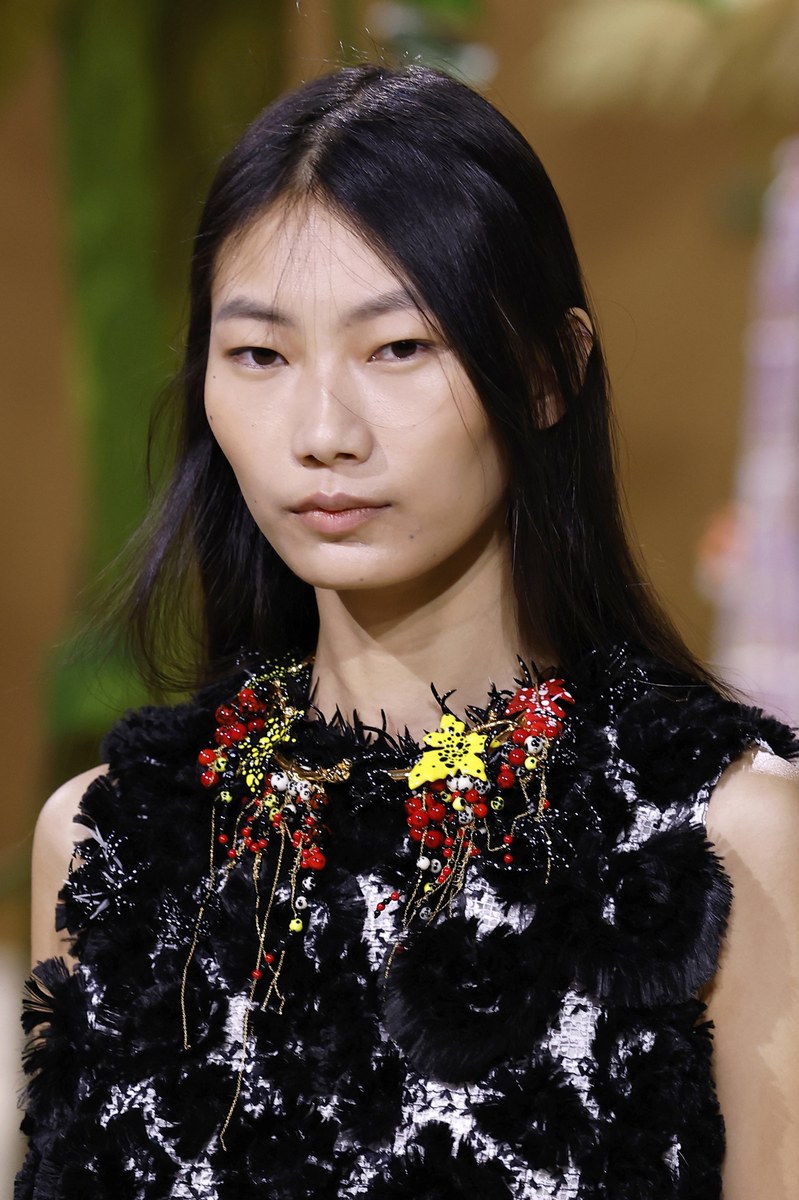
Derrick FW26 Women Looks Report

Derrick FW26 Women Looks Report
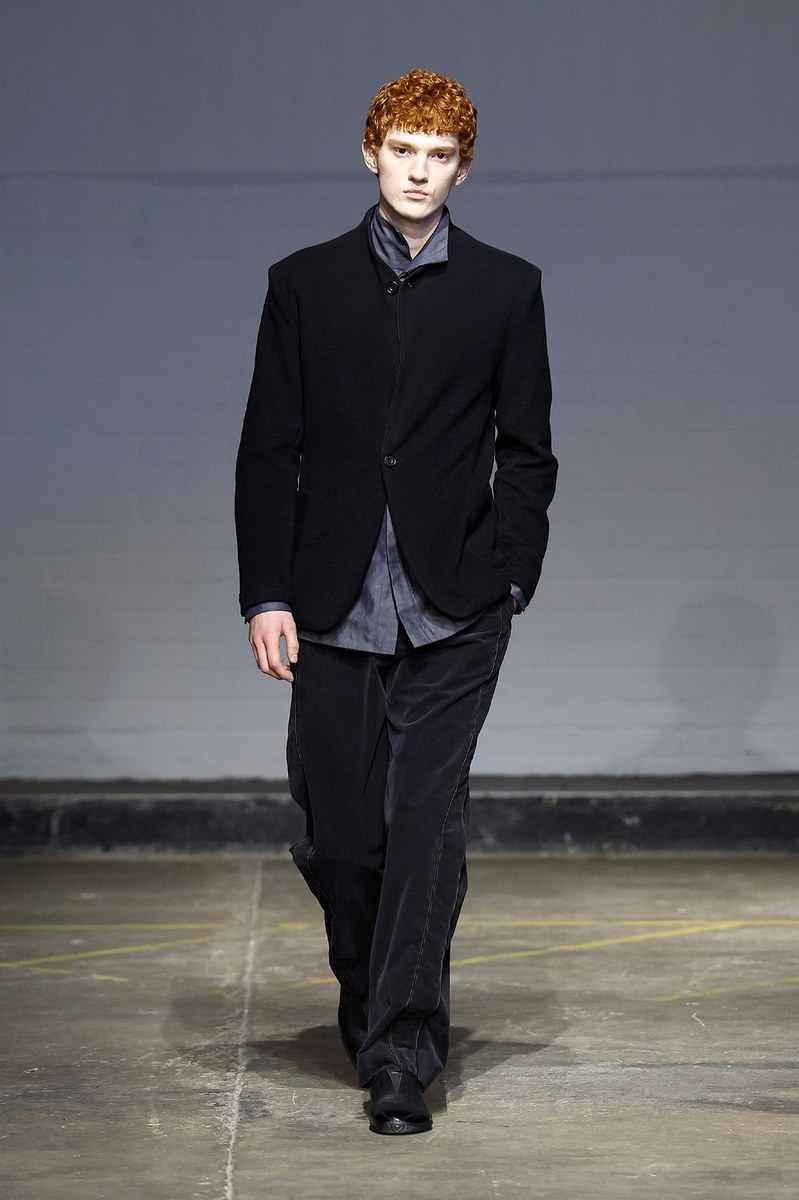
Derrick FW26 Menswear Report

London Fashion Week

Derrick FW26 builds a menswear wardrobe around controlled volume, tactile fabric contrast, and a restrained but purposeful color range that moves between near-black and warm earth tones. Buyers will find this collection arriving at precisely the moment when the market is actively seeking considered layering systems that read as wearable rather than conceptual.

Silhouette and Volume

Wide, pleated trousers anchor almost every look, consistently cut with enough room at the hip and thigh to read as relaxed without collapsing into shapelessness. Whether single-button or double-breasted, jackets sit close enough to the body to provide contrast against the generous trouser leg. Coats in Looks 9, 13, 14 and 16 extend to mid-calf, adding vertical weight that pulls the proportions into a long, unhurried line. Knitwear in Looks 4, 5 and 18 disrupts the tailored silhouette with soft, bundled volume at the neck and shoulder.
Color Palette

Near-black and charcoal dominate Looks 1 through 3, then give way to a sustained run of navy and indigo through Looks 4, 5, 7, 9 and 12. Warm khaki, sage and tan corduroy carry Looks 10 through 14, with tobacco brown velvet anchoring Looks 16 and 18. Look 15 breaks the sequence entirely: acid yellow trousers set against a dark brown jacket, a deliberate provocation that reads as a commercial accent piece rather than a directional statement. Everything here feels autumnal and residential, suited to a customer who dresses with intention rather than spectacle.

Look 15
Look 15

Materials and Textures

Corduroy dominates the mid-collection run, appearing in wide-wale cuts across Looks 10, 12, 13 and 14, carrying a matte, slightly napped surface that photographs richly and holds its shape across a full day of wear. Heavier and more compressed than the corduroy, velvet in Looks 7, 16 and 17 adds a formal register to what are otherwise relaxed silhouettes. Wool flannel appears in wide trousers throughout, notably in Looks 3, 8 and 17, where the cloth drapes without pulling or bunching. Technical outerwear shell fabric in Looks 11 and 13 introduces a matte nylon or coated cotton that reads as utility-inflected without crossing into sportswear.

Styling and Layering

Almost every look operates on three or four layers, with a base shirt or knit, a mid-layer jacket or vest, and in many cases an outer coat or oversized scarf functioning as a soft third shell. Footwear remains consistent and deliberately low-key throughout, a slim Chelsea boot in black or dark brown that keeps the base of each look grounded and lets the trouser width read cleanly. Large fabric tote bags in Looks 2 and 6 use the same striped material as the Look 4 scarf, suggesting a deliberate accessories program built from collection fabrics. Scarves in Looks 4, 8, 15 and 18 are styled with enough volume to function structurally rather than decoratively, wrapping the neck and shoulder to add bulk where the tailoring deliberately leaves it absent.

Look 4
Look 4

Look by Look Highlights

Look 4 layers a navy wool bomber with a matching wide-leg trouser and a thick navy scarf carrying a single white stripe, a complete monochromatic unit with a single graphic break that makes it immediately merchandisable as a set.

Look 9 pairs a floor-grazing double-breasted navy wool coat with a hooded inner layer in grey, the hood visible above the coat collar in a construction detail that adds depth without requiring a separate product.

Look 9
Look 9

Look 10 puts a sage green wide-wale corduroy double-breasted jacket over matching wide trousers with a visible seam stripe down the leg, the most cohesive suiting proposition in the collection for buyers looking for a statement two-piece.

Look 10
Look 10

Look 12 pairs a camel wide-wale corduroy double-breasted jacket against navy velvet trousers, a tonal-but-contrasting combination that opens strong cross-category selling opportunities between tailoring and trousers.

Look 12
Look 12

Look 14 uses a knee-length camel corduroy double-breasted coat over a dark olive wool trouser, a proportioning that makes the coat itself the central commercial piece rather than a supporting outerwear layer.

Look 14
Look 14

Look 16 builds a rich, dark chocolate brown velvet long coat over layered grey knitwear, white shirting and matching velvet trousers, giving buyers a complete velvet story with clear SKU hierarchy.

Look 16
Look 16

Look 17 positions a slate grey double-breasted wool long coat over a dark aubergine velvet blazer, a layering approach that lets two jacket-weight pieces coexist without competing, relevant for buyers building a differentiated outerwear tier.

Look 17
Look 17

Look 19 closes the darker portion of the collection with an all-black double-breasted jacket worn over a white turtleneck and black wide trousers, the hooded inner visible above the collar, a clean and commercially legible re-entry into the opening monochrome register.

Look 19
Look 19

Operational Insights

Corduroy as a hero fabric: At least six looks across a range of weights and colorways feature corduroy, which signals a viable fabrication story for buyers who want to build a coordinated floor set around a single material with seasonal credibility.

Layering system logic: Most looks are built as modular three-piece systems rather than full suits, meaning buyers can purchase jackets, trousers and outerwear separately and still achieve the runway proportion, reducing minimum order risk and improving floor flexibility.

Color phasing for sell-through: The palette moves in three clearly separated groups, black and charcoal in Looks 1 to 3, navy and indigo in Looks 4 to 9, and earth tones in Looks 10 to 18, giving style directors a ready-made floor layout that can phase across a delivery calendar without visual confusion.

Accessory attachment rate: Repeated use of oversized fabric totes and sculptural scarves built from collection textiles gives product managers a low-investment accessory line with high visual impact and natural attachment to key tailoring and knitwear SKUs.

Trouser width as the commercial anchor: Wide-leg trousers run through all 20 looks in multiple fabrications including wool flannel, velvet, corduroy, technical shell and denim, making it the single most repeatable unit in the range and the most defensible investment for buyers uncertain about the broader directional silhouette.

Complete Collection

Look 1
Look 1
Look 2
Look 2
Look 3
Look 3
Look 5
Look 5
Look 6
Look 6
Look 7
Look 7
Look 8
Look 8
Look 11
Look 11
Look 13
Look 13
Look 18
Look 18
Look 20
Look 20
Look 21
Look 21
Look 22
Look 22
Look 23
Look 23
Look 24
Look 24

About the Designer

Luke Derrick grew up in Oxford, navigating the traditional masculine spaces of army cadets and competitive rowing. As captain of his school's boat club, he displayed an early aptitude for leadership, but it was his height and sensitivity that made him feel conspicuous in these environments. His first design work emerged from necessity, creating uniforms for his rowing team before securing an internship at cycling brand Rapha at sixteen. This early exposure to functional design planted the seeds of his aesthetic philosophy, where performance and elegance would eventually converge.

After completing his studies at Central Saint Martins, graduating with both BA and MA degrees between 2015 and 2021, Derrick sought to reconcile his privileged upbringing with fashion's rebellious traditions. He trained at some of menswear's most respected institutions, including Savile Row tailors, Brioni, Alexander McQueen, and Dunhill, absorbing the techniques of bespoke craftsmanship while questioning their contemporary relevance. His time at Brioni proved particularly formative, where he learned that luxury meant comfort rather than constraint. The pandemic years forced him to reconsider menswear's role in modern life, recognizing that suits had become symbols of oppression for many men.

Launching his eponymous label Derrick in 2022, he now operates from his East London studio, creating what he calls "lazy elegance" for the contemporary urban male. His aesthetic draws from the nocturnal energy of Bethnal Green, where late-night walks home inspire collections that blur the boundaries between formality and comfort. He cites influences ranging from Nick Cave and James Baldwin to graphic designer Peter Saville and Raf Simons, finding common ground in their connection to subcultural moments. His approach combines Scottish Hainsworth wool, traditionally used for ceremonial uniforms, with technical fabrics that resist wrinkles and weather, creating suits designed to be thrown on in five minutes yet maintain their elegance throughout the day.

"If a suit is cut right, it will almost feel like you want to rise to it. Even subconsciously, when it's right, you want to give respect to it. Almost like getting comfortable in a new chair." "It's about starting from a point of pragmatism about the way people actually live in the city."

✦ This report was generated with AI — combining human editorial vision with Claude by Anthropic. Because the future of fashion intelligence is already here.