Dipetsa FW26 Shoes
Dipetsa FW26 Shoes Report
Dipetsa FW26 plants its footwear identity firmly in the spike-studded mule, pushing a single silhouette through two distinct executions that read as a coherent and deliberate design system. For buyers and product managers, this signals a brand confident enough to double down on one provocative construction rather than scatter resources across multiple silhouettes, making the assortment tight and easy to merchandise.
Silhouettes and Construction
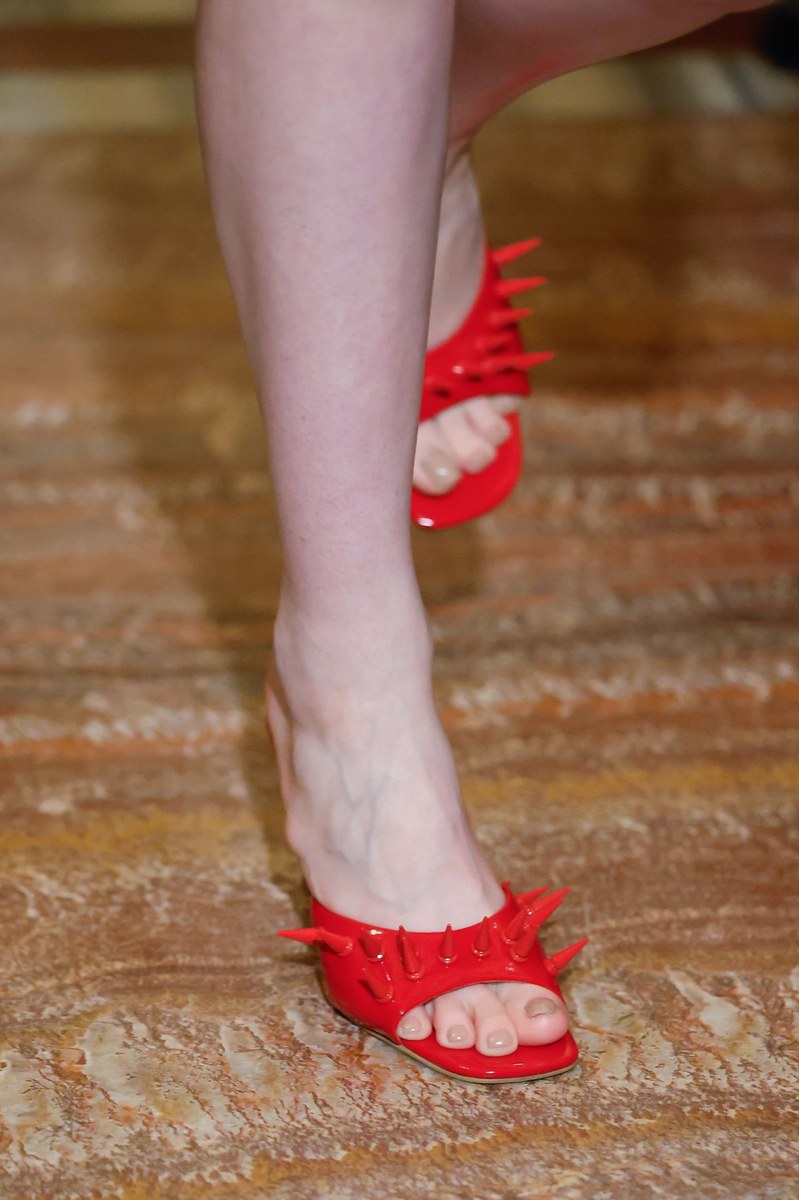
Both styles operate within the open-toe mule format, eliminating any back strap or ankle closure entirely. Shoe 1 sits flat, with a patent sole and no appreciable heel lift, making it a rare flat mule in a market still dominated by mid and high heel options. A block heel measuring approximately 90 to 100mm with a gold metallic finish distinguishes Shoe 2, built with a clean, square heel base that distributes weight evenly. The toe box on both models is open and wide, allowing the foot to splay naturally forward and putting the studded front band in direct visual contact with the toe.
Materials and Finishes
Glossy red patent leather or patent-coated synthetic covers Shoe 1 across the footbed, toe band, and studs, creating a monolithic, high-gloss effect with no tonal variation. Black patent leather with silver-toned metal spike hardware defines Shoe 2, a finish that reads as cast or heavily plated given the weight and density visible in the photograph. Rather than being glued, the spikes on both models appear to be riveted or screwed through the toe band, which suggests more durable construction and raises cost-per-unit but also reduces return risk from hardware failure. Sole construction on Shoe 1 appears thin and flexible, while Shoe 2 carries a more structured midsole consistent with its elevated heel.
Color Direction
Red dominates Shoe 1 completely, with no break in color across the upper, hardware, or sole. A saturated, warm red with a lacquered finish, the kind of tone that photographs strongly and performs well in visual retail environments. Black patent anchors Shoe 2, a perennial commercial driver, with the gold heel and silver spikes adding metallic contrast that prevents the look from reading as basic. Together the two colorways cover the poles of the palette, one maximalist and monochromatic, one rooted in a neutral base with precious metal accents.
Key Models and Details
The spike-toe mule emerges as the clear hero across both looks. What defines the construction is the front band, wide enough to carry a full row of graduated conical spikes pointing outward from the toe, which transforms a structurally simple mule into a sculptural object. Neither model carries visible logo branding on the exterior, which positions these as design-led rather than logo-driven pieces, an important distinction for multi-brand buyers targeting a customer who shops for craft over status signifiers. Lining is not fully visible in either image, but the open construction minimizes the surface area where lining would be required.
Shoe by Shoe Highlights
Shoe 1 A flat red patent mule with a full-coverage monochromatic spike band, making it accessible to a heel-averse customer without sacrificing any of the visual aggression the collection demands.

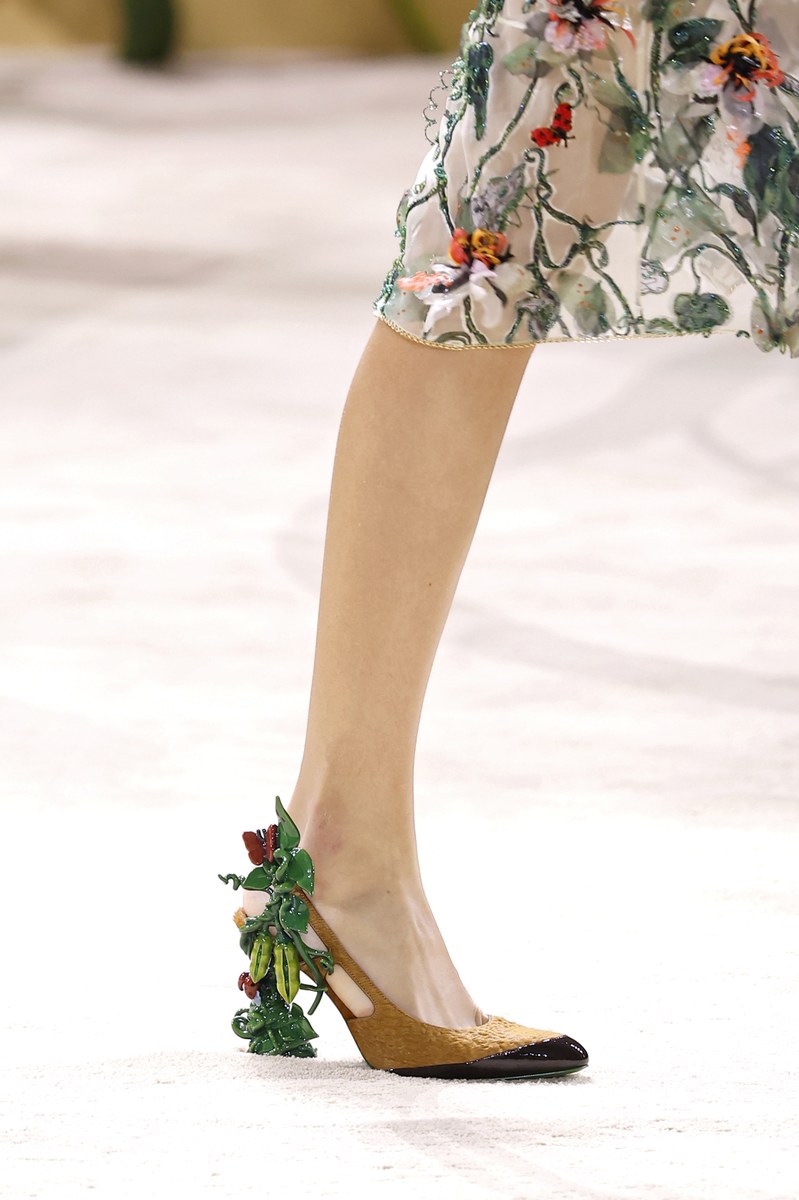
Shoe 2 A 90 to 100mm block heel mule in black patent with silver metal spike hardware and a gold heel block, combining three finishes in a way that reads luxe rather than busy and targets an evening and occasion buying slot.

Operational Insights
- Spike hardware sourcing: The conical metal studs require a reliable hardware supplier capable of consistent finish quality at scale, particularly for Shoe 2 where silver and gold tones must read as premium rather than costume. Confirm the brand's hardware MOQ and lead time before committing to reorder quantities.
- Flat mule viability: Shoe 1 challenges the assumption that fashion-forward footwear requires heel elevation. Track sell-through carefully in the first eight weeks to determine whether the flat format expands the customer base or simply adds a lower price point to the assortment.
- Monochromatic production risk: The all-red construction of Shoe 1 demands perfect dye lot consistency across patent upper, hardware coating, and sole. Any variation between components will be immediately visible and constitute a quality rejection, so request signed-off production samples against a master color standard.
- Block heel positioning: The heel geometry on Shoe 2 targets a wearability-conscious luxury consumer who wants visual drama without a stiletto's stability risk. This makes it a strong candidate for placement in department store footwear halls where comfort alongside style is a proven sales driver.
- Logo-free positioning: The absence of external branding on both styles means retail sell-through depends entirely on the design itself carrying the transaction. Ensure strong editorial and visual merchandising support is built into the buying plan, as these shoes will not self-identify to a brand-literate consumer walking past a fixture.
✦ This report was generated with AI — combining human editorial vision with Claude by Anthropic. Because the future of fashion intelligence is already here.