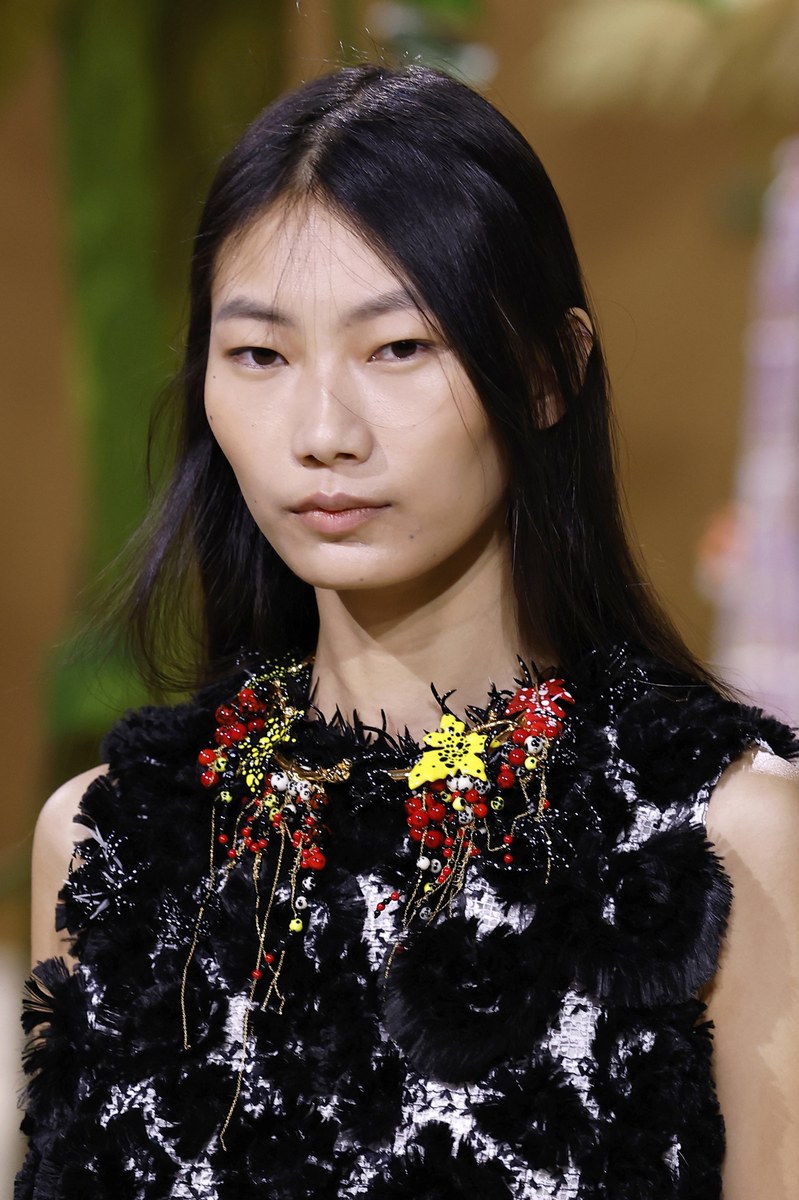
Dreaming Eli FW26 Bags

Dreaming Eli FW26 Bags
Dreaming Eli FW26 Bags Report

Dreaming Eli's FW26 accessory direction treats the body as the primary bag architecture, positioning the hand and wrist as structural elements rather than passive carriers. For buyers and product managers watching the appetite for sculptural, anti-functional accessories grow, this collection signals a clear commercial opportunity in the art-object bag category.

Silhouettes and Shapes

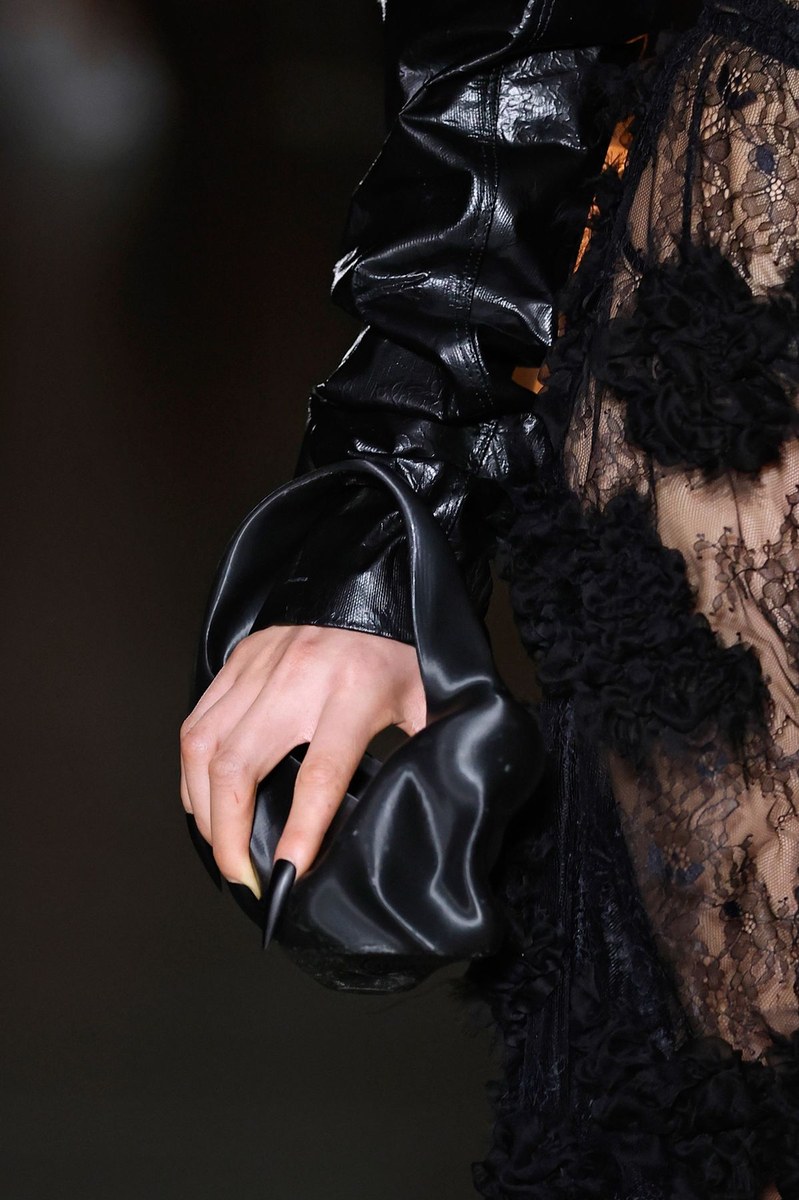
Both bags reject the conventional handled or strapped silhouette entirely. Bag 1 presents a palm-sized, pillow-form pouch gripped directly in the fist, its volume soft and collapsed inward, communicating deliberate smallness and theatrical inutility. Bag 2 follows the same rounded, gathered-satin pouch logic but suspends from a slim white body harness strap rather than relying on the hand. The shared silhouette language, compact, cloud-like, and frameless, reads as a coherent design system rather than two isolated pieces.
Materials and Hardware

Bag 1 uses high-shine patent-effect black leather, likely a coated calfskin or PU composite, with a smooth, almost liquid surface that catches runway light and reads as intentionally theatrical. Bag 2 shifts to ivory or off-white satin, possibly a silk-blend, with a matte-to-sheen surface that aligns with the bridal and lingerie codes of the surrounding look. Neither bag carries visible hardware, no clasps, no rings, no zippers in sight, which places all construction emphasis on the gathered textile manipulation and the pouch's self-contained form. That absence of metal is itself a statement, and a cost-structure consideration for production teams.

Color Direction

The palette across both bags operates as a binary: absolute black against near-white. Bag 1's jet black connects directly to the gothic, latex-adjacent vocabulary of its look. Bag 2's ivory satin reads bridal, soft, and flesh-adjacent against the transparent lace. Together, the two tones frame the collection's emotional range, darkness and light, transgression and fragility, without introducing any tertiary color. For buyers, this tight palette reduces SKU complexity and supports strong visual merchandising contrast on the floor or in editorial.

Key Models and Details

The defining model across the collection is the wrist-grip pouch, a compact, unstructured form approximately the size of a large grapefruit, closed through fabric gathering rather than mechanical hardware. Bag 1 closes via a pinched leather ruffle at the top, held shut by the wearer's grip alone. Bag 2 attaches to the body via a thin, adjustable white elasticated or grosgrain harness strap with a small rectangular buckle, the only hard element in either look. Interior organization appears nonexistent in both cases, reinforcing the art-object positioning over functional carry.

Bag by Bag Highlights

Bag 1 The black coated-leather fist pouch delivers immediate visual impact on the wrist, its crumpled surface creating organic sculptural shadow that no flat bag can replicate.

Bag 1
Bag 1

Bag 2 The ivory satin gathered pouch, worn on a body harness rather than carried, reframes the bag as intimate apparel accessory, a direct crossover opportunity for lingerie-adjacent product categories.

Bag 2
Bag 2

Bag 1 Total hardware absence on the black pouch lowers material cost while amplifying the editorial price-per-image value, a ratio critical for limited-edition production runs.

Bag 2 The harness attachment system on the ivory pouch opens design conversations around modular bag-and-body-strap sets sold as a single SKU, a format with proven traction in the directional accessories market.

Bag 1 The grip-only carry method makes Bag 1 functionally a prop as much as a bag, positioning it squarely in the gifting, display, and collector segment rather than the daily-carry market.

Bag 2 Ivory satin and bridal context make Bag 2 an immediate candidate for capsule wedding or occasion-wear accessory drops, where emotional resonance consistently outweighs practical volume.

Operational Insights

Positioning: Both bags belong in the art-object or collector tier of a buying plan, not the functional accessories floor. Price them accordingly, with margins that reflect editorial value over utilitarian use.

Production volume: Limited runs of 50 to 200 units per colorway are appropriate for this silhouette category. Overproducing a grip-carry pouch without strong editorial support will stall sell-through immediately.

Material sourcing: The coated leather on Bag 1 and the satin on Bag 2 are both accessible fabrications, but quality control on the gathering and ruffle construction is the margin risk. Inconsistent bunching reads as defective, not artistic, at retail.

Category extension: The body-harness carry system on Bag 2 is a separates opportunity. Selling the harness and pouch as discrete, interchangeable components could increase average order value and extend the product lifecycle across multiple seasons.

Retail context: Both bags require high-concept visual merchandising to convert. Neither silhouette will sell itself on a hook or shelf without a styled environment. Buyers should factor in display and editorial investment as part of the total launch cost.

✦ This report was generated with AI — combining human editorial vision with Claude by Anthropic. Because the future of fashion intelligence is already here.