Erdem FW26 Women Looks Report

Erdem FW26 Women Looks Report
Erdem FW26 Women Looks Report

London Fashion Week

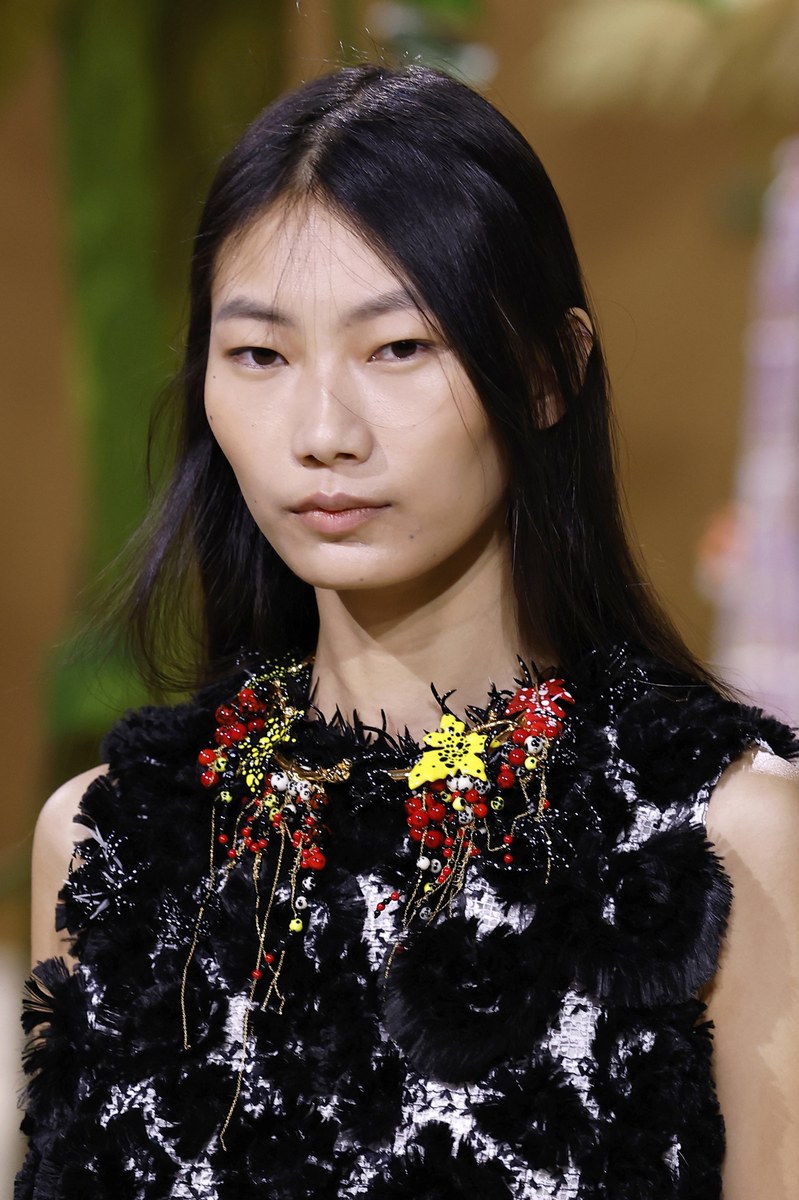
Erdem FW26 builds a wardrobe around deliberate collision, pairing archival brocades and floral jacquards against workwear denim, quilted outerwear, and black leather to create something between a Victorian dress-up trunk and a contemporary street wardrobe. For buyers, this tension between the ceremonial and the utilitarian is exactly where spending energy sits right now, as consumers want occasion dressing that carries daywear logic.

Silhouette and Volume

Two distinct silhouettes drive the show: compressed, structured mini forms in Looks 2, 9, and 11, and voluminous, floor-grazing shapes in Looks 3, 5, 19. Outerwear leans heavily into cocoon and trapeze proportions, with the all-feather coats of Looks 8 and 10 as the clearest examples. Volume clusters at the shoulders and hem rather than the waist, creating a top-heavy proportion that photographs with strong editorial authority.
Color Palette

Black and silver-white anchor the collection throughout, appearing in Looks 2, 6, 7, 9, 10, 11, 13, and 18. Soft powder blue in Look 1, cream and warm ivory in Looks 4 and 5, and a sharp acid yellow in Looks 16 and 17 punctuate that dark base. Look 14 stands out as the single most commercially potent combination: a plum purple coat against moss green suiting that reads as both directional and accessible to a broad retail context. Charcoal grey herringbone in Looks 12, 13, and 15 grounds the more fantastical elements and gives buyers a clear entry point for general womenswear floors.

Look 1
Look 1

Materials and Textures

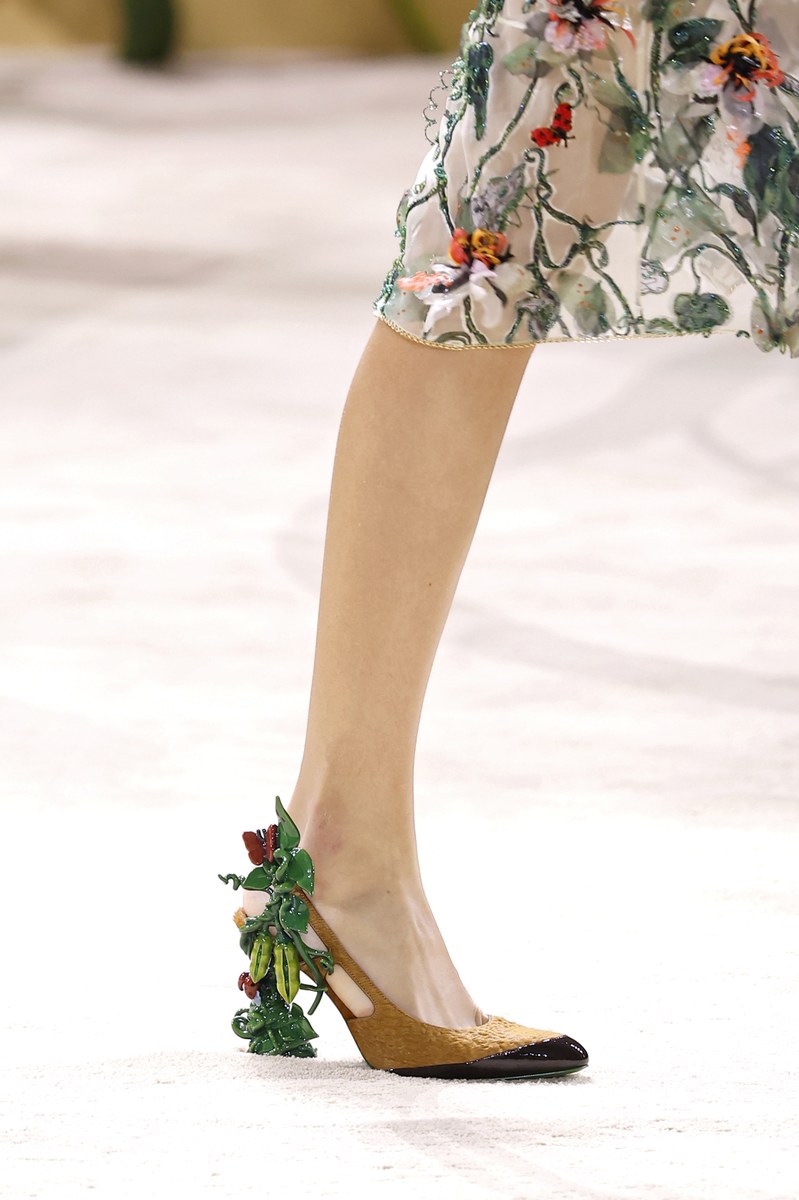
Floral brocade and metallic jacquard carry significant surface weight throughout, most legibly in Looks 1, 2, 3, 5, and 19, where the fabric holds structured shape without interior boning. Feathers split into two distinct treatments: dense all-over coats in Looks 8 and 10, and fringe-trim hem details at shoes and skirt edges in Looks 15, 16, and 17. That second approach costs less to produce and translates more easily to commercial price points. Smooth, matte black leather anchors Looks 6 and 7 with an almost industrial weight that contrasts sharply with the embroidered appliqué florals placed across both garments. Quilted outerwear in Looks 3 and 5 nods directly to the Barbour collaboration visible in the sleeve patches, bringing functional outerwear logic into an embellished context.

Styling and Layering

Layering drives the primary narrative. Corset-style bralettes sit over blouses or sheer mesh turtlenecks in Looks 12, 14, and 15, while structured jackets fall open over underpinnings that would traditionally be considered underwear. A ruffled white collar recurs in Looks 1, 13, and 18 as a styling anchor that codes the collection toward historical reference without costuming the look entirely. Footwear stays almost uniformly black: lace-up loafers or chunky monk-strap shoes keep the ground-plane quiet and let textiles carry visual weight. Small feather-trimmed bags in Looks 12 and 13, and the yellow Miu Miu-adjacent mini bag in Look 15, signal that accessories come built into the buy with clear upsell intent.

Look 15
Look 15

Look by Look Highlights

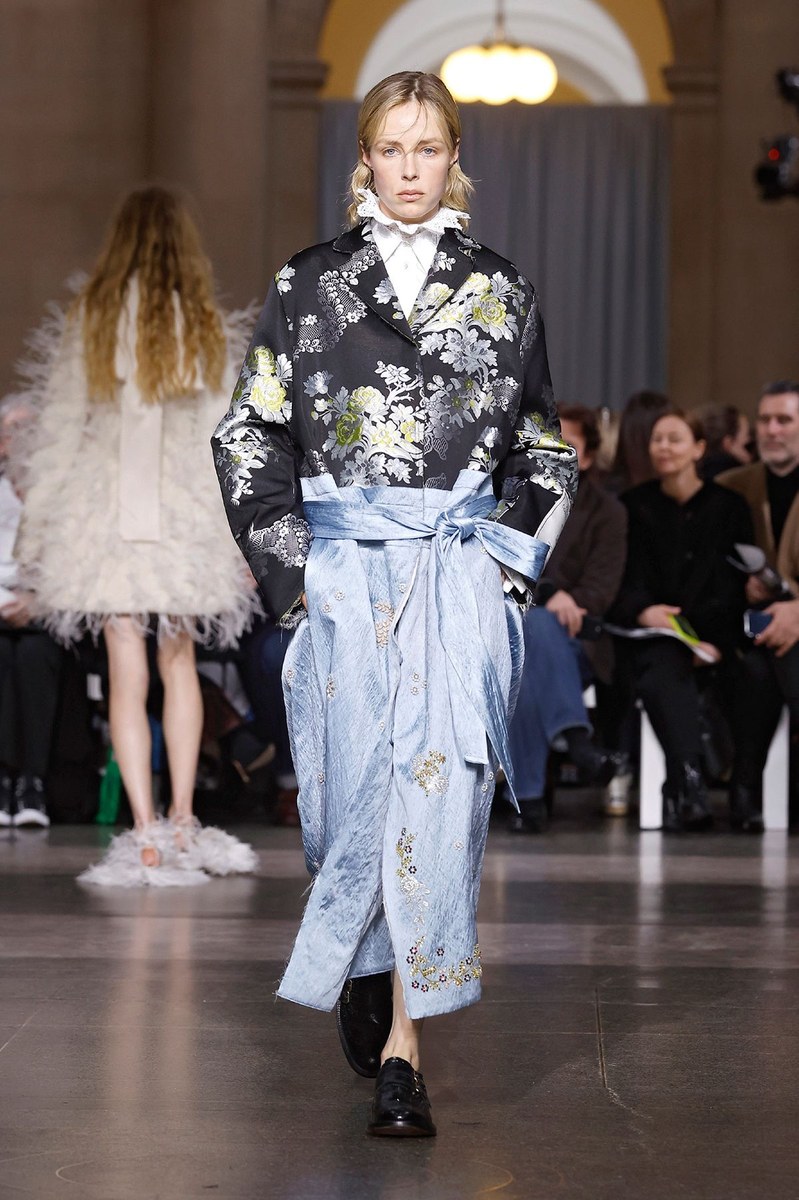
Look 1 pairs a black and gold floral brocade cropped jacket over a powder blue crinkled satin coat-dress tied at the waist. It's the strongest separates story in the collection for buyers building modular occasion wear.

Look 2 delivers a structured black and silver floral jacquard mini dress with a full bubble skirt, styled with a white choker and black feather-trimmed mules. Direct event-wear energy, requiring limited alteration for retail.

Look 2
Look 2

Look 6 grounds the collection in wearable commercial reality with an oversized black faux-leather coat embellished with dimensional pink fabric flowers. Statement outerwear meets approachable novelty detail.

Look 6
Look 6

Look 9 combines a black and lime-flecked bouclé tweed cape top with a black and white feather-trimmed mini skirt. Strong two-piece proposition for buyers sourcing coordinated occasionwear with editorial punch.

Look 9
Look 9

Look 14 is the single clearest coat investment in the show: a double-breasted plum bouclé coat with tonal black velvet floral appliqué, worn over a moss green knit skirt suit and black bralette. Three separately sellable units in one look.

Look 14
Look 14

Look 16 runs a yellow embroidered brocade column dress with yellow feather trim at the hem. Tight, high-margin piece for specialty retailers with a customer who wants full-look occasion dressing at a premium price.

Look 16
Look 16

Look 17 cuts an embroidered ivory crop top against wide-leg low-rise washed denim with yellow feather hem trim. Most commercially accessible look in the collection and the strongest signal that Erdem is reaching toward a younger or more casual spending bracket.

Look 17
Look 17

Look 19 assembles an asymmetric draped dress from monochrome floral printed satin, ivory embroidered silk, and black tulle with feather trim shoes. Production-complex piece that justifies a high retail price and anchors the collection's couture adjacency for luxury department store buyers.

Look 19
Look 19

Operational Insights

Feather trim as entry-level embellishment: Feather details appear at hems, shoes, and bags rather than only as full-coat treatments. This lets buyers at mid-tier price points adopt the collection's key decorative signature without committing to the higher production cost of full feather garments like Looks 8 and 10.

Barbour collaboration signal: Visible Barbour patches on quilted outerwear in Looks 3 and 5 indicate a live or pending brand partnership. Product managers should track this for potential co-branded capsule buys, particularly in markets where heritage Britishness carries commercial weight.

Separates logic embedded in statement looks: Multiple looks, especially 1, 12, and 14, are assembled from pieces that retail independently. Style directors should build buy plans around separates rather than full-look commitments to maximize sell-through across different floor placements.

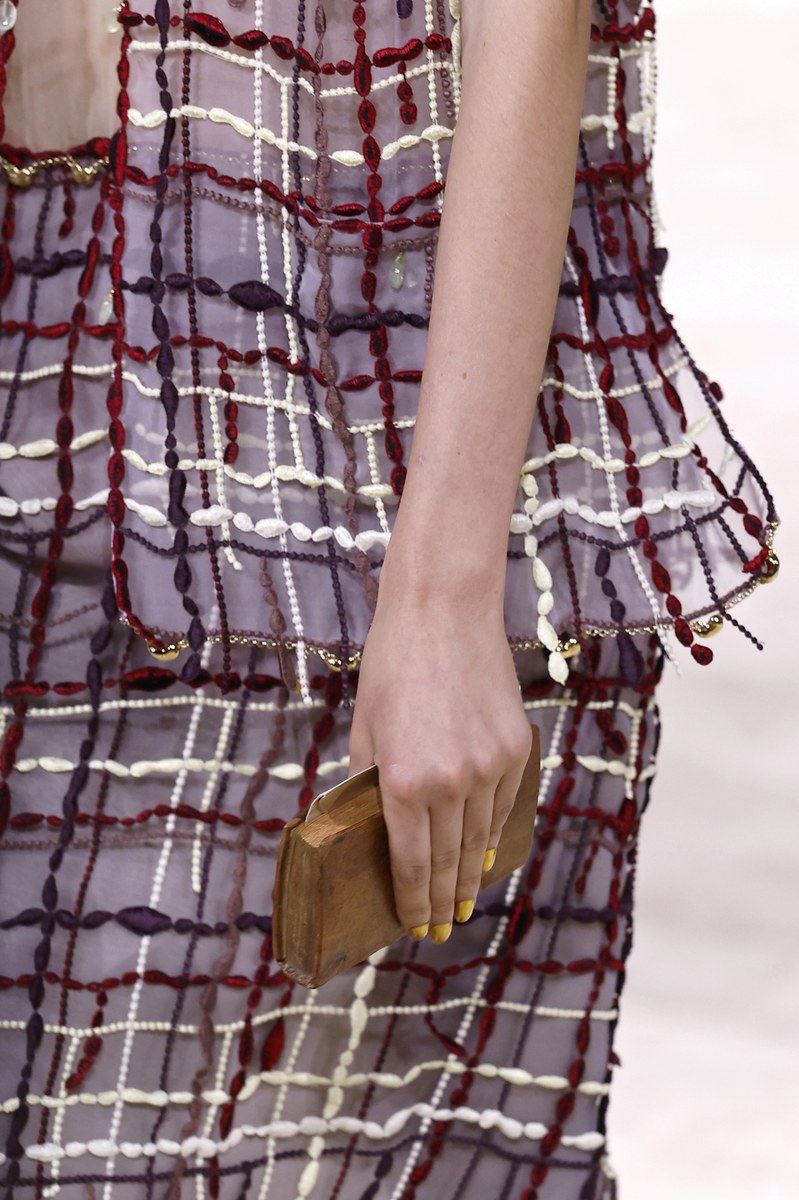
Accessory tier is developed and intentional: Bags in at least five looks carry distinct design identities, from the feather-trimmed white clutch in Look 12 to the neon yellow mini in Look 15. Buyers should treat accessories as a parallel buy rather than an afterthought to the clothing.

Look 12
Look 12

Denim as a deliberate commercial bridge: Look 17 introduces wide-leg washed denim into a collection otherwise built on luxury textiles. That single piece gives the brand a clear hook for press coverage and a lower price-point entry that can drive traffic to higher-margin embellished pieces on the same floor.

Complete Collection

Look 3
Look 3
Look 4
Look 4
Look 5
Look 5
Look 7
Look 7
Look 8
Look 8
Look 10
Look 10
Look 11
Look 11
Look 13
Look 13
Look 18
Look 18
Look 20
Look 20
Look 21
Look 21
Look 22
Look 22
Look 23
Look 23
Look 24
Look 24
Look 25
Look 25
Look 26
Look 26
Look 27
Look 27
Look 28
Look 28
Look 29
Look 29
Look 30
Look 30
Look 31
Look 31
Look 32
Look 32
Look 33
Look 33
Look 34
Look 34
Look 35
Look 35
Look 36
Look 36
Look 37
Look 37
Look 38
Look 38
Look 39
Look 39
Look 40
Look 40
Look 41
Look 41
Look 42
Look 42
Look 43
Look 43
Look 44
Look 44
Look 45
Look 45
Look 46
Look 46
Look 47
Look 47
Look 48
Look 48
Look 49
Look 49

About the Designer

Erdem Moralioglu discovered fashion at seven years old, watching French television coverage of couture shows from his suburban Montreal home. The son of a Turkish chemical engineer father and British mother, he absorbed both cultures while growing up alongside his twin sister Sara, who became a documentary filmmaker. His mother's love of history and gardening planted the seeds of his fascination with narrative and florals, while PBS costume dramas shaped his aesthetic vocabulary.

After studying classics and literature in Canada, Moralioglu earned a fashion degree from Ryerson University before moving to London in 2000 to pursue his master's at the Royal College of Art. He worked briefly as a shelver in the college library, where he consumed books voraciously. Following internships at Vivienne Westwood and a short stint with Diane von Furstenberg in New York, he returned to London and launched his eponymous label in 2005 from a Shoreditch studio.

His design philosophy centers on narrative and character, each collection built around imagined women from history or literature. From Maria Callas to the writer of The Well of Loneliness, these muses inform his blend of romantic femininity with darker undertones. The contrast speaks to his multicultural upbringing: English rose sensibilities tempered by Turkish richness. His signature involves meticulous florals, intricate craftsmanship, and an ongoing dialogue between control and undone beauty. Throughout two decades, he has remained fiercely independent, opening his first boutique only after ten years without loans or outside investment. Today, as Creative Director and founder, he continues to operate from East London, having received an MBE in 2020 for his contributions to British fashion.

"I think my approach is really always about a narrative. It's about a story. It's always about this woman, and who she is, and what's happened to her, and what's about to happen to her."

"When you see someone wearing something that you've designed that might be almost 20 years old, but it's absorbed into their life and they wear it in their own way, I find that really wonderful!"

✦ This report was generated with AI — combining human editorial vision with Claude by Anthropic. Because the future of fashion intelligence is already here.