Ferrari FW26 Women Looks Report

Ferrari FW26 Women Looks Report
Ferrari FW26 Women Looks Report

Milan Fashion Week

Ferrari FW26 builds an entire visual world from a single chromatic premise, running camel and nude leather through structured tailoring, draped silk and lacquered surface treatments to create a collection that speaks entirely in the language of restraint. For buyers and style directors operating in a market fatigued by maximalism, this arrives as a commercially legible proposition with a distinct point of view.

Silhouette and Volume

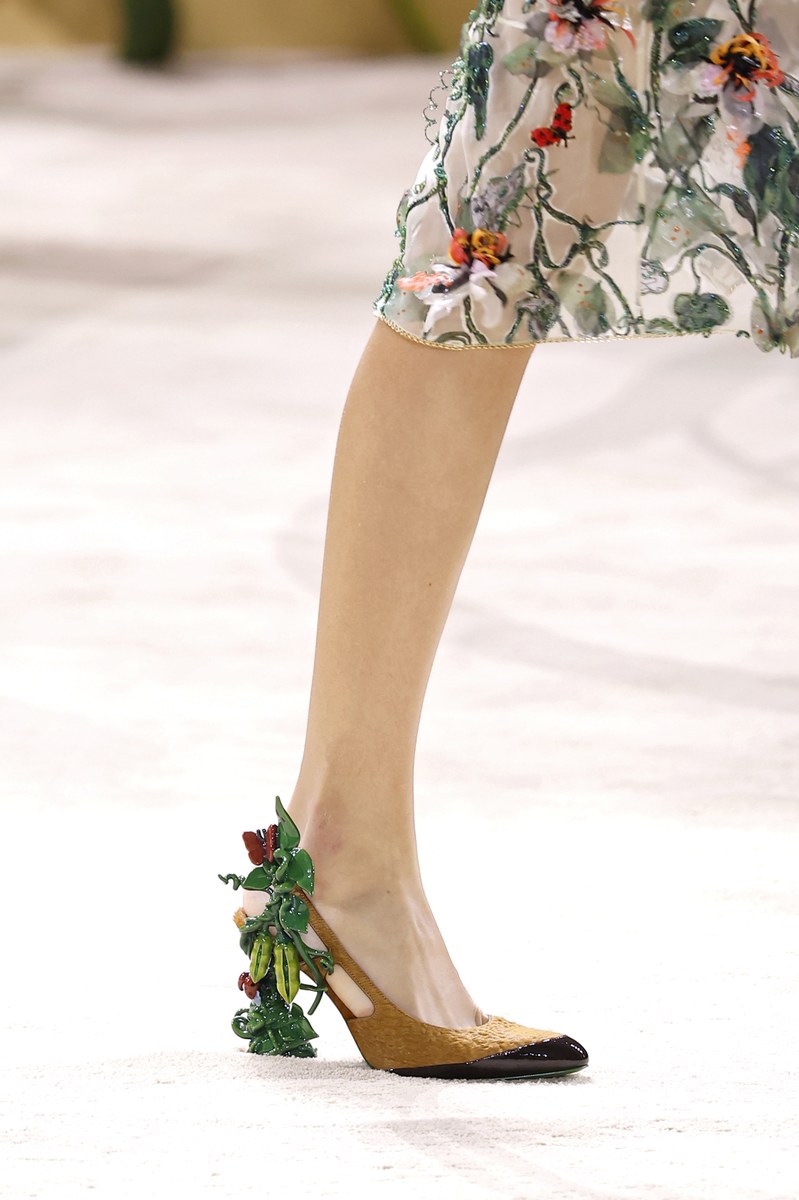
Two opposing forces shape the lineup: body-compressing column silhouettes and deliberately oversized, architectural volumes. Look 1 drops a camel leather overcoat to the ankle with a wide lapel and squared shoulder that reads as both boardroom and runway. Look 14 pushes volume to its structural limit, wrapping the torso in a sculptural folded collar that transforms the coat into something closer to a wearable object. Midi and maxi lengths dominate across the women's looks, while the men's cuts in Looks 3, 6 and 13 favor wide-leg trousers and cropped or extended jackets that carry the same tonal logic.
Look 1
Look 1

Color Palette

Warm camel and raw leather tan move through cooler greige and pale champagne, landing finally at ice-silver crystal in Look 19. Looks 1 through 6 hold tightly to a single sandy beige, building a monochromatic sequence that reads as a deliberate study rather than a default choice. Cream and off-white enter in Looks 7 through 13, introducing softness without abandoning the nude-tone discipline. Look 15 stands apart, moving into a flat taupe with a lacquered surface that reads almost grey under show lighting.

Look 19
Look 19

Materials and Textures

Smooth nappa leather and structured lambskin carry the opening acts, their surfaces matte and weightful in Looks 1, 2, 3 and 4. From Look 7 forward, the pivot shifts to fluid satin and silk-weight fabrics with a high liquid sheen, as seen in the bias-leaning slip of Look 9 and the draped strapless of Look 12. Look 15, Look 16 and Look 18 introduce a lacquered or patent-adjacent surface, likely a coated fabric rather than true patent leather, that catches light and prints abstract white line markings. A sheer crystal-encrusted column closes Look 19, layering micro-embellishment over a nude mesh base for a cumulative shimmer effect without bulk.

Look 7
Look 7

Styling and Layering

Footwear is consistent and intentional: a pointed-toe pump in nude or cream appears across nearly every look, aligning the foot with the overall body tone and eliminating any visual break at the leg. Accessories remain minimal and deliberate. A structured top-handle bag appears in Look 4 and an oversized clutch in Look 8, both sharing the same tonal beige as the clothing and functioning as extensions of the outfit rather than contrast punctuation. Slim, architecturally framed glasses appear on the male models in Looks 3, 6 and 15, reinforcing the collection's investment in precision over ornamentation.

Look 4
Look 4

Look by Look Highlights

Look 1 A floor-length camel leather overcoat with wide notched lapels and a below-knee seam panel, the strongest single commercial piece in the collection for outerwear buyers seeking a statement coat with clear wearability.

Look 2 A strapless camel leather tube dress cut to the ankle with a clean structural seam at the hip, a minimal silhouette that tests well in leather-goods adjacent ready-to-wear positioning.

Look 2
Look 2

Look 5 A knee-length fitted dress in nude leather with a draped asymmetric chest panel, the most body-conscious leather piece in the lineup and a direct opportunity for evening or occasion categories.

Look 5
Look 5

Look 9 A champagne satin slip dress with braided strap detailing at the shoulders and a front slit, commercially approachable and immediately transferable to bridal or resort markets.

Look 9
Look 9

Look 12 A strapless cream ribbed column dress with dense horizontal ruching from bust to hem, technically demanding in production but highly photogenic and strong for editorial-facing retail.

Look 12
Look 12

Look 16 A taupe lacquered oversized wrap coat with exaggerated draped collar worn over a matching lacquered skirt, the most directional layering proposition in the collection and a signal look for style directors tracking outerwear volume trends.

Look 16
Look 16

Look 18 A sleeveless square-neck shift dress in lacquered taupe with abstract white line surface markings, the graphic element reads subtly in person but photographs with strong contrast, making it a strong candidate for digital retail channels.

Look 18
Look 18

Look 19 A sheer long-sleeve column gown covered in scattered crystal embellishment over nude mesh, the evening anchor of the collection and a clear capsule candidate for formal or red-carpet focused buyers.

Operational Insights

Leather depth: Smooth nappa and lambskin appear in at least seven looks across both genders, meaning any buyer committing to this collection needs leather supply chain relationships capable of delivering consistent camel and nude tone matching across multiple silhouettes and cuts.

Tonal dressing: Monochromatic dressing forms the foundation here, so retail presentation requires disciplined visual merchandising. Color-breaking the looks at point of sale will undermine the core proposition.

Gender fluidity: Five male looks run through the same color architecture and several shared construction details as the women's looks. Style directors overseeing dual-gender floors or unisex sections have clear pairing logic to work with here.

Evening capsule: Looks 9, 12 and 19 form a self-contained evening category. A buyer could build a focused formal capsule from these three pieces alone, with a clear progression from accessible to embellished.

Surface innovation risk: Lacquered and coated fabrics in Looks 15, 16 and 18 carry production and care-instruction complexity. Product managers should confirm fabric composition and dry-clean or wear specifications before committing to volume, particularly for markets with strict textile labeling requirements.

Complete Collection

Look 3
Look 3
Look 6
Look 6
Look 8
Look 8
Look 10
Look 10
Look 11
Look 11
Look 13
Look 13
Look 14
Look 14
Look 15
Look 15
Look 17
Look 17
Look 20
Look 20
Look 21
Look 21
Look 22
Look 22
Look 23
Look 23
Look 24
Look 24
Look 25
Look 25
Look 26
Look 26
Look 27
Look 27
Look 28
Look 28
Look 29
Look 29
Look 30
Look 30
Look 31
Look 31
Look 32
Look 32
Look 33
Look 33
Look 34
Look 34
Look 35
Look 35
Look 36
Look 36
Look 37
Look 37
Look 38
Look 38
Look 39
Look 39
Look 40
Look 40
Look 41
Look 41
Look 42
Look 42
Look 43
Look 43
Look 44
Look 44
Look 45
Look 45
Look 46
Look 46
Look 47
Rocco Iannone

About the Designer

Rocco Iannone grew up in Stalettì, a small coastal village in Calabria, where the Mediterranean light and the stark contrast between land and sea left a permanent mark on how he sees color and form. He moved north to Milan as a young man to study at Istituto Marangoni, and the distance between those two worlds, the unhurried south and the relentless pace of fashion's capital city, became a kind of creative engine he never stopped running on.

His career began at Dolce & Gabbana in 2006, where the maximalism of the house sharpened his instinct for craft and cultural narrative. From there he moved to Giorgio Armani, eventually becoming Head of Men's Design, a role that trained him in precision, restraint, and the authority of a reduced palette. Before landing at Ferrari, he spent two years as Creative Director at Pal Zileri, where he began translating the vocabulary of Italian tailoring into something more forward-looking. It was enough to put him on Maranello's radar.

In November 2019, Ferrari appointed Iannone as Creative Director of its fashion division, a role with no obvious precedent. He was not inheriting a fashion legacy but building one from scratch, using a brand whose language had always been speed, performance, and seduction, never fabric and silhouette. His approach has been to work from the inside out: the car as architecture, its curves as tailoring lines, its materials as a source of textile research. He introduced fabrics made from recycled tyre waste and commissioned Paolo Roversi to shoot the first major campaign, a pairing that said everything about how seriously he intended to take it.

"Whenever I begin working on a collection, I seek emotion."

"Ferrari is pure energy, and in my work, I strive to capture that energy, bringing it to life through fabric and silhouettes."

✦ This report was generated with AI — combining human editorial vision with Claude by Anthropic. Because the future of fashion intelligence is already here.