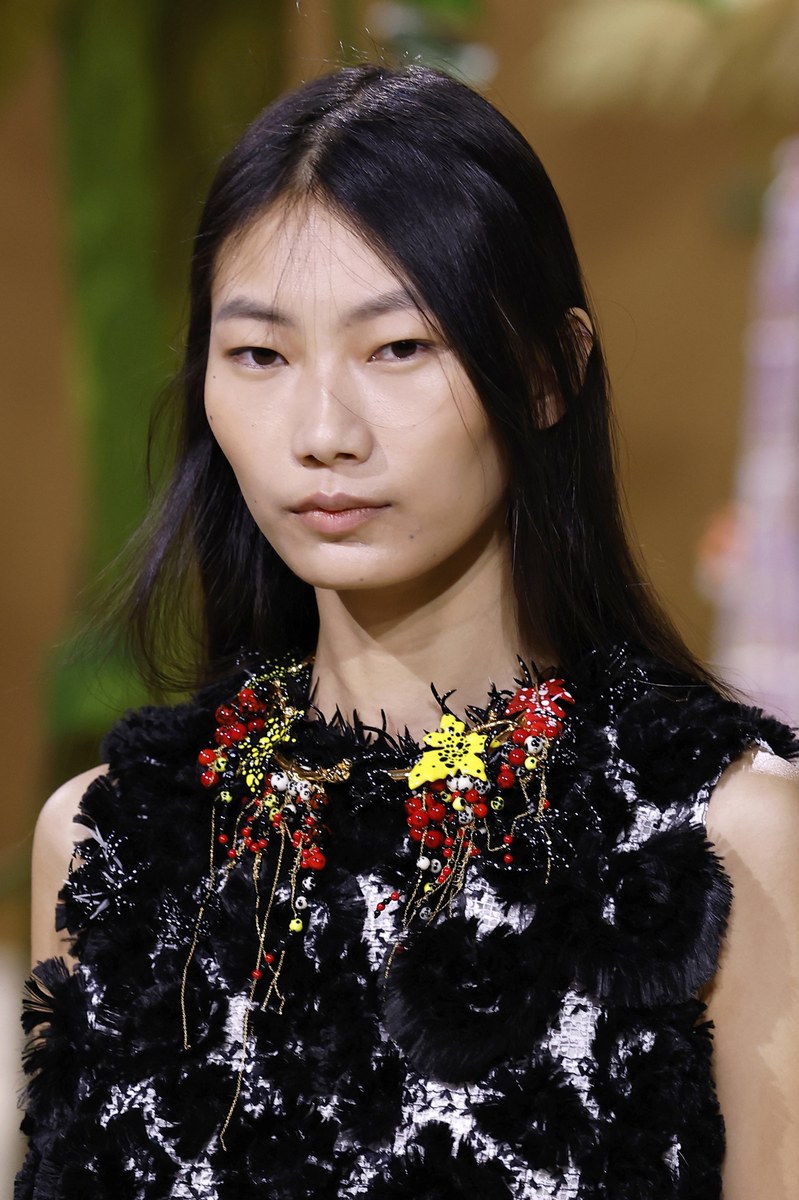
Giorgio Armani FW26 Bags
Giorgio Armani FW26 Bags Report
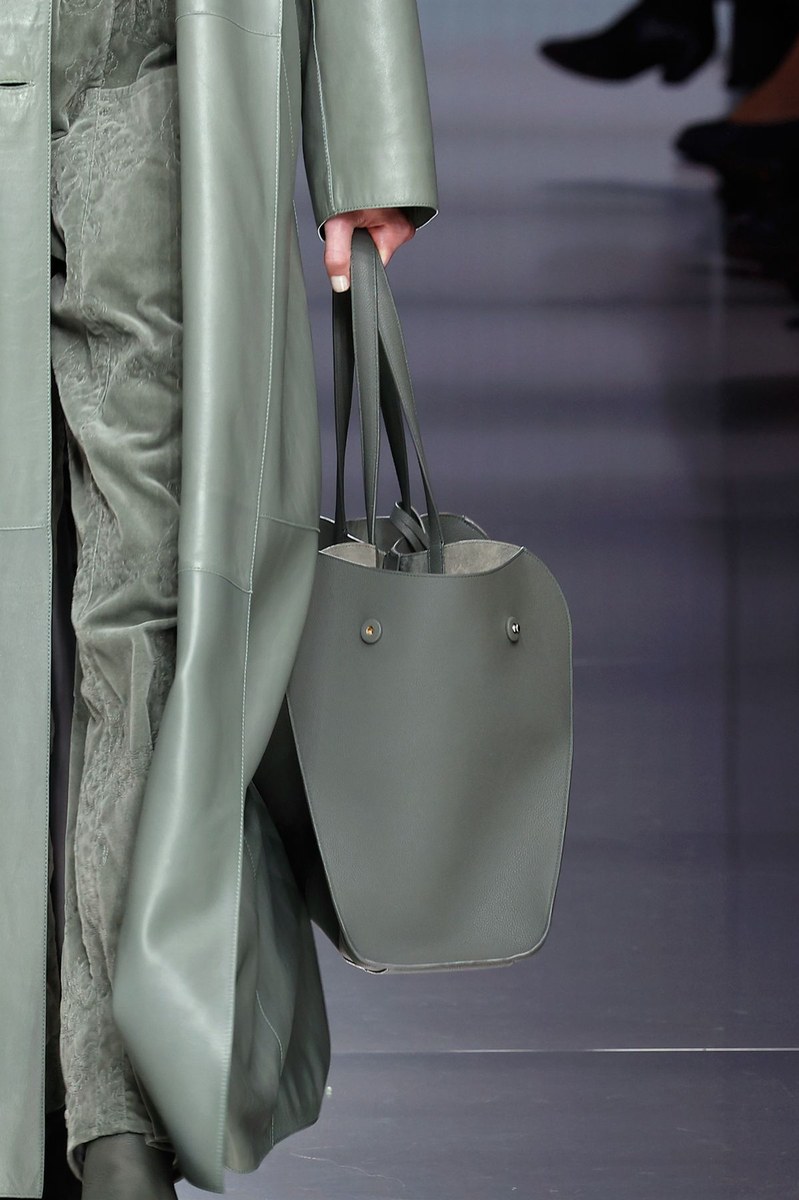
Giorgio Armani FW26 positions the bag as a study in luxurious restraint, pivoting between architectural bucket silhouettes in matte leather and fluid, unstructured pouches in crushed velvet. Buyers and product managers should pay close attention: the collection signals a broad commercial appetite for material-led differentiation over logo-driven design, which plays directly into the current premium accessible market.
Silhouettes and Shapes
Two dominant shape families anchor the lineup. Bags 1 and 2 carry substantial volume through bucket and gathered tote proportions, both sized generously enough to read as everyday carry without tipping into oversized territory. Soft, hobo-adjacent pouches define Bags 3 and 4, which collapse inward and carry low on the hand or wrist. Bag 5 breaks from all of them. A rigid, elongated clutch sits firmly in the evening category.
Materials and Hardware
Velvet drives the narrative across three of the five bags. Crushed velvet appears in Bags 2, 3, and 4 in varying scales, creating a luxurious surface that reads differently depending on how the bag folds and catches light. Smooth, matte-finish leather anchors Bag 1 with visible snap closures in tonal gunmetal, while Bag 5 pairs a satin panel with black micro-stud or woven mesh surround that adds structural weight to an otherwise sleek silhouette. Hardware across the range stays minimal and tone-on-tone throughout.

Color Direction
Deliberately compressed and rich, the palette keeps things tightly edited. Sage green owns Bag 1 entirely, a muted, grey-leaning tone that aligns with the broader quiet luxury color story circulating across the premium market. Burgundy anchors Bags 2 and 5, and a deeper, bluer crimson appears in Bag 3, creating tonal variation within the same red family rather than introducing contrast. Midnight navy velvet rounds out Bag 4, communicating depth, evening weight, and a deliberate move away from neutral beige dominance.
Key Models and Details
Bag 2's gathered velvet tote stands out as the most commercially transferable model in the lineup. Its leather strap construction, which cinches the velvet body at the top rather than using a frame or zipper, gives it a sculptural quality with minimal hardware investment. Bag 1 uses a flat-base bucket construction with dual flat straps and two visible snap closures, a practical, replicable detail that product managers can develop at multiple price points. For evening occasions, Bag 5 emerges as the clearest option, with its rigid minaudière-adjacent structure and mixed-material construction.

Bag by Bag Highlights
Bag 1 A sage green matte leather bucket with a flat rectangular base, dual flat top handles, and two gunmetal snap closures that anchor the front panel, making it the most structured and retail-ready silhouette in the group.
Bag 2 A burgundy velvet gathered tote with smooth leather straps that knot at the top, creating an origami-like fold that differentiates it from standard shopper constructions and adds a tactile, high-margin material story.
Bag 3 A compact crimson velvet pouch with no visible hardware or closure, carried by hand and scaled for evening use, signaling that Armani sees unstructured micro bags as a viable luxury carry even without a rigid frame.

Bag 4 A midnight navy velvet hobo with a wide, self-fabric strap looped through a minimal ring, the largest of the velvet pouch group and the one most likely to translate into a strong wholesale performer given its wearable volume.

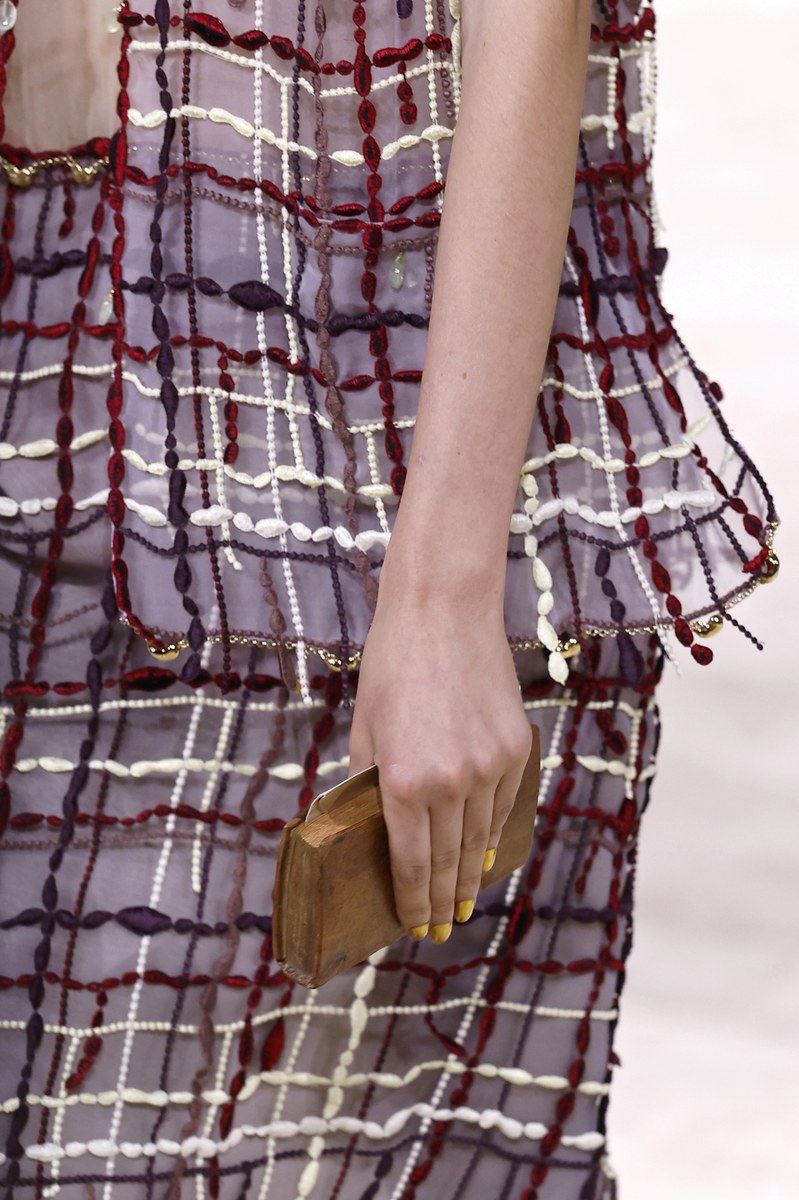
Bag 5 A rigid elongated clutch pairing a burgundy satin panel with a black woven or studded mesh body, the sole evening-specific bag in the lineup and a clear signal that the house is investing in embellished hard structures for formal occasions.
Operational Insights
Velvet sourcing: Three of five bags rely on crushed velvet as the primary material, so buyers should open conversations with velvet suppliers now to lock in quality-consistent yardage across burgundy, crimson, and navy colorways before FW26 production windows close.
Hardware reduction: Visible hardware is almost entirely absent or tonal across the range, which lowers per-unit hardware costs but raises expectations for material and construction quality to carry the visual weight instead.
Silhouette segmentation: Structured bucket and unstructured pouch create a clear day-to-evening range strategy within a single collection, and both shape families can be developed at different price tiers without diluting the design intent.
Color scalability: Burgundy appears across two bags in different materials and scales, suggesting that product managers could build a monochromatic burgundy capsule around velvet, leather, and satin as a tightly edited seasonal drop.
Clutch opportunity: Bag 5 is the only rigid evening bag in the group and carries strong standalone retail potential, particularly in gift and occasion categories during the holiday quarter, making it a priority for open-to-buy allocation in the evening accessories budget.
✦ This report was generated with AI — combining human editorial vision with Claude by Anthropic. Because the future of fashion intelligence is already here.