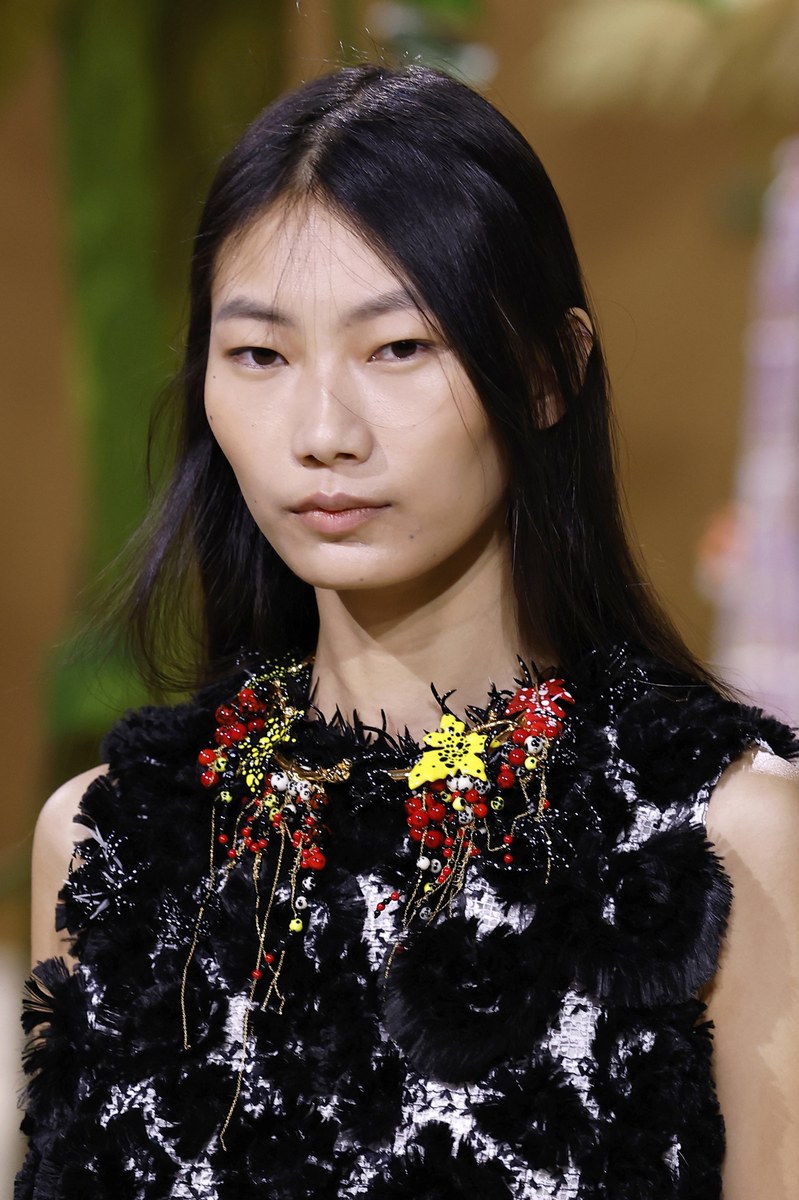
Hui FW26 Women Looks Report
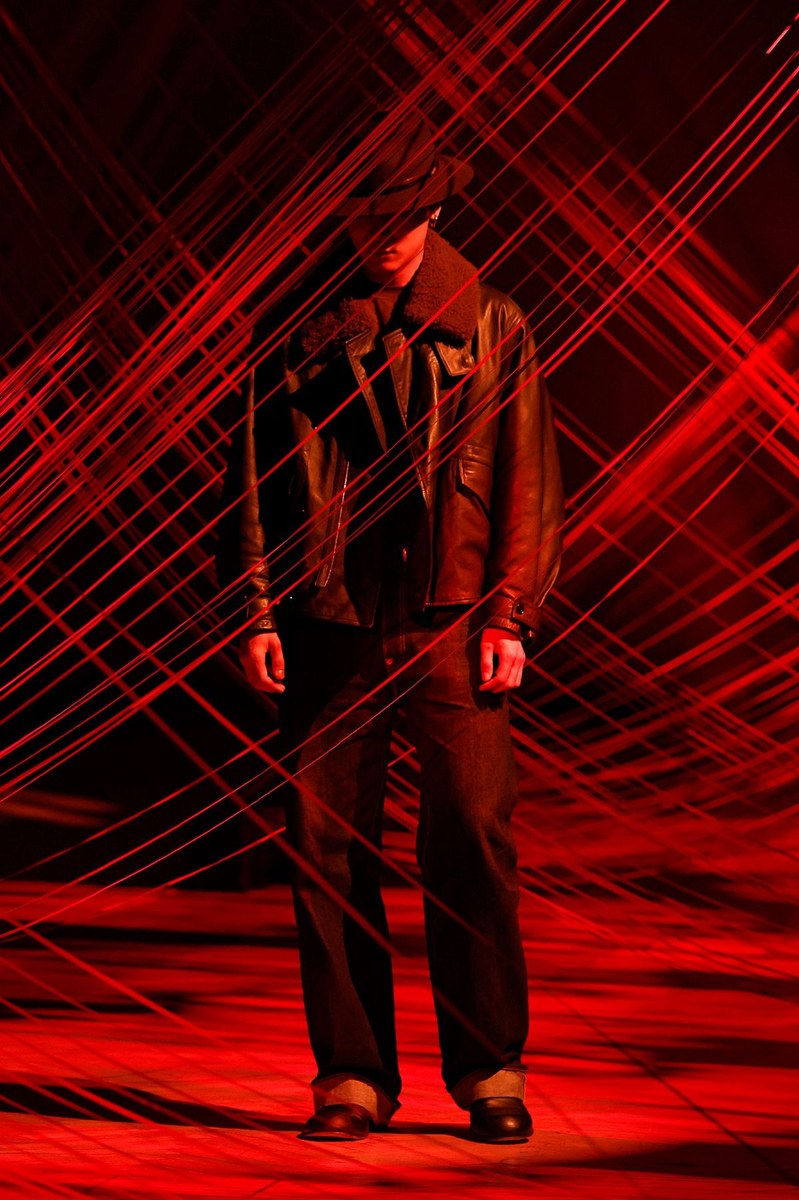
Milan Fashion Week
Hui FW26 builds a wardrobe around the collision of East Asian textile heritage and Western sportswear vocabulary, treating brocade, denim, and shearling as equals rather than hierarchies. For buyers navigating a market hungry for cultural specificity with genuine wearability, this collection delivers both in commercial quantities.
Silhouette and Volume
Two clear shapes emerge throughout. Cropped, body-skimming tops or jackets pair with voluminous bottoms, while dramatic outerwear pieces sit over minimal foundations. Look 7 anchors the first mode with a boxy brocade bomber over wide, draped crimson trousers. Look 13 anchors the second with an oversized dark chocolate shearling coat that swallows a gold jacquard dress beneath it. Midi and maxi lengths dominate the lower half, with several mini shifts breaking the pattern. Look 3 and Look 14 read as strong standalone retail units.
Color Palette
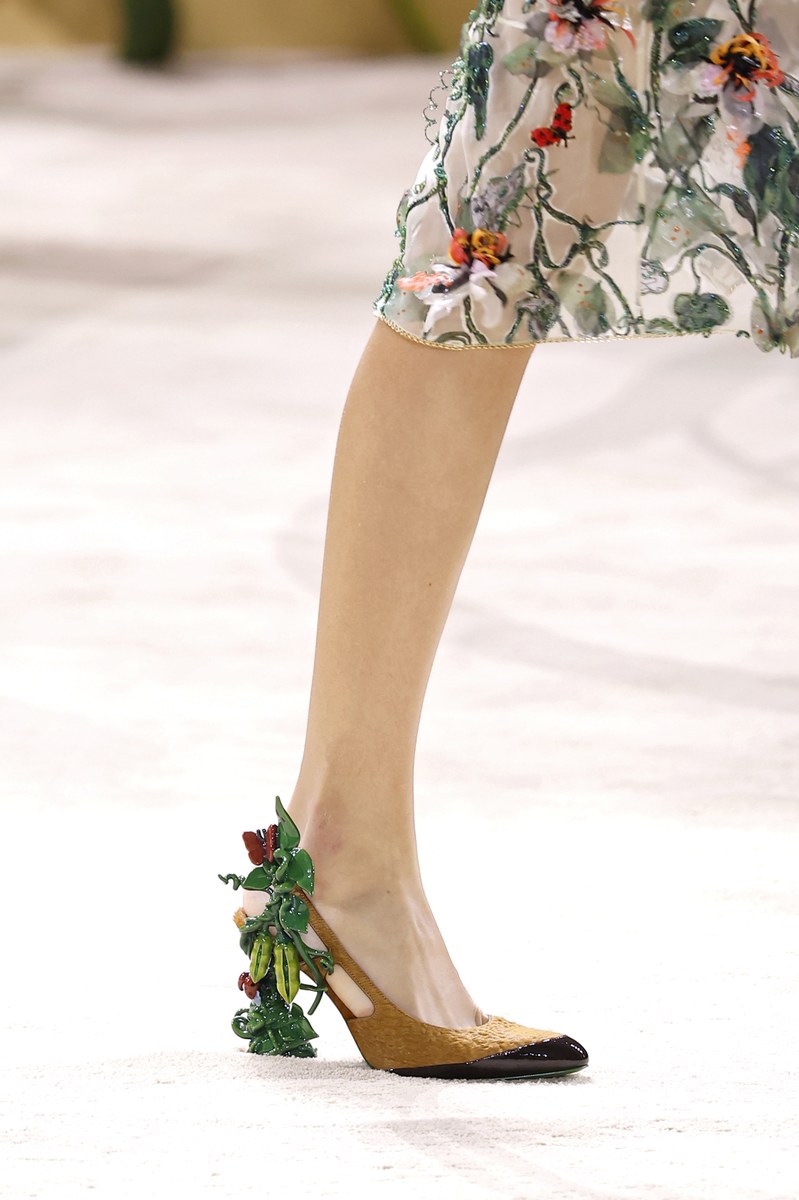
Crimson red is the undisputed lead color, appearing in at least eight looks across satin, brocade, velvet, and cotton. Sage green pairs most frequently with red, as in Look 9 and Look 10, creating a combination that reads simultaneously imperial and contemporary. Deep chocolate brown anchors the outerwear category, grounding the brighter textiles beneath. Gold amber, used in Looks 15, 16, and 18, adds warmth and pulls the Eastern reference forward without reading as costume.

Materials and Textures
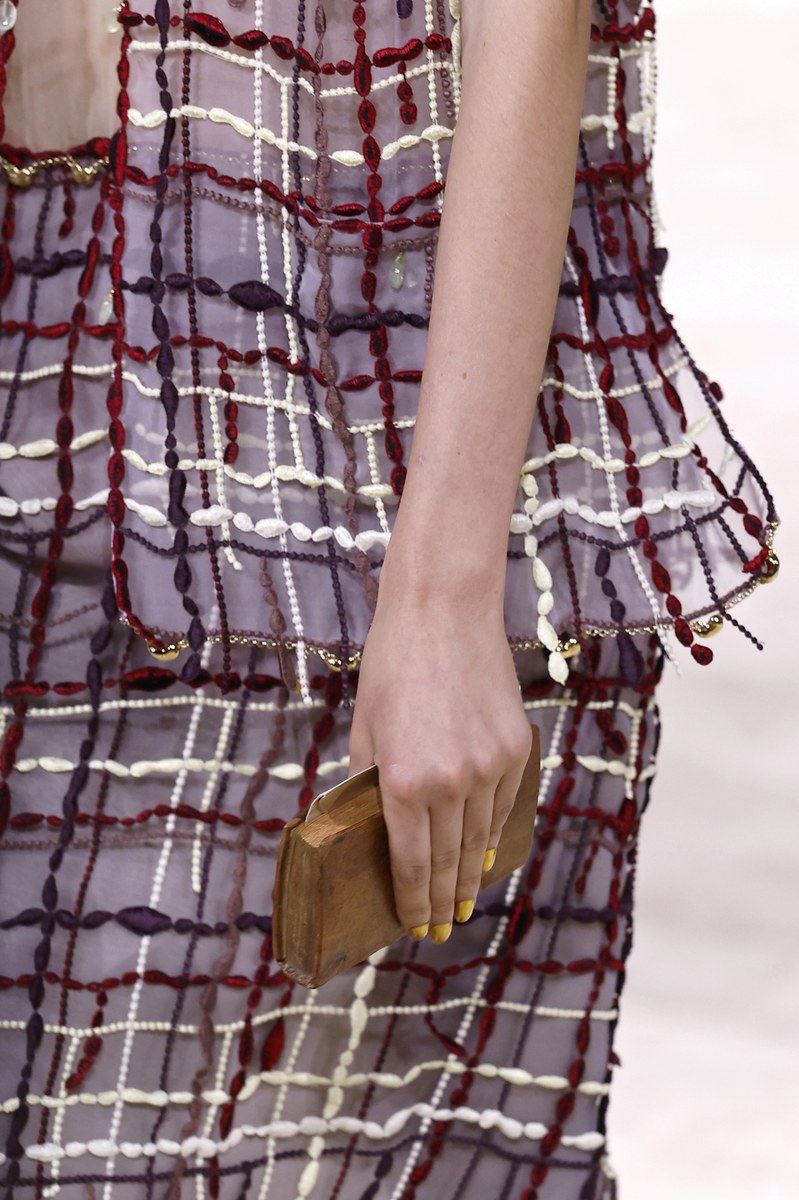
Jacquard brocade in silk-weight fabric carries the most visual weight, appearing in at least six looks with dense floral and figurative motifs at a medium scale. Plaid wool coats, as in Look 2 and Look 5, use a dip-dye or ombre finishing at the hem that bleeds from brown into forest green, giving a structured textile an organic edge. Shearling, used for collars and full outerwear, sits on the heavier end of the weight spectrum and provides tactile contrast against smooth satin pieces. Distressed denim appears in Looks 17 and 18, treated with embroidery and fraying that gives craft quality rather than a streetwear sensibility.

Styling and Layering
Long leather or suede gloves in rust, burgundy, and sage green appear across multiple looks and function as the collection's most consistent styling device, acting as a sleeve extension that bridges outerwear and inner layers. Knee-high ribbed socks in rust brown, mustard, and burgundy are worn with low block-heeled loafers or horsebit-detailed flats, pulling the footwear zone into deliberate coordination with the palette above. Headwear ranges from faux fur pillbox hats to embroidered brocade bands. Every look carries one, making it a core category rather than a styling accent. Small drawstring bucket bags with tassel closures appear repeatedly and offer a direct accessories entry point for buyers.
Look by Look Highlights
Look 3 A sleeveless brocade mini shift in red, sage, and navy with a sage leather glove and burgundy knee socks reads as a complete, high-margin ready-to-wear unit with strong editorial potential.

Look 7 The brocade bomber jacket over wide crimson trousers with a purple brocade head wrap establishes the clearest brand signature look and the strongest candidate for a hero product in a capsule buy.
Look 9 A long quilted robe coat in red and sage brocade worn open over a matching red satin shirt and shorts set gives buyers a three-piece set opportunity with flexible separates logic.
Look 13 The full-length dark brown shearling coat with a belted waist over a gold jacquard dress is the outerwear statement of the collection and will carry a strong retail price point justified by material weight and drama.

Look 16 A gold satin utility shirt with a half-zip placket worn with a floor-length dragon-print skirt and a matching gold brocade head wrap demonstrates how the collection handles formal dressing without moving into eveningwear territory.

Look 18 The combination of a distressed pale denim kimono-cut jacket with a gold jacquard slip dress and a rust ribbed knee sock captures the East-West tension of the collection in a single, accessible, mid-price look.

Look 19 The red bias-cut satin column gown with open side cutouts is the sole eveningwear piece in the lineup and resolves the entire collection's color narrative in one minimal, high-impact silhouette.

Look 6 A pale blue cotton shirt dress with a large appliqued red floral motif and mixed-height red and grey knee socks introduces a cleaner, less brocade-dependent entry point that broadens the customer base for the line.

Operational Insights
Hero fabric: Silk-weight jacquard brocade in the red, sage, and gold colorways is the production priority. Source this fabric first, as it anchors at least six looks and defines the collection's commercial identity.
Accessories as entry category: The drawstring bucket bag with tassel detail and the brocade headband appear in enough looks to support standalone accessory buys. Style directors should consider these as gift and impulse purchase drivers at lower price thresholds.
Socks as a category signal: Ribbed knee-high socks in rust, mustard, and burgundy are styled with every short look and several midi ones. Product managers should treat coordinated hosiery as a planned add-on SKU rather than a wardrobe afterthought.
Separates logic: Most looks decompose cleanly into a top and a bottom that can be sold separately. Buyers should structure the buy around individual pieces rather than sets, with the exception of Look 9, which works as a three-piece proposition at a clear price architecture.
Cultural specificity risk: The collection draws directly from Chinese imperial textile codes, Central Asian headwear forms, and Japanese kimono silhouettes. Style directors in markets with strong cultural literacy in these references should position the collection with editorial precision to avoid flattening the sourcing into generic orientalism, which would reduce the brand's credibility in those markets.
Complete Collection


About the Designer
Zhao Huizhou was born in Hunan province, in central China, and came of age in a country undergoing the fastest economic transformation in modern history. She studied fashion design at the Hubei Institute of Fine Arts, graduating in 1996, and almost immediately started her own brand in Shenzhen, the manufacturing city that had become the country's laboratory for everything new. She later pursued an EMBA and eventually a master's degree in fashion management through a joint program between Tsinghua University and the Politecnico di Milano, which brought her to Italy and changed the axis of her work entirely. Milan gave her a second grammar: the Italian understanding of construction, proportion, and the long relationship between craft and commerce. She has lived and worked between the two cities ever since.
The brand she founded, HUI, launched in its current form in 2009 and made its Milan Fashion Week debut in 2019. What distinguishes it is not fusion for its own sake but a specific and committed archaeological project. Zhao has spent decades collecting historic Chinese garments, which now form the core of the Centennial Fashion Museum she established at her company's 50,000-square-metre complex in Shenzhen. The collection spans from the Qing Dynasty through the Republic era to the present, and it is from these objects, not from mood boards or trend reports, that her collections draw their material: the shadow play theater tradition of ancient China, the Miao ethnic minority embroidery she encountered on a trip to Guizhou province, the women's script Nü Shu, the indigo dyeing craft she introduced in her spring/summer 2018 series. She treats these techniques as living things that need a contemporary context to survive, not as decoration applied to otherwise Western shapes.
Since 2016, HUI has also operated as a foundation, funding cultural tours for students in remote Guizhou villages and supporting the women artisans who carry these traditions. In 2025 Zhao became the first Chinese fashion designer to receive the Italian Tao Award for Creative Fashion Innovation. Her FW26 collection, "Her Threads," presented in Milan in March 2026 and dedicated to Nü Gong, the ancient Chinese art of women's embroidery, marked her sixteenth appearance on the Milan Fashion Week calendar.
"My inspirations always build a bridge between my country's cultural heritage and contemporary fashion. It is a blend of Italy, where I am based and which, to me, sits at the pinnacle of the fashion world, and the widespread conviction in China that, to represent and elevate Chinese fashion, conveying local culture is essential."
"It's not difficult to make one perfect garment, but it's a bigger challenge to build a brand that can speak for itself."
✦ This report was generated with AI — combining human editorial vision with Claude by Anthropic. Because the future of fashion intelligence is already here.