J Press FW26 Women Looks Report

J Press FW26 Women Looks Report
J Press FW26 Women Looks Report

New York Fashion Week

J Press FW26 plants itself firmly in Ivy League heritage, running the full register from tailored blazers and repp stripe ties to varsity bombers, madras shorts and rubber-soled rain jackets without apology or irony. For buyers, the collection arrives at a moment when the market is actively pulling away from logomania and fast-cycle trend drops, rewarding brands that carry genuine institutional identity and a deep bench of classic separates.

Silhouette and Volume

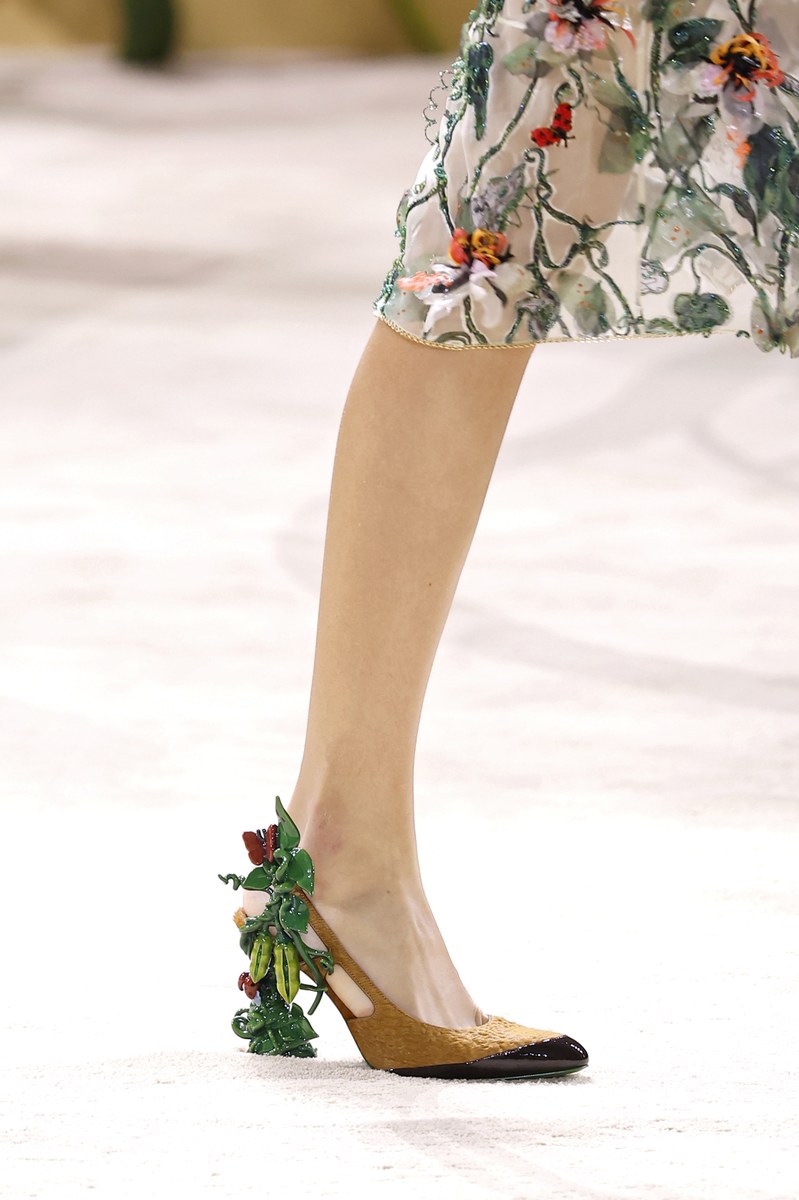
Wide, high-waisted trousers dominate, sitting at or above the natural waist with a generous, straight leg that breaks cleanly at the shoe. Look 1, 4, 11 and 13 make this point repeatedly. Jackets hold a traditional single-breasted construction with soft shoulders and a slightly relaxed chest, never oversized, always composed. Shorts appear in a mid-thigh, easy-cut length across multiple looks, keeping the bottom half light against heavier outerwear above.
Look 1
Look 1

Color Palette

Forest green, teal, burgundy and camel anchor the tailored looks. Orange, a true safety-cone orange, punctuates sportswear pieces in Looks 2 and 16 with real chromatic force. Navy and white run through the formal end of the collection, most crisply in Look 17 with its chalk-stripe blazer and red-navy repp tie. Brick, green and navy madras plaid appears in Looks 8 and 14, grounding the collection in its American summer tradition. Yellow lands in Look 10 as a rain slicker and again as a carry bag in Look 15, a recurring accent that prevents the palette from reading as purely autumnal.

Look 17
Look 17

Materials and Textures

Medium-weight wool flannel carries the tailored trousers and blazers, reading smooth and matte without shine. Wide-wale corduroy appears in the rust shorts of Look 16, adding tactile weight to an otherwise spare summer silhouette. Outerwear moves between waxed or coated cotton in Look 14, rubberized or coated nylon in Look 2 and a clean cotton-twill yellow slicker in Look 10, giving the category genuine breadth. Look 9's plaid blazer reads as a wool-blend suiting cloth in a warm brown-green-burgundy tartan with visible structure and body.

Look 16
Look 16

Styling and Layering

Layering builds on a simple formula: a shirting base, often a button-down Oxford or a striped dress shirt, receives a sweater or tee, then a blazer or outerwear shell on top. Repp and striped ties appear across multiple looks worn under bomber jackets in Look 7 and windbreakers in Look 3, treating the tie as an everyday accessory rather than a formal one. Footwear divides sharply between dark burgundy penny loafers for tailored looks and boat shoes or suede desert boots for casual ones. Look 2 makes the deliberate choice to go barefoot. Accessories stay functional, books and bags as props, a pen in a breast pocket in Look 6, a baseball cap reversed in Look 11, all reinforcing the student-on-campus narrative.

Look 7
Look 7

Look by Look Highlights

Look 1 sets the collection's tonal logic early, pairing a forest green single-button blazer with grey-blue flat-front trousers and a gold-navy-brown repp tie, a combination that will translate directly to a made-to-separate program for retail.

Look 7 is the commercial center of the collection, a red varsity bomber with gold rib trim worn over a light blue Oxford shirt and navy knit tie with camel chinos, a group that a buyer could drop into a store tomorrow and sell across multiple age brackets.

Look 9 carries the most mature authority in the lineup, a large-scale brown-green tartan blazer over grey flat-front trousers and a green repp tie on a silver-bearded elder model, a deliberate signal that J Press dresses men for decades, not seasons.

Look 9
Look 9

Look 13 puts the brand's cultural literacy on the chest, a black ribbed-knit crewneck with "TAKE IVY" in orange varsity letters worn over white wide-leg trousers, referencing the 1965 Shosuke Ishizu photo book and converting archive credibility into a wearable graphic.

Look 13
Look 13

Look 15 reads as the strongest full-look package for a safari or travel category extension, a belted khaki linen field jacket with patch pockets over a white Oxford and navy repp tie, carried with white wide trousers, desert boots and a yellow round duffel bag.

Look 15
Look 15

Look 17 delivers the sharpest formal proposition in the collection, a navy chalk-stripe unconstructed blazer with matching navy trousers and a bold red-navy repp tie on a white spread-collar shirt, a suit that reads as occasion-ready without requiring black tie.

Look 19 closes with calculated surprise, a forest green varsity bomber over a tuxedo shirt with bow tie, a black silk cummerbund and blackwatch plaid trousers with patent loafers, a mix that will drive editorial coverage and anchor the brand's ability to work across dress codes.

Look 19
Look 19

Look 4 places a dark teal "1966" varsity-number crewneck over a white Oxford with grey wide-leg trousers and brown boat shoes, a strong knitwear entry that carries both brand story and seasonal utility in a single SKU.

Look 4
Look 4

Operational Insights

Separates strategy: The collection is built to be sold as separates, not suits. Buyers should plan buy ratios that allow blazers, trousers and outerwear to mix across colorways, because strength lies in internal combinability.

Knitwear as anchor: Looks 4 and 13 demonstrate that graphic statement knitwear with institutional references, year, school, brand name, carries high perceived value relative to production cost. Product managers should prioritize these as hero SKUs for direct-to-consumer and editorial seeding.

Outerwear breadth: At least four distinct outerwear silhouettes appear here, a structured blazer, a varsity bomber, a hooded cagoule and a rain slicker. Style directors should treat this as a category signal and plan seasonal outerwear capsules that cover all four rather than defaulting to a single jacket type.

Footwear pairing discipline: The burgundy penny loafer appears across tailored looks with enough consistency to recommend it as a house shoe for branded or curated retail environments. Buyers coordinating footwear should align with this anchoring choice rather than introducing competing styles.

Age-range casting as a market statement: Deliberate inclusion of two older male models in Looks 9 and 15 is not incidental. Style directors communicating this collection to their customers should lean into this signal, positioning J Press as a brand for long-term wardrobe investment rather than seasonal turnover.

Complete Collection

Look 2
Look 2
Look 3
Look 3
Look 5
Look 5
Look 6
Look 6
Look 8
Look 8
Look 10
Look 10
Look 11
Look 11
Look 12
Look 12
Look 14
Look 14
Look 18
Look 18
Look 20
Look 20
Look 21
Look 21
Look 22
Look 22
Look 23
Look 23
Look 24
Look 24
Look 25
Look 25
Look 26
Look 26
Look 27
Look 27
Look 28
Look 28
Look 29
Look 29
Look 30
Look 30
Look 31
Look 31
Look 32
Look 32
Look 33
Look 33
Look 34
Look 34
Look 35
Look 35
Look 36
Look 36
Look 37
Look 37
Look 38
Look 38
Look 39
Look 39
Look 40
Look 40
Look 41
JACK CARLSON

About the Designer

Jack Carlson was born in 1987 and grew up split between Boston and Hampstead, England, which gave him, from early childhood, a dual literacy in American and British institutional culture. He started rowing at eleven at Buckingham Browne & Nichols School in Cambridge, Massachusetts, and the sport would define the next two decades of his life before becoming, improbably, the gateway to a career in fashion. He attended Georgetown University's School of Foreign Service, where he studied Chinese and Classics — not fashion design, not business — and served as captain of the rowing team. From Georgetown he went directly to Oxford on scholarship, earning a master's degree and then a doctorate in archaeology at Brasenose College, with a dissertation comparing imperial symbolism in ancient Rome and contemporaneous Qin-Han China, supervised by Dame Jessica Rawson. During those Oxford years he also coxed for the University's Lightweight Boat Club and later represented the United States at three World Rowing Championships, winning a bronze medal at the 2015 event in Aiguebelette, France. Between training and research he also spent time as a field archaeologist in Italy, excavating an Etruscan site in the Mugello Valley.

The pivot to fashion came through a book. In 2014, published simultaneously by Vendome Press and Thames & Hudson in partnership with Ralph Lauren, Carlson released Rowing Blazers — an illustrated study of the crested jackets traditionally worn by competitive rowers at events like Henley Royal Regatta, tracing their codes, colors, and histories across clubs and countries. The research for it had required the same obsessive attention to symbolic detail that his archaeology had demanded, and the book found an audience far beyond sport. In 2017, he launched the Rowing Blazers brand, beginning with an accurate reproduction of the rowing blazer itself and expanding outward into rugby shirts, knitwear, and eventually a much wider range of collaborations and categories that mixed Ivy League and preppy references with streetwear energy. The brand grew to dress a genuinely unlikely coalition of customers, collaborated with Gucci, Barbour, Noah, J. Crew, Umbro, and Target, and helped revive heritage labels including Warm & Wonderful, the British knitwear company famously worn by Princess Diana. In 2024, Carlson sold a majority stake in Rowing Blazers to Burch Creative Capital and left the brand the following year.

In September 2025, Onward Holdings — the Japanese parent company of J. Press since 1986 — named him creative director and president of the 123-year-old American menswear brand, marking J. Press's first appearance on the NYFW schedule. For Carlson, the connection was personal from the start: he had shopped at the Harvard Square store since adolescence and still owned the suits and ties he first bought there. His debut collection, Fall/Winter 2025, revived the original J. Press "Ivy" blazer with its patch pocket intact, reinstated the vintage red-on-white label, and included a red tailcoat and a Tyrolean Janker as nods to his years in Oxford and time spent in Kitzbühel. For Spring 2026, shown at the New York Historical Society, he drew from Take Ivy, the 1965 Japanese photobook that documented Ivy League campuses and became one of the most influential documents in the history of menswear. He holds the role of creative director and president simultaneously, and the brand has ambitions to open new stores across the United States by 2030.

"I grew up with J. Press. I used to go to the shop in Harvard Square, and many of the first suits, shirts, ties and belts I bought for myself were J. Press. I still have them. This role feels like coming home in many ways."

"Rowing Blazers is my way of manifesting the things I'd like to see in the world. That vision is influenced heavily by my time at Oxford and Georgetown — especially the six years I spent in Oxford immersed in the history of that special place."

✦ This report was generated with AI — combining human editorial vision with Claude by Anthropic. Because the future of fashion intelligence is already here.