Junya Watanabe FW26 Bags
Junya Watanabe FW26 Bags Report
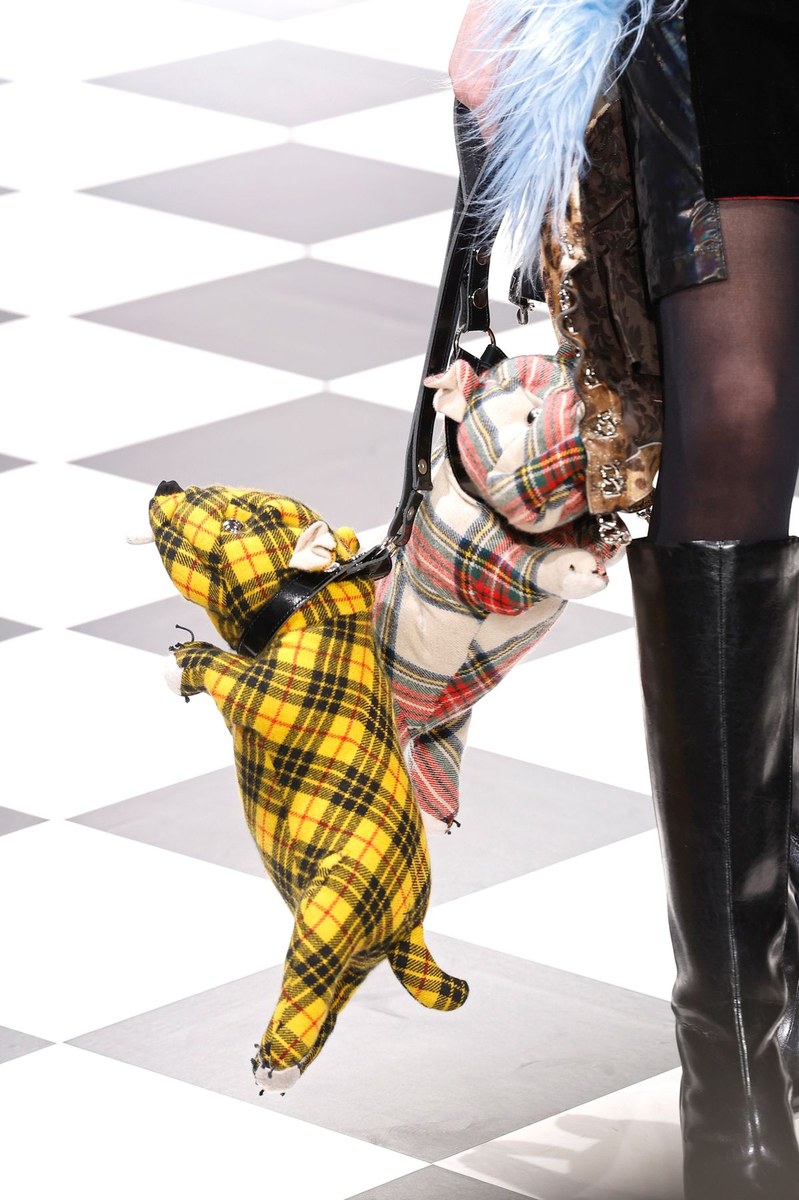
Junya Watanabe FW26 abandons conventional bag silhouettes entirely, delivering instead sculptural character objects rendered in tartan suiting fabric. For buyers and product managers tracking the boundary between accessories and wearable art, these pieces signal a coming push toward novelty object bags with tactile, craft-forward construction.
Silhouettes and Shapes
Bag 1 reads as a dual-figure stuffed animal carrier, with two plush bear or dog figures suspended from a single black strap and their limbs hanging freely to create an asymmetrical, sculptural mass. Volume is substantial, roughly equivalent to a medium tote in total combined size, but the silhouette is entirely governed by the stuffed figures rather than any structural chassis. Every standard bag category has been abandoned here.
Materials and Hardware
Tartan wool suiting dominates, appearing in two colorways across Bag 1: yellow and black plaid on the larger figure and red, white and black plaid on the smaller one. A smooth black leather or leather alternative strap provides deliberate contrast between the soft textile volumes and this clean functional element. Hardware is minimal and unobtrusive, with no visible logo plates, chains or decorative closures. Construction reads as artisanal and handmade, featuring visible soft stuffing and sewn limbs rather than any rigid internal structure.
Color Direction
Yellow dominates the larger figure, a warm, saturated mustard gold anchored by black tartan lines and thin red accent stripes. The secondary figure works in a cooler red, white and cream plaid that reads more traditional Scottish tartan. Together they reference heritage suiting codes while their exaggerated application pushes firmly into novelty territory. This contrast of canonical pattern and subversive execution reflects a broader seasonal appetite for archival references reprocessed through a maximalist, irreverent lens.
Key Models and Details
Both stuffed animal forms connect via a single strap looped through or attached to their bodies, functioning as either a shoulder or hand-carry piece. No visible closure system exists, as any bag interior is embedded within the plush bodies themselves. Sculpted or embroidered features on both figures suggest production complexity beyond standard accessories manufacturing.
Bag by Bag Highlights
Bag 1 The yellow mustard tartan bear figure reads as the hero piece, its oversized limbs and soft belly creating a volume that commands attention from across a runway or retail floor.
Bag 1 The red and cream tartan secondary figure attached to the same strap adds layering and visual contrast, making the combined piece feel curated rather than chaotic.
Bag 1 A black leather strap grounds the look commercially, suggesting this construction could transition from art object to limited retail drop with minimal hardware adjustments.
Bag 1 The dual-figure format functions as a single accessory unit, which creates unusual pricing and production complexity that buyers should factor into cost-per-unit conversations early.
Bag 1 Plush stuffed animal formats directly connect to the ongoing cultural appetite for character merchandise and collectible fashion, from luxury houses collaborating with toy brands to viral plush crossbodies at market.
Bag 1 Tartan fabric selection ties the piece to Watanabe's longstanding relationship with Comme des Garçons heritage craft codes, giving the novelty form legible DNA for press and editorial positioning.
Operational Insights
Exclusivity positioning: Bag 1 reads as a limited production or made-to-order item rather than a scalable SKU. Approach this as a statement investment piece or exhibition buy, not a volume play.
Production sourcing: Stuffed textile construction requires soft goods manufacturing expertise rather than traditional leather goods atelier skills. Product managers should identify artisanal toy or plush fabricators early in development conversations.
Tartan licensing: The specific tartan patterns used may carry clan or heritage registration status in Scotland. Legal and sourcing teams should verify pattern ownership before committing to production replicas or inspired derivatives.
Retail context: This bag category performs best in experiential retail environments, pop-ups, concept stores or gallery-adjacent spaces. Standard accessories walls and flat shelf merchandising will not capture the sculptural impact.
Consumer crossover: The plush character format directly targets a collector consumer who shops both fashion and art toy markets. Buying teams should cross-reference sell-through data on character accessories from brands like Loewe and Moschino to pressure-test demand before committing to orders.
✦ This report was generated with AI — combining human editorial vision with Claude by Anthropic. Because the future of fashion intelligence is already here.