Lueder FW26 Women Looks Report

Lueder FW26 Women Looks Report
Lueder FW26 Women Looks Report

London Fashion Week

Lueder FW26 builds a wardrobe from the logic of the streets, the archive and the body in motion, pulling sportswear construction, deconstructed knitwear and genderless tailoring into a single coherent system. For buyers navigating a market where the customer refuses to separate utility from sentiment, this delivers a clear and commercial answer.

Silhouette and Volume

The collection moves between two poles: extreme volume through drop-crotch cargo trousers, floor-length coats and oversized hooded outerwear, and close body mapping through ribbed knit tubes and fitted long-sleeve tops. Look 1 and Look 19 demonstrate the elongated, draped silhouette that reads almost ceremonial, while Look 16 and Look 2 pull that same volume into athletic trackwear proportions. Skirts appear in both micro and maxi lengths. Look 4 and Look 6 use irregular hemlines to break the expected axis of the body. Nothing here sits at the knee.
Look 1
Look 1

Color Palette

Black anchors the first third with absolute commitment, then the palette opens through military olive, washed slate grey, dusty sage and pale bone. Look 10 and Look 11 introduce an acid-bleached yellow-green camouflage print that reads simultaneously post-apocalyptic and surplus store. Blue enters late through the powder blue ribbed co-ord in Look 16 and the dusty cornflower knit in Look 17, cooling the temperature considerably. Red functions as a punctuation mark, appearing in the piping of Look 2 and Look 3 and in the satin race jacket worn by the designer in the finale. It reads not as a statement color but as a recurring signal of urgency.

Look 10
Look 10

Materials and Textures

Ribbed jersey dominates the knitwear category, used across fitted dresses, off-shoulder tops and cut-open long-sleeve pieces in Looks 7, 8 and 17, where deliberate slashes and open seams expose flesh and create movement. Nylon cargo and parachute fabrications appear in Look 2, Look 3 and Look 5, carrying the matte, utilitarian weight of technical outerwear. The faux fur bomber in Look 15 reads soft and voluminous with a grey salt-and-pepper pile, landing closer to shearling than synthetic in visual weight. Look 12 uses what appears to be a stiff natural-fibre canvas or linen in pale ecru, structured enough to hold the long coat silhouette without lining.

Look 2
Look 2

Styling and Footwear

Chunky trail runners in black, grey and silver appear across at least eight looks, grounding even the most ethereal silhouettes in a functional register. Look 9 and Look 15 pair boots with metallic lace detailing in silver-blue, creating an armoured finish that reads as a signature detail for the season. Accessories are sparse and purposeful: Look 13 uses a large structured canvas crossbody as an integrated part of the outfit architecture rather than an add-on. A silver-grey wire mesh balaclava in Look 11 functions as headwear, mask and sculptural element simultaneously.

Look 9
Look 9

Look by Look Highlights

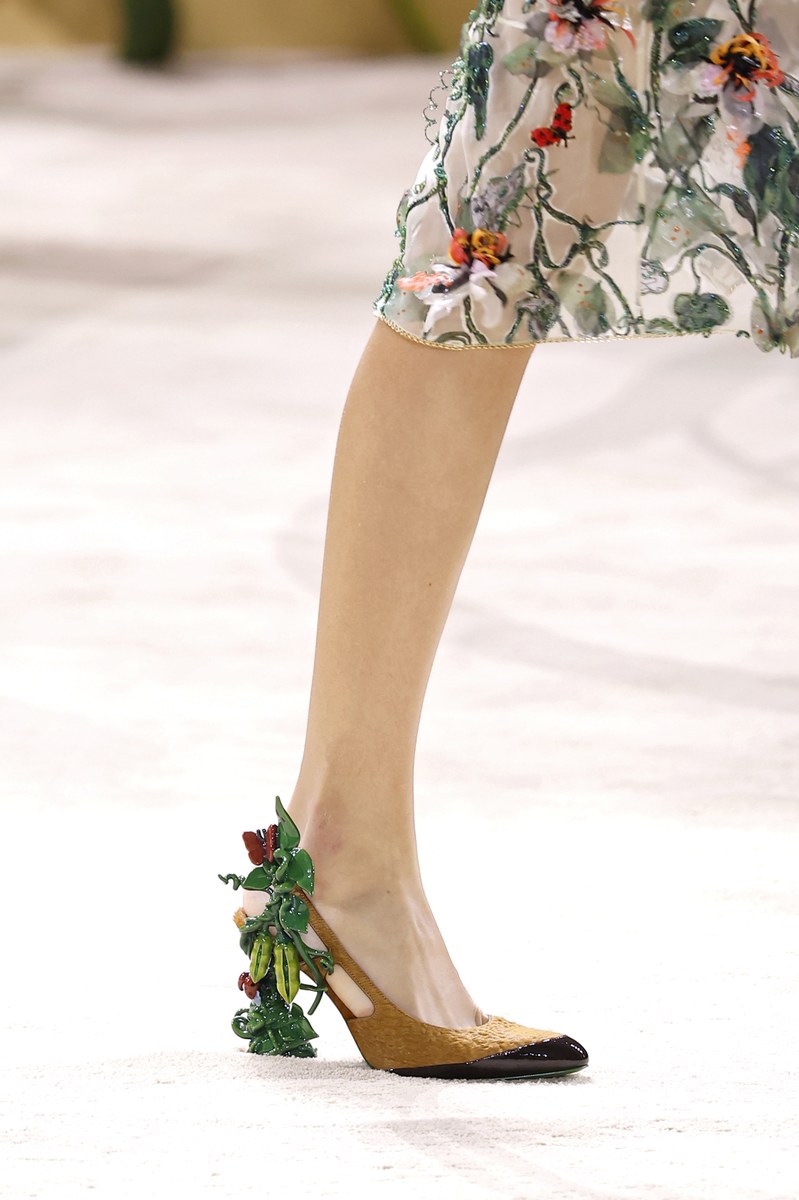
Look 1 The voluminous matte black hooded sweatshirt worn over what reads as a draped skirt panel creates a monastic authority that will translate directly into a dark-season hero piece for directional independents.

Look 2 The red-piped black nylon tracksuit separates carry immediate commercial utility, with the curved seam piping doing the design work that justifies a premium price point over a standard athletic set.

Look 7 The grey ribbed turtleneck maxi dress with a single red half-zip is the clearest high-volume, low-complexity SKU in the collection, suitable for scale production across multiple size ranges.

Look 7
Look 7

Look 11 The "Sorry no budget" slogan top worn with bleached camo drop-crotch trousers and a mesh balaclava turns self-deprecation into brand identity, making it a strong candidate for capsule editorial placement.

Look 11
Look 11

Look 12 The pale ecru floor-length structured coat with its layered collar and buttoned-front construction addresses a premium outerwear buyer looking for something that reads architectural without veering into costume.

Look 12
Look 12

Look 16 The light grey ribbed half-zip top and wide-leg trouser set with blue piping reconfigures the co-ord format for a customer who wants the ease of a tracksuit at the visual register of tailoring.

Look 16
Look 16

Look 19 The hooded black mesh top paired with a floor-length sheer skirt printed with a black lace-like botanical pattern is the clearest evening proposition, genderless and dramatically proportioned.

Look 19
Look 19

Look 4 The long-sleeve black top with extended glove arms worn against the patchwork pinstripe and lace micro skirt captures the gothic-utilitarian tension that runs through the collection and gives press and editorial teams a single image that tells the whole story.

Look 4
Look 4

Operational Insights

Piping as a recurring production signal: Red and blue contrast piping across Looks 2, 3 and 16 is a low-cost construction detail that significantly elevates perceived design value. Buyers should evaluate whether their existing sportswear vendors can execute this without tooling changes.

Genderless sizing architecture: At least eight looks read as fully genderless in cut and styling intent. Style directors should plan buying strategies and size ranges accordingly, as separating this into men's and women's siloed categories would misrepresent the product logic.

Knit with deliberate damage: The slashed and open-seam ribbed knits in Looks 8 and 17 will require precise QC parameters. Product managers need to define acceptable variation thresholds before production briefs are issued to avoid inconsistency being read as defect rather than design.

The co-ord opportunity: Looks 2, 3 and 16 all suggest a strong co-ord commercial strategy. These three alone represent a buyable assortment across black-red, red-black graphic and grey-blue colourways that a buyer could build a delivery around without committing to the more challenging directional pieces.

Footwear collaboration leverage: Chunky trail runners appear to be a consistent branded footwear partner throughout the show. Buyers and commercial directors should investigate whether a co-branded or exclusive colourway footwear tie-in is available for retail, as the shoe is as much a part of the Lueder FW26 identity as any garment category.

Complete Collection

Look 3
Look 3
Look 5
Look 5
Look 6
Look 6
Look 8
Look 8
Look 13
Look 13
Look 14
Look 14
Look 15
Look 15
Look 17
Look 17
Look 18
Look 18
Look 20
Look 20
Look 21
Look 21
Look 22
Look 22
Look 23
Look 23
Look 24
Look 24
Look 25
Look 25
Look 26
Look 26
Look 27
Look 27
Look 28
Look 28
Look 29
Look 29
Look 30
Look 30
Look 31
Look 31

About the Designer

Marie Lueder grew up in Hamburg as part of a family deeply rooted in health practices, with parents who expected her to pursue a secure career in science or medicine. Her mother had worked as both an electrician and doctor before retirement, bringing a practical, hands-on approach that valued direct work with people. This environment would later influence Lueder's own desire to create meaningful connections through her craft, though she felt something was missing from her family's purely physical approach to healing.

Her earliest encounter with fashion came through making medieval costumes with her mother for a children's LARP summer camp organized by the University of Hamburg. They researched historical periods together, developing looks that would become foundational to her aesthetic vision. Before pursuing fashion formally, Lueder trained as a bespoke tailor at Hamburg State Opera, mastering traditional techniques in an institutional setting. This experience gave her profound respect for classical construction methods, though it also created a creative tension that would later inform her deconstructed approach to formal wear.

After moving to London to complete a master's in menswear at the Royal College of Art in 2018, Lueder launched her eponymous brand in 2019, just weeks before the pandemic. Her aesthetic draws heavily from medieval armor and folklore, filtered through contemporary concerns about masculinity and mental health. The concept of "mental armor" became central to her work, creating garments that function as protective shells while allowing vulnerability. Her designs blend traditional tailoring with sportswear elements, incorporating sustainable materials like regenerated ocean plastic and organic cotton, often through upcycling and collaborative processes.

Currently serving as the creative director of LUEDER, she has established the brand as part of the British Fashion Council's NEWGEN initiative and has shown at both London and Berlin Fashion Weeks. Her collections explore themes of ritual, transformation, and identity, often presented through collaborative performances that blur the boundaries between fashion and art. She counts Alexander McQueen, Hussein Chalayan, and Marithé + François Girbaud among her design inspirations, while drawing from club culture, medieval festivals, and the work of artists like Anselm Kiefer and Hildegard von Bingen.

"I like to make fashion that is like a deep conversation, then I simplify the garment so it speaks for itself, because not everyone has the time to listen to me," she explains from her London studio. "I love exploring how a garment affects us energetically."

✦ This report was generated with AI — combining human editorial vision with Claude by Anthropic. Because the future of fashion intelligence is already here.