Luisa Beccaria FW26 Women Looks Report

Luisa Beccaria FW26 Women Looks Report
Luisa Beccaria FW26 Women Looks Report

Milan Fashion Week

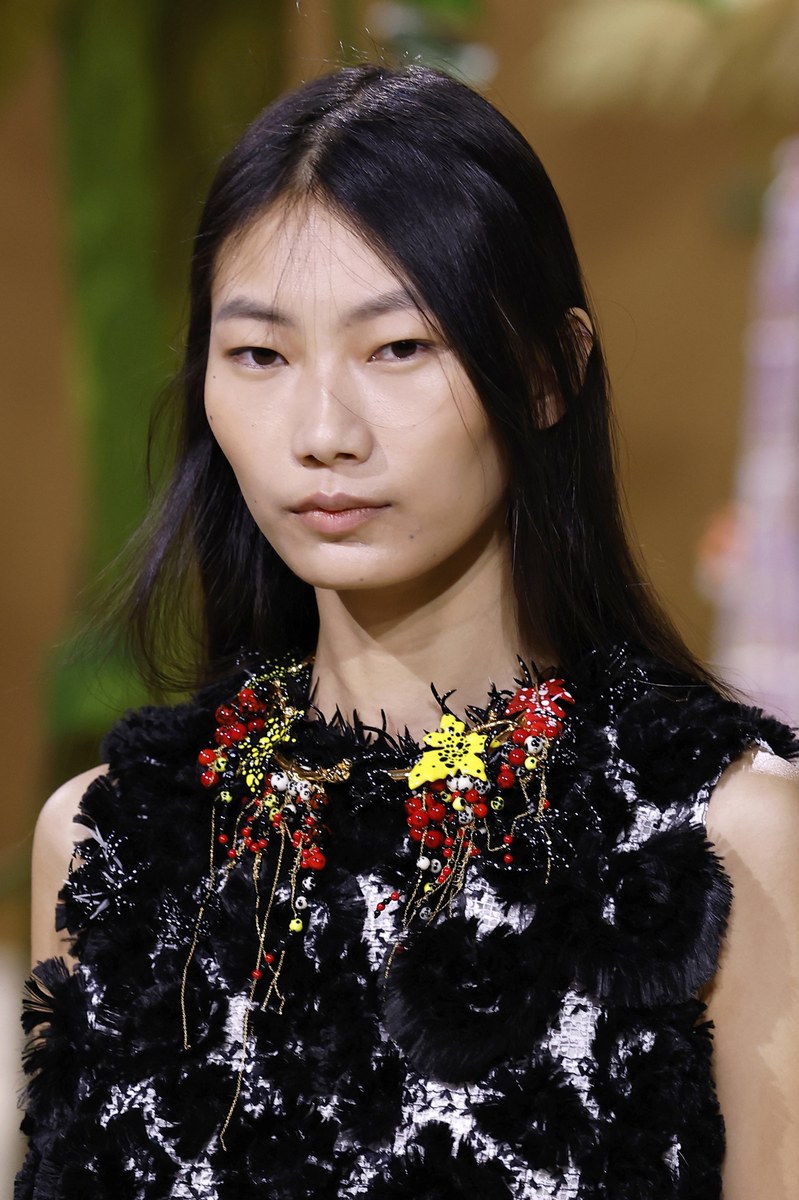
Deliberate nostalgia anchors Luisa Beccaria's FW26 collection, drawing from Edwardian and 1970s references translated through lavender plaids, blush lace, and botanical chiffon prints. For buyers navigating a market saturated with minimalism, this collection carves out a clear emotional proposition: femininity with structural intent and artisanal weight.

Silhouette and Volume

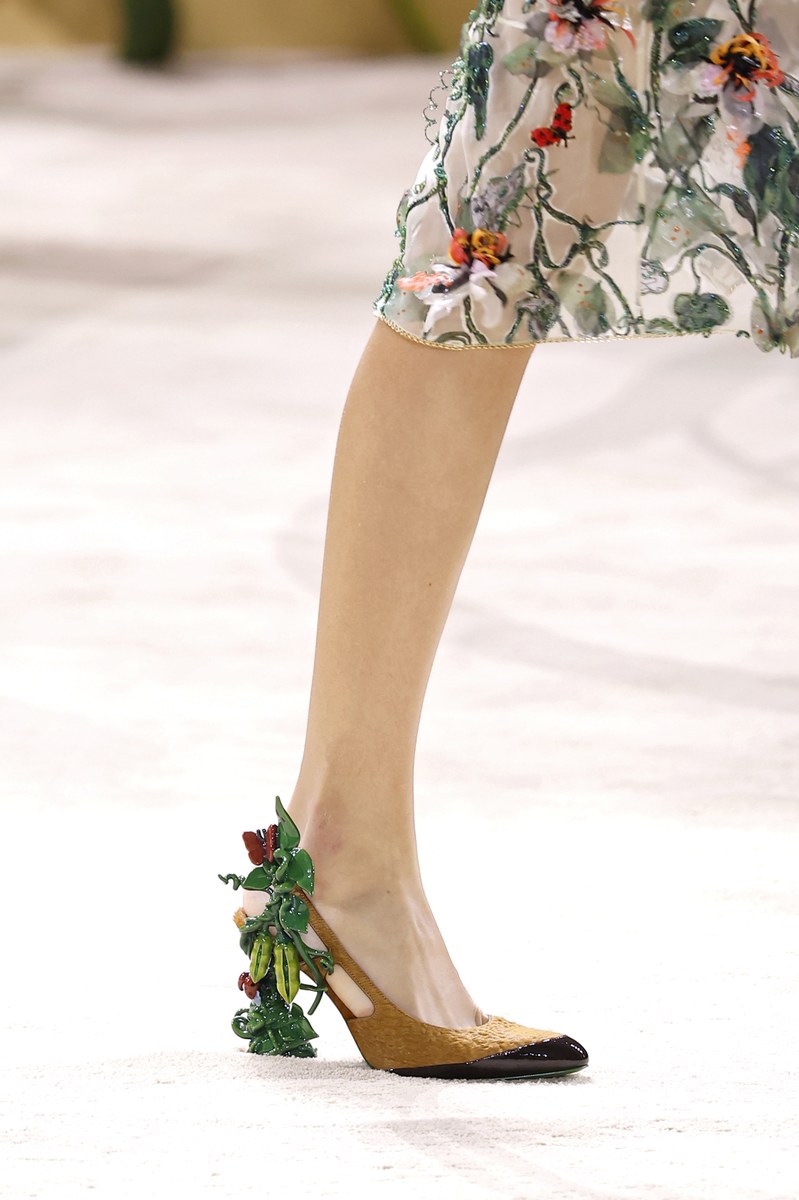
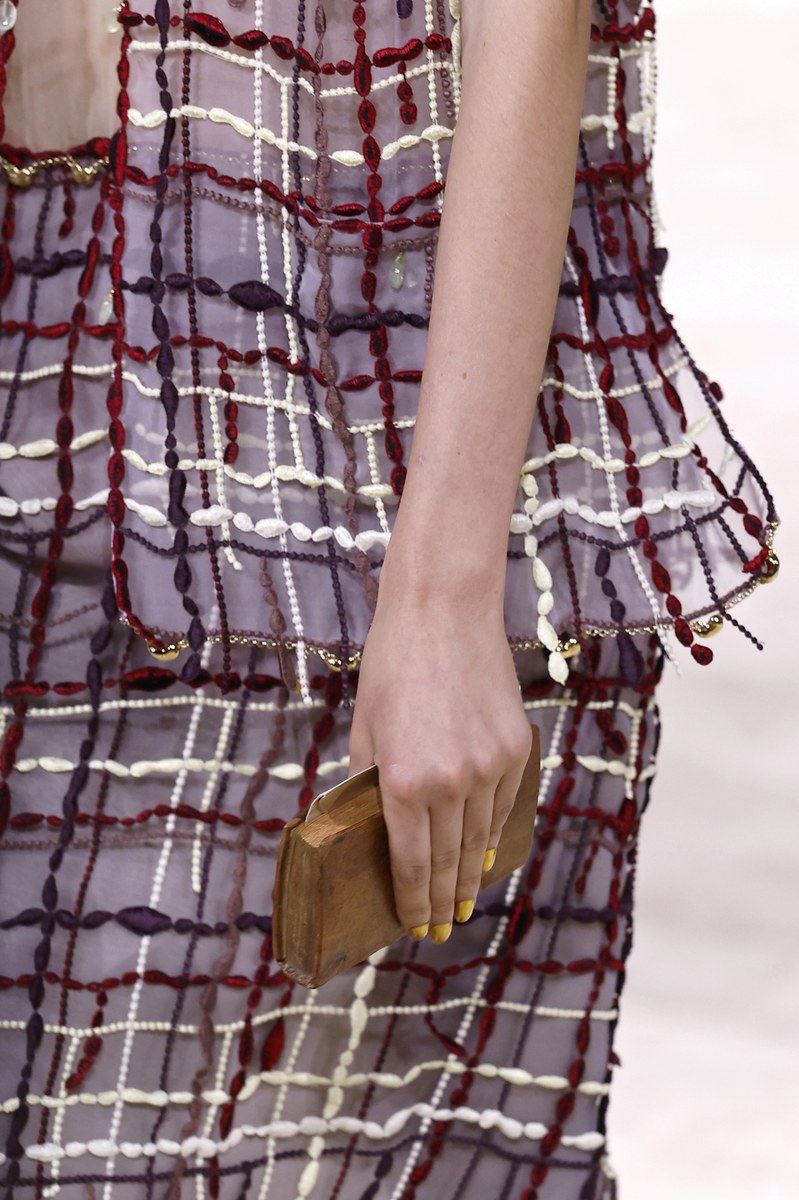
Midi and maxi A-line silhouettes dominate throughout. Tailored wool iterations appear in Looks 1 and 4, while fluid chiffon versions populate Looks 8 and 11. Structured jackets, consistently cropped or fitted at the waist, pair with full skirts rather than trousers as the primary grammar. Look 16 breaks that rule with wide-leg olive satin trousers, making it the lone pantsuit and a commercial anchor for buyers needing versatility. Shoulders remain controlled and natural, with puff sleeves reserved for chiffon and lace gowns where they carry volume without rigidity.
Look 16
Look 16

Color Palette

Lavender, sage, and dusty lilac form the collection's spine, receding into muted neutrals like écru, warm taupe, and oat lace. Looks 14, 16, and 19 bring olive green with real authority, pairing it with pale blue bows and red platform shoes to prevent the palette from reading too soft. A floral lilac ruffled blouse lands against a magenta silk satin column skirt in Look 9, delivering the lone high-contrast moment. Silver sequin in Look 12 closes the palette toward evening without abandoning the collection's cool, grey-adjacent temperature.

Look 9
Look 9

Materials and Textures

Boucle tweed in icy mint and ecru carries significant weight in Looks 17 and 18, giving daywear entries the kind of tactile substance that photographs well in editorial and sells in cooler retail climates. Silk satin in olive and magenta (Looks 9, 14, 16) reads crisp and structured, holding its shape at the hem. Botanical floral prints in chiffon (Looks 5, 8, 11) run sheer and layered, requiring lining decisions that buyers should confirm before production sign-off. Taupe lace across Looks 13 and 15 carries a scalloped hem finish that adds yardage complexity but delivers strong differentiation on the floor.

Styling and Layering

Fabric-wrapped headbands and oversized tulle bows appear consistently as styling tools, signaling that Beccaria intends accessories as category extensions, not afterthoughts. Footwear splits between glitter Mary Janes, silver metallic pumps with ankle straps, and flat leather or wooden-soled mules, giving buyers three distinct directives to work with. Look 17 layers a long boucle coat over a teal embroidered midi dress with a velvet ruched bag, demonstrating the collection's strongest commercial layering story. Bow ties and gathered ruffle blouses (Looks 4 and 6) frame the face and function as independent product categories with strong gifting and accessory department potential.

Look 17
Look 17

Look by Look Highlights

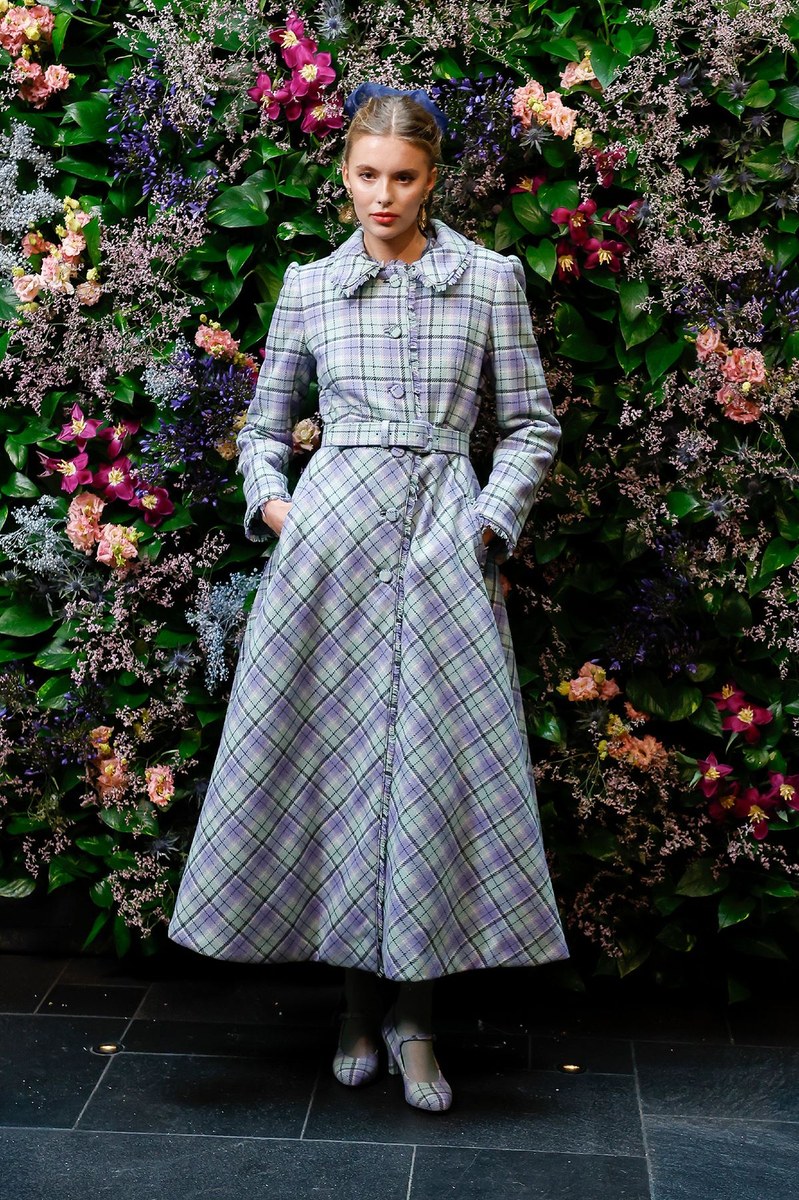
Look 1 Lavender and sage plaid wool coat dress with self-covered buttons and a matching belt reads as a complete, standalone unit that requires no additional styling investment, reducing wholesale presentation risk.

Look 1
Look 1

Look 4 Plaid boucle jacket and coordinating midi skirt in the same lilac tartan position as a direct suit alternative with softer fabrication, a strong pitch for department store suit floors.

Look 4
Look 4

Look 6 Dusty rose structured jacket with contrasting satin pocket flaps and cuffs over a matching full skirt represents the collection's clearest conservative-occasion piece, with direct relevance for mother-of-the-bride and formal daywear buying.

Look 6
Look 6

Look 10 Powder blue duchess satin cape coat worn short with glitter Mary Janes and a tulle bow headband delivers the collection's most covetable editorial image and anchors the accessories narrative.

Look 10
Look 10

Look 12 Silver micro-sequin ruched column dress with a front slit translates directly to black-tie retail without a styling bridge, making it a standalone evening buy.

Look 12
Look 12

Look 15 Taupe all-lace A-line gown with cap sleeves and scalloped hem edges into bridal and occasion territory, giving multi-door buyers a piece that works across two commercial categories.

Look 15
Look 15

Look 19 Floor-length dark floral jacquard gown with a botanical pattern in charcoal, blush, and gold sits as the collection's formal anchor, with enough visual density to compete at a higher price tier.

Look 19
Look 19

Look 9 Magenta satin column skirt paired with a layered off-shoulder lilac floral ruffle blouse represents the collection's most separates-forward look and the strongest argument for buying into the line as mix-and-match units rather than head-to-toe looks.

Operational Insights

Fabric sourcing: Boucle tweed in Looks 17 and 18 and lace in Looks 13 and 15 carry scalloped and fringe edge finishes that increase cutting waste and trim cost. Buyers should request full technical specs and confirm minimum order quantities on trimmed yardage before committing.

Category mapping: Three retail lanes emerge clearly from the collection: tailored daywear (Looks 1, 4, 6, 18), occasion and eveningwear (Looks 7, 12, 15, 19), and separates (Looks 9, 16). Style directors should assign floor placement and margin targets by lane, not by look.

Accessories strategy: Fabric headbands, tulle bows, ruched velvet bags, and glitter Mary Janes appear as recurring styling tools across the runway. These represent low-cost, high-margin add-ons worth negotiating as part of a broader buy rather than sourcing independently.

Colorway prioritization: Lavender, sage, and ecru will move earliest in pre-season, but olive satin in Looks 14 and 16 carries stronger full-price longevity given its versatility into autumn dressing. Product managers should build reorder capacity around the olive and taupe neutrals.

Lining and construction risk: Sheer chiffon pieces in Looks 8 and 11 require full or partial lining decisions that affect both cost and drape. Buyers planning to place these in markets with stricter modesty or return-rate sensitivities should request lined samples before confirming quantities.

Complete Collection

Look 2
Look 2
Look 3
Look 3
Look 5
Look 5
Look 7
Look 7
Look 8
Look 8
Look 11
Look 11
Look 13
Look 13
Look 14
Look 14
Look 18
Look 18
Look 20
Look 20
Look 21
Look 21
Look 22
Look 22
Look 23
Look 23
Look 24
Look 24
Look 25
Look 25
Look 26
Look 26
Look 27
Look 27
Look 28
Look 28
Look 29
Look 29
Look 30
Look 30
Look 31
Look 31
Look 32
Look 32
Look 33
Look 33
Look 34
Look 34
Look 35
Look 35
Look 36
Look 36
Look 37
Look 37
Look 38
Look 38
Look 39
Look 39
Look 40
Look 40
Look 41
Look 41
Look 42
Look 42
Look 43
Look 43
Look 44
Look 44
Look 45
Look 45
Look 46
Look 46
Look 47
Look 47
Look 48
Look 48
Look 49
Look 49
Look 50
Look 50
Look 51
Look 51
Look 52
Look 52
Look 53
Look 53
Look 54
Luisa Beccaria

About the Designer

Luisa Beccaria was born in Milan in 1956 into a family whose intellectual lineage stretches deep into Italian cultural history. She is a direct descendant of Cesare Beccaria, the eighteenth-century Enlightenment jurist whose treatise on crimes and punishments helped dismantle judicial torture across Europe, and of Giulia Beccaria, the mother of Alessandro Manzoni. That density of literary and moral heritage was not decorative furniture in her childhood but a genuine atmospheric condition, alongside art, poetry, music, and long summers at a family farm in northern Italy. Her love for the south arrived separately and viscerally: at seven she traveled through Sicily by car with her family and kept a diary of the journey, noting the contrasts in light and landscape with the attention of someone already translating the world into images. She studied literature and imagined she might become a scholar or university professor. Fashion arrived not as a career plan but as a private compulsion: she could not find clothes that fitted her slight frame, so she began sketching and having them sewn by a seamstress.

Around age twenty she showed a handful of pieces at Piero Fornasetti's art gallery in Milan, presenting them less as a commercial proposition than as an experiment. Fornasetti accepted them because he recognized in her, as she has recounted, a particular energy and taste. Everything sold within three days. The Italian press took notice. Shops began placing orders. A first store opened in Via Madonnina in the Brera neighborhood in 1984. By 1991 the brand was invited to the Alta Moda shows in Rome, presenting alongside Valentino and Versace, and from 1993 to 1995 Beccaria showed haute couture in Paris. When the Vendôme group offered her the position of women's ready-to-wear designer at Chloé, replacing Karl Lagerfeld, she declined, choosing instead to remain in Italy with her family and develop her own line. The decision was reported as major news in the United States, with extended coverage in Vogue America and Women's Wear Daily. She launched her first proper prêt-à-porter collection in 2000.

In 2006, her eldest daughter Lucilla Bonaccorsi joined the brand, initially watching her mother work from the studio floor as a child, later assuming responsibility for the ready-to-wear collections. The two now operate as a creative pair, Luisa's primary references running from the paintings of Fragonard and Winterhalter to Visconti's cinema and the layered sensory world of the family castle near Noto in Sicily. The brand occupies a single aesthetic position that it has held without significant revision since the beginning: tulle and lace and broderie anglaise, organza in pastel and floral, garments conceived for garden weddings and Sicilian summer lunches, the kind of occasion dressing that requires neither justification nor irony. The SS26 collection, shown at Milan Fashion Week in September 2025, continued exactly that tradition.

"I was 20 years old and I had a very thin body. I couldn't find anything that fitted me well. So I began to create my own clothes."

"Extravagance and creativity do not have time, they have no space. They have no words that describe them, they simply manifest themselves."

✦ This report was generated with AI — combining human editorial vision with Claude by Anthropic. Because the future of fashion intelligence is already here.