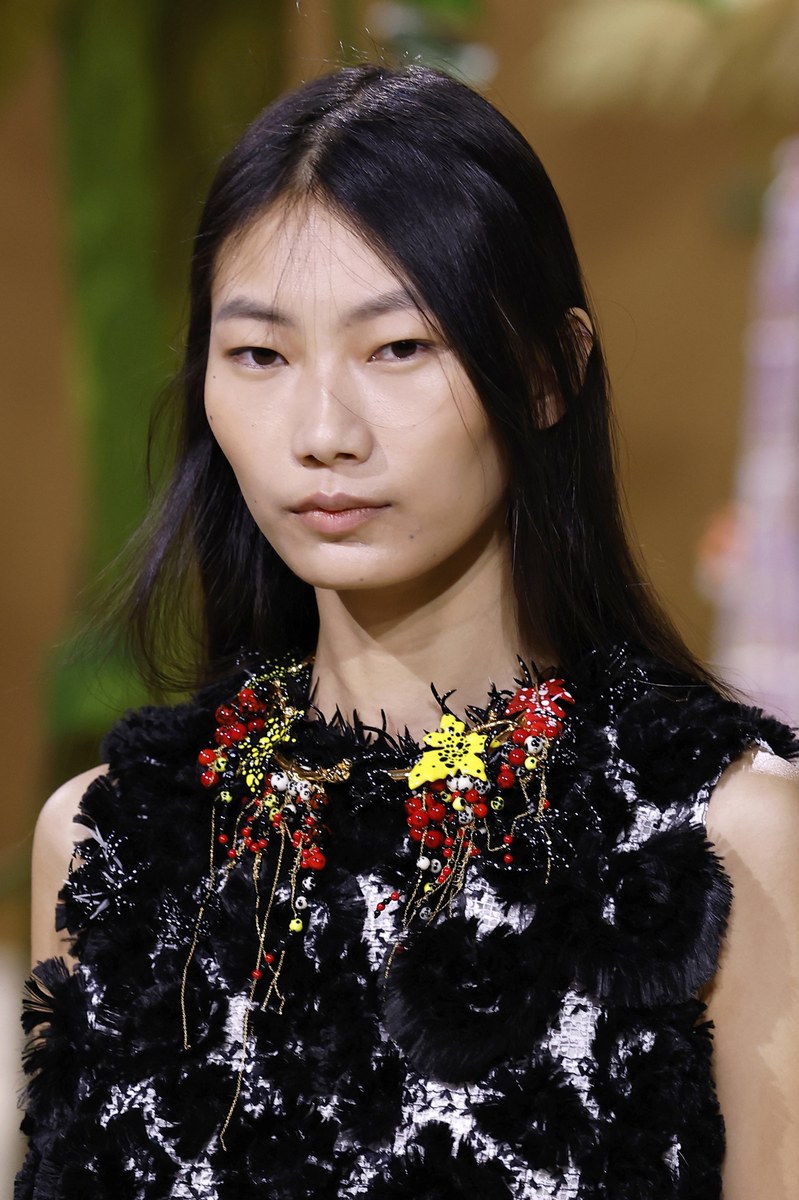
Magda Butrym FW26 Women Looks Report

Magda Butrym FW26 Women Looks Report
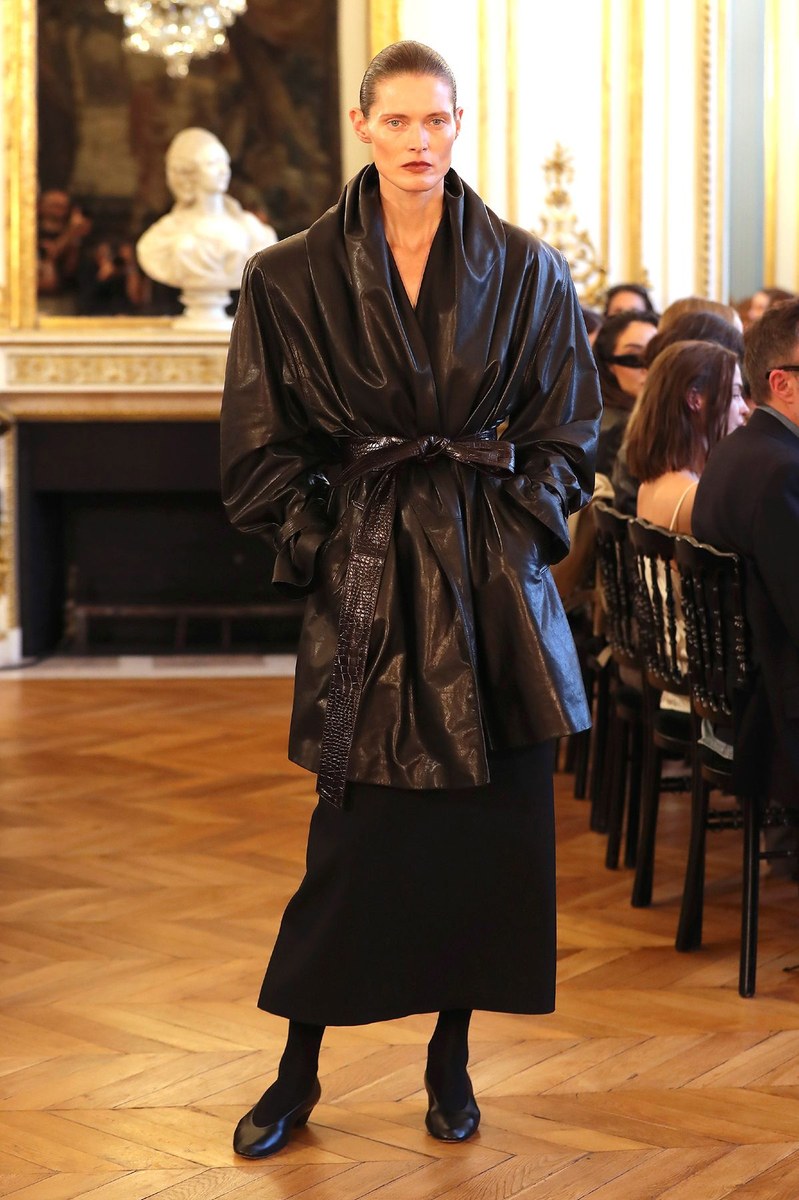
Did you know? Magda Butrym's eponymous label, founded in 2010, is known for its precision-engineered tailoring that combines Polish craftsmanship traditions with contemporary construction techniques, particularly in creating structured silhouettes with unexpected cutouts. The brand's signature approach involves using traditional pattern-making methods alongside modern 3D design technology to achieve its distinctive asymmetrical seaming and architectural draping.

Magda Butrym FW26 Women Looks Report

Paris Fashion Week

Magda Butrym FW26 builds a wardrobe around polished darkness and deliberate sensuality, moving between oversized leather outerwear, fluid knit coordinates, sculptural evening silhouettes and delicate lace with the confidence of a house that knows exactly who its customer is. For buyers, this collection arrives at precisely the moment the market is hungry for luxury pieces that read as both wearable and deeply considered, closing the gap between ready-to-wear functionality and the emotional pull of couture craft.

Silhouette and Volume

Volume concentrates at the top half of the body throughout. Looks 1, 3, 5 and 17 deploy oversized wrapped and belted outerwear that narrows at the waist before releasing into a long, clean midi skirt below, creating an hourglass tension that avoids preciousness. Balloon and bubble hemlines in Looks 7, 8 and 19 punctuate the collection with a sculptural counterpoint to all that elongation. What emerges is a consistent silhouette language: generous where it coats or wraps, controlled where it skirts or trousers.
Color Palette

Black dominates every finish imaginable, from matte wool crepe to high-gloss croc-embossed leather to feathered textile. Dark chocolate brown enters through Looks 5, 8, 12 and 17, providing just enough warmth to keep the palette from reading as severe. Ivory and cream arrive late in the collection, concentrated in Looks 9, 23, 25 and 26, where they land with maximum contrast against the black tights and dark footwear that anchor even the lightest dresses. Nocturnal in mood, the collection delivers deliberate flashes of blanc throughout.

Materials and Textures

Leather is the signature material here, appearing in lacquered, matte and croc-textured forms across outerwear, belts, gloves and bags. Ribbed chunky knit in charcoal grey (Look 12) and tonal heathered coordinates (Look 15) bring a tactile warmth that grounds the more architectural pieces. Feathered and fringe-cut fabric, used for skirts in Look 20 and full dresses in Looks 22 and 23, creates visible movement and textural drama at a production complexity that buyers should factor into lead times. Handmade in weight and drape, the lace in Look 26 reads as precious, while Look 9 uses a semi-sheer flocked lace that holds its shape against the body.

Look 12
Look 12

Styling and Layering

Black opaque tights run through nearly the entire collection, functioning as a unifying base layer that connects outerwear looks to evening dresses without any tonal break. Both a cap-toe leather flat and a pointed sock boot variation of the kitten heel appear consistently from Look 1 through the closing looks. At least a dozen looks feature black leather gloves, worn fully on the hand or loosely carried, reinforcing the idea that accessories are structural to the look rather than afterthought. Fur stoles, croc-textured belts and small structured bags with tassel pulls recur as the three-point accessory system the collection builds around.

Look 1
Look 1

Look by Look Highlights

Look 3 delivers the single strongest commercial outerwear piece in the collection, a full-length black leather shearling with fur collar and croc-textured belt that translates directly into a hero SKU at the top of the price range.

Look 3
Look 3

Look 9 pairs a semi-sheer white flocked lace long-sleeve dress with a black fur collar and black leather gloves, a pairing that generates the collection's most potent tension between fragility and edge.

Look 9
Look 9

Look 12 wraps an ankle-length ribbed charcoal wool coat with a croc-textured leather belt, proving the belted-robe silhouette works equally well in knit as in leather and opens a second fabrication option for production planning.

Look 15 sends two nearly identical knit coordinates down the runway together, a deliberate choice that positions the ribbed cardigan and matching knit tight as a set unit rather than separates, which has direct implications for how buyers should build their buy.

Look 15
Look 15

Look 19 cuts a strapless black taffeta or duchess satin dress with a fitted sweetheart bodice and dramatically gathered, almost tulip-burst skirt, the most overtly romantic silhouette in the collection and the clearest candidate for event and occasion retail placement.

Look 19
Look 19

Look 25 closes the light palette chapter with an ivory power-shoulder blazer and matching midi skirt over a crochet turtleneck, topped with a white openwork knit cap, a total look that reads as a directional white-on-white proposition for the resort and transitional buying window.

Look 25
Look 25

Look 26 presents a strapless ivory crochet maxi dress with wide-pattern lacework against a black fur stole and leather gloves, a bridal-adjacent piece that sits at the intersection of eveningwear and destination-wedding buying.

Look 26
Look 26

Look 27 closes the collection with a black satin-lapel tuxedo blazer over wide-leg trousers and a black lace turtleneck beneath, a look that confirms the house's ability to address the formal suiting customer without abandoning its sensual point of view.

Look 27
Look 27

Operational Insights

Outerwear as hero category: Looks 1, 3, 6, 14, 16 and 17 confirm that leather and mixed-material coats are the collection's highest-investment tier. Prioritize depth of buy in the belted leather styles, particularly Look 3, which has clear sell-through logic across multiple retail channels.

The belt as margin driver: Croc-embossed leather belts recur across at least eight looks as a standalone styling instrument. Product managers should explore whether this belt can be merchandised as a separable accessory unit, since its visual weight on the runway is strong enough to justify independent shelf placement.

Knit coordinate strategy: Look 15 explicitly frames the ribbed knit cardigan and tight as a set, not separates. Style directors should merchandise these as a single unit with a set price point rather than splitting them into separates, which risks losing the intentional tonal coordination that drives the look's appeal.

Feather and fringe lead time risk: Production complexity and longer sourcing lead times characterize the fringe-cut textile used in Looks 20, 22 and 23 compared to the leather or wool pieces. Buyers committing to these styles should build in a minimum six to eight week buffer beyond standard delivery windows.

White and ivory as a secondary story: Cream and ivory looks clustered in Looks 9, 23, 25 and 26 form a coherent sub-collection with a distinct bridal and occasion customer in mind. Style directors at multi-brand retailers should consider pulling these looks into a dedicated occasion edit rather than absorbing them into a broader RTW floor presentation.

Complete Collection

Look 2
Look 2
Look 4
Look 4
Look 5
Look 5
Look 6
Look 6
Look 7
Look 7
Look 8
Look 8
Look 10
Look 10
Look 11
Look 11
Look 13
Look 13
Look 14
Look 14
Look 16
Look 16
Look 17
Look 17
Look 18
Look 18
Look 20
Look 20
Look 21
Look 21
Look 22
Look 22
Look 23
Look 23
Look 24
Look 24

Magda Butrym was born in 1985 in Zabrze, an industrial city in Silesia, the coal-mining heartland of southern Poland. She grew up in a household where clothes were taken seriously: her parents dressed well and made sure she understood that how you present yourself carries weight. As a teenager she briefly considered medicine, drawn by the rigour of it, until she realised she was more interested in the uniforms than the diagnoses. She moved to Warsaw at nineteen to study at the International School of Costume Design and Fashion, and while still a student she began working as a stylist for Polish Television.

After graduating, she spent several years inside the Polish fashion industry before the world knew there was one worth watching. She styled, she learned the mechanics of production, and eventually joined the womenswear brand La Mania under Joanna Przetakiewicz, rising to chief designer by 2010 and staying for three years. A brief first attempt at her own label, a small line called Portofino, dissolved after a single collection. The ground wasn't ready, or she wasn't. In 2014, she tried again under her own name, and this time it held.

What Butrym built was a particular kind of femininity: not soft for its own sake, not tough as a performance, but genuinely in between. Her references are concrete and unexpected: the fiber sculptures of Magdalena Abakanowicz, the texture of a Polish tablecloth, tailoring borrowed from menswear draped over the curves of a body that refuses to disappear. She works with artisans across Poland, from Silesia to the highlands of Podhale, weaving handcraft into pieces meant to be worn on a Tuesday. The rose, her signature motif, came from the same logic: beautiful and resilient, always slightly dangerous. By 2018 she was an LVMH Prize semi-finalist, and in 2024 she made her official debut at Paris Fashion Week, where she served Polish water alongside Champagne and placed hand-blown glass art on tables covered in regional lace.

Today, a decade into her label, Butrym serves as founder and creative director of one of the most distinctive women's brands to emerge from Eastern Europe, stocked by Net-a-Porter, Mytheresa, and Moda Operandi, with a flagship on Foksal Street in Warsaw and over forty countries in her retail footprint.

"I launched my label to express something deeply personal. I didn't want to fit into someone else's idea of style or follow a trend for the sake of being current. I wanted to carve out my own aesthetic language — something intuitive, rooted in emotion and entirely mine."

"I don't want to define women; I want to empower them. We should all be our own muses."

✦ This report was generated with AI — combining human editorial vision with Claude by Anthropic. Because the future of fashion intelligence is already here.