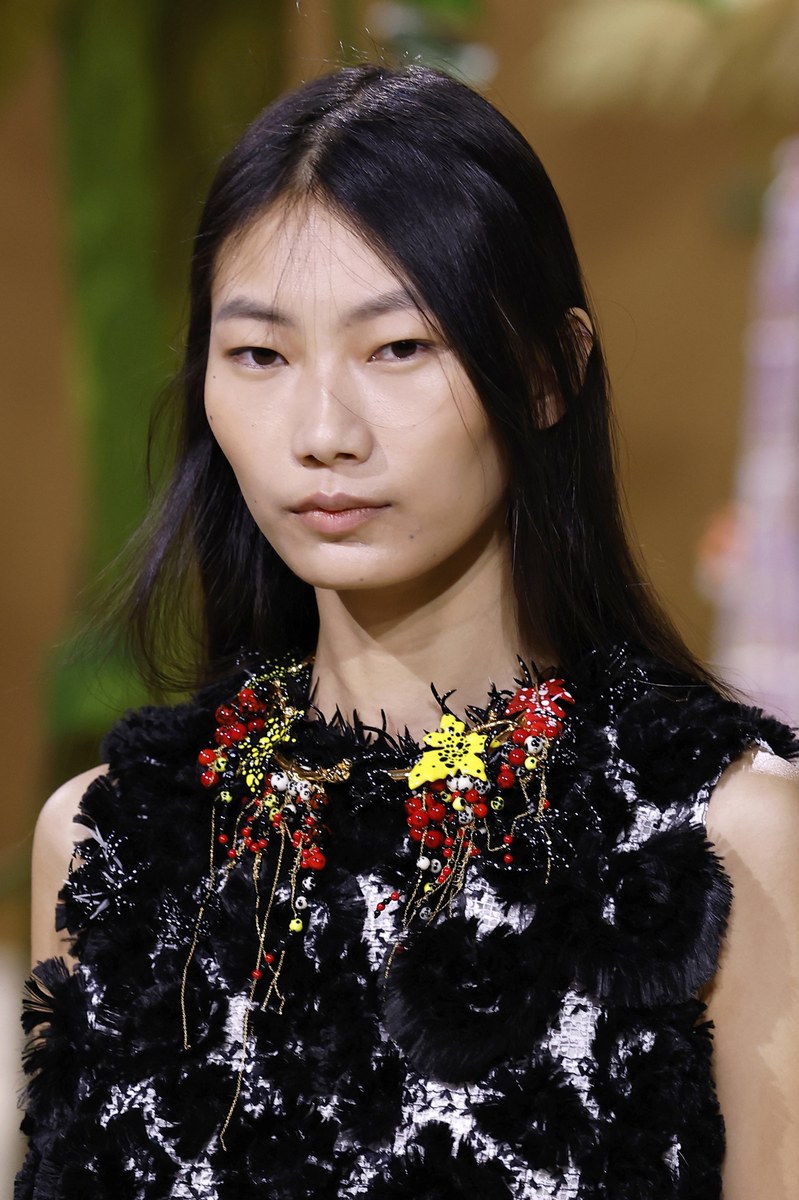
McDowell FW26 Women Looks Report

McDowell FW26 Women Looks Report
McDowell FW26 Women Looks Report

London Fashion Week

McDowell FW26 builds a wardrobe around controlled contrast, pairing architectural tailoring in black and deep plum against fluid ivory and blurred floral prints to create a collection that moves between rigor and softness within a single outfit. For buyers, this tension translates directly into a high-conversion, mix-and-match proposition that spans occasion dressing, day tailoring and eveningwear without requiring a full look purchase.

Silhouette and Volume

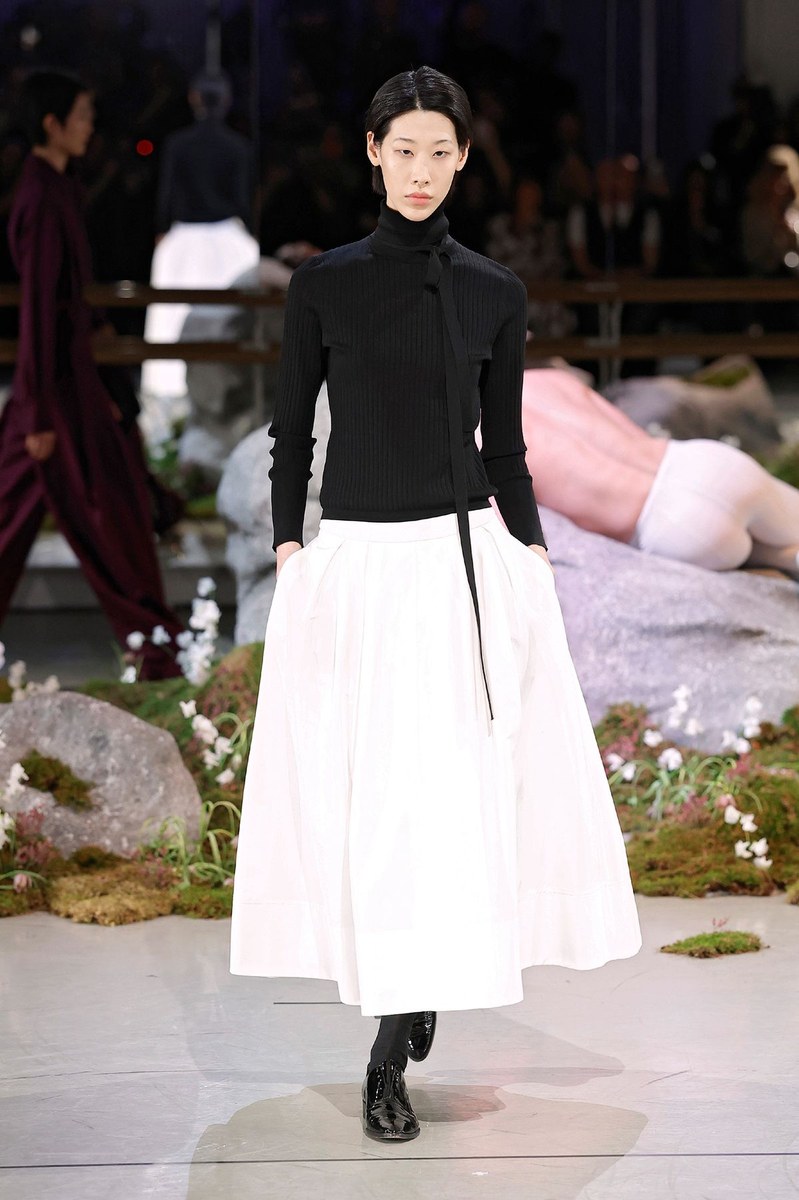
Two opposing poles define the silhouette here. Fitted, structured bodices and tailored jackets with sharp shoulders sit against full, floor-grazing or midi-length skirts and wide-leg trousers with generous pleating. Look 1 makes this immediately clear, a ribbed turtleneck cut close to the body paired with a voluminous white cotton skirt that balloons at the hip. Look 9 and Look 15 reinforce the strong-shoulder, wide-trouser suit as a recurring power silhouette, while Look 18 takes that logic furthest with a cropped velvet blazer and palazzo-width trousers that create maximum contrast between top and bottom volume.
Look 1
Look 1

Color Palette

Black anchors everything and appears in every category from tailoring to tulle. Deep plum, closer to a wine-saturated burgundy than a true purple, runs as a consistent second through Look 2, Look 6, Look 8 and Look 17, and it reads as the commercial hero color of the season. Ivory and warm off-white appear in softer, more fluid pieces including Look 4 and Look 12, creating a luminous counterweight to the dark ground. The blurred floral print, a diffused pink blossom on near-black ground, bridges the dark and the romantic moods and recurs across Look 5, Look 7, Look 16 and Look 17 to give the print category real depth.

Look 2
Look 2

Materials and Textures

Structured wool crepe carries the tailored pieces, giving them the weight and clean press lines visible in the double-breasted coats of Look 8 and Look 11. Silk satin appears in the fluid categories, with high liquid drape in Look 4 and Look 6 and a slightly heavier, more structured hand in Look 12. Cotton poplin, crisp and matte, builds the shirt dress in Look 3 and the full skirt in Look 1. Printed silk or silk-blend charmeuse defines the floral looks, their softness and slight transparency visible in the way Look 7 wraps and pools at the hem.

Look 8
Look 8

Styling and Layering

The neck tie, worn as a loosely knotted scarf or ribbon, appears from Look 1 through to Look 17 and functions as the collection's signature styling device, adding a tailored formality to knits, shirt dresses and printed separates alike. Footwear splits cleanly between patent leather lace-up oxfords and block-heeled loafers for the tailored looks and minimal strappy heeled sandals for the fluid and evening categories. Headwear carries significant editorial weight. The wide-brimmed felt hat in Look 9, the architectural disc hat in Look 18 and the birdcage veil in Look 3 each function as a complete look amplifier. Bags appear sparingly, a small drawstring bucket in Look 2 and a miniature structured top-handle in Look 4, signaling that accessories are intentional punctuation rather than volume drivers.

Look by Look Highlights

Look 1 Establishes the white cotton full skirt as a standalone commercial piece that reads against both the black ribbed knit shown here and any fitted top in a buyer's existing assortment.

Look 2 The belted plum jumpsuit in what reads as heavyweight crepe de chine is a direct buy for the workwear and occasion crossover customer, with the built-in belt removing the need for separate styling decisions.

Look 8 The long double-breasted plum wool coat worn over the floral print dress solves the layering equation for cold-climate markets and gives buyers a single outerwear piece that anchors the entire color story.

Look 9 The black peplim-waisted button-front blazer with wide-leg trousers and wide-brimmed felt hat is a full look designed to be bought as a set, and the coordinated silhouette reduces fragmentation risk for wholesale buyers.

Look 9
Look 9

Look 13 The sheer black wrap crop top over the full black tulle skirt is the strongest eveningwear entry, balancing exposure with coverage and addressing the customer who wants occasion dressing without a formal gown.

Look 13
Look 13

Look 14 The black satin midi dress with a large folded collar and flower-shaped crystal buttons gives production teams a single statement garment requiring minimal accessories, which reduces the cost-per-wear argument for the end consumer.

Look 14
Look 14

Look 17 The deep crimson floral print midi dress with a black crossbody bow detail and matching bag accessory reads as a complete capsule within a capsule, well suited to a pre-order or exclusive colorway strategy.

Look 17
Look 17

Look 19 The strapless ivory brocade bridal gown with three-dimensional floral appliqué at the waist and a plain tulle veil is the collection's closing statement and opens a direct conversation about a bridal or occasion extension for the brand.

Look 19
Look 19

Operational Insights

Color prioritization: Plum burgundy is the single most versatile color across the range, appearing in tailoring, silk blouses, outerwear and print grounds. Buyers should weight initial orders toward this shade over black, where newness carries more sell-through argument.

Print exclusivity: The blurred pink floral on black ground appears across four looks in two distinct fabrications, structured crepe and fluid satin, which means a single print buy can be deployed across multiple product categories without cannibalizing itself.

Separates strategy: Building full looks from separates rather than dresses gives wholesale partners the ability to open price points with individual pieces and trade customers up to complete looks. Plan receipts in coordinating sets.

Millinery as margin driver: The hats in Look 9, Look 18 and Look 3 are conspicuous enough to drive accessory sell-through independently of the garments they accompany. Style directors should flag these for editorial placements and window display to raise average transaction value.

Fabrication weight calendar: The range mixes seasonally heavy wool crepe with lighter silk satin within the same color family, which allows a phased delivery strategy. Retailers in transitional climates can open with silk pieces in early delivery and follow with the tailored crepe items as temperatures drop.

Complete Collection

Look 3
Look 3
Look 4
Look 4
Look 5
Look 5
Look 6
Look 6
Look 7
Look 7
Look 10
Look 10
Look 11
Look 11
Look 12
Look 12
Look 15
Look 15
Look 16
Look 16
Look 18
Look 18
Look 20
Look 20
Look 21
Look 21
Look 22
Look 22
Look 23
Look 23
Look 24
Look 24
Look 25
Look 25
Look 26
Look 26

About the Designer

Patrick McDowell emerged from the working-class Wirral suburb of Liverpool with a sewing machine and a vision that would reshape luxury fashion. Raised in a large, matriarchal household where his mother was one of eight children with five sisters, he watched women transform from their weekday personas into "glamorous peacocks" on Friday nights. This early fascination with clothing's transformative power, combined with a Catholic upbringing that later informed his complex relationship with identity and belonging, planted the seeds for what would become his signature approach to design. At 13, defying his mother's refusal to buy him a new school bag, he cut up a pair of jeans and crafted his first creation. The reaction was immediate and telling: classmates couldn't believe he had made it himself.

What began as practical necessity evolved into entrepreneurial drive. McDowell taught himself to create bags from bedroom scraps, selling thousands before he even understood he was building a sustainable practice. His teacher Ali Mcwatt recognized his potential early, encouraging him to push boundaries and take risks. By 13, he had Googled the world's best fashion schools, set his sights on Central Saint Martins, and mapped out his future with the single-minded determination that would later characterize his approach to reshaping fashion's broken systems.

McDowell's entry into fashion proper came through his studies at Central Saint Martins, though not without struggle. His first year was difficult, admitting he "wasn't really ready" at 19. During an internship at Burberry, he witnessed the industry's waste firsthand, watching only 30 percent of ordered fabric make it to the runway while the rest was discarded. This revelation crystallized his mission. When his internship ended, he boldly wrote to then-CEO Christopher Bailey requesting the discarded fabric for his graduation collection. Not only did he receive the materials, but Bailey also provided sponsorship. When Burberry later offered him a job, McDowell politely declined, asking to be considered only for a sustainability-focused design role.

His aesthetic draws heavily from his Liverpool heritage, family photographs, and what he calls "Liverpool glamour." McDowell's collections consistently explore the tension between hypermasculinity and femininity, often referencing his father's mountaineering adventures and his mother's transformative red dress from a millennium party. His musical upbringing, playing brass instruments as a child, influences his theatrical runway presentations, which function more like collaborative performances than traditional fashion shows. Rather than chasing trends, he mines personal history, creating what he describes as "deeply personal" pieces that carry stories within their construction.

Now 30, McDowell serves as founder and Creative Director of his eponymous label while holding multiple influential positions across the industry. He is Designer in Residence at Professor Jimmy Choo's JCA London Fashion Academy and Sustainability Creative Director at Italian brand Pinko. His business model deliberately subverts fashion's growth-obsessed structure through limited-edition, made-to-order pieces that come with lifetime alterations and repairs. Winner of the 2024 Queen Elizabeth II Award for British Design, he has dressed celebrities from Rita Ora to M.I.A. while building a practice that extends far beyond creating clothes to reshaping the systems that govern fashion itself.

"I always say I'm not trying to create a sustainable fashion brand. I'm trying to create a world where fashion is sustainable by default."

"We must design not just for this season, but for the next generation. Fashion should be a regenerative force, not an extractive one."

✦ This report was generated with AI — combining human editorial vision with Claude by Anthropic. Because the future of fashion intelligence is already here.