Moschino FW26 Women Looks Report

Moschino FW26 Women Looks Report
Moschino FW26 Women Looks Report

Milan Fashion Week

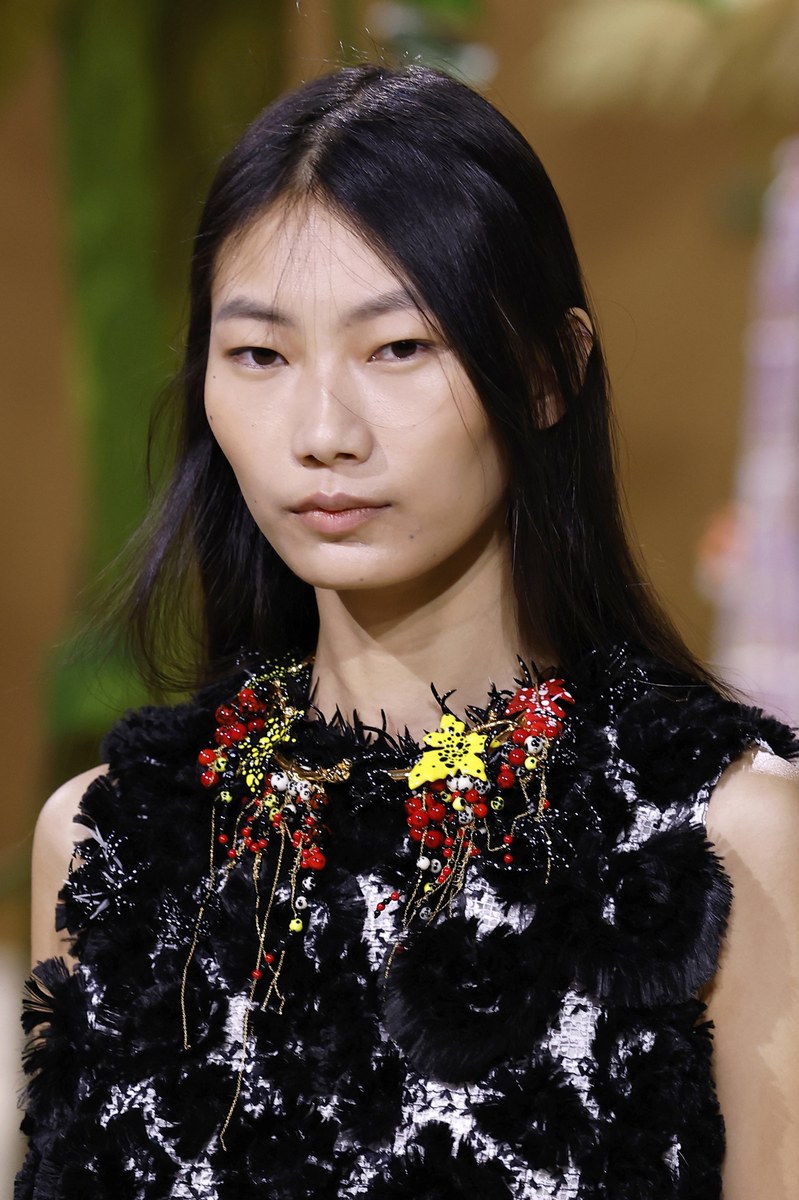
Adrian Appiolaza sends tailored European heritage crashing into deliberately absurdist, pop-saturated vernacular. Gingham, horse-print silk, pixelated graphics and neon outerwear live in the same collection without apology. For buyers navigating a market where logomania fatigue is real but novelty still sells, this reads as a viable commercial toolkit. There are enough wearable anchors to offset the more theatrical statements.

Silhouette and Volume

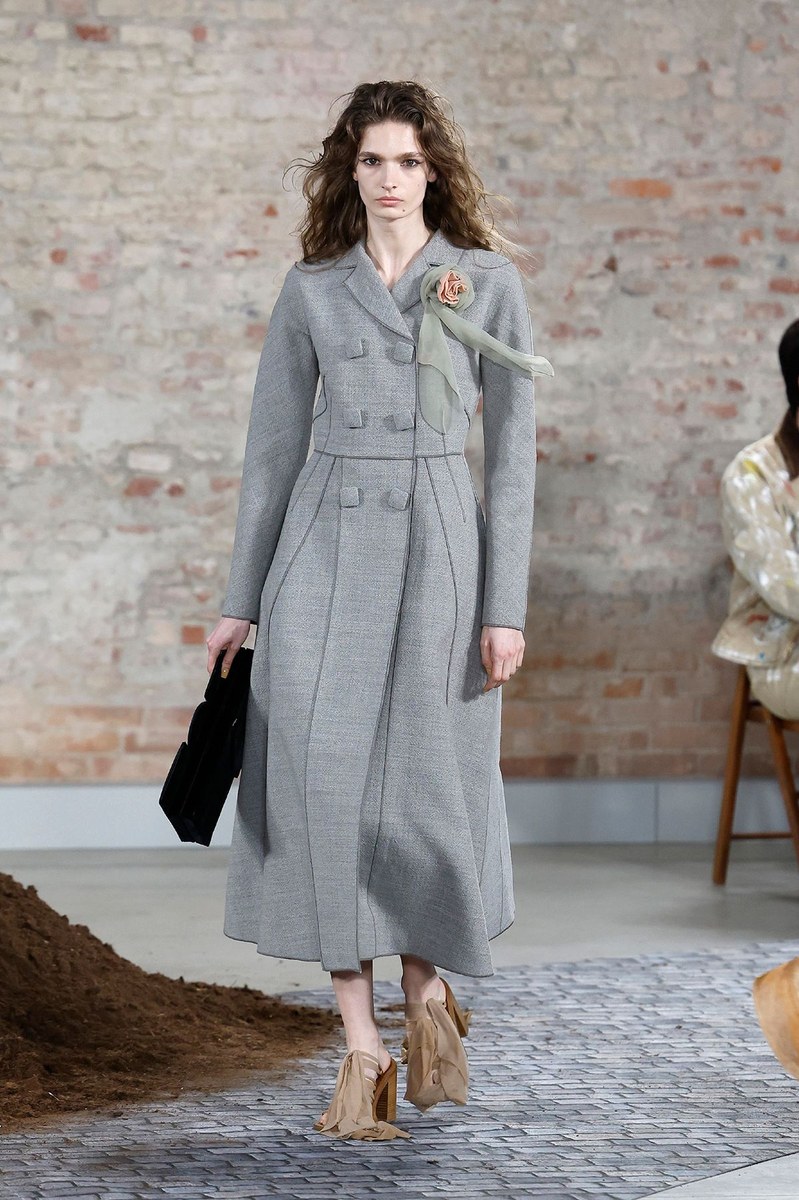
Two body philosophies run through the collection. Fitted, seamed coats and dresses hold the body close with precise princess-line construction, most prominently the double-breasted grey wool coat in Look 1 and the ribbed black column dress in Look 13. Against these sit oversized balloon trousers, voluminous gingham skirts and a cape-scale neon poncho in Look 16 that push volume to the outer limit of commercial viability. The structural argument of the collection lives in this tension.
Look 1
Look 1

Color Palette

Grey heather wool, ivory silk and mid-wash denim form the neutral core. Acid mint, turquoise, cobalt blue and neon yellow-green then drop into that base with zero transition, creating combinations that feel confrontational rather than tonal. Burgundy red paired repeatedly against grey in Looks 3, 6 and 18 grounds the louder moments and gives style directors a more restrained extraction path. Horse-print ivory and black with turquoise accents in Looks 4 and 5 could anchor a focused capsule as a signature print family.

Materials and Textures

Structured double-faced wool carries the tailored pieces, with enough body to hold sculptural seaming without padding. Fluid silk charmeuse and printed crepe de chine handle the horse and currency prints, draping loosely against the body or worn as draped scarves off the shoulder. Ribbed knit in Look 13 clings with considerable weight, not the lightweight jersey typical of transitional collections. Fringe-cut argyle panels in Look 2 and the tiled photo-print skirt in Look 11 introduce surface relief that photographs well and drives editorial coverage.

Look 13
Look 13

Styling and Layering

Layering is additive and occasionally aggressive, with scarves pinned at the chest, jackets carried rather than worn and complete looks built around a central garment that doubles as outerwear. Strappy lace-up heels, flat ballet pumps and lug-sole boots reflect a deliberate refusal to lock into a single consumer. Footwear splits across three distinct categories. The piggy bank clutch in Look 19 and the mop-inspired bag in Look 17 sit firmly in the art-object accessory category, best treated as editorial props rather than volume accessories. Belt styling is consistent across Looks 2, 3, 9 and 14 with leather belts in burgundy and tan at the natural waist, providing a repeatable commercial detail.

Look 19
Look 19

Look by Look Highlights

Look 1 The princess-seamed heather grey wool coat with covered buttons and a silk flower brooch is the collection's clearest commercial anchor. European and Japanese department store floors will buy this directly.

Look 2 The pale blue knit co-ord with shredded turquoise and black argyle panel appliqués reads as a high-impact separates story with strong editorial pull and manageable production complexity.

Look 2
Look 2

Look 5 The horse-head print silk dress in black with structured cap sleeves and a burgundy rolled hem carries both a graphic identity and a silhouette that works across multiple body types.

Look 5
Look 5

Look 11 The white cotton jersey top paired with a tiered, tiled cityscape photo-print skirt in cobalt and white demonstrates Moschino's ability to turn a graphic concept into a physical construction technique worth tracking.

Look 11
Look 11

Look 13 The full-length black ribbed turtleneck dress with yellow-green gingham balloon hem inserts and matching cuff detail is a styling-led piece that generates outsize visual return from a relatively simple base garment.

Look 15 The black double-breasted long blazer worn over a billowing purple micro-gingham skirt draped to floor length combines the collection's tailored and voluminous registers in one look. This is the most buyer-ready formal option in the lineup.

Look 15
Look 15

Look 16 The neon yellow-green and black technical cape with matching structured hat targets the outerwear statement category directly and will perform in markets where weather-reactive fashion is already commercially proven.

Look 16
Look 16

Look 19 The oversized black single-button suit with Bermuda shorts, a currency-print button-down and crumpled multicolor platform shoes makes a pointed comment on wealth and absurdity. Press and stylist loans suit this better than floor inventory.

Operational Insights

Print licensing: The horse-head motif appears across silk charmeuse, crepe and structured fabric in Looks 4, 5 and 6, making it a viable hero print for a licensed or diffusion capsule with clearly defined colorway options in ivory-teal and black-multicolor.

Tailoring investment: The grey wool seamed coat and jacket in Looks 1 and 6 share construction logic, suggesting the brand is building a reusable pattern block that could support a small tailoring capsule with lower per-unit development cost across two or three SKUs.

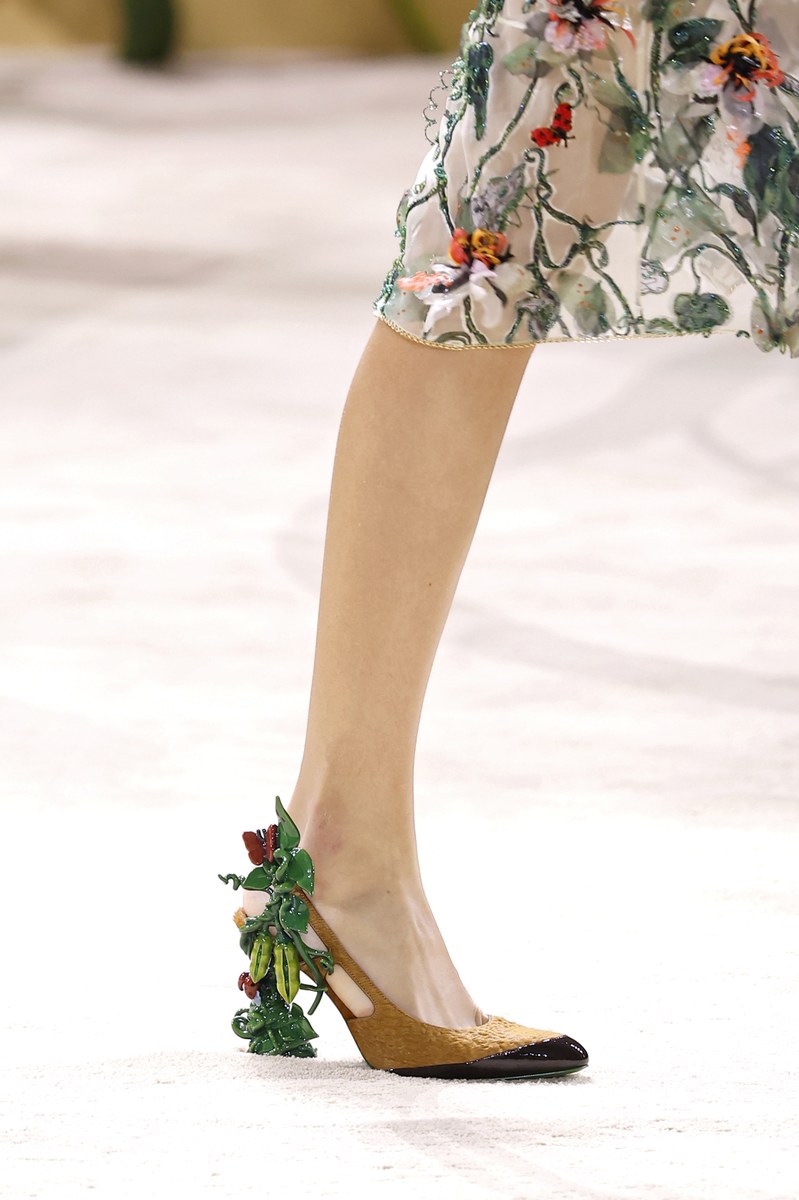
Accessory tier strategy: Sculptural accessories, the piggy bank, the mop bag, the floral platform shoes, should be treated as editorial and wholesale press drivers rather than volume purchases. Reserve open-to-buy budget for the leather belt program and small leather goods visible in Looks 2, 9, 10 and 12.

Separates potential: The clearest volume opportunity lies in separates rather than full looks. Polo knit tops, tailored midi skirts and balloon trousers each read independently. A focused four-piece separates buy across Looks 12, 17 and 18 would give style directors maximum mix-and-match flexibility for floor presentation.

Color family edit: Buyers targeting conservative markets should edit to the grey, ivory and burgundy family visible in Looks 1, 3, 6 and 15. Fashion-forward urban retailers can extend into the neon and cobalt family in Looks 7, 10 and 16 without needing to carry the full range.

Complete Collection

Look 3
Look 3
Look 4
Look 4
Look 6
Look 6
Look 7
Look 7
Look 8
Look 8
Look 9
Look 9
Look 10
Look 10
Look 12
Look 12
Look 14
Look 14
Look 17
Look 17
Look 18
Look 18
Look 20
Look 20
Look 21
Look 21
Look 22
Look 22
Look 23
Look 23
Look 24
Look 24
Look 25
Look 25
Look 26
Look 26
Look 27
Look 27
Look 28
Look 28
Look 29
Look 29
Look 30
Look 30
Look 31
Look 31
Look 32
Look 32
Look 33
Look 33
Look 34
Look 34
Look 35
Look 35
Look 36
Look 36
Look 37
Look 37
Look 38
Look 38
Look 39
Look 39
Look 40
Look 40
Look 41
Look 41
Look 42
Look 42
Look 43
Look 43
Look 44
Look 44
Look 45
Look 45
Look 46
Look 46
Look 47
Look 47
Look 48
Look 48
Look 49
Look 49
Look 50
Look 50
Look 51
Look 51
Look 52
Adrian Appiolaza

About the Designer

Adrian Appiolaza was born in Buenos Aires in 1972 and grew up between two very different kinds of education. His grandmother ran a tailoring shop, and he spent his adolescence inside it, absorbing the mechanics of construction and the specific intelligence of people who work with cloth. But the other education was sonic. A friend whose father worked for Aerolíneas Argentinas would return from London with vinyl records, tapes, and copies of Melody Maker, objects that were otherwise unavailable in Argentina at the time. Through that contraband music, Appiolaza became obsessed with The Smiths, the Rockabilly scene, and then the Madchester wave, the Stone Roses above all. The desire to see that world for himself was strong enough to outweigh everything else. He had started studying graphic design at university, but at twenty-one he left Buenos Aires for the first time, heading for London with no contacts and very little money.

He spent four years working nights in bars and clubs, saving carefully, circling closer to the fashion world through the friends he made in that milieu. Nicola Formichetti, later Lady Gaga's stylist, was part of that circle. Kim Jones, now at Dior, was studying at Central Saint Martins and told him he could do the same. Appiolaza put every pound he had saved into a portfolio-building course, applied to CSM, and got in. Simultaneously, he was told that McQueen's studio was looking for a junior assistant. He showed up with his portfolio and was hired. For a few years he held both simultaneously, working nights as a barman in Soho to make rent, until McQueen told him he could stay and leave school. He chose school. His graduation collection in 2002 won the prize for best womenswear of his year, and Phoebe Philo, having seen it, called him to join her at Chloé. What followed was a career built entirely through the proximity of exceptional people: four years at Miu Miu under Miuccia Prada, two years at Louis Vuitton under Marc Jacobs as senior designer, a return to Chloé as design director under Clare Waight Keller, and then a decade at Loewe as women's ready-to-wear design director alongside Jonathan Anderson.

He arrived at Moschino in January 2024 under difficult circumstances: his predecessor Davide Renne had died nine days after starting the job. Appiolaza had been collecting Franco Moschino pieces for years, a fact that mattered to the house's ownership as evidence of genuine rather than professional respect for the archive. His debut collection showed in February 2024 at the Museo della Permanente in Milan, the same venue that had hosted the brand's tenth-anniversary exhibition in 1993. He now oversees all women's, men's, and accessories collections for the house.

"What guided me on a journey of discovery, taking me away from those familiar confines and into the centre of my life, was the passion for English music. During the years when the music scene in Manchester was thriving, it pushed me to imagine another universe, seemingly distant, where I could express myself like never before."

"The essence of his talent, for me, is to inhabit his time — a mission he carried out with enviable lightness, opening a window for all of us to imagine, in our own way, the future."

✦ This report was generated with AI — combining human editorial vision with Claude by Anthropic. Because the future of fashion intelligence is already here.