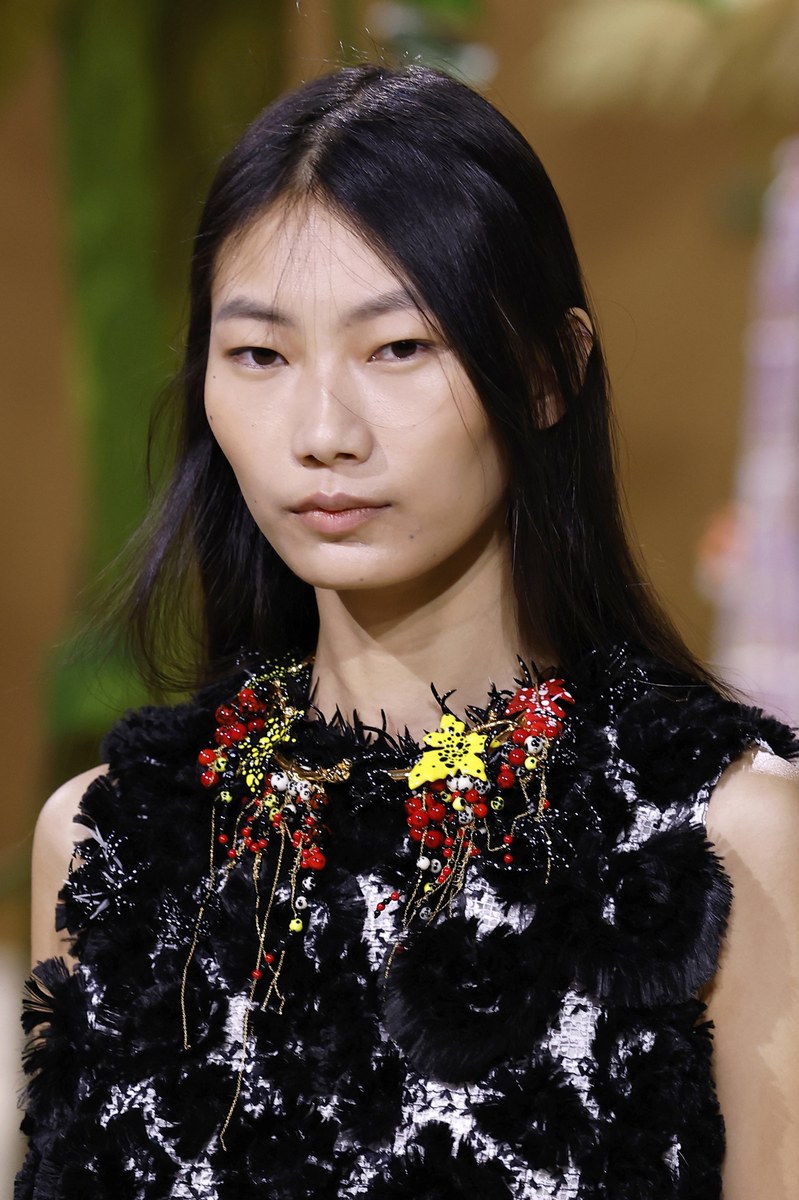
Paul Costelloe FW26 Women Looks Report

Paul Costelloe FW26 Women Looks Report
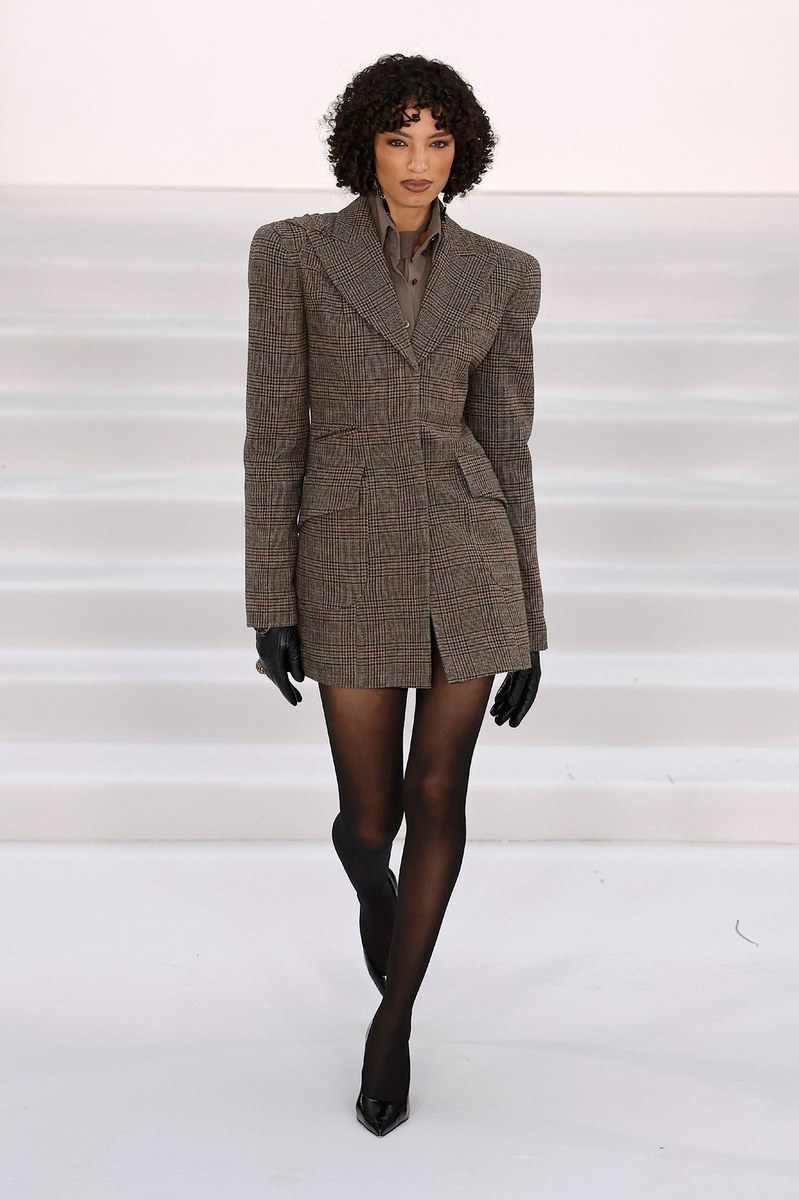
Paul Costelloe FW26 Women Looks Report

London Fashion Week

Paul Costelloe FW26 builds a coherent commercial wardrobe around the power-shouldered blazer dress, prince of Wales check, and a disciplined neutral palette that moves from warm greige through camel to ivory and cream. For buyers, this collection solves a real shelf problem: it delivers tailored occasion dressing with enough casual-adjacent layering to justify broader placement across contemporary and bridge retail channels.

Silhouette and Volume

A structured, nipped-waist blazer cut to mini length and worn directly over sheer black hosiery opens the collection. No skirt or trouser is visible. This silhouette repeats across Looks 1 through 9 with deliberate variation in lapel style, button placement, and collarless versus notched construction. Look 3 breaks the format entirely with a full-length, column-skirt ensemble and an asymmetric peplum bow at the hip, providing a dramatic floor-grazing option within the same check fabric story. Volume enters late through oversized knit silhouettes in Looks 12 and 13, a cocoon-shaped woven dress in Look 14, and the floor-length textured wrap coat in Look 17.
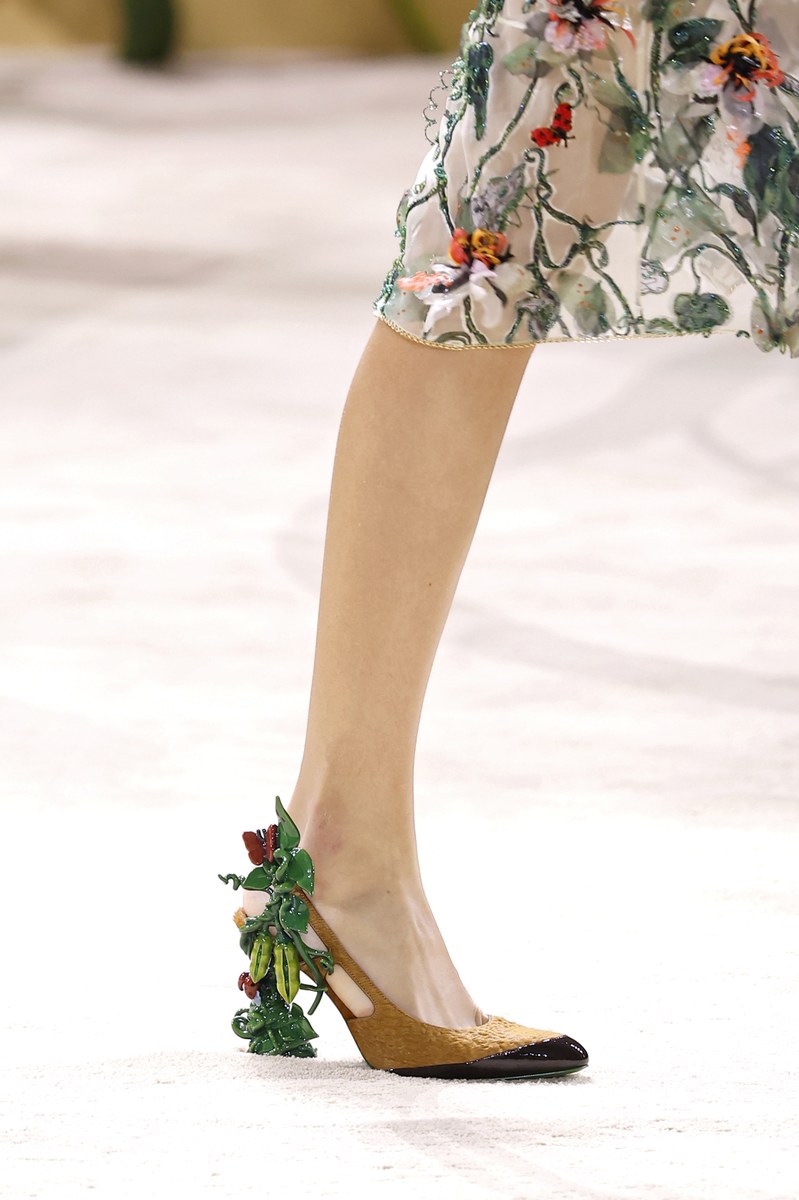
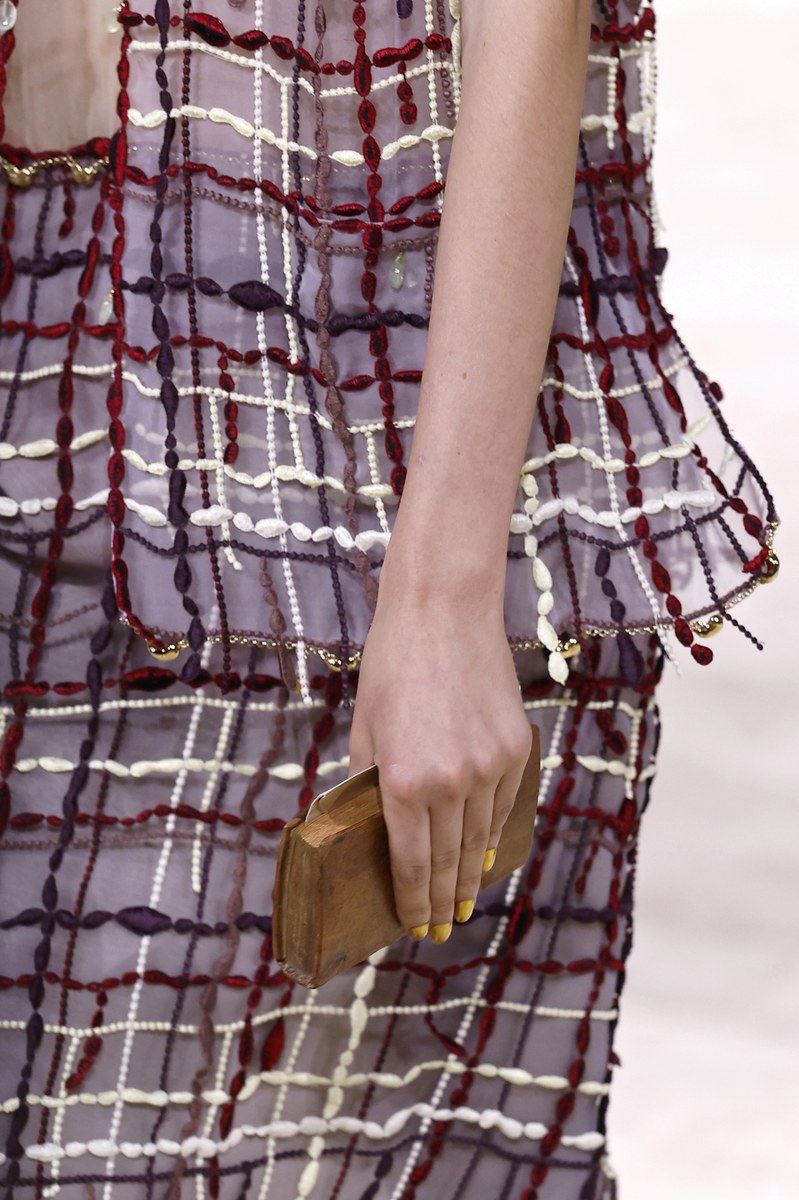
Look 3
Look 3

Color Palette

Two distinct check colorways anchor the first half: a cool grey-beige glen plaid appears in Looks 2, 4, and 7, while a warmer dark brown-and-tan tartan intensifies through Looks 8, 9, 10, and 11. From Look 12 onward, ivory and chalk white take over, running through knitwear, structured coats, and eveningwear to close the show on a clean, monochromatic note. Black functions strictly as an accent, concentrated in hosiery, gloves, boots, and bags rather than in any garment fabric. Such restraint makes the collection highly crossover-friendly for buyers building mix-and-match capsule assortments.

Look 12
Look 12

Materials and Textures

Check wools and wool-blend suiting fabrics carry the first two-thirds of the collection, reading as mid-weight with enough structure to hold the sharp shoulder line without excessive interfacing bulk. Looks 10 and 11 shift to a heavier, looser-weave plaid with visible texture, suggesting a brushed or bouclé-adjacent handle that adds depth without adding formality. Chunky-ribbed ivory knits in Looks 12 and 13 are clearly heavy-gauge, styled to read as outerwear in their own right. Look 17 closes the tailoring arc with what reads as a jacquard or tone-on-tone brocade in ivory, providing a high-ceremony fabrication that sits apart from everything preceding it.

Look 17
Look 17

Styling and Layering

A slim dress shirt or fine-knit layered beneath the blazer dress appears in Looks 1, 2, and 7, adding a suiting-adjacent formality that broadens the styling story beyond off-duty wear. Black leather gloves repeat across at least ten looks, functioning as a consistent styling signature that also has real commercial sell-through potential as an add-on SKU. Footwear splits into two clear tracks: pointed-toe patent or leather court shoes for the tailored looks, and flat or low-block-heel suede ankle boots for the more relaxed pieces. Large structured tote silhouettes in oxblood, black, and tobacco leather appear in Looks 8, 11, 15, and 16, which signals a clear handbag commercial priority alongside the clothing.

Look by Look Highlights

Look 1 A dark brown-on-grey glen plaid blazer dress with sculpted peak shoulders, worn with black leather gloves and patent courts, sets the commercial template for the entire first chapter and would perform well as a hero SKU at the blazer dress price point.

Look 1
Look 1

Look 3 The floor-length prince of Wales check column skirt with a cropped matching jacket and an oversized asymmetric bow peplum at the hip is the most production-intensive piece in the collection and reads as a runway anchor rather than a volume style, useful for editorial and display purposes.

Look 6 A cap-sleeve mini dress in cool greige check with exaggerated padded shoulders, toggle buttons at the bust, and knee-high black suede boots delivers the most accessible and trend-forward silhouette in the lineup for a younger contemporary buyer.

Look 6
Look 6

Look 11 The full head-to-toe brown tartan look, including a draped hood formed from the jacket collar, wide-leg trousers, and an oxblood structured holdall, is the strongest outerwear-adjacent commercial proposition and the most directly wearable floor-length option in the range.

Look 11
Look 11

Look 12 An ivory heavy-gauge ribbed knit worn as a hooded mini dress, cinched with a double-prong oxblood leather belt, produces a strong contrast of softness and structure that translates directly into a gifting or holiday capsule without restyling.

Look 16 A long ivory single-button wool coat worn open over a printed blouse with voluminous puffed sleeves and brown suede knee boots is the clearest outerwear commercial hero, combining clean coat construction with a print blouse layering story that can be sold as a set.

Look 16
Look 16

Look 17 The floor-length ivory jacquard wrap coat with structured shoulders and a self-belt is the collection's formal outerwear statement and carries a perceived luxury weight that positions it for premium wholesale or special-occasion retail placement.

Look 19 The black silk or satin maxi dress printed with white linear fashion sketch illustrations and gathered into multiple large fabric knots reads as the evening anchor, distinct from every other look in fabrication and mood, and would serve editorial and red-carpet adjacency functions for the brand.

Look 19
Look 19

Operational Insights

Blazer dress repeatability: At least seven colorways and construction variations of the mini blazer dress silhouette appear across Looks 1 through 9, which gives buyers strong grounds to build a focused style family around a single block. Development cost drops while floor differentiation stays high.

Check fabric sourcing: Two distinct check weights and color registers run through the collection. Buyers should confirm with the Paul Costelloe studio whether the grey-beige and brown-tan plaids originate from the same mill, as consolidating to one supplier simplifies reorder logistics for any capsule rollout.

Accessories as revenue layer: Black leather gloves, oversized structured totes in oxblood and black, and pointed-toe patent courts appear with enough consistency to function as a genuine accessories commercial programme rather than pure styling decoration. Style directors should assess whether these are available for buy alongside the clothing.

Hosiery dependency: Nearly every look from 1 through 15 depends on sheer black hosiery to complete the visual logic of the barely-there bottom half. Buyers placing the blazer dresses should plan coordinated hosiery recommendations or inclusions to protect the intended aesthetic at point of sale.

Evening and occasion gap: Daywear and tailored casualwear dominate the range, with only Looks 17 and 19 carrying true formal occasion weight. Style directors building a full-range buy will need to supplement with additional eveningwear sourcing or weight those two SKUs heavily for any client with a significant occasion-dressing business.

Complete Collection

Look 2
Look 2
Look 4
Look 4
Look 5
Look 5
Look 7
Look 7
Look 8
Look 8
Look 9
Look 9
Look 10
Look 10
Look 13
Look 13
Look 14
Look 14
Look 15
Look 15
Look 18
Look 18
Look 20
Look 20
Look 21
Look 21
Look 22
Look 22
Look 23
Look 23
Look 24
Look 24
Look 25
Look 25
Look 26
Look 26
Look 27
Look 27
Look 28
Look 28
Look 29
Look 29
Look 30
Look 30
Look 31
Look 31
Look 32
Look 32
Look 33
Look 33
Look 34
Look 34
Look 35
Look 35
Look 36
Look 36
Look 37
Look 37
Look 38
Look 38
Look 39
Look 39
Look 40
Look 40
Look 41
Look 41
Look 42
Look 42
Look 43
Look 43
Look 44
Look 44
Look 45
Look 45

About the Designer

William Costelloe stepped into his role as Creative Director of Paul Costelloe in January 2026, following the death of his father Paul Costelloe in November 2025. His artistic foundation began at Camberwell College of Art in London, where he completed his undergraduate degree in fine art painting. He then pursued a master's at Chelsea College of Art in London, developing a particular interest in figurative painting that explored the relationship between absence and presence through empty interior spaces.

Before entering fashion, William worked across several European creative industries. He spent time as a print and textile designer for Portuguese bedding manufacturer Piubelle and homewares producer Matceramica, roles that deepened his understanding of material and colour. His commercial experience extended to visual merchandising and styling at La Rinascente in Milan, the same department store where his father had worked early in his career. This period gave him practical insight into retail presentation and the commercial aspects of design. He later received formal fashion training at the Istituto Marangoni in Milan, specializing in womenswear design and textiles.

William joined the family business seven years before becoming Creative Director, serving as Design Director under his father's guidance. This apprenticeship allowed him to develop the brand's seasonal collections while learning the intricacies of heritage fashion. His artistic background influences his approach to colour and material, combining his painterly sensibilities with commercial fashion requirements. His aesthetic draws from his fine art training, particularly his exploration of tension and atmosphere through muted palettes and bold compositional elements.

"My father taught me to see fashion through the eyes of an artist; to respect materials, the process, the people," William reflected upon his appointment. "I am honoured to be continuing his legacy, and I approach this role with determination, gratitude and excitement for what lies ahead for the Paul Costelloe brand."

✦ This report was generated with AI — combining human editorial vision with Claude by Anthropic. Because the future of fashion intelligence is already here.