Selasi FW26 Shoes
Selasi FW26 Shoes Report
Selasi FW26 positions footwear as the functional anchor of the collection, pairing relaxed suede riding silhouettes with monochromatic technical trainers to build a wardrobe that moves between dressed and casual without friction. For buyers, this split signals a deliberate two-customer strategy, one rooted in heritage craft and one in performance-adjacent casualwear, both landing in the same muted brown spectrum.
Silhouettes and Construction
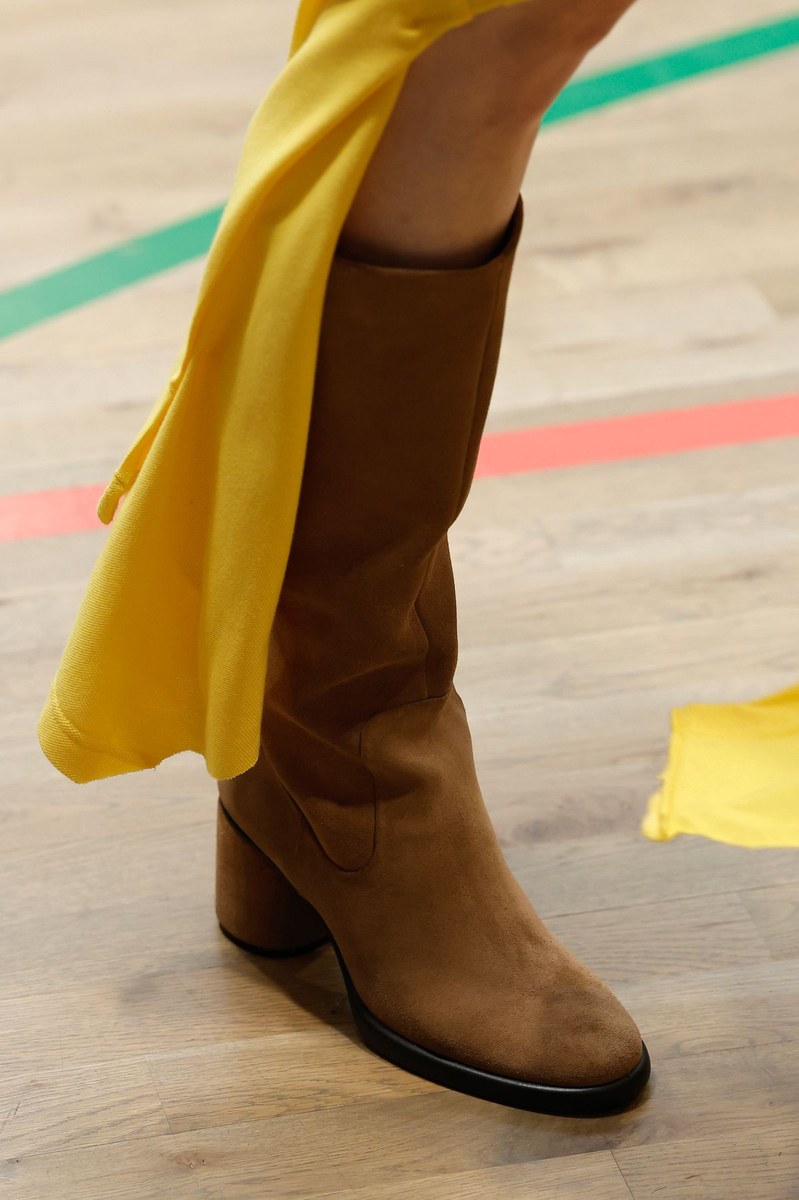
Shoe 1 delivers a knee-high riding boot with a stacked block heel sitting at approximately 6 to 7 centimeters, a rounded square toe, and a clean pull-on construction with no visible closure hardware. Shoe 2 presents a low-profile lace-up trainer with a flat rubber cupsole, a rounded toe bumper, and a multi-panel upper construction that layers mesh and smooth leather components across the vamp and quarter. The contrast between these two silhouettes is stark but intentional. Both share a blunt, unpretentious toe shape that signals a directional move away from pointed or elongated lasts.
Materials and Finishes
Matte suede sits at the heart of Shoe 1, most likely split leather suede given the soft nap and slight texture variation visible across the shaft and vamp, finished with a black rubber outsole that grounds the warm brown upper. Shoe 2 constructs the entire upper in a single clay-taupe tone using a combination of perforated mesh panels, smooth synthetic or leather overlays, and tonal lace hardware. No metallic or contrast stitching appears on either shoe. This absence of embellishment suggests a deliberate raw-material-forward design ethos this season.
Color Direction
The palette is built entirely on warm neutral browns. Shoe 1 lands in a mid-tan caramel suede, close to a raw tobacco or dry earth tone. Shoe 2 works in a cooler greige, sitting closer to wet clay or putty than a traditional beige. Together these two tones establish a tight, wearable neutral range that layers across the collection's yellow and ochre garments without competing, and communicates directly to buyers that this season's footwear is built for mix-and-match versatility rather than statement contrast.
Key Models and Details
Shoe 1 is the stronger commercial proposition of the two, a pull-on knee boot with a traditional riding silhouette updated by its block heel geometry and the relaxed, slightly collapsed shaft that avoids a stiff equestrian read. Shoe 2 reads as a dad trainer reinterpreted through a tonal reduction, stripping away the color-blocking typical of the category and replacing it with complete monochrome construction across every component including the outsole. Both models avoid visible branding, logo placement, or external labeling in the photos, which positions them as label-agnostic wardrobe pieces rather than logo-driven product.
Shoe by Shoe Highlights
Shoe 1 The stacked block heel at approximately 6 to 7 centimeters hits a practical height that appeals to the core 35-plus contemporary buyer who demands comfort alongside a dressed silhouette.

Shoe 1 Pull-on construction with no zipper or buckle hardware reduces production complexity and eliminates the fit variability that closures introduce, making it a streamlined SKU for scaling.
Shoe 1 The soft collapsed shaft in matte suede creates a relaxed, lived-in volume that pairs with both midi skirts and wide-leg trousers, broadening its styling range across categories.
Shoe 1 Black rubber against caramel suede upper is the only tonal break in the design, and it reads as a deliberate grounding detail rather than a contrast finish.
Shoe 2 Complete monochrome execution across upper, lace, and sole in a clay-putty tone is the defining commercial decision here, removing the color barrier that typically limits trainer adoption in European contemporary market channels.

Shoe 2 Multi-panel upper construction, combining perforated mesh with smooth leather or synthetic overlays, adds visual texture while maintaining the tonal discipline across the full silhouette.
Shoe 2 The cupsole profile sits flat and low to the ground, separating this model from the thick-soled chunky trainer trend and positioning it closer to late 1990s runner revival territory.
Shoe 2 Tonal lacing hardware with no contrast color or metallic aglets keeps the finish consistent and reduces per-unit cost without sacrificing the intentional design logic of the model.
Operational Insights
Material sourcing: Matte split suede in mid-tan is the priority material call for Shoe 1. Buyers should lock in suede allocations early given continued tightness in quality split leather supply across Italian and Spanish tanneries.
Colorway strategy: Both shoes operate in a one-colorway-per-model logic this season. Product managers should resist the urge to extend into black or white variations without testing whether the monochrome neutral is doing the commercial work here, because it almost certainly is.
Heel engineering: The block heel on Shoe 1 requires a solid wood or resin core with a rubber top lift to hold structural integrity over a knee-high shaft. Factories without block heel expertise will struggle with the load-bearing ratio at this height.
Trainer positioning: Shoe 2 competes in the lifestyle trainer segment but avoids direct comparison to Nike or New Balance by stripping all branding and color. Buyers should position it as a fashion-first, brand-agnostic option for contemporary independents and department store edit floors rather than athletic or sport specialty channels.
Retail pricing architecture: Production complexity varies meaningfully between Shoe 1, suede, knee-high, stacked heel, and Shoe 2, trainer, synthetic upper, cupsole. Style directors should build the range plan around Shoe 1 as the anchor investment piece and Shoe 2 as the accessible entry point, keeping the overall range accessible without collapsing perceived brand value.
✦ This report was generated with AI — combining human editorial vision with Claude by Anthropic. Because the future of fashion intelligence is already here.