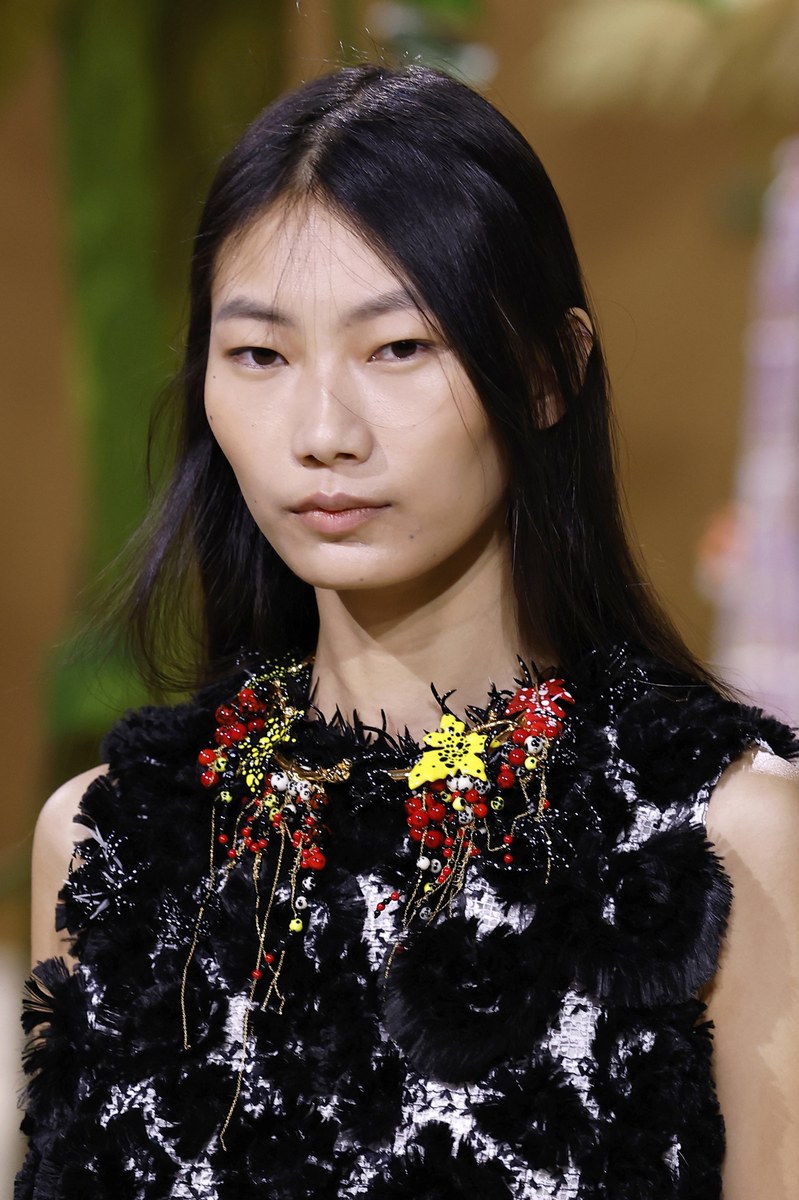
Stella McCartney FW26 Shoes

Stella McCartney FW26 Shoes
Did you know? Stella McCartney became the first luxury fashion designer to achieve a major house position without any formal fashion design training, joining Chloé as Creative Director in 1997 at age 25 after apprenticing under Christian Lacroix. Her commitment to fur-free and leather-free production since founding her eponymous label in 2001 pioneered the luxury sustainable fashion movement before it became industry standard.

Stella McCartney FW26 Shoes Report

Stella McCartney FW26 plants its footwear firmly in two opposing registers: the utilitarian authority of tall leather boots and the architectural precision of heeled pumps and mules. Buyers need to pay attention because this split signals a consumer appetite for both dressed-up occasion pieces and season-spanning wardrobe workhorses within the same brand story.

Silhouettes and Construction

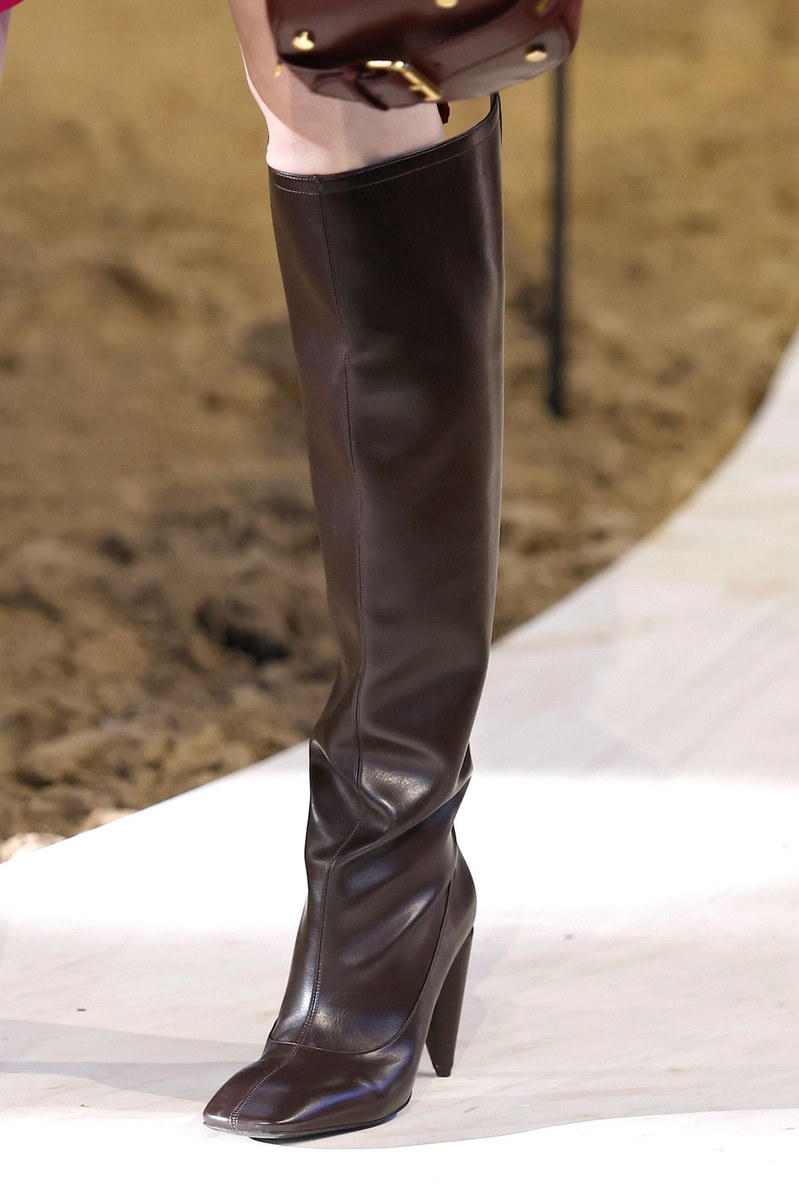
The lineup divides cleanly between over-the-knee shaft boots and low-cut heeled styles. Shoe 1 and Shoe 3 both run to approximately knee height or above, with squared toe caps and solid block-to-cone heel constructions ranging from roughly 90mm to 100mm. Shoe 2 presents a sharp pointed toe on a slingback pump silhouette, riding a sculpted geometric heel sitting at approximately 70mm. Shoe 4 operates as an open-back mule with a pointed toe and a slim stiletto heel of approximately 100mm, secured by a single straight ankle strap sitting low on the foot.
Materials and Finishes

Smooth, supple dark chocolate-brown leather with a high polish finish defines Shoe 1, cut with minimal seaming to preserve a clean shaft line. For Shoe 3, the same over-the-knee boot structure arrives in black leather with a deliberately relaxed shaft that bunches above the ankle, suggesting a softer, less structured leather grade. Shoe 2 introduces a white leather upper with color-blocked panels in red, nude, and black at the heel cup, paired with a matte gold metal heel cage. Black patent leather cuts Shoe 4, producing a high-gloss mirror finish across both the vamp and the single ankle strap.

Color Direction

Dark neutrals anchor the boot category. Deep espresso brown delivers Shoe 1 while true black delivers Shoe 3, together covering the two safest entry points for fall replenishment buys. Shoe 2 breaks the palette open with an optic white base and red and black color-blocking, which reads as a deliberate contrast injection against the heavier tones. The gold metal heel on Shoe 2 and the warm wood-tone stacked heel on Shoe 3 both introduce warm metallic and natural accents that give buyers a secondary color story to build on.

Key Models and Details

Both tall boots share a squared toe cap with a subtle metal toe guard plate, a construction detail that adds durability signaling and a slight industrial edge. Shoe 1 carries no visible external hardware, relying entirely on the seaming and leather quality to carry the design. Shoe 3 introduces the stacked wood-effect cone heel as its primary differentiator, a detail that will photograph well and drive editorial placement. Shoe 4's single ankle strap sits without a buckle or adjustable closure in the visible frame, suggesting a fixed elastic or stretch mechanism beneath the patent upper.

Shoe by Shoe Highlights

Shoe 1 The dark chocolate over-the-knee boot in smooth leather with a solid cone heel and squared toe cap is the most commercially accessible piece in the lineup, sitting at the intersection of equestrian heritage and contemporary volume dressing.

Shoe 1
Shoe 1

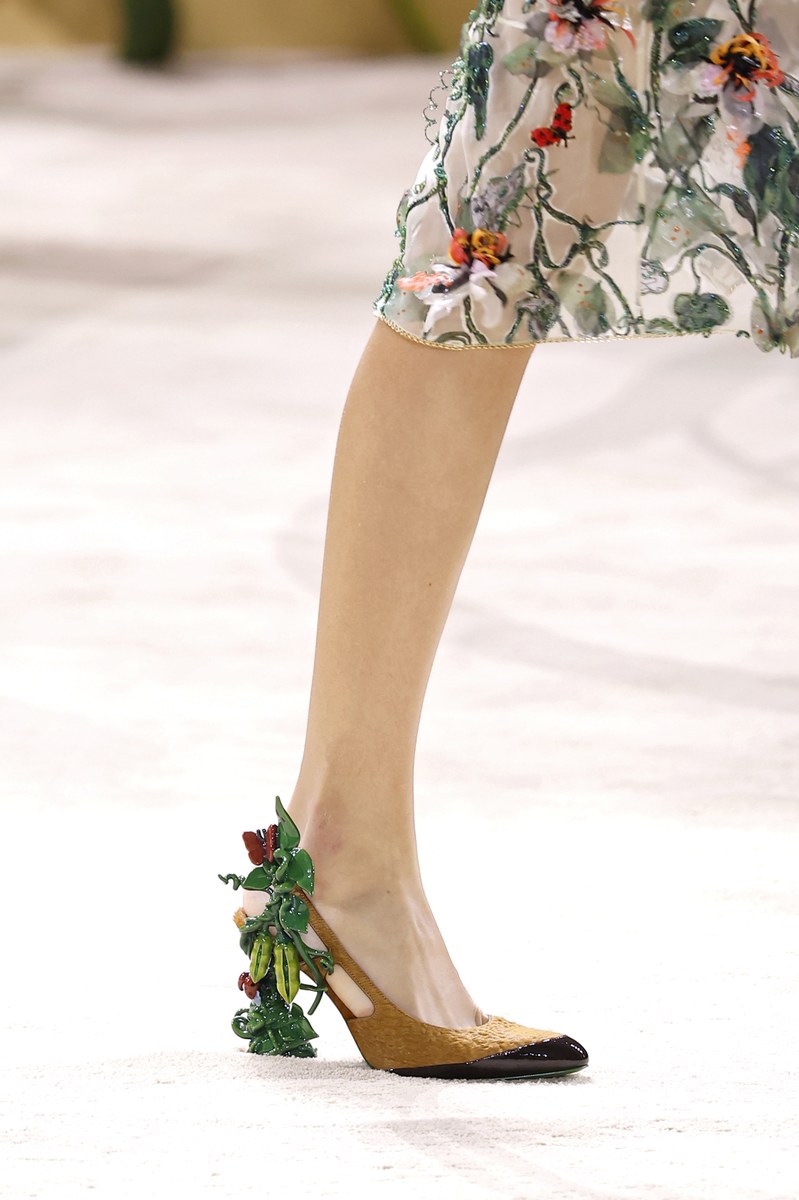
Shoe 2 The white slingback pump with a geometric gold metal heel cage and red, black, and nude color-blocking at the heel cup is the season's statement buy, best positioned for pre-spring carry-over or resort capsule planning.

Shoe 2
Shoe 2

Shoe 3 The black over-the-knee boot with a relaxed, bunching shaft and a warm-toned stacked wood cone heel differentiates itself from Shoe 1 through texture and attitude, targeting a younger, trend-forward consumer who reads slouch as intentional.

Shoe 3
Shoe 3

Shoe 4 The black patent mule with a fixed low ankle strap and 100mm stiletto heel delivers a strong occasion shoe that requires minimal SKU complexity, making it a low-risk, high-margin candidate for limited-door distribution.

Shoe 4
Shoe 4

Shoe 1 vs Shoe 3 Buyers stocking both boots should brief retail staff on the distinction: Shoe 1 reads polished and structured, Shoe 3 reads relaxed and editorial, and they serve different fit and styling occasions despite sharing the same heel height zone.

Shoe 2 The metal heel cage construction on the pump will require reinforced attachment points at the heel seat, a detail production managers must validate at the prototype stage before committing to bulk.

Shoe 4 Clean, unbroken vamp lines matter here. Any deviation in the toe spring at production will read immediately under the high-gloss surface, and the patent finish demands a specific last shape to succeed.

Operational Insights

Minimum Order Architecture: Shoe 1 and Shoe 3 share structural similarities in last shape and heel construction, which creates a plausible shared component strategy that production managers should explore to reduce tooling costs across the boot category.

Material Risk: The white leather upper on Shoe 2 will require rigorous quality control protocols around scuff resistance and edge finishing, particularly at the color-blocked heel cup where three materials meet and adhesion failure is most likely.

Heel Component Sourcing: The gold metal cage heel on Shoe 2 is a custom fabricated component, not a stock heel, and buyers need to confirm lead times for that specific hardware before locking in delivery windows for the pump style.

Retail Positioning: Shoe 4 in black patent operates as an entry-level price point relative to the boots and should be positioned in retail as a gateway purchase for new customers, with higher stockroom depth allocated per door than the boots.

Color Carry Rate: The espresso brown of Shoe 1 is a carry forward opportunity and buyers should evaluate sell-through data from comparable brown boot silhouettes in their assortment before committing depth, because the tone sits close enough to black that consumer differentiation may be weaker in lower-light retail environments.

✦ This report was generated with AI — combining human editorial vision with Claude by Anthropic. Because the future of fashion intelligence is already here.