Vaquera FW26 Bags
Vaquera FW26 Bags Report
Vaquera FW26 reduces the bag to its most confrontational essentials, stripping away decorative convention in favor of radical material play and deliberate provocation of scale and function. Buyers working the subculture and avant-garde contemporary market will find direct commercial signals here, particularly in the fringe hardware category and the revival of kiss-lock minaudière formats.
Silhouettes and Shapes
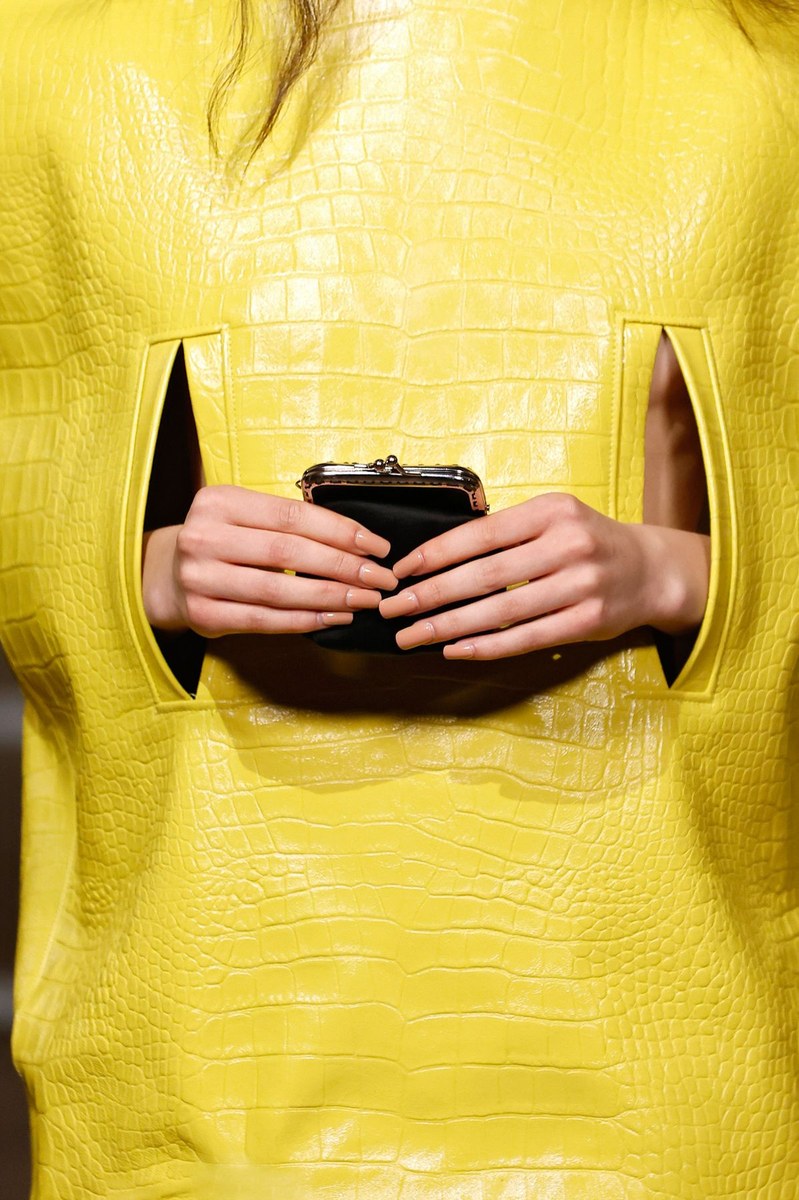
Bag 1 presents a palm-sized rigid minaudière, barely large enough to hold a phone and cards, sitting flat against the body in a micro-clutch format. Bag 2 operates at the opposite end of conceptual scale, with a boxy structured top-handle base that dissolves entirely into cascading fringe, making the actual bag body nearly invisible in motion. Both silhouettes reject mid-size wearability entirely. Here, scale becomes either monumental in gesture or aggressively minimal in footprint.
Materials and Hardware
Bag 1 is constructed in what reads as smooth black satin or fine matte leather, with an antique gold or aged brass kiss-lock frame closure at the top, a hardware format that references Victorian-era coin purse construction. The frame carries moderate relief detailing and appears to be cast rather than stamped, suggesting a mid-to-high tooling cost. Bag 2 is built entirely in white leather or coated leather, with the fringe strips cut to varying lengths and punched with small silver grommets at attachment points. Brushed or matte silver hardware runs consistently across the grommet detailing.
Color Direction
Together, these two bags create a deliberate binary. Bag 1 sits in deep matte black, functioning as a graphic punctuation mark against the electric yellow crocodile-embossed leather dress. Bag 2 works in chalk white with silver hardware, a pairing that reads clinical and stark against the black leather suiting it accompanies. Neither uses seasonal or transitional color. The palette signals a directional move toward high-contrast, zero-compromise color choices rather than the muted earth tones that have dominated accessories for the past four seasons.
Key Models and Details
Bag 1 centers entirely on its kiss-lock top closure, a mechanism experiencing measurable commercial traction at the premium contemporary price point. The body offers no visible exterior pocketing, no strap, and no adjustable carry option, positioning it purely as a hand-carry statement piece. Bag 2 uses a short rigid top handle in white leather and a compact rectangular body as the structural anchor, but the fringe, which falls well past knee length, becomes the dominant visual and tactile element. The grommet attachment method on Bag 2 is a production-relevant detail, as it allows fringe strips to be manufactured and attached as a modular component.
Bag by Bag Highlights
Bag 1 The rigid black minaudière with antique brass kiss-lock frame positions at the intersection of archival evening wear and contemporary street styling, a commercial sweet spot for buyers serving dress-up occasions without formality.
Bag 1 Micro-scale proportions and the absence of any carry strap make this a deliberate one-occasion, one-hand piece, which concentrates perceived value entirely in the frame hardware and base material.
Bag 2 The white leather fringe bag anchors its commercial case in the grommet-punched modular fringe construction, which translates directly into a scalable production process at mid-premium price tiers.

Bag 2 Its structured rectangular top-handle base beneath the fringe reads compact enough to enter the mini bag category, which carries consistent sell-through data across multiple contemporary accessories markets.
Bag 2 Fringe length here exceeds conventional proportions by a significant margin, falling well below the hemline of the look, which signals Vaquera's intent to position movement and theater as primary product values over storage utility.
Bag 2 An all-white colorway with silver grommet hardware presents a strong case for summer capsule buying, particularly in markets where white leather accessories track well from March through August.
Operational Insights
Kiss-lock hardware sourcing: The antique brass frame on Bag 1 requires a casting supplier with archival reproduction capability. Buyers should audit their current hardware vendors for this finish before committing to development timelines, as lead times on cast brass frames typically run longer than stamped alternatives.
Modular fringe production: The grommet-attached fringe on Bag 2 lends itself to a split production model where the base bag and fringe panels are manufactured separately and assembled at the final stage, which reduces waste and allows colorway flexibility without retooling the entire bag.
Micro-clutch category positioning: Bag 1 sits below functional carry capacity for most consumers, which means retail placement and floor presentation must lead with the object-as-accessory narrative rather than utility. Plan visual merchandising accordingly.
Color commitment: Both bags avoid seasonal blending and commit fully to their respective colorways. Product managers should treat this as a signal to reduce color option breadth in avant-garde SKUs and invest in stronger per-color inventory depth.
Fringe as movement marketing: Bag 2 performs significantly better in video and social content than in static imagery, which has direct implications for how buyers brief their marketing and ecommerce teams. Short-form video coverage should be built into the launch plan from the product development stage.
✦ This report was generated with AI — combining human editorial vision with Claude by Anthropic. Because the future of fashion intelligence is already here.